
Camper Vans, Stolen Radios And The Graveyard Shift At Le Mans
Living and showering in camper vans, no luxury hotels, no helicopters and no fancy weekends: Karun Chandhok on racing the Le Mans 24 Hours



The Le Mans 24 hours race is widely recognised as one of the crown jewels of world motorsport along with the Indianapolis 500 and the Monaco Grand Prix. This year was the 90th anniversary of the world’s most famous endurance race and after becoming the first Indian to compete in and finish the race last year, I was once again very honoured to be the only Indian amongst the 166 drivers on the grid this time around. Having finished 6th last year, I was back this time in the LMP2 class with an Irish team called Murphy Prototypes alongside a Kiwi – Brendon Hartley and a South-African-American driver – Mark Patterson.
As a driver, the build up to Le Mans is unlike any other race. Activity starts weeks in advance with simulator work and engineering meetings to ensure that the team and car are competitive straight away. The circus moves into town 3 weeks before the race as the official practice session happens a full 2 weeks before the big race. This is good for the local economies as thousands of personnel stay on between the test and the race, which obviously helps the nearby hotels and bars but means it’s a hell of a slog for the guys in the teams.

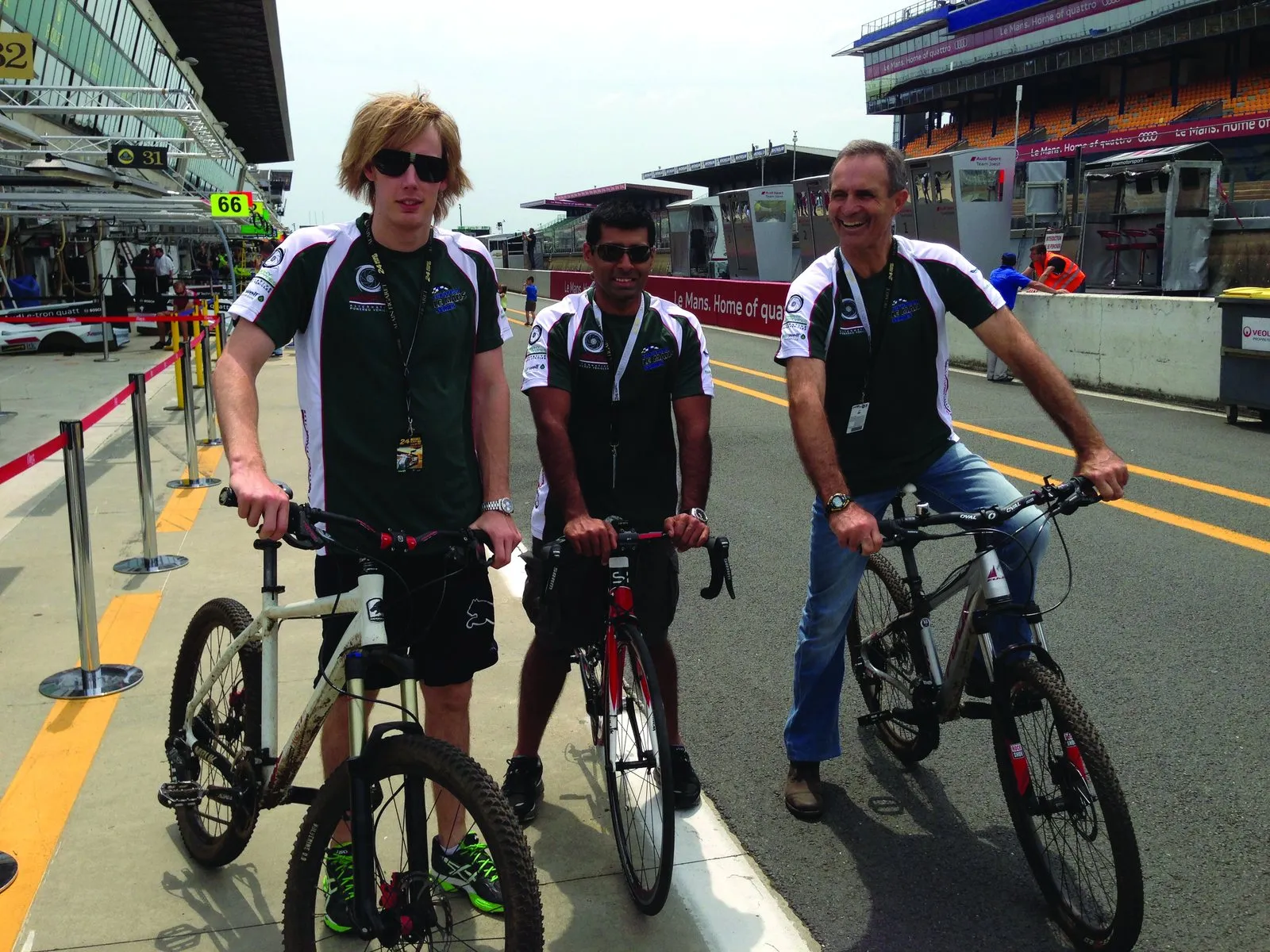
As drivers, we get a week at home before coming back for the race. Even then, we arrive on the previous weekend, which means we have a lot of hanging around before the race. I brought my cycle down and did lots of training to keep me entertained.
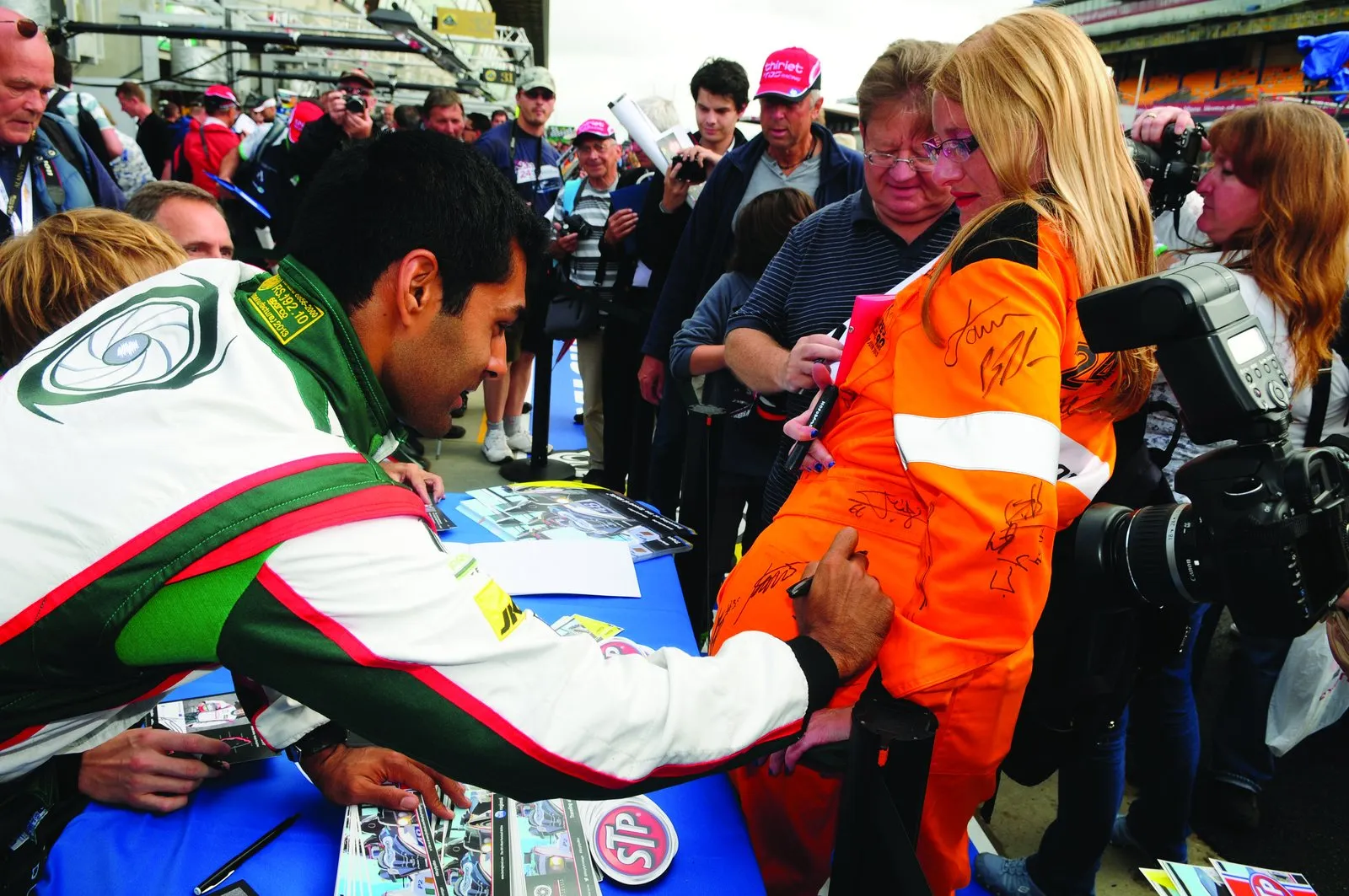
A fun tradition associated with this race is that the cars are paraded through Le Mans town for scrutineering and then the drivers are taken through on a separate parade in front of 100,000 people lining the streets.

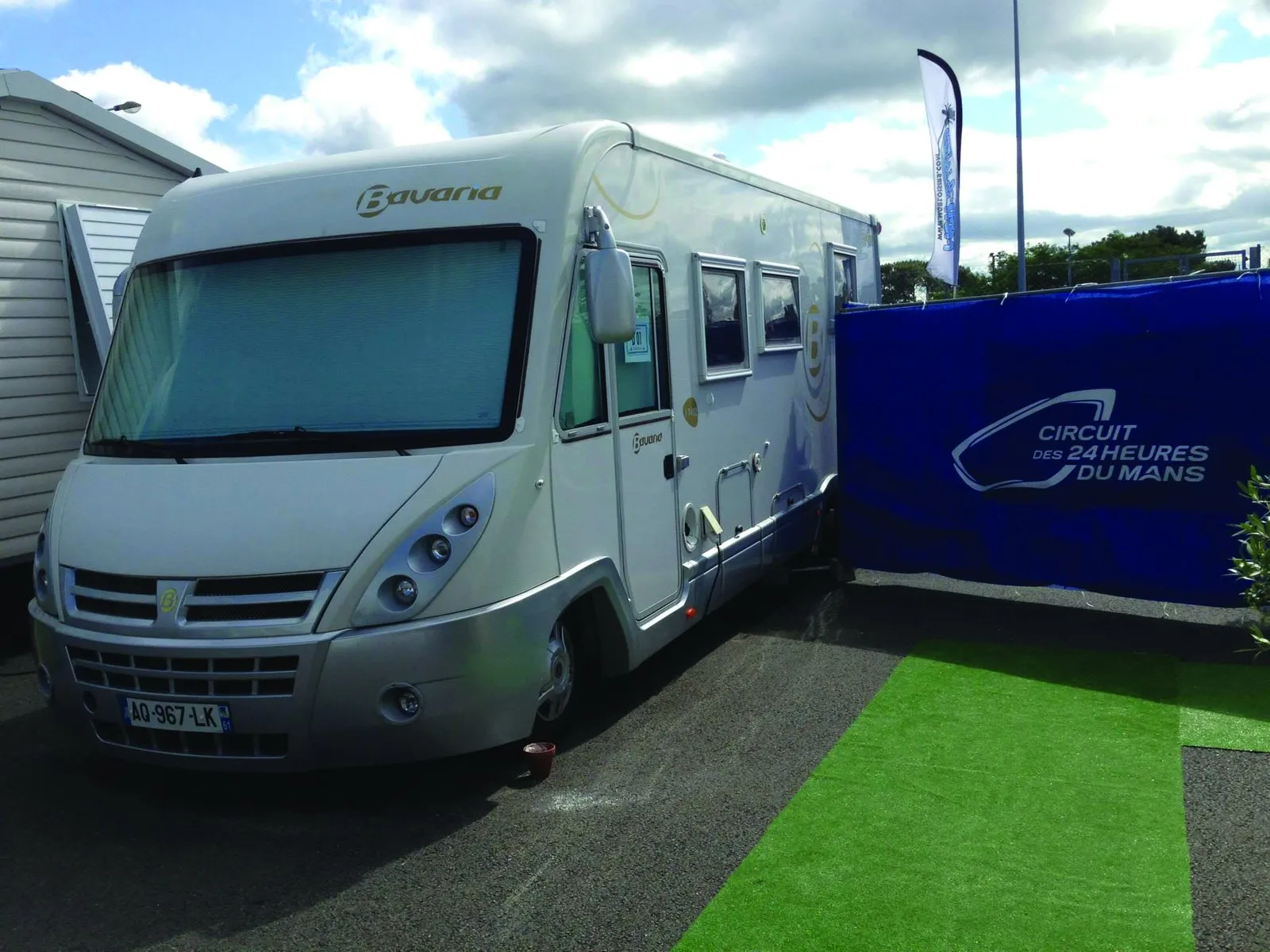
Last year, coming to Le Mans for the first time was a very confusing time for me. I had no idea about where to stay, what routine to follow in terms of eating or sleeping and was generally relying on my teammates – Peter Dumbrek and David Brabham to hold my hand. Luckily, they had 23 Le Mans starts between them and taught me a lot, so this year I went back better prepared. All the drivers stay at the circuit in little mobile homes or camper vans and I have to say it’s pretty cool being able to walk to work in 3 minutes. The downside of staying at the track is that you have 280,000 very noisy neighbours all in the campsites around the circuit, and not to mention the 56 racecars making a lot of noise!
On race day, you would think the organisers would allow the drivers to have a lie in before the race, but instead, we’re up at 7am for a morning warm up session. The opening ceremony for the race is amazing, where they play the national anthem for every one of the 166 driver’s nations represented on the grid. This year they played our own Jana Gana Mana first, ahead of everyone else, which was a very special surprise. To have the anthem played out for me in front of all those thousands of people in the grandstands was a real goose bump moment. My dad and I even took an Indian flag to the starting grid to celebrate the moment.
The race started off disastrously for us when an electrical problem dropped us down the order by 2 laps and then it got worse when Mark had a collision with a Ferrari that cost another 4 laps, so before I even got in the car, we were in 52nd place overall and last in our LMP2 class. From there on, the race was a seriously hard slog with rain coming on and off, but Brendon and I pushed like hell through the night.
Early on, we also got the terrible news that one of the Danish drivers, Allan Simonsen, who was racing for Aston Martin died in an accident. It was a real shock – this was the first time in my 12 year career that someone had died in a race that I was in, but as cold as it may seem, during the race you have so much to focus on that you don’t really dwell on it. It was only after the race that we had a chance to pause and reflect on Allan’s unfortunate passing.
I did the night shift last year, but this time around it was an even longer and harder shift – I got in the car at 2:30am and got out at 6:20am! I have to say that stint was one of the hardest things I’ve ever done in my career. We were chasing from behind, so I was taking big risks in the rain to make up time. The fatigue really started to set in, as by that point I’d been awake for nearly 24 hours apart from a little powernap and it’s amazing what an effect that has on the system. When you’re charging along at 320 kmh through the forests in the pitch dark, the mind starts to play tricks on you – you start to see parts of the track that aren’t there, hearing noises that don’t mean anything or seeing random bits of light that aren’t really other cars but people in the grandstands!
It was hard work, but ultimately satisfying because we had now dragged ourselves back into contention with 8th place. Brendon and Mark made up another place in the morning, which meant that we finished the race in 7th place in our class – a fantastic recovery from 22 hours before. Le Mans is a race that’s frustrating, painful, satisfying, magical and highly addictive – I can’t wait to go back next year.
BLURB
Drivers stay at the circuit in camper vans. It’s pretty cool to walk to work in 3 minutes, but it also means 280,000 very noisy neighbours.
IN BOX
Karun Chandok finished 13th overall in 2013 racing for Irish team, Murphy Prototypes.
He debuted at Le Mans in 2012 and finished 6th.
The race itself runs from 3pm Saturday to 3pm Sunday. A team has three drivers who drive the car in shifts.

Over the course of the race, the cars cover over 5,000 kms. This is equivalent to 17 Formula 1 Grand Prix races.
2,80,000 people show up to watch the race. 1,20,000 people watch a match at Eden Gardens and 1,05,000 watch the Indian F1.
They might not look like Formula 1 cars, but the cars that compete at Le Mans are still capable of doing 320 kmph
At 13.8 kms, the track is one of the longest tracks in the world and runs through public roads and forests.
From the July 2013 issue of FHM India.
Spotted a mistake, or your photo used without permission? Report a correction









 in your inbox