
Kalaripayattu: Get Ripped With the Mother of Kung Fu
Pick up a sword, a shield and get ripped quick with Kerala's 2,000-year-old martial art. Guru Murugan of NC Kalari academy explains the stages, from Meithari to knife defence and sword combat.
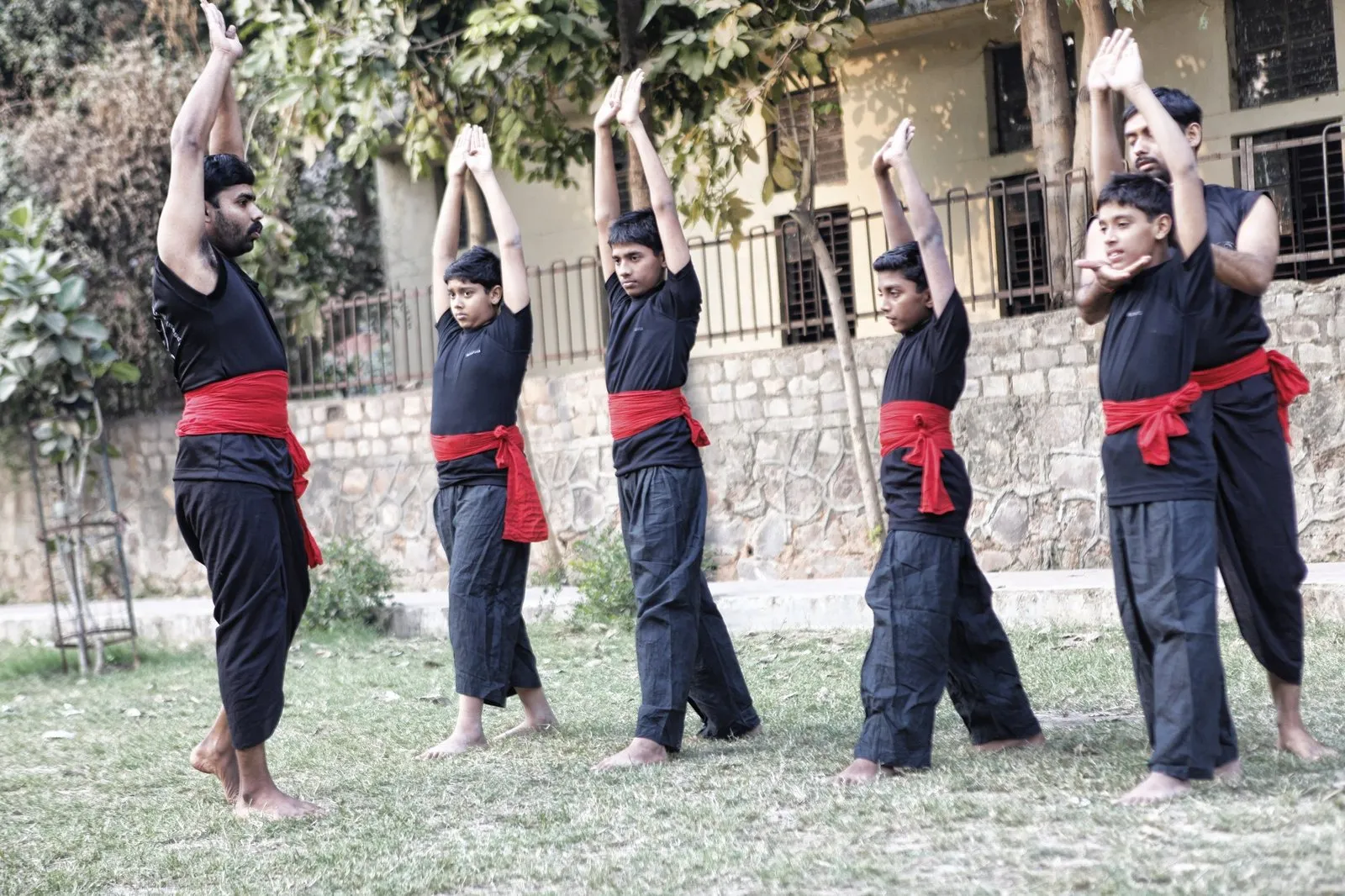



Pick up a sword, a shield and get ripped quick with the mother of kung fu (seriously).
The Chinese have learnt it from us. Jackie Chan swears by it. Our very own Khiladi has learnt it and so has the Badshah of Bollywood. So what is so kickass, which you don’t know about yet?

Well well, it’s your key for a perfect, flexible and ripped body, and it is known as Kalaripayattu-- the 2000-year-old Kerala martial art form which is said to be the mother of Kung Fu. (It is said that Buddhist monk Bodhidharma took this knowledge of Kalaripayattu from India to China which became the basis for the Chinese martial art. Thrilled? Of course you will be, like the yoga became as important as water after Madonna adopted it, similarly your light bulb must have started blinking after that Chinese trivia.

Anyways, the awesome thing is- though, it takes four years to master the art we have got a crash course on self defence where you can get both physical and mental strength (yes you need it, desperately, by the way). We contacted the best in India, NC Kalari academy (they are the first Indian to perform at the Shaolin Temple in China) and its founder Guru Murugan, who has been teaching since 17 years, to explain to you the nuances of the martial art. Mind you he will whoop your ass into shape so you better brace yourself.
“Kalaripayatu is not just any martial art. It is a sadhana, which needs full devotion and concentration of the part of the learner. You need to believe in your guru and respect the art, ” says Murugan.
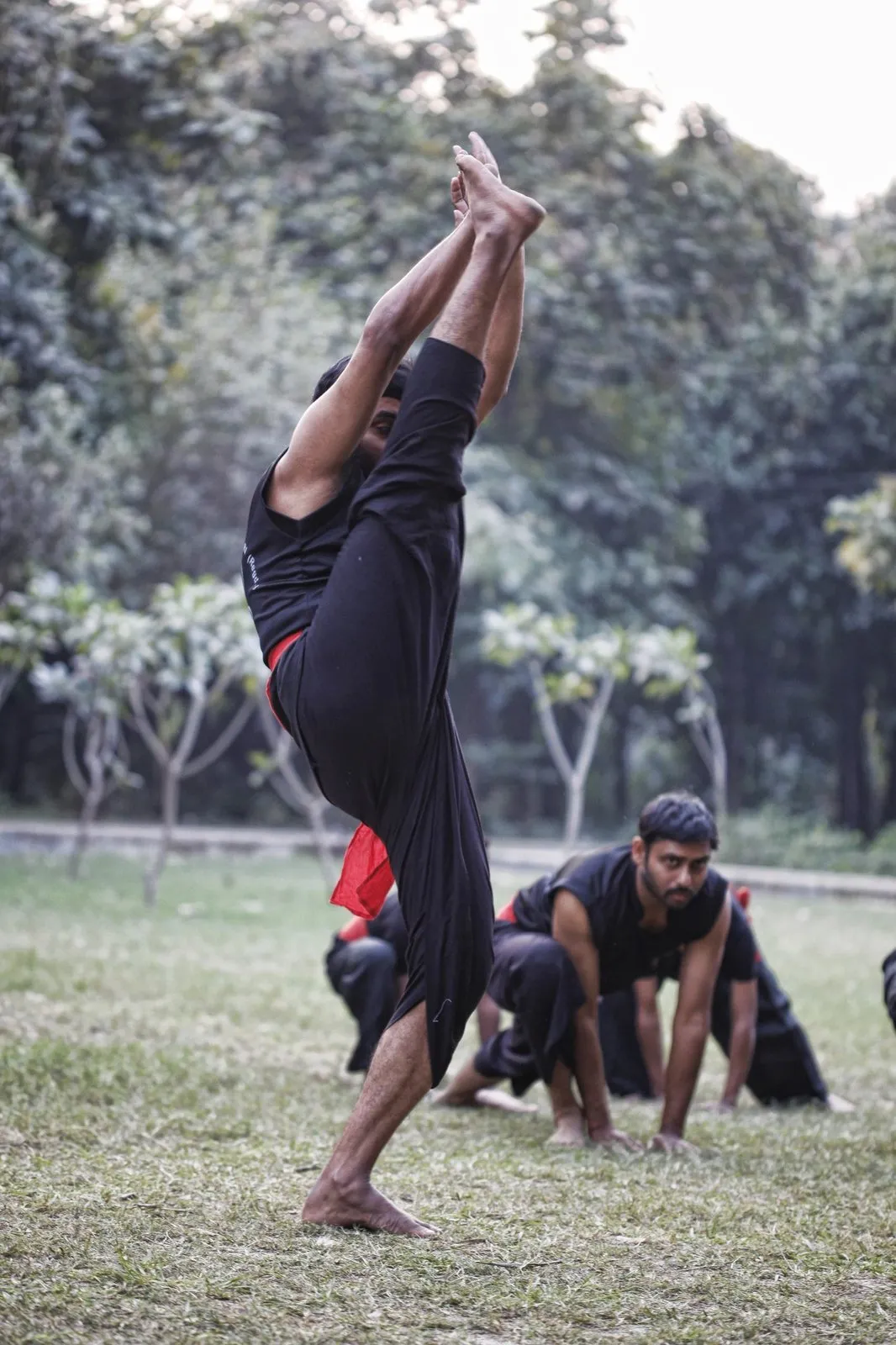
But is there any age to start or is it never too late? “It is always better to start at young age but then age is no bar. We have students from age of 5 to 60 at our institutes. The most important thing is the sheer dedication from the part of the learner and rest we can take care of,” adds Murugan.
You can learn Kalari at Nithya Chaithanya Kalari A2-Pocket, Mayur Vihar Phase - III , New Delhi.
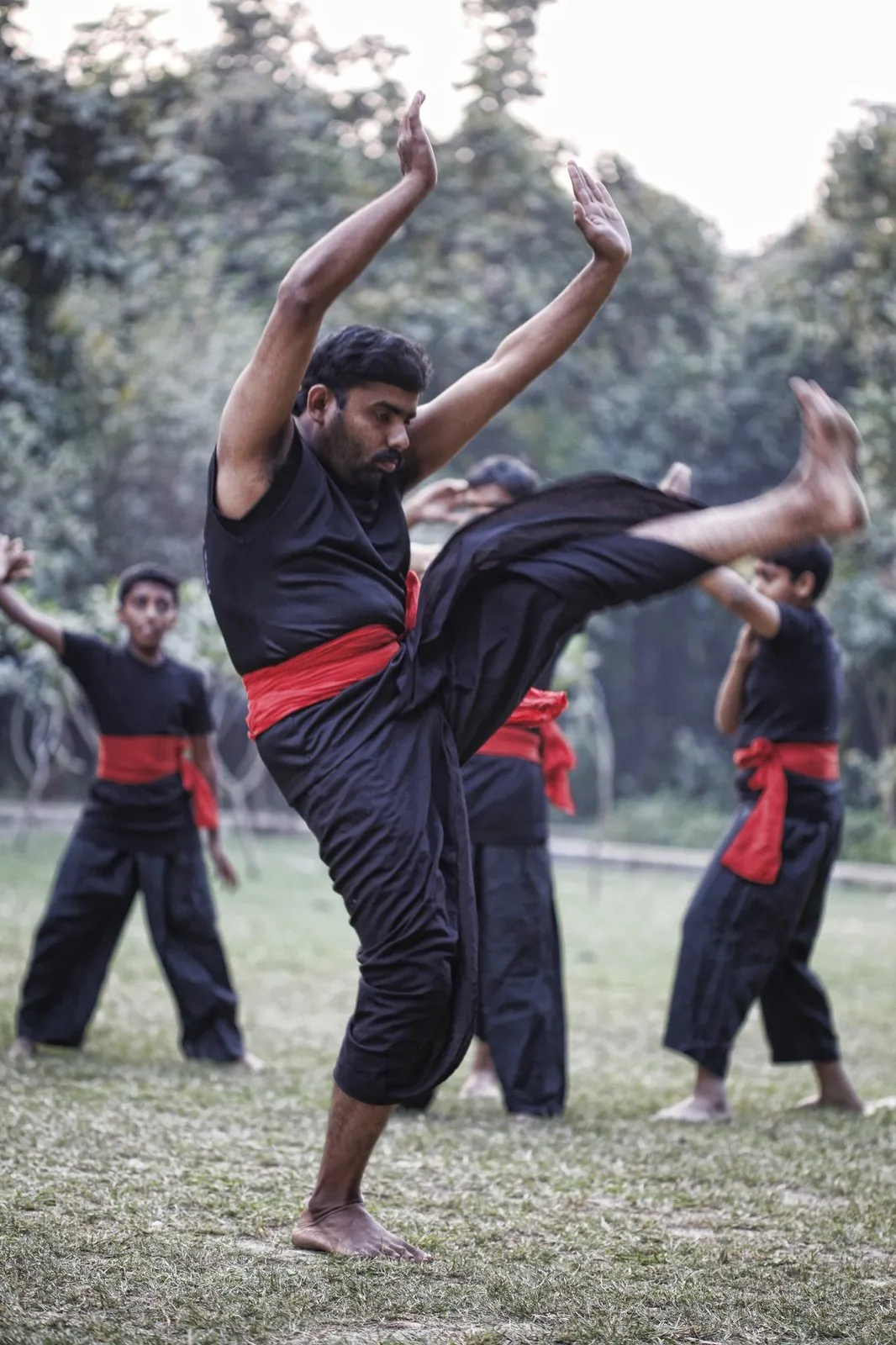
Animal instinct: hit the spot
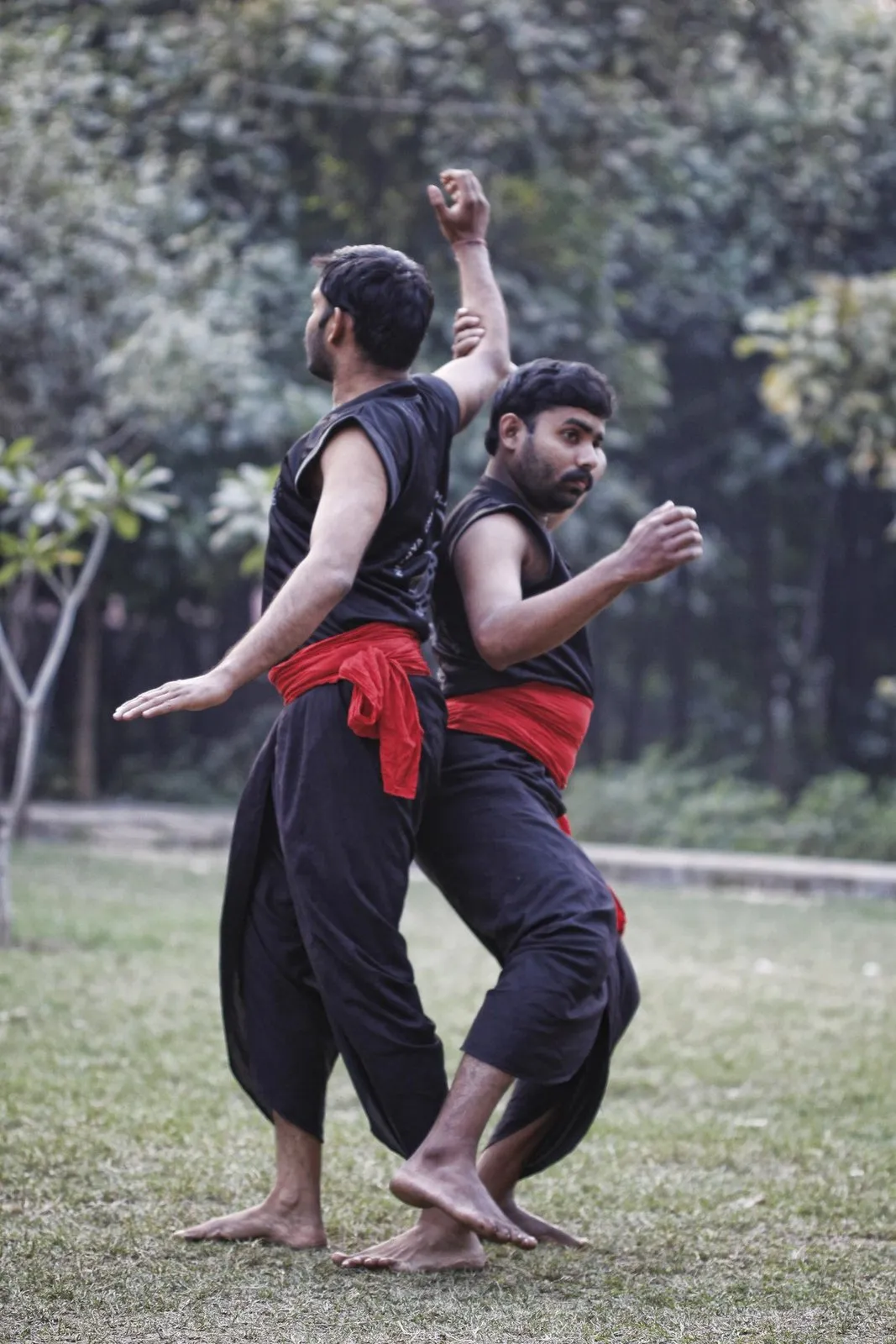
Kalaripayattu works on attacking the vital spots (108 in human body), which can stun, disarm or even kill the opponent. The art derives heavily from the fighting styles of different animals like cat, horse, lion, elephant, peacock, snake, cock, wart hog, and fish. Like the different postures you see here have been taken from the way the above listed animals charge towards their prey or enemy.
Meithari
This is the first stage of the art called Meithari all of which involves rigorous body sequences. These movements are for neuromuscular coordination, balance, flexibility and stamina. The training begins with disciplining the physical body and attaining a mental balance. The physical exercises help to develop strength, flexibility, balance and stamina. It includes jumps, low stances on the floor, circular sequences, kicks which are an attempt to understand and master each separate organ of the body.
MURUGAN SAYS:
“These exercises also bring alertness to the mind which is crucial to understand some of the movements and processes of the self defense sequences taught at later stages.”
Kolthari and Ankathari: take up a weapon
Once the learner becomes physically fit and competent, he/she is introduced to fighting with long wooden weapons, which is known as the second stage called the Kolthari. But these are testing times and we thought it was better give you the war training, which is the third stage known as Ankathari. This level involves starting with metal weapons, which require superior concentration due to their lethal nature.
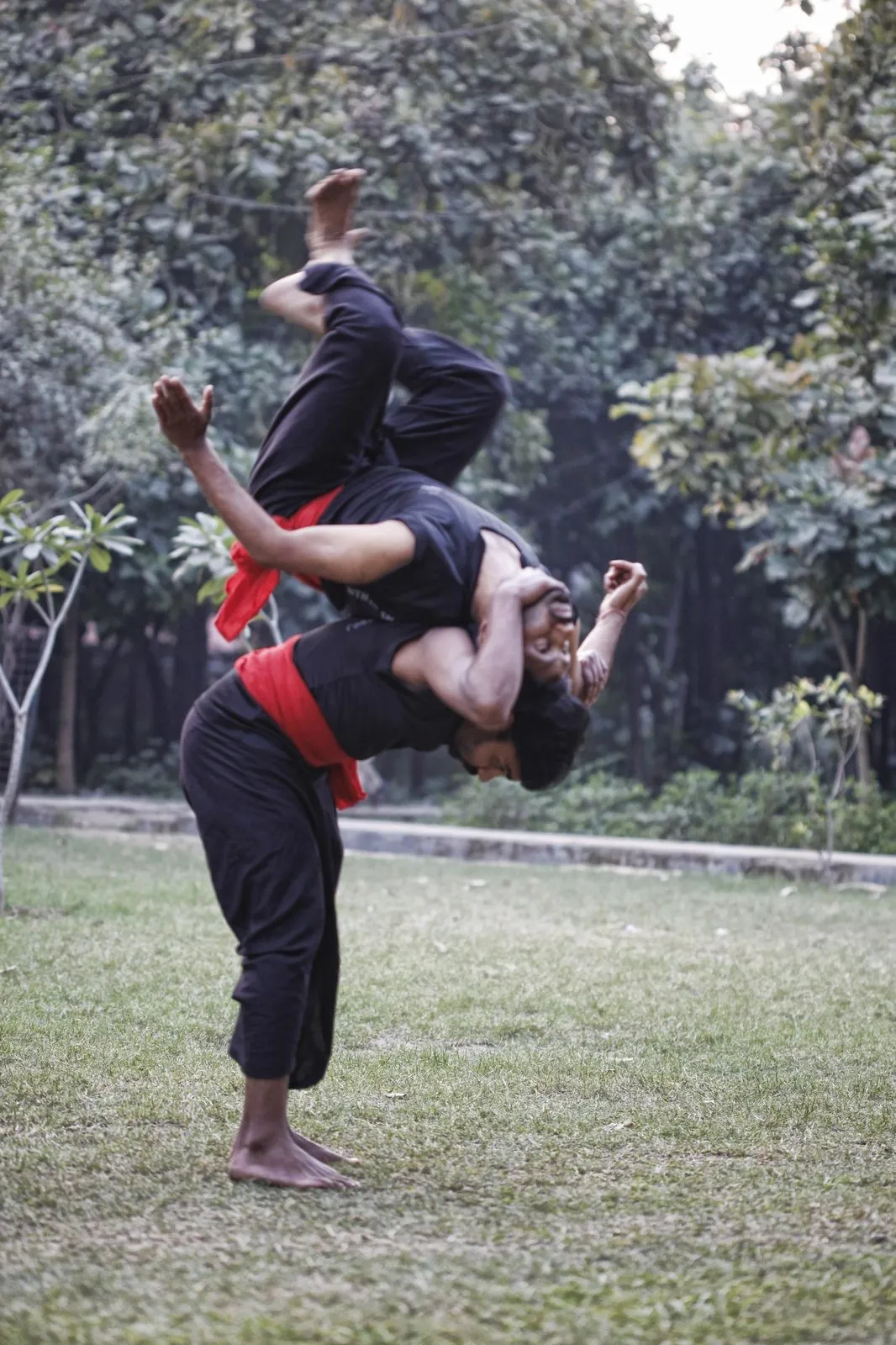
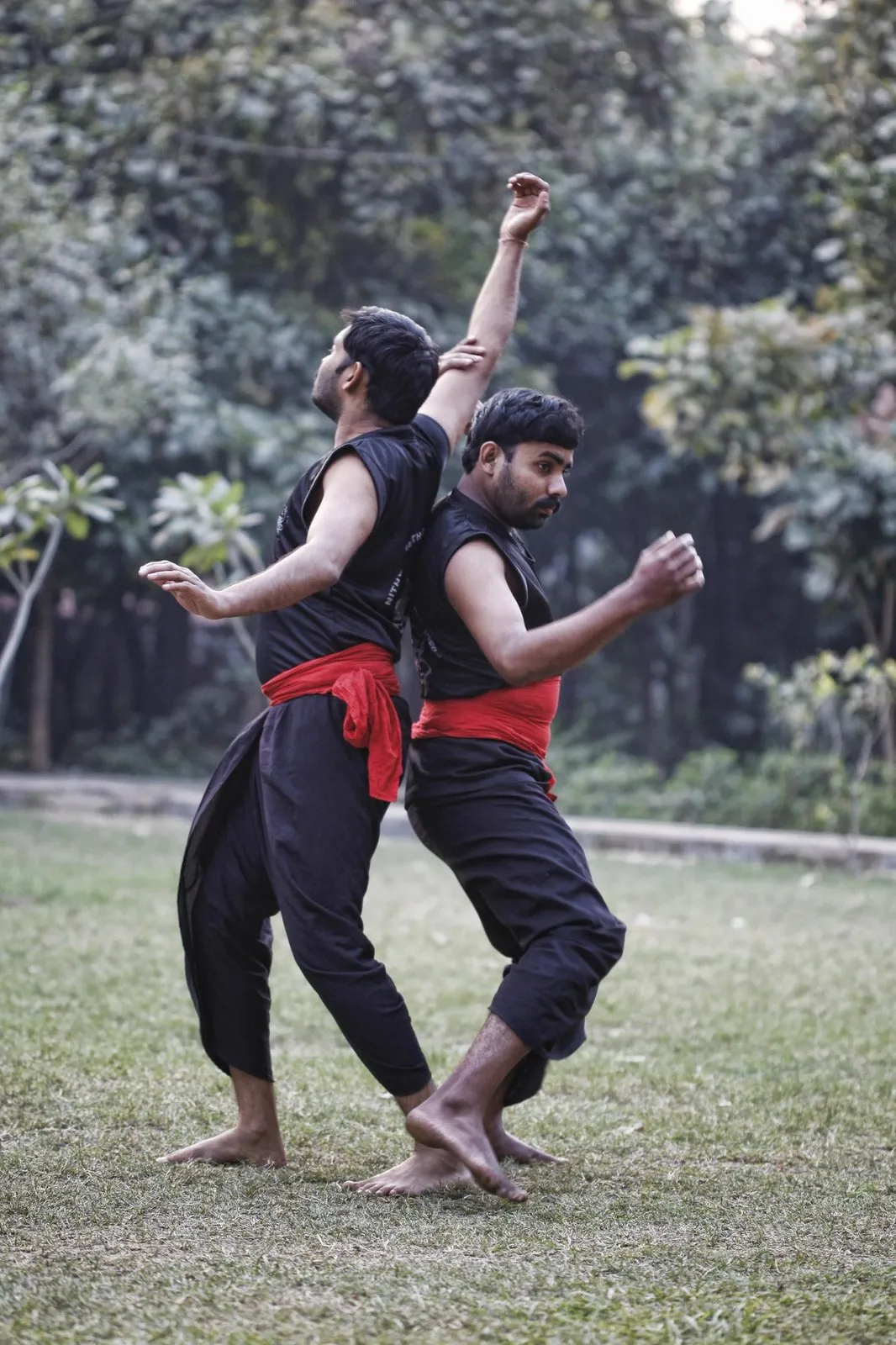
The one you see here involves the most basic weapons--knife. The sequence here is demonstration of how to tackle if someone attacks you with a knife. It involves locking the attacker in different ways with your agile moves. Like in the first picture, Guru Murugan locks attackers one hand with the knife while in the next he locks the attackers neck. The attacker then tries to use his left hand for his defence, which is again locked by Murugan.
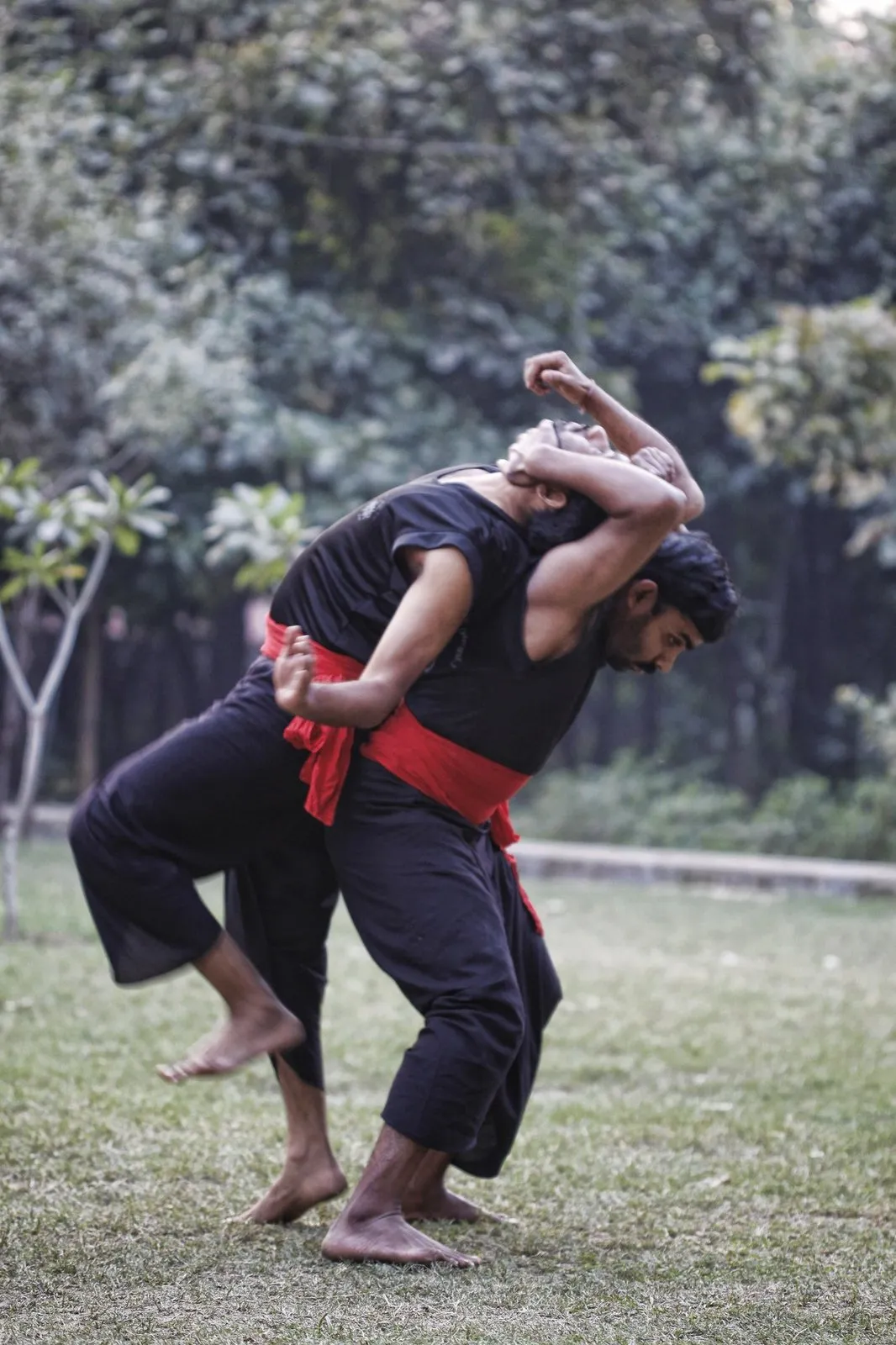
But if the enemy attacks you from behind then see the picture number 4, 5, 6, 7.
MURUGAN SAYS: “The technique is quite simple in here. You need to first hold the attacker by his neck to force him down. If still doesn’t leave his arm give him a Dhobi Pachaad. The shock of it will definitely force him to leave his dagger,” says Murugan.
Pick a fight: hand to weapon combat
The next to be taught in Ankathari is combat with the sword (Val) and shield (Paricha). All the postures, which you learnt in the earlier stages, come in play here. The key again is flexibility and control on your weapon. There are further subsequent weapons include the spear (Kuntham), trident (Trishool) and axe (Venmazhu). Usually the last weapon taught is the flexible sword (Urumi or Chuttuval), an extremely dangerous weapon taught to only to the most skilful students. Needless to say we didn’t qualify.
Historically, after the completion of Ankathari, the student would specialize in a weapon of their choice, to become an expert swordsman or stick fighter. It not only helps in harmonizing the biological system of the body, it also stimulates energy pathways and improves blood circulation, while activating the self-healing mechanism of the body.
From the January 2011 issue of FHM India.
Spotted a mistake, or your photo used without permission? Report a correction











 in your inbox