
Shigeru Miyamoto: The Man Who Made Your Childhood
Meet the visionary at the heart of Nintendo who started it all: how Shigeru Miyamoto came up with Super Mario, Zelda and Chain Chomps, and what makes his games last.



November heralds the arrival of the latest in a long line of Nintendo consoles – the Wii U. Meet the visionary who started it all, Shigeru Miyamoto.
Shigeru Miyamoto does not stand out in a crowd. Apart from an ever-present, slightly goofy grin, very little distinguishes him from the millions of exhausted, middle-aged men who grind out an existence in Japan every day. Scratch beneath the surface however, and almost everything about him is exceptional. He’s nominated for Time magazine’s 100 Most Influential People list every year. In 2006, he was honoured with the French Légion d’Honneur. He’s won more prizes, attracted more plaudits and generated more acclaim than any other man working in his field. He is Shigeru Miyamoto, creative genius at the heart of Nintendo, and whether you’re 16 or 40, the chances are he made your childhood fun.

If you reckon we’re exaggerating, think again. Add together the worldwide sales figures for the FIFA, Grand Theft Auto and Call of Duty franchises and you won’t come close to the number of Shigeru Miyamoto games that have been sold over the last 25-or-so years. Super Mario, one of his creations, is officially more recognisable than Mickey Mouse.
These days the official role of Shigeru Miyamoto, who turns 60 this month, is manager of Nintendo’s Entertainment And Development division. The reality is that he is Nintendo. Even the man who is technically his boss, company president Satoru Iwata, describes himself as “the biggest Miyamoto fan in the world”. He’s directly responsible for, among other things, all the Mario games (including Mario Kart), The Legend of Zelda series, Star Fox, Donkey Kong, F-Zero, Metroid and yes, all those Wii sports and keep fit games that your mum likes. So crucial is he to Nintendo, that when he mentioned in an interview last year that he might want to scale down his responsibilities within the company the entire industry was sent into a tizzy and share prices plummeted.
“I clearly remember grown men, professionals, shaking with nerves when they were about to meet him,” one former Nintendo insider tells FHM. “I’m not sure if he really understands the impact he’s had on everyone’s childhoods. He’s got no ego whatsoever, which is astonishing, considering he’s one of the few men alive who can claim to have had a massive effect on global pop culture.”
Once upon a time in Japan…
So what’s his secret? How can one man have churned out so much mind-bendingly awesome stuff over such a long period of time? According to David Sheff, journalist and best-selling author of controversial, tell-all Nintendo exposé Game Over, Miyamoto’s success is down to the fact he doesn’t really know much about computers. “He’s not a programmer or an engineer,” Sheff tells us. “He can’t write code, he’s an artist. When Nintendo originally got him to work on games he had no experience whatsoever.”
This isn’t an exaggeration. Back when Miyamoto joined Nintendo on a whim in 1977 the 24-year-old, banjo-playing art graduate’s only responsibility was designing posters. Four years later the company, which at that point was best known for making playing cards, decided to have a crack at video games. Unsure of what they were getting themselves into, the old men who ran Nintendo asked Miyamoto to create some character designs. They wanted something that was similar to Popeye, they explained. Miyamoto gave them a gorilla who threw barrels at an Italian plumber.
“When Nintendo decided to let Miyamoto make Donkey Kong, that was a really leftfield choice,” says Tristan Donovan, author of Replay: The History of Video Games. “But it paid off massively.” Sheff agrees: “The result was they ended up with someone who didn’t think linearly like everyone else, but around corners.”
Despite its weirdness, Donkey Kong was a massive hit. The Nintendo management immediately decided two things: the company’s future lay in those new-fangled video game things and the man who was going to steer their ship towards globe-conquering success was Shigeru Miyamoto. They were right on both counts.
The science of fun
You’d probably expect the man who repeatedly revolutionised video games to play them himself. He doesn’t. By all accounts Miyamoto has never been that into consoles. He gets his inspiration elsewhere. “He draws on his home life and his hobbies a lot,” says Dylan Cuthbert, a British developer who ran off to Japan as a teenager to pursue his dream job of working with Miyamoto. Not only did he achieve this, he also ended up marrying the man’s daughter. “Things that he’s doing in his life tend to pop up in his games. Nintendogs was a result of him getting really into dogs (Miyamoto breeds the animals semi-professionally). The Wii Fit game came about when he realised he was getting old, so he started working out and then made a game out of the challenge of getting healthy.”
People who know Miyamoto all comment on his talent for identifying fun and then distilling it down to its purest essence. Remember when you were a kid and you’d invent games in your head to make going on long car journeys or doing chores less boring? Miyamoto still does this, but then he also knows how to turn the results into a million-selling video game. “The N64 game Pikmin was based on the enjoyment he gets out of weeding his garden,” Jeff Ryan, author of Super Mario: How Nintendo Conquered America, tells FHM. “Miyamoto’s actually not allowed to discuss his hobbies in public anymore, because then other game developers will try to steal his next idea.”
In interviews, which have become increasingly rare over the years, Miyamoto has hinted at the sorts of things that spark his imagination. It’s safe to say Call of Duty doesn’t really figure on his radar: “I can still recall the sensation I had when I was in a small river as a kid, and I was searching with my hands beneath a rock, and something hit my finger, and I noticed it was a fish,” he has said. “That’s something that I just can’t express in words… I wish that children nowadays could have similar experiences.”
Working with a super-genius
Working with someone like Shigeru Miyamoto has its downsides. There are countless stories of developers at Nintendo going out of their minds after their projects are cancelled or delayed due to Miyamoto having a change of heart at the last minute.
“Even when deadlines are getting close and schedules are tight he’ll still be open to changing absolutely everything,” Cuthbert tells us. The Brit worked on Starfox with Miyamoto as a teenager and presumably experienced this first hand. “It’s become known as ‘upending the tea table’ – demanding major changes to games at a really late stage. It can annoy people but that’s just the way his mind works.”
“Miyamoto is a perfectionist,” confirms Donovan. “When he was overseeing Metroid Prime he didn’t like the way Samus, the main character, transformed from a human into a ball so at the last minute he threatened to cancel the entire thing unless the developers made it seamless.”
Even having a conversation with the man can be far from straightforward. When dealing with his teams of developers he’ll often answer their questions with more questions, like some kind of jolly Japanese Sphinx. According to him it’s because he has a hard time expressing himself. Others say he does this because it forces his people to think hard about interpreting his vision in interesting ways.
At other times, Miyamoto’s difficult behaviour can be attributed to the fact he knows exactly how he wants things to be and won’t settle for anything less. “When he was making Super Mario 64, Miyamoto had a really specific idea of how he wanted Mario to swim,” Ryan tells FHM. “He had a hard time conveying it to his crew so he showed them by lying on a table and air-swimming. This is a 45-year-old man.”
Despite his jealous rivals’ best efforts, no one’s been able to work out exactly what Miyamoto’s secret is with regard to creating long-lasting, classic games. People have been trying for decades. Companies have even allegedly offered him massive salaries (Miyamoto is reportedly happy on an “average” wage) in an attempt to tempt him away from his beloved Nintendo. None have succeeded.
“If someone figured out his magical formula they’d bottle it and try and replicate it,” one Nintendo source tells FHM. “One thing I have heard him say is that his games all have a sense of ‘fairness’. Mario would always run at the right speed. The arc of his jump was always a constant. You always felt you could advance, compete, reach that coin, beat that boss. But it would take one more try.”
It seems scarcely believable that in an industry dominated by ultra-violence, guns and fast cars the character that has lasted the longest should be a fat plumber. But there it is. Mario, along with a laundry list of other Miyamoto characters, has helped Nintendo not just survive but thrive during two global recessions. “It isn’t about ‘games’ for me, personally, and it never really was,” says the man himself. “It was about creating something – anything – far bigger than all of us.”
On that front he’s succeeded and then some. In this era of cynical marketing ploys, bland focus groups and faceless corporations, it’s downright brilliant that someone can change the world with nothing more than an overactive imagination. Without Miyamoto, all of our lives would be slightly less fun. And for that we salute him.
How Miyamoto came up with… Super Mario
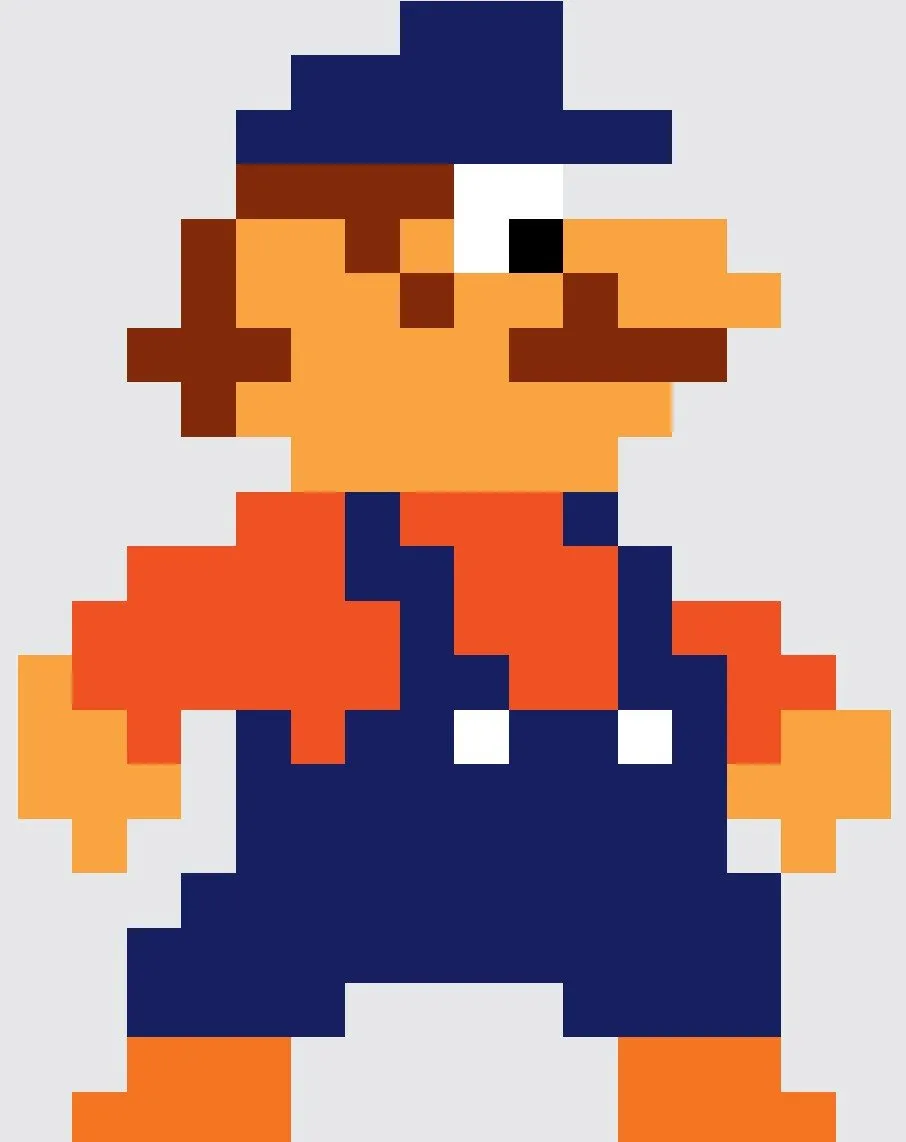
Mario started life in 1981’s Donkey Kong as “Jumpman”. Miyamoto’s only feeling towards the character, initially, was that he should be a “funny, hang-loose kind of guy”. The game’s popularity inspired Miyamoto to develop him, however. Jumpman was renamed Mario, in honour of an Italian landlord Miyamoto knew. Because graphical capabilities were then so low he was given red and blue overalls as an easy way to make him stand out. The cap was added so they wouldn’t have to draw any fiddly hair.
How Miyamoto came up with… Zelda
As a boy, Miyamoto had no television so he spent his summers exploring Kyoto’s forests and caves with a homemade lantern. The Zelda games were an attempt to recreate the same sense of child-like wonder he felt at the time. The game’s protagonist was called Link because Miyamoto wanted the player to feel connected to the game. The princess Zelda was named after American author F. Scott Fitzgerald’s wife, as Miyamoto felt it sounded “pleasant and significant”.
How Miyamoto came up with… Chain Chomps
If you’ve ever played Super Mario Brothers then you’ll know all about Chain Chomps. One of the most annoying enemies in the Mario universe, Chain Chomps are still capable of inducing screams of frustration from grown men. Miyamoto based them on a fierce, chained-up dog he had to pass as he walked to school every day as a child. The dog would rush forward and try to bite him but the chain around its neck would hold.
From the December 2012 issue of FHM India.
Spotted a mistake, or your photo used without permission? Report a correction












 in your inbox