
The Irrational Fear Of Flying: Is Flying Still Safe?
Planes appear to be falling out of the sky like flies. Or is it mere coincidence? FHM asks a pilot, a maintenance engineer and a flight attendant whether flying is still safe – and looks at why planes crash.



We have it too these days. Especially since planes appear to be falling out of the sky like flies. Or is it mere coincidence? FHM investigates.
The thing that has had the biggest impact on mankind, since the invention of booze of course, is airplanes. They made the world a smaller place and there isn’t a destination where you can’t fly to. But at speeds of hundreds of kilometres per hour and altitudes higher than Mount Everest, the slightest mistake can spell doom. And it has been so, with a seemingly alarming regularity, off late. So we set out to find the answer to the question that is on every flyer’s mind these days. Is flying still safe? Here’s a sample of some local news from the past month. A newspaper report pointed out how a Jet Airways flight from Mumbai to Brussels descended 5,000 feet below the designated flight path over Turkish airspace without the pilots realising this. One pilot was resting while the other reading the flight manual. Both have been grounded and an inquiry is on. Another report past this month says that DGCA, the civil aviation regulatory body in India, has grounded 14 planes in the past six months, thanks to the special surveillance drives it has been conducting. If that kind of morning news doesn’t put you off flying, we don’t know what will. To understand what the situation is like up in the air, we wanted to hear the other side of the story. From people who are actually involved in the background, before we gave up on flying completely. Here’s what they had to say.

45 million: The number of flights you have to take before being in a fatal accident. Statistically speaking.
Pilot – Captain Abhinav Sehgal
Scared to fly. Should you drive everywhere?
Not really. Flying is one of the safest means of transportation. In fact driving may not be that safe since nobody follows any rules of the road anyway. In the air, we have a lot of rules in place to ensure flight safety.
Pilots are safer than drivers
Well, for starters, unlike driving a car where any Tom, Dick, Harry and his neighbour can buy a driving license, it’s not the case for pilots. Lot of training is required before getting a CPL. But even then you won’t be allowed anywhere near the cockpit. You have to get your ATPL or Airline Transport Pilot License and then be certified on the model you will be flying. Lots of hours in the simulator later and you are finally allowed to enter the cockpit. Then you have to undergo route checks (basically you’re under a strict watch) so that you can fly as a First Officer. Becoming a captain is even tougher.
Not anyone can command a plane
Yes it’s not easy to become a captain. It needs many more route checks. In fact in India, even a captain isn’t allowed to fly during the monsoons without first completing 100 hours of flying with restrictions. It depends on the regulations and the individual airline’s guidelines as well.
Training is hardcore
Planes are quite complex and you have to learn every little thing about them. There is a lot of help built into the plane, but you still have to know what to do in different situations. So we learn to handle scenarios like engine failures, emergency evacuations, water landing and the like. Two compulsory emergency simulator training sessions are conducted every six months.
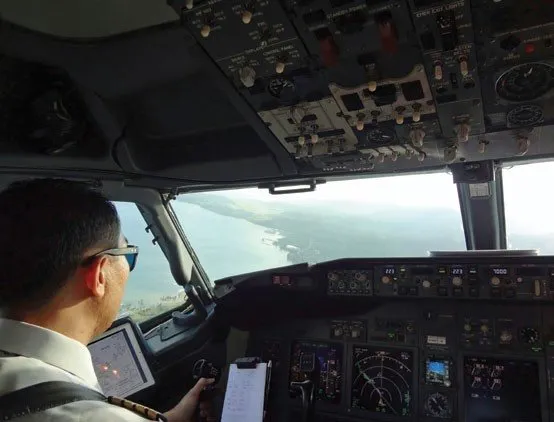
It’s not mayhem inside a cockpit
No. Not really. Planes usually fly on autopilot most of the time.
Pilots don’t faff in a cockpit
We’re constantly monitoring the aircraft. We communicate with the ATC, chart navigation and ensure the plane is on the right course. And frankly the autopilot is more capable than a pilot and passengers are safer for it. But sitting for long hours is quite tedious. To make sure safety isn’t compromised, if a pilot isn’t feeling up to it, he can report sick. Another pilot can then take the plane instead of him.
What happens in case of emergencies?
Depending on the kind of emergency, we follow the Standard Operating Procedures. On board computer guides us through the step by step plan. If it’s something that doesn’t affect the flight, then we carry on to the destination. On the other hand, if there is something that will affect the flight plan, we inform the cabin lead of any deviation from the course.
Informing passengers
There isn’t a law that makes it compulsory, but we do inform them if there is a change in flight plan. Also we make sure that we don’t induce panic and maintain calm.
It’s still quite safe
It’s not different accidents, but different news items about the same accident which gives you the impression that planes are simply falling off from the sky. The reason it’s big news is because air is a costly business and losses tend to be in millions.
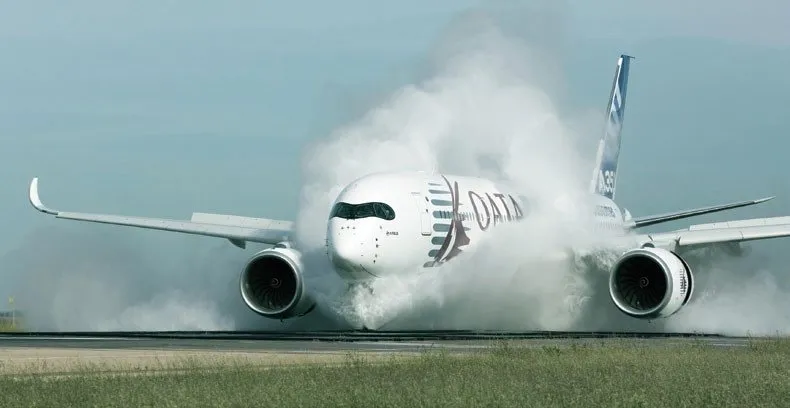
Maintenance Engineer – Rahul Sharera
Maintenance engineers know more than your mechanic
A lot of studying is involved to become one. In India, DGCA approved education establishments conduct entrance exams for the licensing course which is three years long. The course itself is quite difficult, with a pass score of 70% for each exam. Just to put things in perspective, regular engineering course exams have a passing percentage of 50%.
What he does
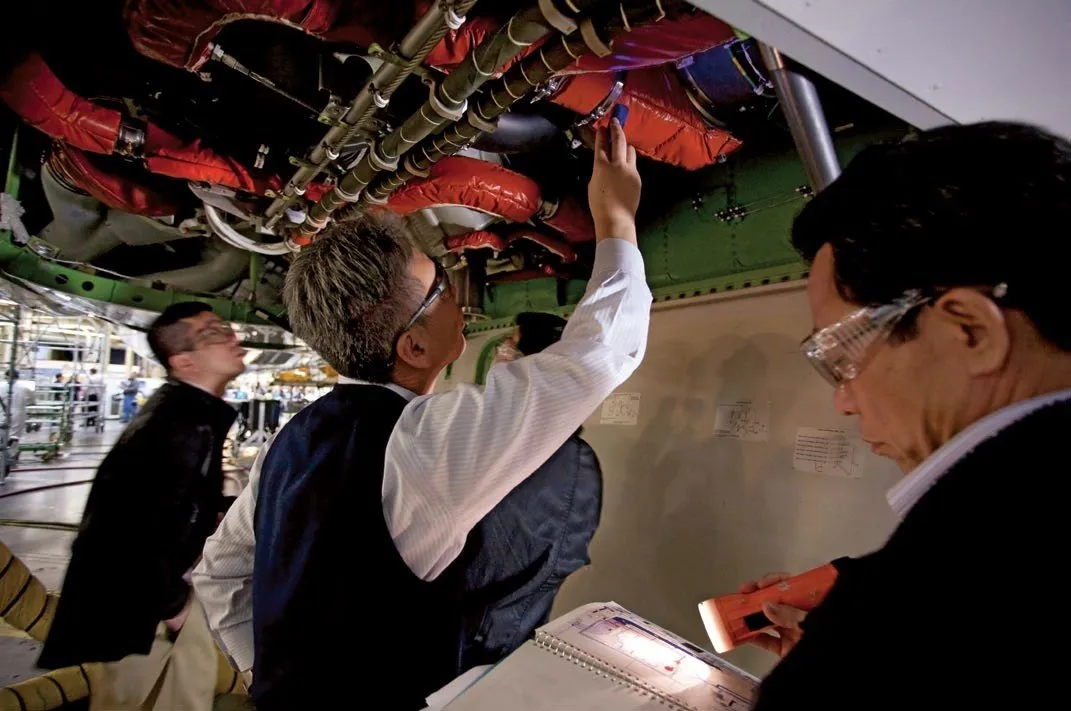
I make sure that the airplane is in perfect flying condition. For this we follow maintenance schedules, as recommended by the aircraft manufacturer and is unique to every model. Usually the schedule is based on the number of flying hours completed. For example, some parts may be changed every 200hrs, others every 400hrs.
Is a procedure followed?
An aircraft is made up of thousands of parts. So, it’s quite complex really. But there are procedures in place that we follow to ensure we don’t skip any step. There are a large number of preflight checks that we undertake and each check is signed off by the engineer in the log book.
Engineers have the last say
In terms of absolute control, if an engineer doesn’t give his OK for an aircraft, then the pilot cannot fly it.
If there’s an incident
Thankfully this has never happened to me. But I’m sure there will be a thousand things running in my head. Obviously everyone’s safety is foremost. Then I would wonder if it was something that I missed, if it was a faulty part or an external factor. Only an investigation reveals the full details.
Investigations
For every incident, the DGCA conducts an inquiry. This can take a few days to months depending on the severity and scale. Can result in anything from a suspension to the license being revoked permanently.
So is flying safe?
In a word. Yes. It depends on the aircraft’s maintenance and the pilot’s abilities.
Flight attendant – Simran Kapur
What does a flight attendant do except bring you your coffee?
We are not only meant to smile, look pretty and fetch water when you’re thirsty, we are also trained to save your life, if something goes wrong.
She can save your life
Emergencies can take different shapes and we are trained to deal with things like water landing, medical emergencies, fires, decompression of cabin, evacuations, malfunctions, life raft procedures and many more. So if you see the usually cheery demeanour replaced with a face that will look good on a school principal you can be sure something is up. And it’s a good idea following orders at this time, especially because we know exactly what to do.
The pacifier
We are the first line of communication between the flyers and the pilots. Usually the cabin lead is the first to be informed of an emergency and will know what kind of landing and evacuation is expected. This information is then relayed to the rest of the crew and then the passengers. There are no rear view mirrors on the plane and in an emergency landing pilots wouldn’t know if there is a fire outside or five feet of water. This is where a flight attendant steps in. We have to make split second decisions about whether it’s safe to open the emergency exits, deploy the inflatable slide or not. Because, frankly you don’t want to be roasted alive or drowned in water for that matter.
Why do you want to get out early?
During an evacuation, it’s the jumping over one another in a hurry to get out, which causes injuries to passengers. If everybody follows directions this can be reduced to a great extent. If need be, we block the exit that is deemed dangerous, and direct the passengers to the next exit. There is a bit of shouting involved too. So don’t be surprised if volumes rise.
Can they work on any aircraft?
Each aircraft is different, so we are certified for the kind of plane that the airline operates. We are also qualified for crisis like medical emergencies, giving first aid, battery fires, evacuation procedures to name a few. And emergencies like a passenger having a heart attack in the air and surviving, or a mother giving birth to a child on a flight wouldn’t have been possible without the training that cabin crew receive.
We’re not giving up on flying, we probably were never going to in the first place. There are enough safety measures and redundancies built into the system that the chances of something untoward happening are slim. Of course, human element is always there, but as Mr. Sharat Dhall, President, Yatra.com told us “The death risk for passengers of a commercial airline is 1 in 45 million flights”.
If it makes you feel any better: things you didn’t know about planes
- An airplane is quite capable of flying on a single engine, if one fails mid air. If on the off chance, all the engines fail when it’s at the cruising height, it can still glide for more than 30 minutes.
- If lightning hits the aircraft, it passes through, leaving the passengers safe since the plane isn’t grounded.
- Commercial aircraft are designed to withstand tough weather conditions and can even pass through storms. But they don’t. Instead they fly around them.
- Most of the near misses you read about are actually mere deviations from mandated distances.
- 90% of all accidents happen during descent/approach/landing or take-off.
- Planes are required to carry more than enough fuel on board so they can circle around or land at an alternate location in case of emergency.
- Planes undergo various tests including wings being bent more than 30 feet at the tips. This is well beyond the maximum load it is expected to encounter.
- ATC ensures there is enough distance between two aircraft so that the first one is clearing the runway when the next one is making its approach.
- Planes flying in opposite directions fly at different altitudes with a vertical distance of 1000 feet between them.
- Airliners are equipped with TCAS (Traffic and Collision Avoidance System) which warns of an approaching aircraft and provides audible commands to the pilot.
- Security at airports is much tighter these days. You’d be lucky to get a water bottle through security at an Indian airport these days, let alone a bomb.
Why planes crash
1. Pilot error
The human element will always be a part of civil aviation... till the time they make autonomous planes. But with fatigue and mistakes, parts of every job, pilot errors are a given. Flight: Aeroflot Flight 593, Moscow to Hong Kong. Aircraft: Airbus A310. Date: 23 March 1994. While the autopilot was on, Pilot Yaroslav Kudrinsky let his children into the cockpit and allowed them to sit at the controls. The children managed to partially disengage the autopilot, which made the plane bank right, in a steeper angle than it was designed for. The autopilot over-corrected, nearly stalling the plane. The pilots managed to level the plane out, but it had already lost altitude and crashed near a hillside. Lives lost: 75 | Survivors: 0
2. Inclement weather
Commercial aircraft are designed to fly in a host of different weather conditions, although extreme weather can still cause accidents. Flight: Bhoja Air Flight 213, Karachi to Islamabad. Aircraft: Boeing 737. Date: 20 April 2012. The first evening flight of the airline after a gap of 12 years ended in disaster when the flight crashed 5.6 km short of the destination. The landing was attempted in heavy rains and strong winds, which caused the plane to crash into the ground. Lives lost: 127 | Survivors: 0
3. Engine failure
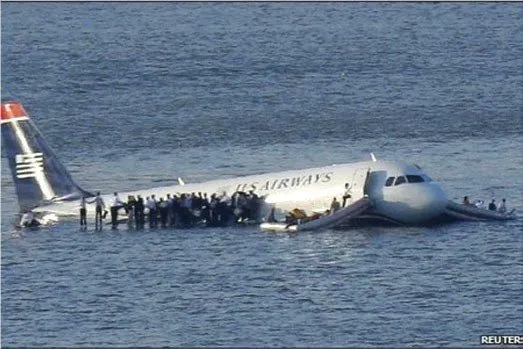
An engine failure is said to occur, when the engine fails to produce thrust because of a malfunction. Flight: US Airways Flight 1549, New York to Seattle. Aircraft: Airbus A320. Date: 15 January 2009. Three minutes into the flight, the aircraft reported loss of thrust on both engines because of a bird hit. Captain Chesley Sullenberger, in command of the plane, reported he couldn’t turn around to land and instead proceeded with a forced water landing in the Hudson river. All aboard the plane survived and the crew was later feted with Master’s Medal of the Guild of Air Pilots and Air Navigators. The incident is famous as the “Miracle on the Hudson”. Lives lost: 0 | Survivors: 155
4. ATC goof-ups
The ATC guides inbound and outbound aircraft to avoid collisions. But it doesn’t always go by the book. Flight: Aeroflot Flight 892, Minsk to Berlin. Aircraft: Tupolev Tu-134A. Date: 12 December 1986. The ATC cleared the plane for an ILS landing (guided), but during the approach, the lights for another runway were switched on. The controller warned the crew about it being a test, but was misunderstood as a go ahead for landing. Lives lost: 72 | Survivors: 10
5. Terrorist threats
Apart from mechanical failure and pilot errors, terrorist threats and sabotage are a very real possibility. And this isn’t a new phenomenon either. Flight: Air India Flight 182, Montreal to Delhi. Aircraft: Boeing 747. Date: 23 June 1985. Militants of the Sikh terrorist outfit Babbar Khalsa blew up the jumbo jet mid air and it crashed into the Atlantic. This attack was in retaliation of the Indian Army’s Operation Blue Star at the Golden Temple. Of all the victims, only 132 bodies were recovered. 197 were lost at sea. Lives lost: 329 | Survivors: 0
Some of the names have been changed on request.
From the September 2014 issue of FHM India.
Spotted a mistake, or your photo used without permission? Report a correction













 in your inbox