
18 Essential Indian Rides



We walk down memory lane and take a dig at the most Indian automobiles of all times...
Reminiscing the liberating days of Indian Automobile history, team FHM scouts for the best known indigenous cars, scooters, bikes and off-roaders that were produced in India. Referred to as a closed economy at that time, these automobiles brought about a revolution in the automotive industry in their own sense. While the first car hit the Indian roads in 1899, it took another 50 odd years for the embryonic automotive industry to emerge from its shambles. The next 40 years saw the rise of various home-grown and licensed brands trying their luck to make a deeper impact here, with the eventual rise and growth of foreign automobile brands ultimately leading to the establishment of an automotive industry in India.

HM Contessa: The real gangsta ride!
A lot of you wouldn’t know this fact about Contessa, but when it was introduced in 1983, it was one of the few luxury cars available in the market. Based on the GM Vauxhall Victor FE, which was produced till the year 1979, the Contessa was a hugely popular car amongst the rich and famous of the time owing to its elaborate looks and grandeur outlook. Upon its initial release, the mass market was left awestruck with its roomy interior and plush looks.
Initially introduced with the underpowered 150 HP 1.5 L petrol engine borrowed from its cousin, the Ambassador, the Contessa was later introduced with a high performance 2.0 L turbo diesel engine, which helped rev up its sales and catapult its popularity in the niche segment as a forerunner. The car was, and is still considered by automobile aficionados, as the only ‘real muscle car’ of India, owing to its rear-wheel drive platform and coke-bottle styling that could be perceived as reminiscent of American Muscle cars of the 1960s and 70s. There are still a handful of these mean machines still out there in their original condition, and the lads at FHM are dying to get their hands on one of these.
FYI: Production: 1984–2002
This was the first Indian made vehicle to have vacuum assisted disc brakes

HM Ambassador: Destroy the planet in style
The Ambassador can be easily addressed to as the ‘Blue Eyed Boy’ of the Indian automobile industry. Ever since its inception in 1958, the car has passed hurdles harder than what Usain Bolt has faced. Based on the Morris Oxford Series II platform, the Ambassador has been a true loyalist to Indian government officials amongst other important personnel. Initially built on the flathead (side valve) engine specs, the car was later improved to an overhead-valve engine, which established it as a much more stable and powerful car. Upon its release, the car was recognised as a big spacious car owing to its enclosed monocoque chassis, which stood out as quite a revolution at that time. The dimpled hood, completely redesigned dashboard and chequered grill became iconic symbols that helped it emerge as a car mass-produced for the longest number of years with minimal design changes and on the same assembly line (Uttarpara,West Bengal) in the whole world. The silver model is still one of our favourites and we are religiously looking out for the same, so in case you spot or find one, do drop us a mail. We shall thank you profusely.
FYI: Production: 1958– present. The marvel product has been recently named as the best taxi in the world.
Jonga: The lone ranger of the Indian Army
This automobile wonder was quite a sensation with the Indian Army. It was inducted in the army in 1963 under an exclusive license from Nissan. The car soon gained iconic status and was modified to suit several military requirements such as working as a recovery van, ambulance and signal rovers. With high ground clearance and a 6 cylinder 4.0 L powerful engine, the car was a hit for all terrain performance and was referred to as a ‘bulletproof engine’. Delivering 110 BHP, the engine was one of the most powerful engines of the time with almost zero mechanical problems. The car was also showcased in many Bollywood flicks, often referred to as a family vehicle for hilly terrains. It still enjoys high respect and status in the Indian Army, as till date there has not been a true substitute for it. Ironically, it went out of production in 1999, with the Indian Army then resorting to the Mahindra 550 and Gypsy King.
FYI:: Production: 1965-1999. Jonga was an acronym for Jabalpur Ordnance and Guncarriage Assembly.
Tata Nano: Tata’s underwritten dream
Touted to become the common man’s car, the Nano dream was conceived with the intent of making the cheapest four wheeler passenger car of the world. A reluctant price of ₹1 lakh was widely touted for the Nano, which after its launch has continuously risen, albeit still boasting the tag of the cheapest car available. The dream project’s commercial viability came tumbling down after the manufacturing plant controversies, first in Singur West Bengal and then in Gujarat. The car’s relatively large ambitions were to expand the nation’s car market by a whopping 65% after its launch, which still widely remains unachieved. Targetted at the segment of two-wheeler segment riders, the car received underwhelming response with more misses than hits with the only considerable positive being its toppling of the sales of its closest competitor — Maruti 800 by an estimated 20%. Since its launch, the demand for the car has been steady at 70000 units/fiscal year, which is still miles away from Tata’s ambitious capacity to produce more than 250,000 units/fiscal. Today, the Maruti 800 is gone but the Nano still lingers on.

FYI:: Price: ₹1,50,000. Ever since its launch, the car’s prices have steadily increased to more than 50% of the initial marked up price.
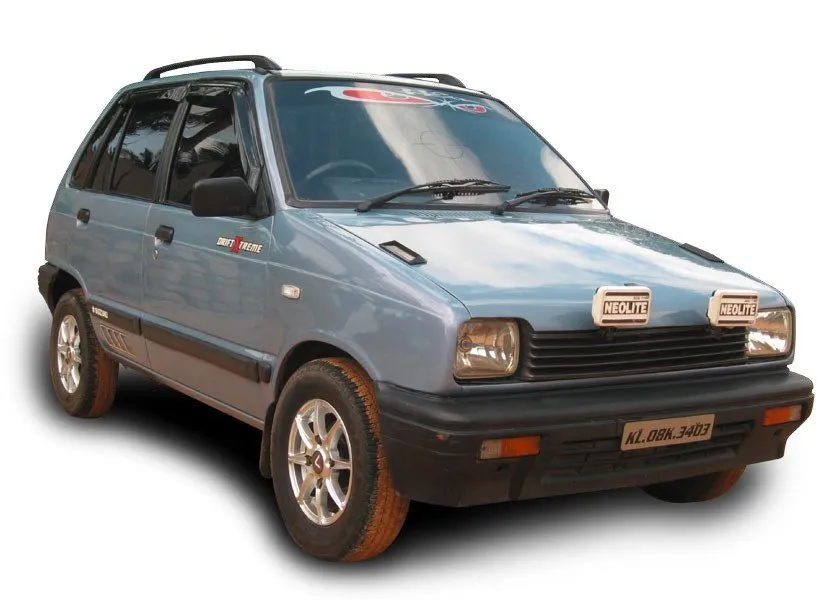
Maruti 800: Sanjay Gandhi’s only viable dream
The Indian automobile industry exploded with the launch of this car. Selling more than 2.5 million units, the car enjoyed immense popularity and success in its close to three decades of functioning. The car was based on Suzuki’s Model ‘796, which was one of the most successful entry level cars in the eastern part of the world. Positioned as the people’s car, Maruti 800 had a long uncontested pole position and played one of the most important roles in liberating the automobile industry in India. The car was launched in 1984, and underwent many facelifts before coming to a complete halt in April 2012. For those who owned the car, it was not Maruti but ‘Dinky’ —the small car, which changed the automotive landscape long dominated by Ambassadors and Premier Padminis. Owning a 800 became a status symbol and the car became the cynosure of all neighbourhood conversations. When the company decided to take bookings in the 80s, with an advance of ₹10,000, about 120,000 customers put their money in the pre-launch phase. It also brought out a sense of competition amongst the middle class, which was a rarity considering the socialist environment prevalent in the eighties and early nineties. The 800 also replaced the Bajaj scooter as the dream vehicle of the Indian middle.
FYI:: ‘The Maruti Story’ co-authored by Maruti-Suzuki chairman R.C. Bhargava shares the behind-the-scenes manoeuvring that went into ensuring the company’s success.
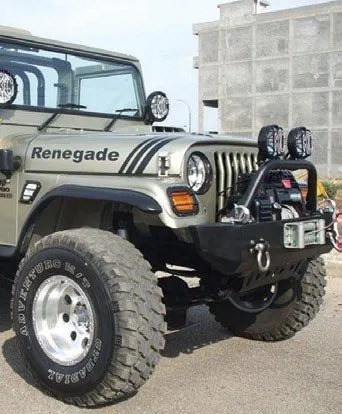
Mahindra Classic: Made off-roading appear easier!
Once the quintessential World War II Jeep, after the Willys had finished with the war and done their victory dance, the manufacturers decided to build civilian versions of it. Grabbing the opportunity, Mahindra and Mahindra decided that the Willys wouldn’t do too badly back home either.
Our roads were perfect for what the Jeep was designed for and the CJ3B variant would be ideal for armed forces, policemen, and of course, civilians. M&M had taken a distributorship to assemble and sell the Jeep in India in 1949, which came to a complete halt in the late 90’s. The Mahindra Classic was not your average jeep, although it has been out of production for almost a decade. With its short chassis, multi-gear 4x4 and powerful Peugeot engine, the Classic was built for tackling far tougher terrains than simply the ruined roads of rural India.
Stripped of its canvas hood, it looked more like a steel fist of naked aggression than anything else. The Classic was however taken down the production line after the company introduced the Thar, which by far not only failed to impress off-roading enthusiasts but also failed miserably at selling in big numbers.
No matter the form, colour, or engine specs, the Classic can be modified and fabricated in various styles to suit one’s elegance or ruggedness.
For us, the Classic is by far the alpha male’s one of the top must haves, and we did manage to find a couple of schmucks who wanted to sell it to us for a couple of lakhs.
FYI:: Though out of prodution, you can still go for a second hand car for a mere 2-3 lakhs. Also, we recommend you get the registration done from Punjab.
Two wheeled glory
Five iconic two-wheelers of those times.

Yezdi 250 Forever gone By far the most iconic two-wheeled workhorse. The bike also won a lot of accolades in rallies and championships in its nearly two decades of production.
Yamaha rx 100 The working class hero This 98cc’s completely knocked down units became a staple in every household in India after its 1985 launch.
LML Vespa New Fashioned Scooter The Italian brand made quite an impact in the bustling two wheeler segment in India with this 150 cc two stroke Italian scooter.
Lambretta LI From Milan with love The API found unprecedented success in this retro class scooter with production peaking in the year 1980-81 with around 35K scooters being built.
Rajdoot 350 The Powerhorse This licensed copy of Yamaha RD350B was a tamed powerhorse, which didn’t see much commercial success due to its heavy maintenance and high fuel consumption.
Others who left a mark...
These are the other indigeneous automobiles that left a significant, or rather an insignificant spot on the industry.
Padmini Premier Seen as a luxury car, this marvel peaked from the 70’s-80’s and looked more modern in appearance, was more fuel-efficient and was very easy to drive.
Tempo MATADOR The first family car or rather an extended family car, this marvel made a big impact and replicated the utility of bigger buses and trucks. Remember your primary school days?
Maruti Gypsy KING This 4x4 was positioned as a vehicle for rough unprepared roads, as it offers neither the ride quality nor an interior comparable to that of a modern SUV.
Tata Sierra It’s claim to fame – the first automobile to be fully designed and produced in India and also the first diesel passenger vehicle to be commercially accepted in the country.
Maruti Omni Highly popularised through Bollywood movies as the vehicle for abduction, explosion sequences, rape and other inconsiderable deeds, the car will complete three decades in production next year.
Premier 118Ne Another one from the devil’s den, this car was showcased as the devil’s ride in Bollywood for a long time before actually going bust.
Tata Estate The car was considered fairly advanced during its time, boasting of fancy features like power windows, power steering and a tachometer. The underpowered engine led to its untimely decline.
From the August 2013 issue of FHM India.
Spotted a mistake, or your photo used without permission? Report a correction





 in your inbox