
FHM Hero: Robert Englund, the man behind Freddy Krueger
For more than 30 years, the metal claw, battered fedora and burnt face of Freddy Krueger have haunted people around the world. FHM meets Robert Englund, the man behind horror’s most famous mask…


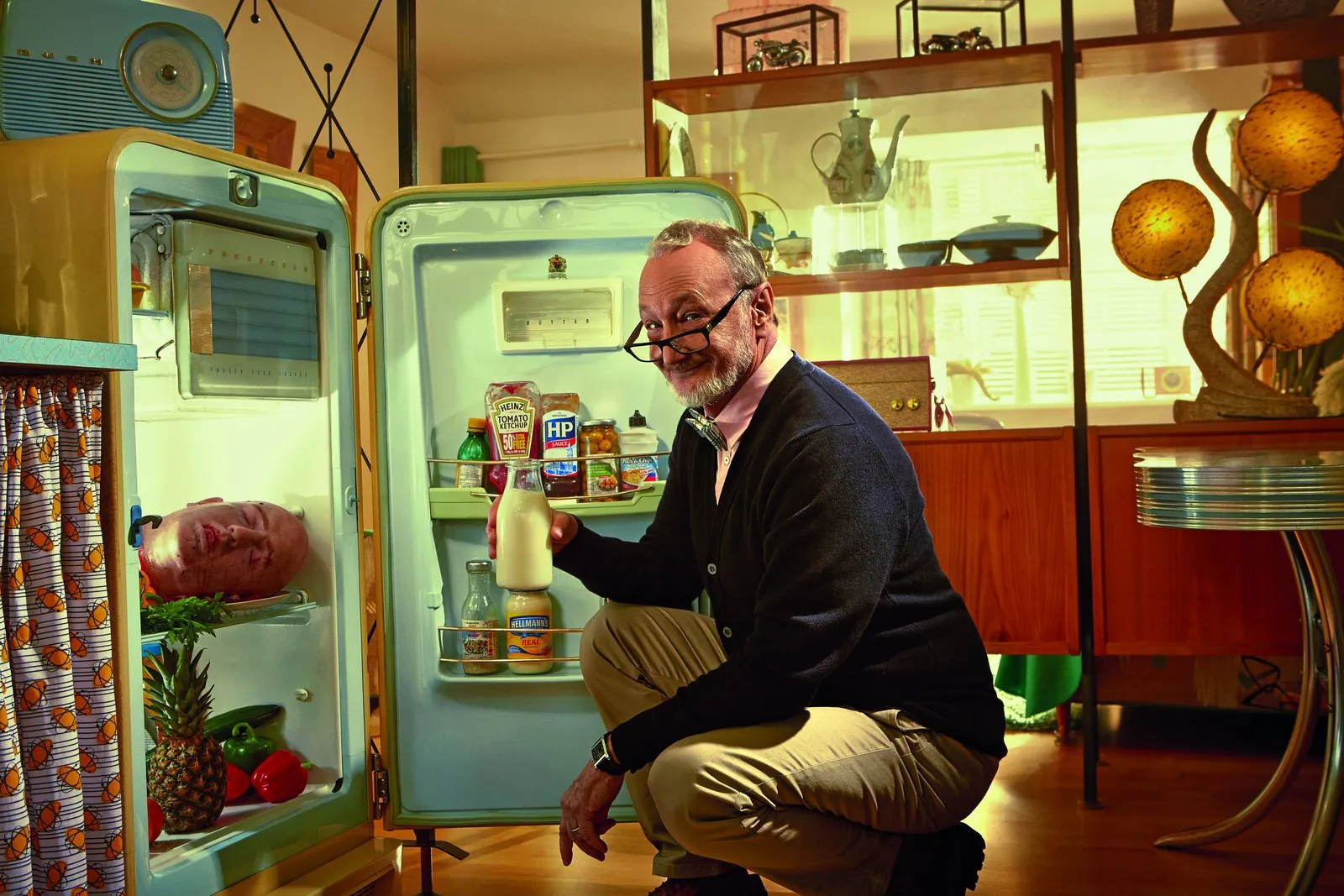
No wonder A Nightmare On Elm Street’s Freddy Kreuger had a temper: he was always one of life’s runners-up. For one thing, the melty-faced serial killer only had the second-best fedora hat in cinema, after Indiana Jones. Dennis the Menace had a better stripy jumper. And he only had the third-best disfigured face, after Hellraiser’s Pinhead and Sloth from The Goonies.
He didn’t even have the best slasher claw; glueing kitchen knives to a gardening glove is never going to match Wolverine, whose claws are made out of the strongest substance in the universe (and we’ve only left out Edward Scissorhands because he didn’t slash anyone).

But, in spite of all those obvious insecurities, there is one thing Freddy Krueger can never be touched on by anyone: the fear factor. He is the most sadistic, bloodthirsty and psychologically terrifying villain in Hollywood history.
His secret? Creator Wes Craven, who died in August, must take his share of the credit… but it was actor Robert Englund who breathed life into Freddy. It was Englund who gave him that sneer, that lurching gait and, of course, that nose.
Between 1984 and 2003, Englund’s eight spine-tingling performances as the Springwood Slasher have made moviegoers in their millions unable to close their eyes at night without hearing Englund’s chilling purr, “One, two, Freddy’s coming for you…” oday, we’re sat with Englund in the back of a taxi en-route to the photo shoot on these very pages and Robert’s discussing the secret to Freddy’s fear factor.
“He’s playing the most intimate mind game,” Robert says. “Because he exists in your subconscious, he knows your most inner thoughts – your sexual fantasies, your fears, your diary, what you’ve hidden in your underwear draw. And he’s in there sifting around, toying with your dreams like a cat with a half-dead sparrow.”
But it is Freddy’s sense of humour, Robert believes, that makes him truly terrifying. “At the end of the scene I might gut some poor child, give him a kiss of death and let him cling to my body as he slowly drops to the ground,” he says with relish. “Then I might prop him up for a second before I discard his dead corpse and say some pithy one-liner.”
Most memorable is perhaps the scene in the third Elm Street instalment, Dream Warriors, when wannabe TV star Jennifer notices Freddy’s face appear on television. The TV suddenly sprouts arms and slams her head into the screen with the words, “Welcome to primetime, bitch.”
Now, the man that unleashed modern horror’s most infamous slasher into suburban living rooms is looking extremely chilled. His black V-neck T-shirt and multiple pendant necklaces give the 68-year-old an air of a seen-it-all rock star. His mellow tan betrays his love of surfing the waves that roll in just minutes from his California home. He regales us with tales of drinking wine with Hollywood greats while demonstrating an encyclopaedic knowledge of cinematic and theatrical history. He is, after all, a classic thespian.
Only Englund’s eyes, that burn brightest when he raises his voice to hammer home a point, let out the Freddy inside him. “In killing teenagers, Freddy is literally killing the future. I love that,” Robert tells us. “I love the simplicity. There is something darkly poetic about tha … THERE!” he barks, cutting himself off. “There he is! Freddy Krueger’s walking right there!”
Today, Robert’s ‘Freddy’ is a heavy-set man strolling alongside the road in a striped red and green rugby jersey. You’d see Freddy everywhere too, if playing him had defined your career across an epic nine films. The Elm Street franchise has made almost $500 million worldwide at the box office; has been credited with saving New Line Cinema from bankruptcy (the studio that gave us The Lord Of The Rings); launched the career of one Johnny Depp; and has broken free of the film world and infiltrated music lyrics (everyone from big time American rappers like Lil Wayne and Wu-Tang Clan to, er, Oxide & Neutrino), video games (Mortal Kombat) and primetime cartoons (The Simpsons, South Park, Family Guy – even My Little Pony). “Then there was the entire day I had dedicated to me by the Mayor of Los Angeles,” Robert adds to our long list of Freddyfications. “I was presented with a proclamation and it was Freddy Krueger Day, which was just bizarre. Oh, and I saw an all-female lesbian stage production of A Nightmare On Elm Street in a bar in Melbourne once, too. They were unbelievably hot girls.” The fame, the money, the movies, the sexy Australian lesbians – it’s baffling. It makes sense for a pretty-faced pop sensation like Justin Bieber, or legends like The Beatles, to have all these things. But a serial killer with a melted pizza for a face? In short, Robert Englund has created a monster like no other: one that frightens and fascinates in equal measure, and that still has its claws well and truly embedded in the psyche of popular culture worldwide.
Qualifying Freddy Krueger’s legend is easy. You already know what you’d have to cobble together to dress like the Springwood Slasher when Halloween rolls around later this month: one red and green striped jumper, a battered fedora, a razor-sharp claw on one hand, a latex mask. His image is burnt on to your brain with a red-hot branding iron. But to get to the bottom of Freddy’s success, dissect him, and ultimately discover what Robert Englund brought to the character that nobody else could, we need to go back to 1984, to a room full of beautiful people, feelings of inadequacy and one hell of a lot of lube. Freddy was born in a dark place.
“It was a bad day,” Robert recalls, revisiting his second week of shooting the first film in the Freddy franchise, A Nightmare On Elm Street.
“It was summer, I’d been on set since 5am, I was hot and itchy, and I was getting some touch-ups to my mask,” he explains. “I remember walking into the make-up room and Johnny Depp [who played Glen Lantz] was in the best chair with Heather Langenkamp [Freddy’s nemesis Nancy] in the second, while I got the crap chair.
“Here are arguably two of the most beautiful-looking actors in the world at that time. They’re sitting there, looking pretty, with the make-up girl holding tiny fans to their faces to cool them down, while I’m getting basted in KY jelly.
“I looked over and wondered if I’d really made the right choice doing this movie. I looked at those fucking beautiful, talented kids, knowing that they had an incredible future ahead of them. I was envious of their youth, perhaps a little jealous, and I remember thinking, ‘I can use this. I can use this feeling on the set.’ I recalled that jealousy and envy and feeling old and self-doubting myself to play Freddy. That’s what really gave me the key.”
CREATING A MONSTER ith Freddy’s inner demons in place, the horror began. He slayed his victims across eight films in bizarre, bloody, and often bonkers ways, from Tina Gray’s grisly and gravity-defying death-on-the-ceiling, to the ridiculous video game massacre of Spencer in 1991’s Freddy’s Dead: The Final Nightmare.
Unfortunately for the cast and crew, Robert’s reign of terror would take place on both sides of the camera.
“Robert relished being evil,” said Elm Street director Wes Craven in 2010 documentary Never Sleep Again, a four-hour investigation into what made the franchise so successful.
“What I think he meant is that after three or four of the movies, I became worried that I wasn’t scary any more,” Robert says. “I had to check I hadn’t lost it. So I’d lurk in shadows behind the set until some roadie came for a cigarette. Then I’d move into a shaft of light and growl at them. It never failed to make them shit their pants. I got one guy really bad. He was a big guy and I think I might have given him a little heart palpation or something. But I needed that. I needed to know I was still scary.”
If you’re in any doubt that Robert ‘still has it’, get yourself down to one of the many conventions he attends every year. Always the headline attraction, he’s scrawled his autograph for endless queues of horror-loving fans, putting his mark on everything from original posters to female flesh.
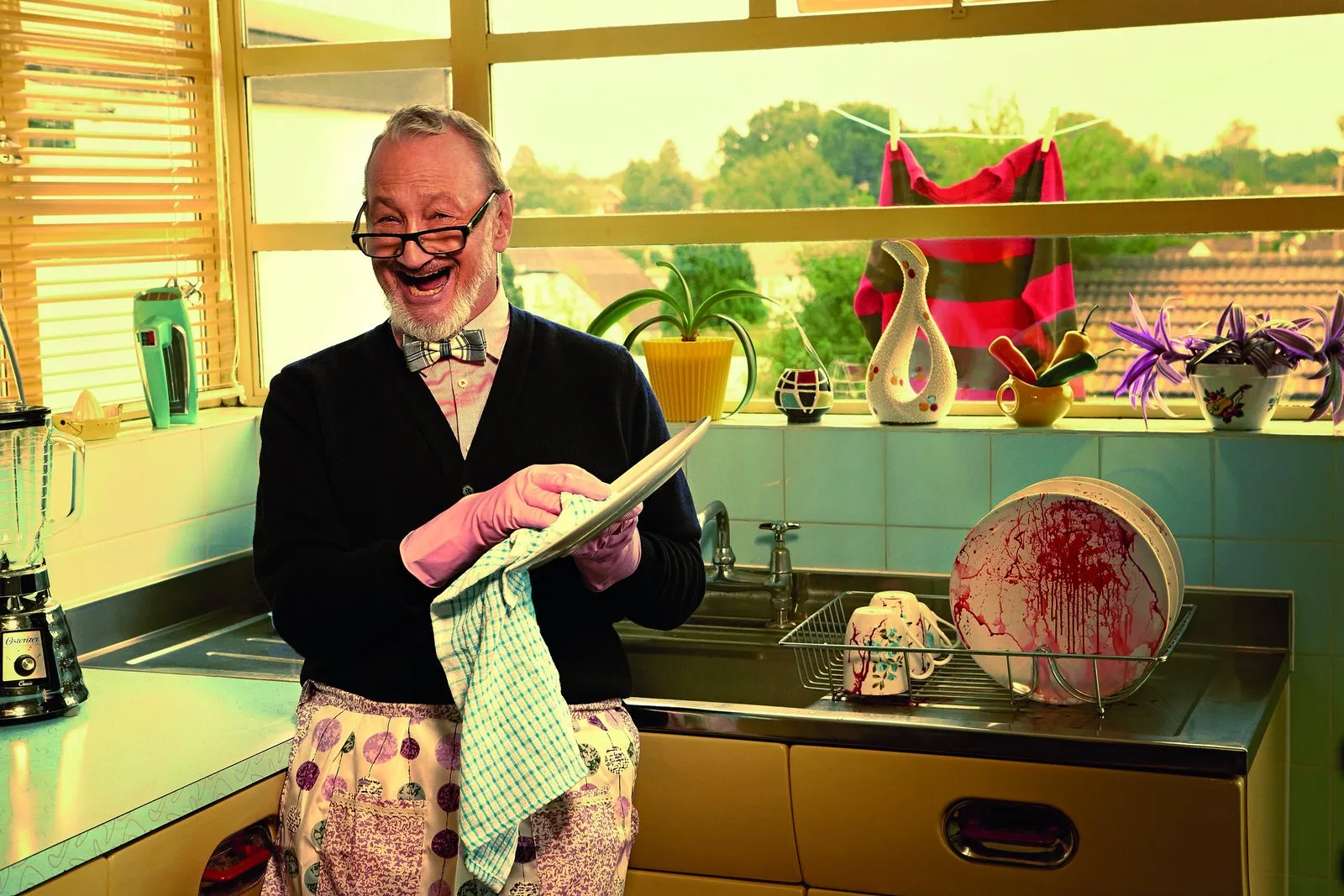
“I’ve lost count of the number of cleavages I’ve autographed,” he tells us. “I’ve signed an awful lot of women with tattoos of me on their breasts, asses or way, way up high inside their thighs. They sometimes then go off and get my autograph tattooed and come back to show it to me all bruised and bloody. That’s interesting. I still get hundreds of love letters, too.”
Freddy Krueger? A sex symbol?
“Y’know, a lot of women tell me they find Freddy darkly sexy,” he says. “I don’t want to say it verges on the kinky but there are girls who have sort of adopted Freddy as a dream lover. Some girls use him as a protector against other bad dreams and others actually have a sort of half and half – fear and titillation at the same time.”
LIVING THE LEGACY here is, of course, one drawback to the three-decade legacy of Freddy Krueger. Through the breast signings, the LA naming days, the fame, the fortune and the frights, lurking in the shadows is a phrase so feared by film stars that it can terrify even the bravest and burliest of actors. Unfortunately for Robert Englund, it’s a beast that has hold of him. He will forever be a horror actor. He can never unshackle himself from the Freddy Krueger franchise. Robert Englund has been…typecast. “What’s wrong with being a one-hit wonder?” he says, turning to us again from across the passenger seat, raising his voice and triggering our driver to glance back in his rear-view mirror. “What’s wrong with having the number-one song in the world, touring for the rest of your life, being able to play all the other music you’ve created? Look, I do know that I will always be That Guy Who Played Freddy Krueger. But I’ve used that to my advantage. I’ve changed that into becoming a go-to horror actor.” Before we can come back in agreement, reeling off various B-movie, arthouse and feature film titles like Hatchet, Fear Clinic and 2001 Maniacs that prove his career hasn’t been hindered by his famous mask, Robert’s already begun on his next anecdote and one that, for him, proves that this, all of this, is what he was meant to do.
“About 15 years ago I suddenly had this memory of going to my godfather’s house as a child. He had rooms and rooms of coffee-table books. I found one called Life Magazine Goes To The Movies. I opened it to Lon Chaney’s ‘man of a thousand faces’ pages. He played everyone, from the Mummy to Frankenstein’s Monster to the Wolf Man. I became obsessed with him and those images, in particular one with a hard-boiled egg over his eye to make it all milky and blind-looking. But after that I got into girls, surfing, cars, college, drama, and the Royal Academy, never wanting to do film and only do theatre, so that memory became suppressed. But of course I wanted to fuck around with make-up. That desire was somewhere in me, albeit buried. That’s what made me say yes to Wes Craven and doing Freddy.”

So is he really happy to be remembered only for a single part and not the countless other movies he’s appeared in over the years? He cackles. “Not only was Freddy a wonderful character to play, but he made me an actor who works all over the world. I cannot begrudge that. Some actors famous for one character may call it typecast… for me, Freddy was a gift.”
Freddy’s Halloween playlist
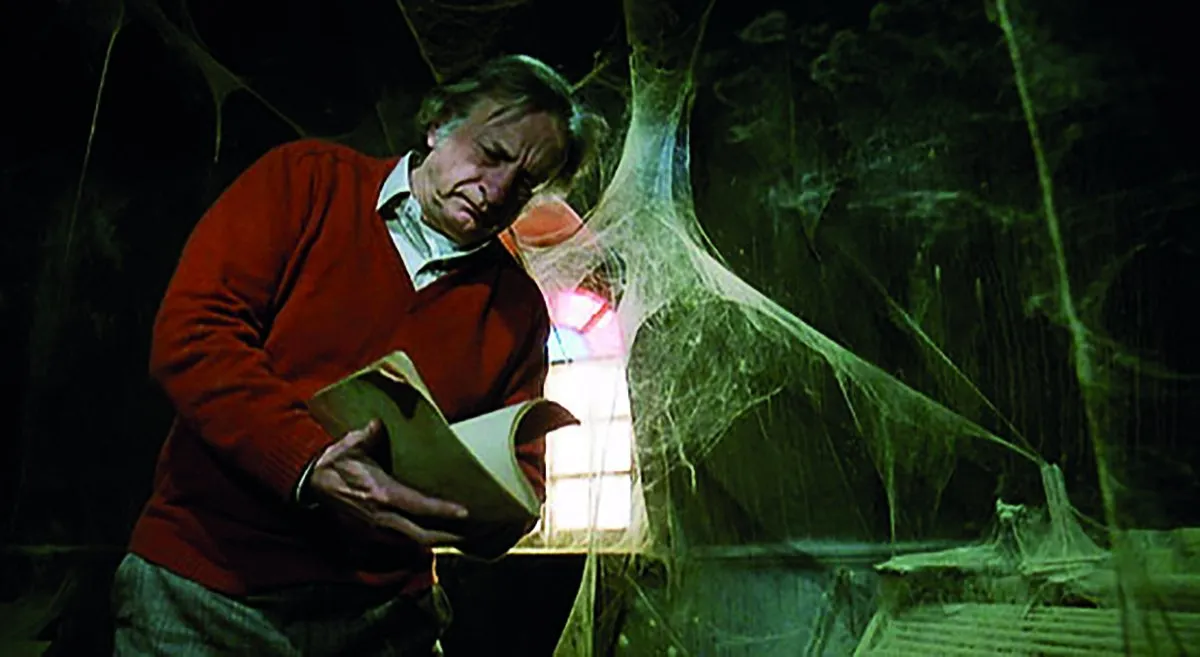
Sisters (1973) What the devil hath joined let no man cut asunder
“It stars Margot Kidder and William Finley as the greatest ever mad scientist.”
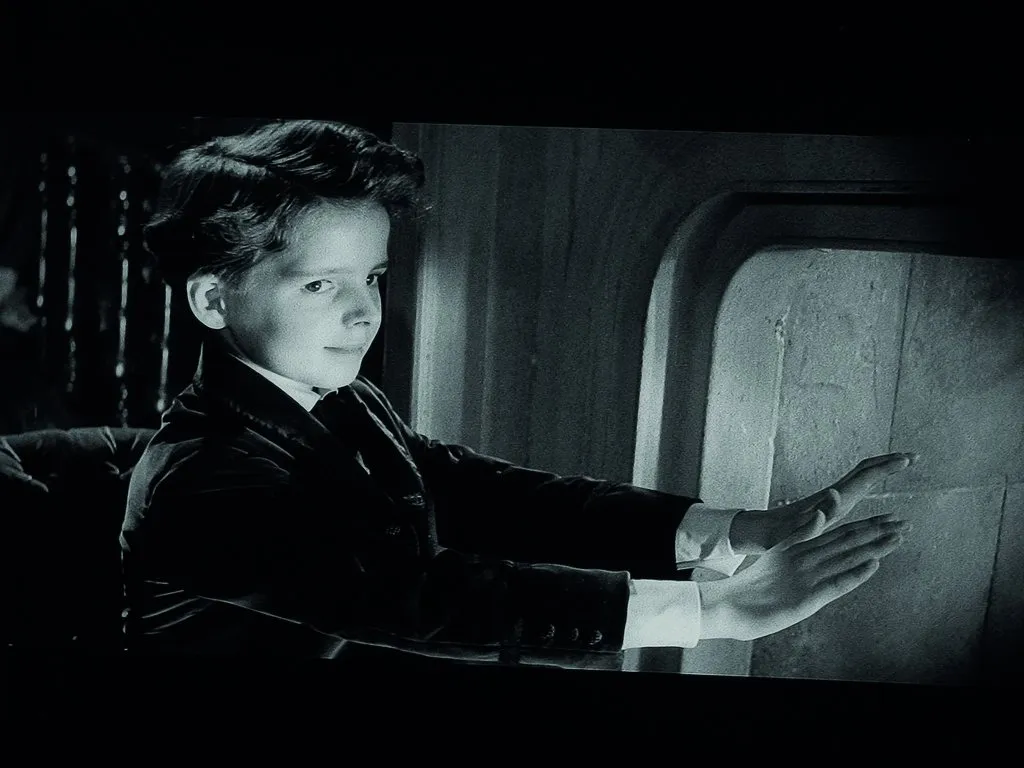
The Innocents (1961) A haunting tale of terror!
“It’s a really old school black-and-white horror with some brilliant child actors. So creepy.”
The Changeling (1980) How did you die, Joseph? Why do you remain?
“It’s just such a great little horror film, and George C Scott is fantastic in it.”
From the December 2015 - January 2016 issue of FHM India.
Spotted a mistake, or your photo used without permission? Report a correction







 in your inbox