
FHM's Guide to the Races: Betting on Horses Without Going Broke
The complete guide to horse racing in India: the Derby, how to bet ten rupees, forecasts, quinellas and jackpots, reading the odds, buying a horse, and the champion jockeys to follow.



Beginner’s guide
Horse Racing in India owes its rich heritage to the British. Today, there are turf clubs in Mumbai, Delhi, Kolkata, Hyderabad, Bangalore, Poona, Mysore, Chennai and Ooty, so you don’t have to go too far for that bet. In the last few years money attached to horse racing has increased exponentially thus pulling more and more people to the tracks - for the money and fashion. The sport itself has gone through a lot of transition and has become far more professional. Today India is a popular destination for foreign jockeys to come and participate in races. This season there are more than fifteen foreign jockeys riding in India. But what has really changed is the attitude of the people. Once known as ‘The Sport of Kings’ the track has become the playground of the plebians. But truth be told, the art of blowing up money on a 30 second rush is something every man should try at least once.
What is the Derby?
The Derby is the richest race run in India and has been sponsored over the years by Dr. Vijay Mallaya owned McDowell’s group and is run traditionally on the first Sunday of February every year at Mumbai’s Mahalaxmi racecourse. A horse can only run in the Derby once in his lifetime at the age of four. The prize money to win the Derby was a whopping Rs 1, 30, 00,000 this year!

First time?
Let’s say you have ten-rupee note in your pocket and plan on squandering it on a cigarette and a cup of chai. That may be great but wouldn’t you want to rethink your options if you found that even a ten-rupee wager could fetch you upto a 100 bucks (more if you bet on a lame horse that went on to clinch the race). The minimum bet you can place at a course is as low as Rs 10 and the maximum limit depends on the depth of your pockets and your fortitude.
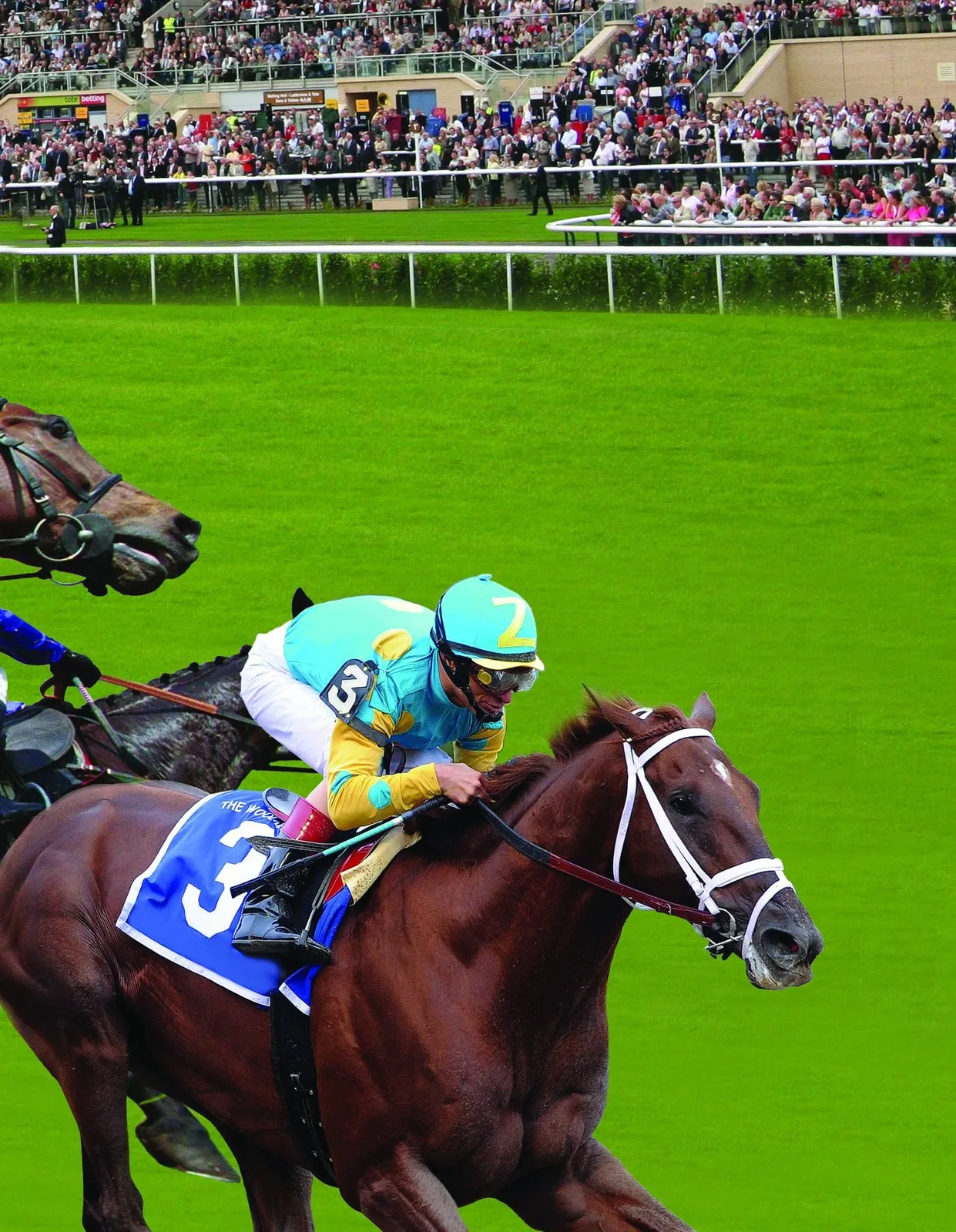
More importantly, horse racing offers a number of innovative ways to bet and win. Those not familiar with horse racing can win not only by predicating who’ll come first but also by predicting the one that will finish second. All you have to do is head to the tote-betting window and single out a horse, which you’re certain will finish second. This is known as the “Second Horse Pool Bet”.
Returns on a Rs 10 bet
Forecast: Correctly predict two horses that will finish first and second in the correct order to win.
Quinella: This pool is similar to forecast but with a twist. You need to predict first and second finishers in either order for the bet to materialise.
Tanala: Correctly predict first three finishers to get the returns. But you can still win a consolation amount if you call the winner correct but the next two finished in either order. Say you had predicted horses nos. 7, 9, 2 to finish in that order. You get consolation even if the results turn out to be 7,2,9.
Jackpot: In order to win the jackpot, you have to pick the winners of five races in a row. Pay offs are huge but so are losses.
How are odds calculated?
First, learn how to read the tote board. It’s a large board that lists the odds for upcoming horse races. The tote board displays horse’s number, the race, and its current odds.

The odds on a horse can change in minutes as money is placed on the various horses before the horse race. For example, if you see a horse with odds of 2:1, it means that for every rupee you bet on that horse to win the race, you’ll win two rupees. Larger the odds, the less likely it is that the horse will win.
When the horse you bet on wins, you also win back your stake. So, if you bet Rs 100 on a 2:1 shot you get back your Rs 100, plus your win of Rs 200.

How to buy a horse?
Chulbul Pandey, a three-year old bay coloured colt shows the same promise as the original owner of the name.
Sharan Makhija, one-third owner of pandey runs an advertising agency in Bangalore and feels that aren’t many better investments.

The prize money in horse racing has gone up exponentially. The Poonawala Breeders multi-million race, for example, had the winner pocketing Rs 60 lakh. Even a better than average filly one has a good chance of winning smaller competitions to earn up to ten lakh per race and a prize of upto Rs Rs 1 crore in a Derby.
Characteristics of a champion
- Investigate the genetics. While there are no guarantees that the progeny of two champion thoroughbreds will be a champion, it’s always a good place to start. So check your horse’s family tree before making the purchase.
- Examine the horse’s muscular structure. A strong Thoroughbred is highly muscular with toned contours. There should be no evidence of uneven bulk in its body. It’s an indicator that the horse wasn’t properly cared or trained in its early years.
- Carefully observe the horse’s movement and gait. The gait of a potential champion will be fluid and graceful while still being strong. Strong thoroughbreds also gallop with longer than average strides.

Drug tests
When as many as nine horses tested positive for banned substances at the Bangalore Turf Club on December 29 last year, the shock that spread through turf clubs was palpable. Owners cried foul, threatened to disrupt the races and conceded only when authorities agreed to a second round of tests.
Whip controversy
Recently, jockeys have found themselves getting penalised for whip-overuse. During the final stages, when jockeys start cracking the whip to remind the horses of the urgency of the task, they have to keep a count of the number of hits. If it crosses eight, they will be penalised. A ridiculous rule say the jockeys. PETA unfortunately for them doesn’t agree.
Champion jockeys
Suraj Narredu: Born in 1985 he has already reserved a berth in India’s hall of fame for Jockeys. Suraj Narredu last year became the youngest Indian to ride 1000 winning races. The 1000th win came when he rode his favourite ‘Becket’ to victory in the Nizam’s Gold Cup in Hyderabad.
Christopher Alford: Christopher Alford the champion of Calcutta, spent 16 long years honing his craft to finally reach the milestone of 1000 winners. He started at the age of 18 and as an apprentice January 1995.
Silvestre De Sousa: The former champion apprentice from Brazil is rapidly becoming the jockey to watch out for in India. It took him less than a year-and-a-half to cement his place in the Indian Derby and in the 2011 turf season rode to a string of 60 winners. He won a 44-1 triumph in the $250,000 Indian Derby in Mumbai last spring.
Most wins
Vijay Mallya: The King of Good Times celebrated his string of 100 victories for the second time in 2009 in Calcutta Oaks. In 1996 he had raced with a huge stable of 140 horses to achieve the feat. 2009 saw him compete with just 82 horses, making it the more significant win of the two.
From the May 2011 issue of FHM India.
Spotted a mistake, or your photo used without permission? Report a correction









 in your inbox