
Graphic Evolution
As 4K gaming and 144z displays start becoming the norm, it’s the best time to upgrade your graphics for the optimal experience.



It is no breaking news that computing and graphics technologies have taken great leaps in the previous decade alone, that dwarf the accomplishments and imaginations of previous generations. The new developments have allowed desirable traits like ultra-high-quality graphics and top-tier computing performance to become not only commonplace but also affordable. We’ve seen the impact of this in a variety of fields, enabling dozens of new competitors to crop up, thus also increasing the variety of options. Yet somehow, the graphics card segment has gone in the opposite direction, with only two companies, Nvidia & AMD, dominating the space with their multitude of offerings. The only other name big enough to stand in the conversation is Intel, but they have abandoned the video game community for all intents and purposes, focusing mostly on integrated graphics for low-cost laptops with no dedicated graphics hardware.
This in no way means that the competition has ended, as both companies have been striving to outdo the other with newer technologies and performance upgrades. Nvidia has maintained their dominance with the 12nm Turing architecture for quite some time, but AMD’s latest 7nm processors seem to be just the foil and the benchmark of future products. Both companies are waiting for the latest RTX-supported games to prove their versatility. At the same time, the prices of good quality 4K panels, as well as high-refresh-rate displays, have finally become low enough that the next big jump in graphics doesn’t seem so unaffordable for the layman. With both companies going head-to-head in almost every price range, let us take a look at the different options you can get, for your dream gaming setup.

Radeon RX 590

AMD has long been the preferred choice for budget consumers, and at a starting price of `17,000, you certainly can’t get a cheaper graphics card that can deliver this level of 1080p performance. Even though it is an older generation 12nm Polaris GPU, it easily matches, and often beats the more expensive GTX 1660, with a smooth average of 50-60FPS in most games set at 1080p-Ultra settings. This is the same level of performance you get from the newer 7nm RX 5500XT from AMD, even though that processor is priced higher due to being the latest generation. You can perhaps credit this to the high number of GPU cores (2,304), even though it loses out in both Base (1,469MHz) and Boost (1,545MHz) Clock. You will even come to appreciate the 8GB of VRAM, as newer games increasingly become memory intensive.
GTX 1660 Super

The 1660 graphics card has been a reliable performer for Nvidia in the budget space, so it was really confusing when the company released a Super variant within one year of its launch; especially when the only difference between the two is the addition of GDDR6 memory. But that is the effect of the recent AMD launches, which forced Nvidia to release something to match the new RX 5500XT. As a result, it is a slightly better version of an already existing product, with the same number of GPU cores (1,408), as well as the same Base (1,530MHz) and Boost (1,785MHz) Clock. You even get similar performance to the RX590, which is already cheaper than the 1660 Super’s starting price of `20,000. However, it is still the best bet for entry-level gamers who are comfortable with 1080p-60FPS setups and don’t want to jump ship to AMD just yet.
Radeon RX 5700XT
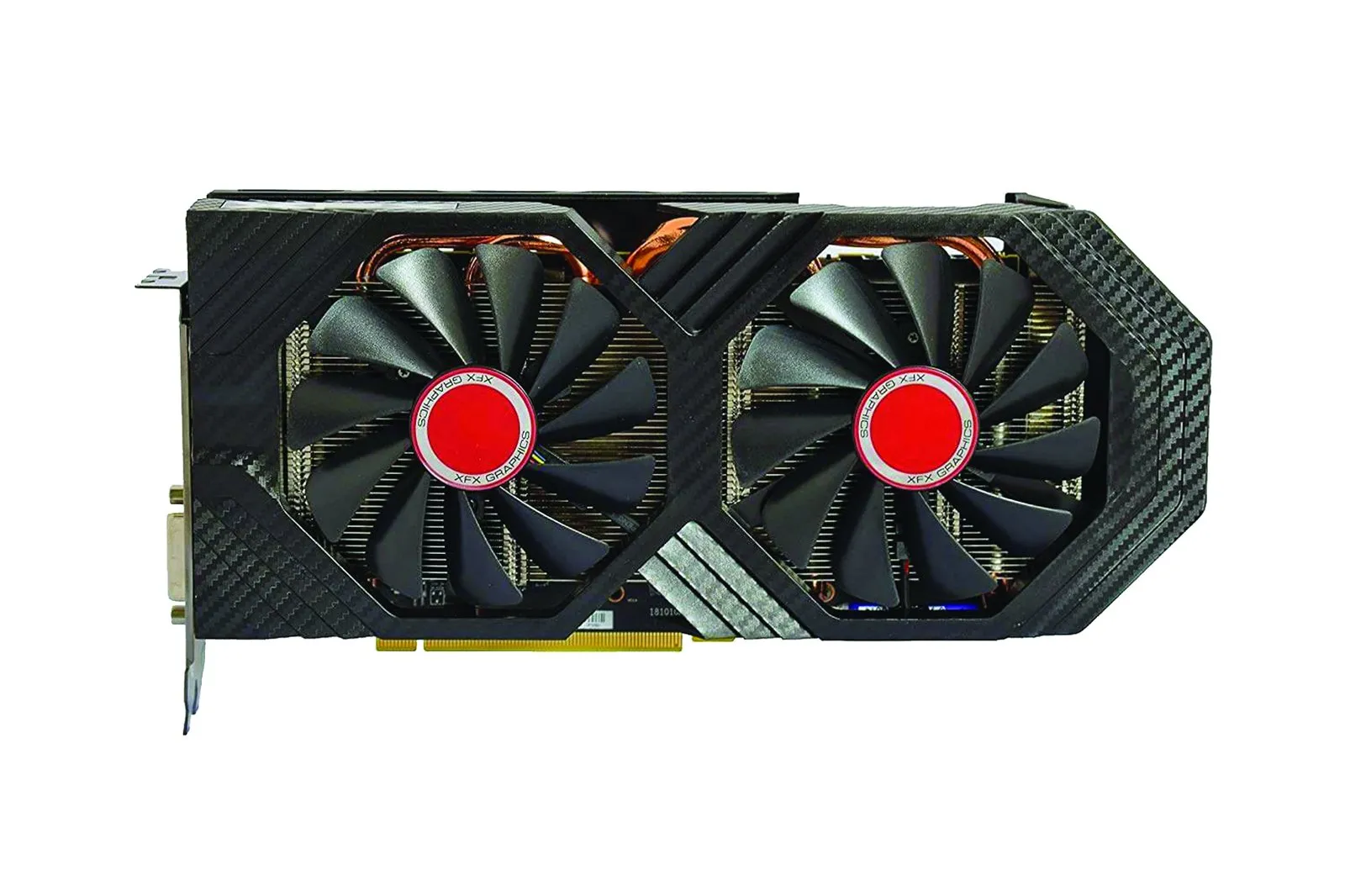
The emergence of the battle royale genre has led to a resurgence of shooter games. These titles rarely require high-end 4K graphics and latest ray-tracing technologies, as the experience relies much more on fast-paced gameplay that is much more affected by refresh rates and input lag. As a result, there has been a steep increase in the demand for 1440p monitors and 144Hz refresh rates displays, making them the new mid-level benchmarks of quality and performance. For this segment, the RX 5700XT is easily one of the best options, as it delivers a stable 60-ish FPS at 1440p, or a mind-blowing 100+ FPS at regular 1080p. Thanks to the new 7nm architecture, even in terms of GPU Cores (2,560), and Base (1,605MHz) & Boost (1,905MHz) Clock, it easily stands toe-to-toe with the RTX 2070 Super, while decimating the RTX 2060 Super. For a starting price of `37,000, we would certainly have appreciated the future potential of ray tracing, but for now, it is as good as it gets.

GeForce RTX 2080 Super
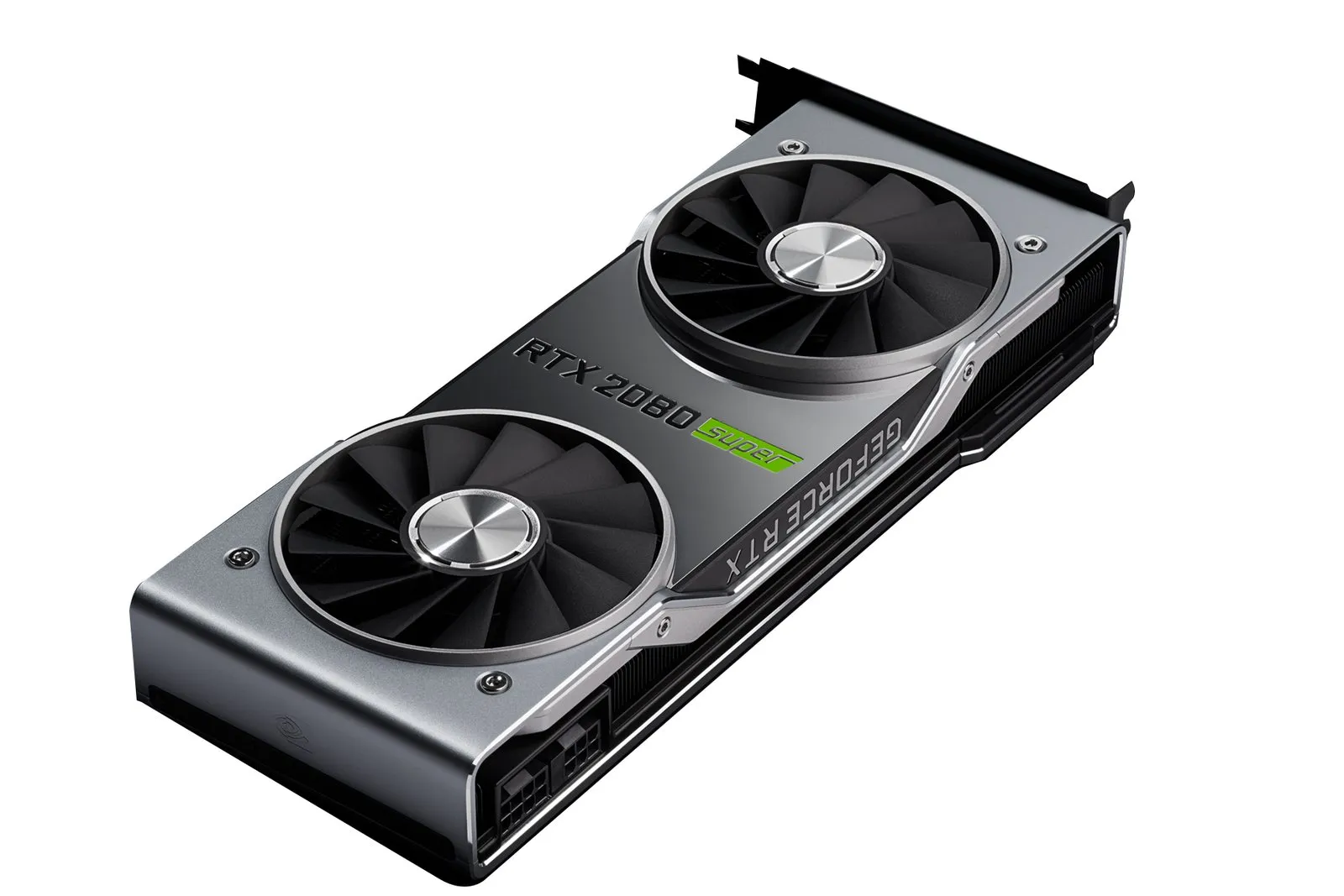
For people who want a proper 4K gaming experience, the RTX 2080 has been the preferred choice for quite some time now. With the launch of the Super version, a lot more people jumped on the bandwagon, thanks to the increased GPU Cores (3,072) as well as the Base (1,650MHz) and Boost (1,815MHz) Clock, and the surprising drop in price at just `66,000. You even got a minor boost in the memory bandwidth and the number of physical RT cores, which make it possible to sustain true ray tracing, even at 4K-Ultra settings. Sadly though, enabling that will also destroy your frame rates, as the card just isn’t powerful enough to manage a stable 60+FPS count at maxed-out settings. Still, not a lot of games support the technology right now, and for the rest, this card is more than capable of delivering a satisfactory experience.
Radeon VII

This is perhaps the only 7nm flagship graphics card on the market right now, with a performance level that matches the RTX 2080 Super. You can thank the larger die size for it, which allows more GPU Cores (3,840) even though the Base (1,400MHz) and Boost (1,800MHz) Clock fall just shy of the competition. The surprising thing is its ability to handle ray tracing without the presence of any physical cores dedicated to it. You can easily get stable 60FPS at 4K-Ultra settings in a lot of games, with lower resolutions featuring blistering performance in the excess of 100FPS. Even though it doesn’t get close to the top-of-the-line 2080Ti, there is still more than enough power to justify the `65,000 price tag. We’ll just have to wait for AMD to release their version of the Ti series, but until then, this is a good foil for the more economical 2080 Super.
GeForce RTX 2080Ti
This card is the reason behind Nvidia’s sustained dominance in the market, even though they are still on the seemingly dated 12nm architecture. In this card, they supplement that gap by adding RT (68) and Tensor (544) Cores that enable high-quality ray tracing, as well as AI-based anti-aliasing. All of this is backed by lots and lots of GPU Cores (4,352) and a somewhat disappointing Base (1,350MHz) and Boost (1,545MHz) Clock. The combination of these specs and Nvidia’s unique tuning makes this easily the most powerful graphics card in the sub-lakh rupee segment, even though it is much more expensive than the rest of the competition at `84,000. Thankfully though, the expense certainly feels worth it, when you are playing AAA titles at 4K-Ultra settings, and anything between 60-100FPS, even on 144Hz displays. This level of graphical prowess can only be seen to be believed. If this is the present benchmark for performance, we can only imagine what the future will be like, once Nvidia finally comes around to adopting the 7nm architecture.
From the February 2020 issue of FHM India.
Spotted a mistake, or your photo used without permission? Report a correction












 in your inbox