
Immortality: Five Reasons You Could Live to 1,000
Survive the next 30 years and you could live to be 1,000. Aubrey de Grey, Ray Kurzweil and friends on why disease, accidents, ageing and failing bodies may soon be beaten, plus smarter toys and weird science.
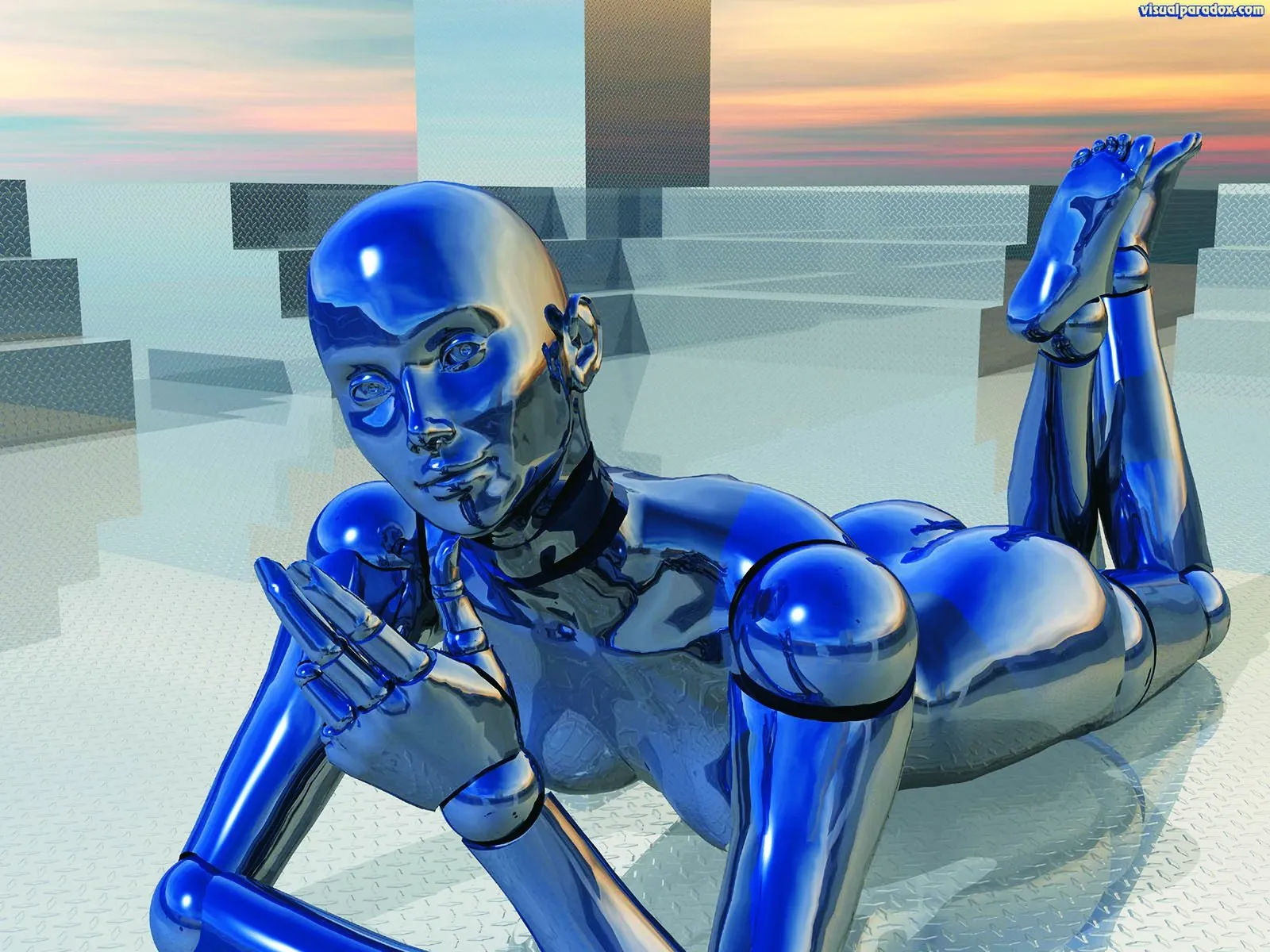



Great news! Survive the next 30 years and you could live to be 1,000. Why? Because by 2040 scientists will have five reasons you’re going to live to see bad sci-fi come true…
According to British scientist Dr Aubrey de Grey, the first ever person to live to 1,000 years old is already amongst us. Medical science, he says, is progressing at breakneck speed. And with science evolving so quickly, your day of death will get put back time and again. “All you have to do,” adds future-science expert Ray Kurzweil, “is survive for the next three decades.” Why? Because by that time, he says, we’ll have cured cancer and heart disease. “By then scientists will be able to stop your ageing process and stave off death.” In fact, he adds, research shows that by 2045, computers will be so advanced they’ll be able to reverse engineer our minds and bodies. Meaning that if we break down, we can just be repaired like old washing machines. “But I’ll just be an old bag of skin who’s lost his mind by that stage,” you frown. Not quite, smile FHM’s smart pals…

1 You’ll never die in an accident
In 2005, inventor Richard Palmer unleashed d3o, an impact-absorbing ‘flubber’. Today, it’s used in protective sportswear as well as by the MoD. As it gets thinner and more affordable, it’s going to be in clothing, meaning your chances of being killed in an accident will plummet. Giovanni Bisignani, head of IATA, meanwhile, says that by 2050 he sees a world where air travel will have “close to zero accidents”. And Mercedes-Benz is developing a car that won’t let drivers jump the lights. In fact, by 2060, experts expect all driving decisions to be made by a computer that can react a thousand times better than us. Cars that park themselves or maintain a safe distance while on cruise control are already available. Camera systems will likewise be used to detect pedestrians or cyclists, and trigger braking.
2 You will never die from a disease
“Cancer” is actually a collective term for over 100 different diseases, and currently more than Rs 30 thousand crore a year is spent on research to cure them all. But scientists are becoming wilier. In Boston researchers are developing a drug that strikes at a tumour cell’s Achilles’ heel then shrinks it, while at Baltimore’s Johns Hopkins University scientists are working on a personalised blood test that identifies tumour DNA before it even starts growing. And last year, scientists mapped out the complete genetic codes of two human cancers, predicting that by 2020 every cancer on Earth will be understood and their treatments tailored accordingly. Concludes De Grey: “Certainly in the next 100 years, perhaps sooner, all fatal diseases will be treatable.” One lab Dr Kurzweil knows of has already invented a robotic blood-cell-sized device that detects and kills cancer cells in the bloodstream.
3 Any body part will be replaceable
“Animals such as salamanders can regenerate body parts naturally,” De Grey says. “And we’re getting close scientifically to being able to re-grow limbs.” Over in Canada, Queen’s University’s Dr Brian Amsden is developing a technique where cells from a patient’s body are placed on an artificial limb that stimulates cell growth. This is then implanted on the body and biodegrades over time, leaving behind nothing but the patient’s own tissue. Amsden says this technique will be available within just ten years.
4 Your mind will become ever sharper
Why live to 600 if most of it is spent in a nursing home, thinking you were once the bassist in Bon Jovi? Luckily, scientists are on the case, citing stem cell research as the solution. “Stem cells are cells that give rise to a lot of other cells,” explains Dr De Grey. “These stem cells then divide so that one of the two resulting cells can be used to become other stuff. So as some cells in various parts of your body die as you age, these stems cells would now replace those dead cells.” Parkinson’s Disease, he says – and the stem cell research going into curing it – is a prime example of this process. “With Parkinson’s, one particular area of the brain is dying at an unusually fast rate. But stem cell therapy replaces those dead cells with new ones.”
5 You won’t look or feel old
Smashing the ageing process will soon be child’s play. “Within 25 years, we may achieve all the breakthroughs required to beat the molecular and cell damage that occur in your body as you age,” says De Grey. Pharmacology expert Medha Joshi claims tiny robots (“nanobots” ) placed in your body will go to work to change your personal appearance. “They’ll perform cosmetic surgery by rearranging atoms within you to change the shape of your ears, nose, eye colour and any other physical appearance you’d like to alter.” Imagine injections that would prevent receding hairlines, she says. Now you’re talking.
Chicago University’s plastic surgery expert professor Sander Gilman likewise believes the future looks rosy. “By the year 2020, no one will ask you whether you’ve had aesthetic surgery – but they will ask you why you haven’t.
The explainer: the Semantic Web
Computers are getting smarter. Soon they’ll enslave us.
I have no idea what ‘semantic web’ means. Can we please talk about football?
Later. This is important. It’s a fancy term started by Tim Berners-Lee, the man who ‘invented’ the internet. Basically, it refers to machines being able to make sense of information on the web, by reading what it means, rather than simply what it says. That way a search engine can deliver better results, but more importantly, your laptop can ‘get to know you’.
I don’t want to be friends with my iBook. How does it do this?
Web pages are given various tags (by software and people) relating to what they’re about. For example, a web page about Paris might be tagged as about the city or the annoying blonde woman, depending on which is relevant. With multiple tags, cross-referencing and linking, you can then be given extremely accurate results.
That’s not scary. That’s amazing!
It could be scary when search engines and your computer hold so much information about you that they know all your interests. On the one hand, you’ll start receiving suggestions for web pages and products you’ll actually want. On the other, potentially your habits will be tracked very accurately.
Erm… all my habits?
All of them. Google has just bought a company called Metaweb, which is a very successful semantic search engine. Twitter and Facebook are also trying out smarter searches. It’s everywhere.

Yes. Anyway. Where’s all this heading then?
A scary Minority Report future where ‘The Man’ knows all about you and you’re bombarded with eerily personal advertising is possible. IBM has developed software that lets digital ads be personalised to you by reading information from RFID chips on your credit card (the new one that lets you swipe your card to pay). Imagine how far that could go.
Smart(er) toys
Loopz Rs 2,500
Watch a sequence of lights; then match it by waving your hands through the loops as fast as you can, like some really compact raver (wearing white gloves is optional). Good for improving your reflexes.
Mindflex Rs 5,800
Move a ball around an assault course by controlling the speed of a fan with your mind. Yes, it actually works but you will look properly stupid wearing the headgear. Helps focus your mind.
Bop It! Bounce Rs 1,500
Keep the ball bouncing on the hand-held platform according to the voice instructions. Play it only in areas where you can’t bump into anything or fall down a hole. Helps hand-eye coordination.
Weird science
Odd things happening in the world this month
A Bristol sewage utility has converted a VW Beetle so that it runs on farts. The car is powered by methane byproducts of sewage processing, i.e. the stink off your innards. Filling up should be horrific.
Bees are morning people. Research has found that our fuzzy friends are better at sniffing out the best flowers first thing in the morning. They then knock off early and get pissed in the afternoon, like postmen.
Nissan is planning to fit out future cars with air conditioning units that will spritz you with vitamin C, to help prevent skin damage. So you might be morbidly obese from lack of walking anywhere but you’ll have a lovely complexion.
Scientists at the University of New Mexico have concluded that the moon is too dry to have ever supported life. Which puts an end to the long-held theory that aliens just hid on the dark side, sniggering, whenever astronauts landed.
Security researcher Charlie Miller has deduced it would take two years, a thousand computer monkeys and $100 million to totally wipe out America’s cyber defences.
Nerds using listening devices to monitor oil exploration in Gabon have found that elephants fear humans more than dynamite. Only human activity, not explosions, affected their movements.
From the October 2010 issue of FHM India.
Spotted a mistake, or your photo used without permission? Report a correction













 in your inbox