
Is Football Still Racist?
Suárez, Terry and a string of race-related incidents have cast a dark cloud over the beautiful game. With Euro 2012 heading to Poland and Ukraine, FHM UK investigates whether racism is still rife on the pitch and in the stands.
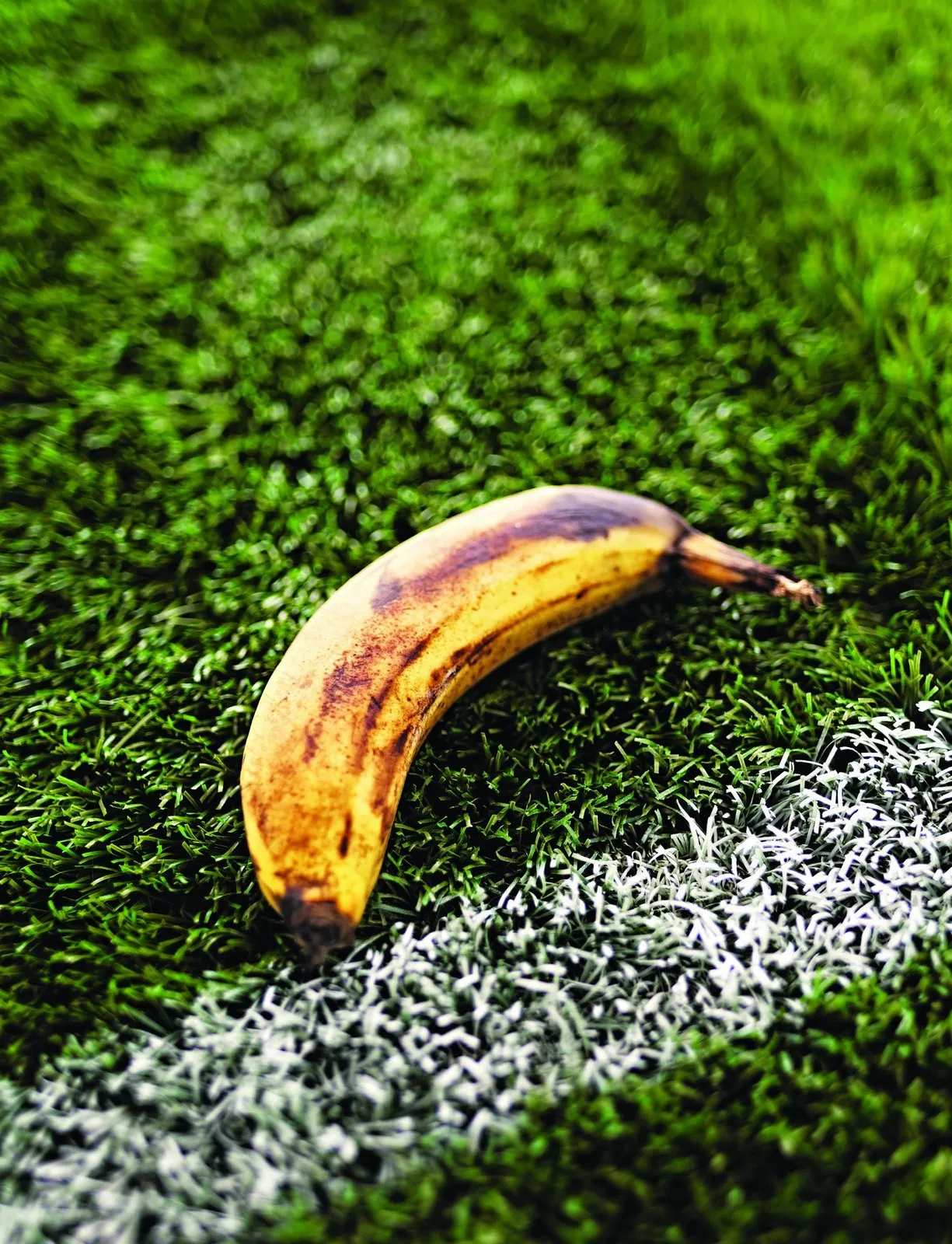



A string of high-profile race-related incidents has, once again, seen a dark cloud descend over the beautiful game. But is racism still rife on the pitch and in the stands, or is it just the media getting unduly agitated? And with the Euros coming up in Poland and Ukraine this summer, should we as football fans, be more concerned about discrimination in the beautiful sport? FHM UK investigates…
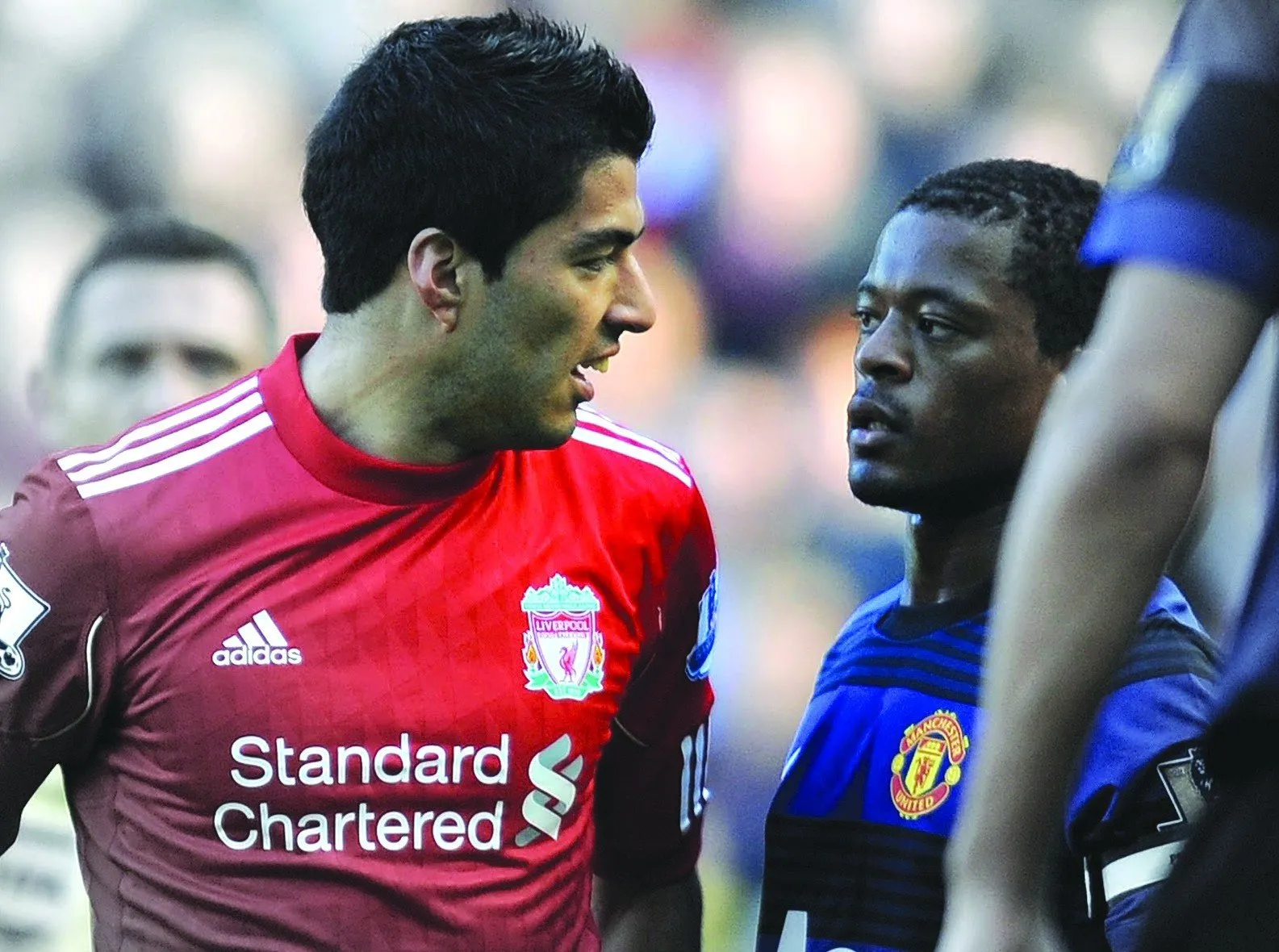
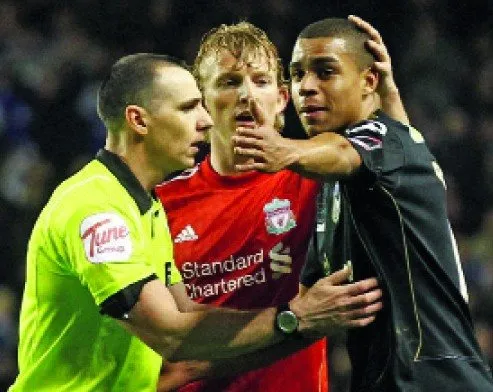
“I don’t speak to blacks… OK, blackie, blackie, blackie.” This is a rough translation of the words originally directed at Man United’s Patrice Evra in Spanish by Liverpool’s Luis Suárez. After a prolonged – and unexpected – period of support from the club, the FA finally issued an unprecedented eightmatch ban on December 20 last year. The following day the Crown Prosecution Service announced its intention to launch criminal proceedings against Chelsea’s John Terry for his alleged racial abuse of Anton Ferdinand in a league game between his team and QPR in October. The England captain is accused of calling his opponent a “f*g black c**t”. He denies the charges. The two high-profile events came as an unexpected double blow to the image of English football, a sport which, once laden with prejudice and xenophobia, had seemingly cleaned up its act. The issue has been escalated further by numerous racist attacks on Twitter in the wake of the events: both former player Stan Collymore and Everton’s Louis Saha have been victims of venomous 140-character racist assaults, while Oldham’s Tom Adeyemi almost broke down in tears after suffering vicious abuse from a Liverpool fan last month. This unexpected outbreak of racial assaults has been deemed severe enough to warrant an enquiry into racism in the game: the Commons culture committee will begin hearing evidence on March 6. For most football fans – especially those under 30 – the current events will come as an unpleasant shock. Two decades of progressive social values and successful antiracism campaigning have made the football pitch (and the stands) a place where racism is – if not completely dead – barely breathing. It’s easy to forget that less than 30 years ago racial abuse against black players was rife across the field.

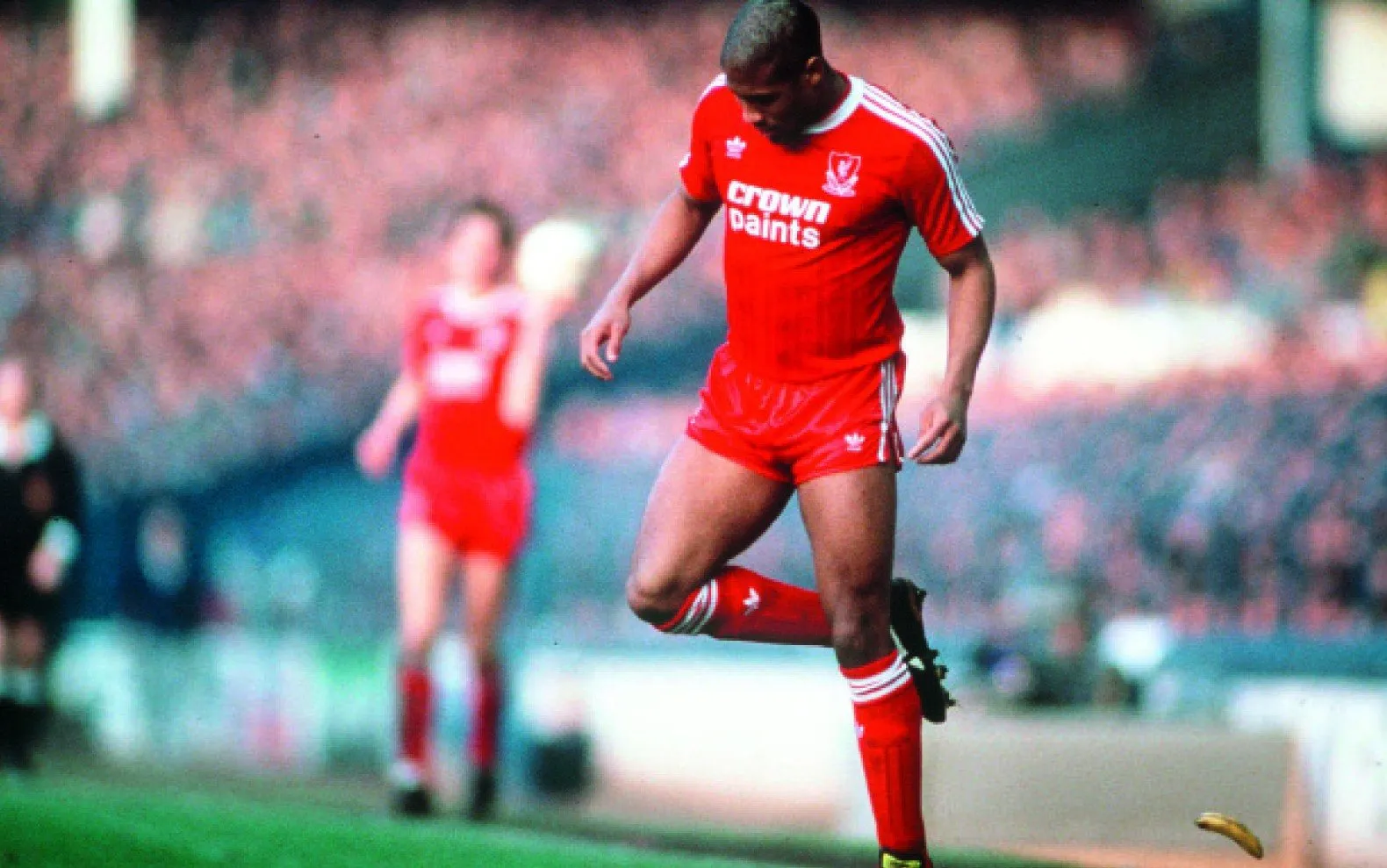
In the ’80s, Britain nearly all the best players were black and were subjected to regular racist chanting due to the colour of their skin. John Barnes, Justin Fashanu and Cyrille Regis, to name but a few, all received regular barrackings both home and away. “Back then, not only was it on the terraces, you also had it from a minority of players,” recalls former Chelsea player Paul Elliott. “You had monkeychanting and booing and obviously banana-throwing.” “When I played they actually said it,” adds Barnes, who played for Watford, Liverpool, Newcastle and Charlton between 1981 and 2000. “They called me ‘n****r’ to my face. It happened in training, in matches. Any black player of my generation had it – there wasn’t a game in the ’80s when you didn’t get racial abuse as a black player.” It was only 1987 when Barnes, playing for Liverpool, was photographed back-heeling a banana that had been thrown by Everton supporters chanting “Everton are white” en masse. The England winger was by no means the only target either. Chelsea’s first black player Paul Canoville was chanted at by his own team’s supporters before his debut; player-turned-BBC pundit Garth Crooks was regularly subjected to racist chants from opposition fans; and Midlands journeyman Cyrille Regis was sent a bullet in the post following his call-up to the England squad. “The improvement since then is considerable,” believes Elliott, who was awarded the MBE in 2003 for his work on antiracism initiatives. “It’s too easy, because we’ve had a couple of high-profile events, to blow things out of proportion. Up until these two incidents I can’t remember any real issues whatsoever for a number of years. The bigger challenges were, and still are, homophobia, xenophobia and anti-semitism. These events are, in my opinion, in isolation, certainly by comparison with the situation 20 years ago.”
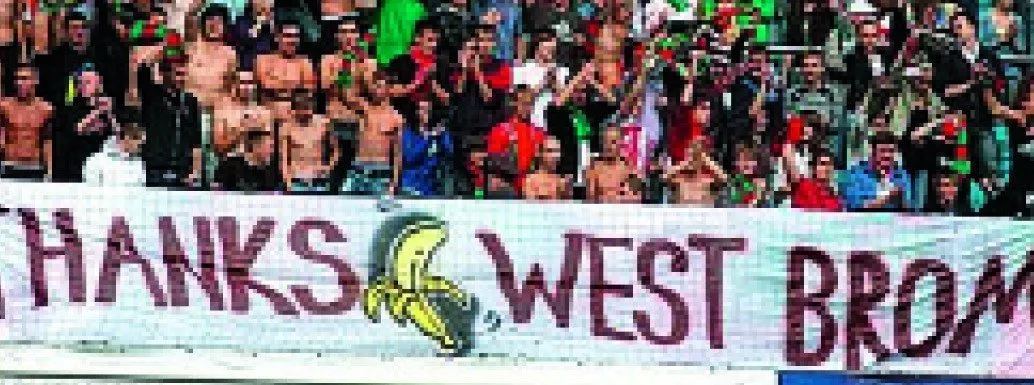
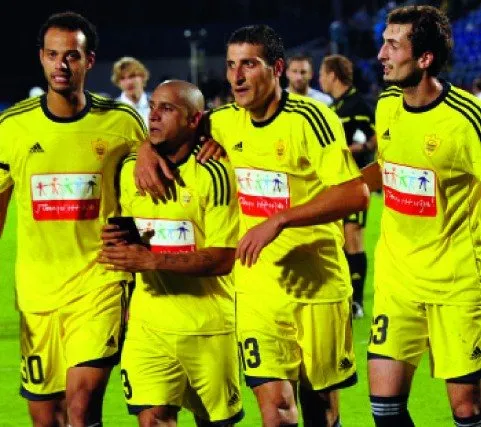
The state of play in English football is by no means perfect, but there’s no doubt it’s vastly improved. You’d be genuinely shocked to hear someone being overtly racist at a Premiership or Conference game. The sport should also take some credit for acting as a positive force against racism in the UK: as more black players joined the English leagues over the past few decades, kids have grown up with non-white role models in a way that the children of the ’60s and ’70s never did – which has inevitably played a part in ushering in a generation far more welcoming of multicultural football than its predecessor. The same advancement of values has been slower across much of Europe (although it is important to point out that in most cases the vast majority of abuse comes from minority groups). In Russia, just two years ago, some Lokomotiv Moscow fans celebrated the sale of striker Peter Odemwingie to West Bromwich Albion with a banner featuring a picture of a banana. “It’s a minority but it’s really sad,” the player said of Russia. “Coloured players feel the open racism there.” In 2008 the then manager of Zenit St Petersburg, Dick Advocaat, said “it would be impossible” for them to sign a black man: “I would be happy to sign anyone, but the fans don’t like black players.” Last year the Russian FA discussed a blanket ban on bananas in football grounds after Brazilian Roberto Carlos was pelted with them. Later in the year they were awarded the 2018 World Cup.
The more immediate worry is this summer’s European Championships, which are to be held in Poland and Ukraine. In the 18 months to March 2011 there were 133 reports of racist incidents in Polish football, including 56 uses of fascist imagery and 36 incidents of anti-semitism. At the same time in Ukraine, there were 62 reports, but these figures have been described as “the tip of the iceberg”. “You rarely see a Ukrainian Premier League match without a display of racist, right-wing slogans,” says Pavel Klymenko of the Ukrainian organisation Football Against Prejudice.
What, then, is the answer? “In extreme cases, I think the next phase has got to be points deductions and possibly expulsion from major competitions,” suggests Paul Elliott. “I think that’s the only way that national associations and clubs themselves will be forced to act. Once they are suffering a detrimental effect financially, I think clubs and associations will get their houses in order.”
Back in 2006 both UEFA and FIFA did, in fact, give themselves the right to issue points deductions if a club or country’s supporters committed a racist offence, and summary relegations if a club or country’s supporters committed three. It was a bold move, but the punishments were so harsh that legal advisors decided they could never hold water in court and within months national associations were quietly informed that “sanctions may be reduced or even disregarded”.
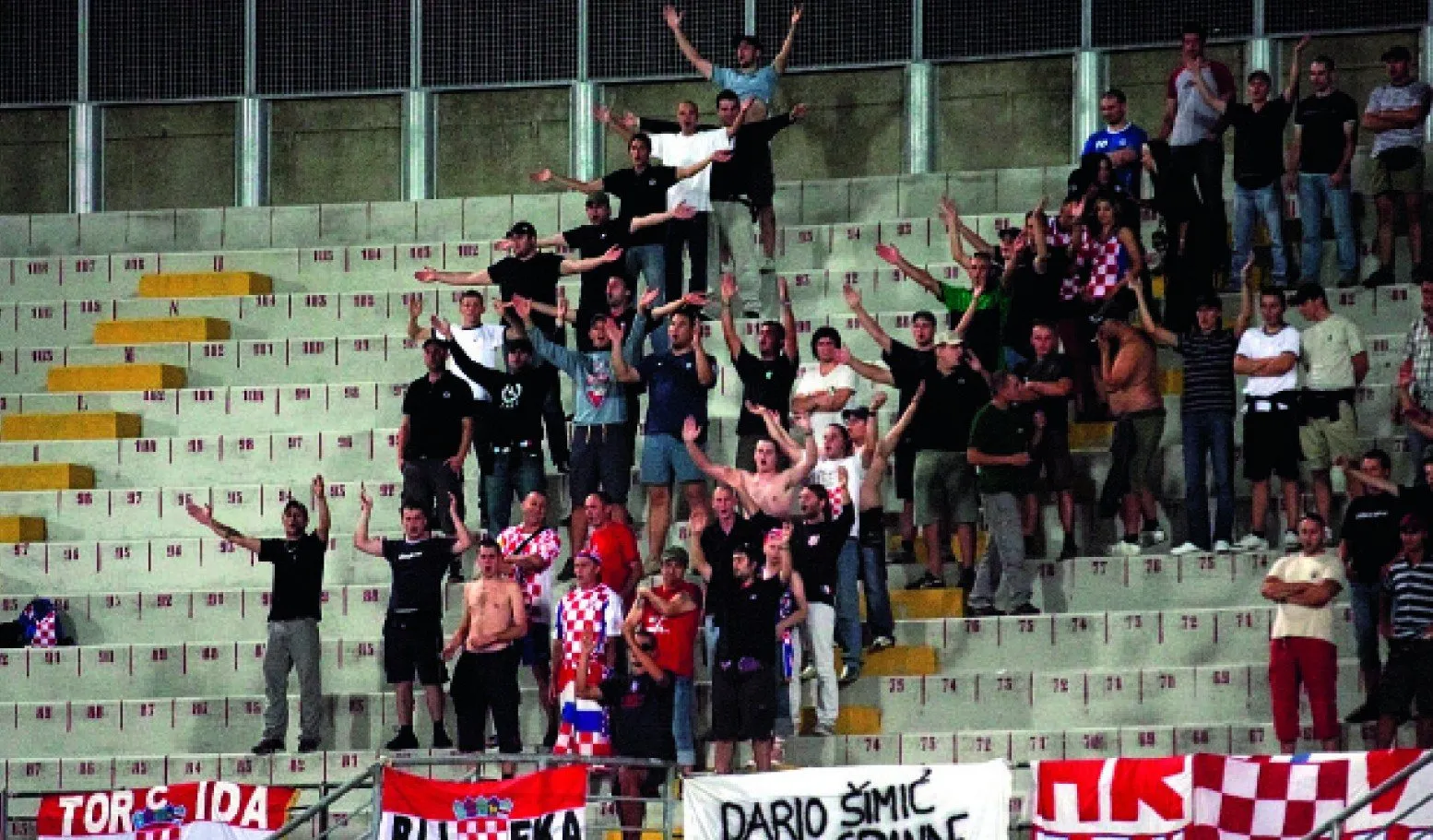
So, in reality, how tough are the current penalties? The short answer: nowhere near tough enough. Take, for example, former Spanish manager Luis Aragonés who was fined just over £2,000 by his national FA for calling Thierry Henry a “black shit” in 2004. Or, better still, consider some supporters of Croatia’s national team. Fines were imposed on them after a match against France in Euro 2004 was marred by fans making monkey noises and displaying racist banners, and again in 2006 when a group of fans formed a human swastika during a friendly against Italy. At the time UEFA’s director of communications William Gaillard warned that “because of the problems we have encountered with Croatian teams in the past, they have been warned future sanctions will be much heavier than any which have been imposed for previous incidents”. Quite how heavy these sanctions would be was revealed when a group of Croatia fans displayed “Nazi-style banners” and made “racist chants” in a Euro 2008 qualifier against Turkey. They were fined just under £10,000.
Three months later England travelled to Zagreb, where black players including Emile Heskey were racially abused. This time, FIFA fined Croatia £15,000. “Croatia were fined a few thousand quid,” said Man Utd’s Rio Ferdinand. “That’s not going to stop people shouting racist or homophobic abuse. Sepp Blatter likes to speak up about things that are good for FIFA’s image but I would love to see them stand up and dish out the right punishments for these incidents.”
The FA, though, have acted with a firm hand in the UK by banning Luis Suárez for eight games and fining him £40,000 for abusing an opponent. The high-profile cases and subsequent social media abuse have shown that racism is not dead in football, but the fact that the British media and public have reacted so negatively towards Suárez is proof that racist incidents in football have become the exception rather than the norm. The hard work of our national associations and charitable bodies such as Kick It Out and Show Racism The Red Card have led English football to a place where any player ignorant enough to abuse a fellow professional will be punished severely and any fan ignorant enough to abuse a player, manager or fellow fan due to the colour of their skin will be rounded upon, ejected and, at the very least, banned for life. The bigger issue is perhaps how unreflective the football leagues are of Britain’s multicultural society. Despite the fact that over three million Asians live in the UK, only 1% of supporters define themselves as Asian and only one British Asian has ever played in the Premier League (former Fulham defender Zesh Rehman, now with Hong Kong First Division League side Kitchee). Furthermore, it’s astonishing that when over 20% of our footballers are black, at the time of press just two of the 92 league managers were black.
One solution could be to introduce something similar to the Rooney Rule that has been a huge success in the NFL in America. In 2003, Pittsburgh Steelers owner Dan Rooney persuaded NFL owners to commit to putting at least one minority candidate on the shortlist for coaching jobs. In the eight years since, the number of black coaches has increased from two to eight (out of 32), and each of the last four Super Bowls has featured a black manager. The PFA is keen on something similar, but last year Richard Scudamore, chief executive of the Premier League, rubbished the idea. “In America it is a different sport and a different country,” he said. “If people are good enough they will get their chances.” This doesn’t seem to be the case, particularly in the upper echelons of the FA. The body’s governing council is composed of two women, one black man and 99 white men, most middle-aged or older. With such statistics, it’s hard to argue with the outcome of a study conducted by Dr Steven Bradbury at Loughborough University, which concluded that European football is “institutionally” racist, governed by an “old boys’ club” of white, middle-aged men. Insiders say that tackling minority representation at the top will be even more of a challenge than eliminating racist abuse in the game itself.
So while there are certainly more battles to fight, some pride should be taken in the continued strangling (if not complete asphyxiation) of racism in the game – on the pitch and in the terraces. The Brits believe that while they might not be perfect, it is in far better order than most of its European neighbours, and with the Euros in Poland and Ukraine only months away the bigger worry should be the treatment of all black players this season. If racial abuse is to happen on such a global stage – as is widely anticipated – it may finally ask the question of FIFA, and force the hand of a governing body that, to date, has not covered itself in glory in the fight against racism.
Football’s worst race-related quotes…
“There is no racism [on the field], but maybe there is a word or gesture that is not correct. The one affected by this should say this is a game and shake hands.” – Sepp Blatter, the President of FIFA, football’s governing body, on the sport’s ‘racist’ problem in 2011.
“When I came into the assembly hall it was full of blackies and it was getting dark when they were all sitting together. I thought, ‘If this lot get in a bad mood it won’t be so funny.’” – Lennart Johansson, former President of UEFA, while visiting South Africa in 1996 (who later claimed he was misquoted).
“We don’t have a problem with black players. No black players – no problem.” – A Zenit St Petersburg fan’s boast to the BBC.
“If you put a foot on our Wembley turf you’ll get one of these through your knees.” – The threat that accompanied a bullet sent to Cyrille Regis in 1982 after he was called up to the England squad.
Photography by Nato Welton.
From the March 2012 issue of FHM India.
Spotted a mistake, or your photo used without permission? Report a correction











 in your inbox