
It’s the nuances that make all the difference: Timothy Everest
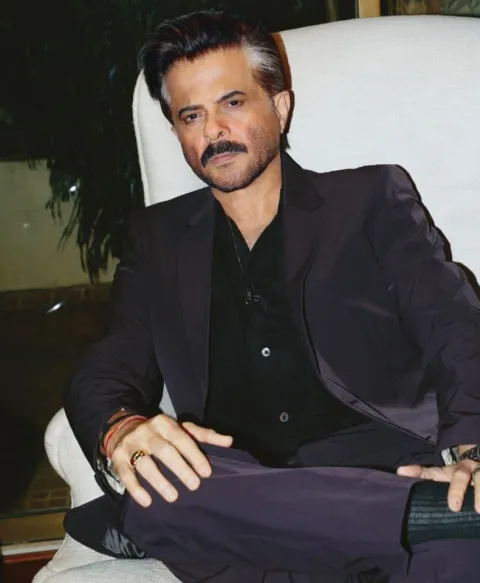
Timothy everest, the face of bespoke tailoring recently hit the Indian shores, and we just had to capture him in our pages.


Having dressed a series of Bonds, yes, James Bonds, film stars, musicians and politicians from across the globe, Timothy Everest, recently showcased an exclusive line of garments during Raymond’s Spring-Summer collection launch in association with the Woolmark company. Is this your first time in India?
No, this is my first time in Delhi. I have been to southern India a few times, but that was a long time ago. I was excited to come here. It’s quite different coming here and seeing and smelling it yourself rather than reading about it on the internet. It’s very personal and emotional. I had an opportunity to chat with a lot of people within the industry as well, so it’s quite interesting.

You’re here in the middle of the quintessential Indian heat. Which fabric would you suggest for an Indian summer?
I think wool is a very good fabric, particularly a cool tropical wool. I cycle a lot and I’d forgotten the properties of wool. I would associate wool as being kind of itchy and warm. I’d never think of wearing wool in the real heat. Then I worked with Rapha, a very successful English cycling brand. Their base layers are a very fine tropical wool, a fine micron. One thing about wool is that it wicks away the sweat and doesn’t smell. It’s all about the structure. So obviously if it is 40 degrees outside and you have a meeting, wearing a heavy jacket would be very difficult, but a properly constructed cool wool would actually recover you from that. People want to be casual but they want to look elegant at the same time. So your fabrics have to reflect that. With wool it has to be very fluid, it can’t be too structured for the summer. On a trend point of view washed cotton would last very long. I see a big return of linen.
What is the concept of cool wool?
Well, it does keep you cool. And if it is actually woven properly it should breathe really well. The other concept is that a lot of my Indian friends want to wear something tailored and they want to look very sharp. And cool wool performs better than, say, cotton or linen.
You have spoken against the bespoke garments becoming elitist. But the prices they are marked at make them vulnerable to fall into that category. How do you explain this paradox?

Yes, I am against that. I think everything should be value for money. That’s what I was trying to say at the beginning of my business. We had to accept that the price point of bespoke is going to be expensive but it doesn’t have to be elitist. But from my point of view, being a British gentleman, that’s not what we should be doing. We should be inclusive. That’s why a lot of projects I have done, all the way down to the high streets, are trying to take the little bit of what we have learnt to produce that other people can afford. But again that is premium, so it would cost just 10 per cent of the bespoke. But it’s still premium. Having said that, there are consumers who still want to be elitist, so if they want that we can make them elite suits (laughs).
The concept of fine casual is not very popular in India. How will this trend catch on in India?
I think this is an educational process. You’ve got to hold people’s hands and guide them to it. It’s a process of evolution. There is a very famous restaurant in London where lot of businessmen go for lunch. You’ll see three types of people there… An English gentleman possibly with a bespoke suit, looking very traditional. Another person with no idea at all. He’d be wearing a formal suit with an open neck shirt that should have a tie, trousers too short and a suit one size too big. Then you see a person that they probably call a metro-sexual. He’s much more aware. He may be wearing a little tan coat with a cashmere roll neck and a very clean pair of trousers, or a fitted blazer with an open neck shirt, good belt, watch, and may be some clean jeans. So it’s casual and still quite smart. And I would rather someone dress like that than a shirt that wouldn’t fit, or something too formal. They are not overtly trendy but they are kind of cool.
What’s your inspiration been?
I grew up in a time where people were still wearing oversized suits, still a hangover from the late 80s Armani and Hugo Boss. I was inspired by the 60s. I loved films like The Italian Job and those of Steve Mcqueen. I liked the idea of these 30 something guys who were quite cool, still wearing suits. So they were based in tradition but were quite casual. Things from the past are still valuable. I think it’s about celebrating the past and not living in the past.
So, is it safe to say that your style of tailoring is post modernistic in approach?

Yes. I think that’s just my take. Some people like to live in the future and some people like to live in the past. For example, the heritage vintage thing in clothing in the last five years has become a little boring. But it was very important for the casual wear probably to rediscover a lot of traditional fabric. So a lot of casual designers started using traditional fabrics like tweed and all. So I think yes, I am postmodern in that sense. I think it’s a very British thing— we dwell in the past, look into the future but don’t live in the present. So I try and live in the present. Try to understand what’s going on and where the market will go and, of course, the relevance of designs and ideas.
You’ve shown your interest to dress Prince Harry.
Yes. I’d like to do both of them actually, William as well. I think Charles is probably one of the best examples of British tailoring. When he wears a three piece grey suit, he has his sleeves pressed like his trousers, which is very old fashioned. I think they are great icons. It’s a difficult task to dress them, because they can’t ever shock you. It has to remain very subtle and yet do the job. That’s in a way what we do very well in bespoke. You should never look like you went out and bought something very new. It’s about expressing yourself and your confidence.
How has the fashion scene changed?
The biggest thing is that now you have the internet. In my time one had to go to different cities to find out. And there were very strong movements. But they were much localised. Fashion trends generally took turns, like before me if women were wearing maxi skirts, most women would. If you were wearing platform shoes, most men would. What started to change in my lifetime was that fashion scene became very premium and elitist. Look at the high street now, that’s where the fashion scene is happening. If you take brands like Superdry, what they were very clever at doing was to look at other brands and think how can they elevate that. Affordability and price is the other thing. Prices are incredibly low compared to before. So more people can afford bigger brands now.
Considering that time moves in a circulation motion and assuming that you have the power to go back in time, which time period would you like to go back to?
The 1920s would be interesting. You’ve just come out of the First World War, and there is a tremendous change in the power hierarchy in Europe. But also you have the bright young things that were sort of decadent that I wouldn’t have really approve of (laughs). But a lot of creativity came out of that. I love the whole art and décor thing. That’s probably one of the more recent things of challenging tradition, like use of colour, fabrics and dyes. Then I suppose I would be interested in the 1950s and 60s. A lot of 60s rockstars all wore suits. It’s all really interesting. I don’t know if I’d really like to go further back than that… I’d like to see things flamboyant but in a controlled way. It’s boring being traditional all the time.

What do you take back from India?
India is one of the most spiritual places I’ve been to, so definitely a bit of that. But also I’ve explored how modern it is now. Things are quite elaborate as well. They may be seen as quite decadent but beautiful at the same time. I’d love to come back and work here. I wished to work here couple of years back but that couldn’t really happen then. But after 25 years of working in the industry, I think I’m in a position to suggest to people about casual fashion (laughs). I’d love to do that here.
Timothy tells: what to wear
Casual breakfast: A clean shirt, a clean pair of trousers. The right belt with a nice watch. It also depends on how you’ve groomed yourself. You’re dressing up for a morning breakfast, so it has to be something very fresh. It could even be a nice polo shirt. And you could carry a simple bag.
Office: I would say this should be more casual. A structured jacket, may be a blazer. The indigo colour is very good. A buttoned down shirt. Carry a deconstructed tailored look, a soft tie or a pocket handkerchief. You don’t want people to think that you are there only for business. Try not to look intimidating. Make it light, maybe with a coloured sock.
Formal dinner: A really sharp suit. I’d go with some of the fabrics from our Raymond collection with a lovely lustre that look quite luxurious. I wouldn’t mind putting in a little colour, like I said, Indigo. I like things that have a slow burn, so when you enter people should take notice but not in the bang-on way that says “wow”.
From the May 2015 issue of FHM India.
Spotted a mistake, or your photo used without permission? Report a correction



 in your inbox