
Life Beyond Cricket
From UK to right across the globe. The first Asian woman of cricket credits her distinctive background to bringing a fresh perspective to the sport.



At just 17 years old, Isa Guha became the first woman of South Asian origin to represent England in any sport, when she made her international cricket debut in 2002. In a playing career that spanned a decade, she was part of one of the most successful teams in English sporting history. At the time of her retirement in April 2012, Isa was positioned as the second highest wicket taker in the all-time England Women’s ODI List and sixth in the world, having been awarded 113 caps.
Since then, she has continued to break boundaries with a career in broadcasting. We speak to the former sports star to get an insight into her journey.

As a sports lover, tell us, did you choose cricket or did cricket choose you?
I guess I chose cricket in a way. Badminton was my first love however it was in the genes to play cricket - mum and dad were big fans and steered me and my brother in that direction. But they also allowed us to play lots of sports. I was playing at the England academy at the age of twelve so the dream started early.

You were the first Asian woman to represent England. Was it hard?
It was a big deal when I first got into the side for a lot of Indian journalist, but I did not understand the importance and relevance of it until just recently. As a kid, I played as the only girl from Indian descent in a team of boys from British and Pakistani descent. My parents never saw it as an issue and so no-one else did. It is a known fact that girls of South Asian descent take part in the least recommended levels of activity in the UK, so I am keen to encourage more women of South Asian descent to take up sports. This is a huge priority now for the ECB which is really positive to see.
Speaking about your own career, the England team won the World Cup, the World T20 and three Ashes in that time. How did England transform into this strong side?
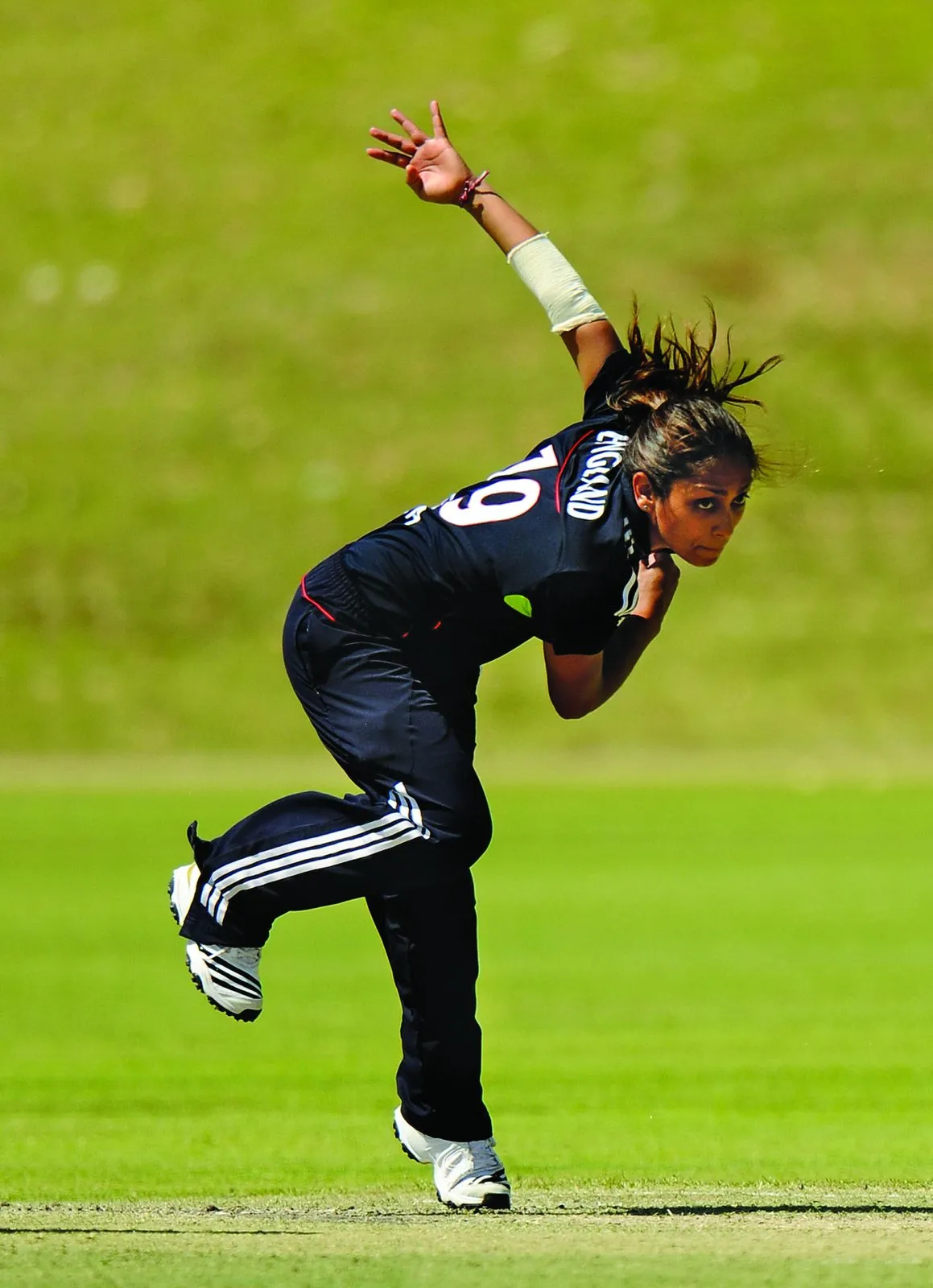
For me, it started when John Harmer took over as coach. He formerly coached the Australian women’s side that dominated for a long time and brought a lot of biomechanics into our game. Richard Bates helped us become more tactically aware and then Mark Lane’s message was to play with freedom as we developed more skills. There were various moments on the journey that helped us become the best in the world, from our first series win against Australia in 2005 to winning the Ashes for the first time in 42 years. The team stayed together for a while and everyone knew their own roles as well as each other’s. Links with men’s academies helped us become technically better and training with the England Institute of Sport helped us to become stronger and fitter.
Do you feel that you retired early even when you were at the top of the game?
It was a difficult decision at the time but I have no regrets about when I retired. I was fortunate to go on a journey from being an average team to the best team in the world. Personally, I enjoyed some good moments and when I retired I felt the best I ever felt bowling and the fittest I’d ever been. I was happy to step aside for the next generation.

A cricketer who has a degree in Neuroscience. Well that is impressive. But how difficult was it to manage a career like that along with education?
I managed up until the last few years of my career. A typical week would involve going to Lords to train from 8-11am then be in the lab from 12 until 10pm 3-4 days a week. Then play at the weekends. I finally finished it as an MPhil a couple of years ago where I had to navigate around the broadcast opportunities I was fortunate to receive. I actually wanted quit after my first couple of years because it was becoming a burden but I stuck at it and am very thankful to my supervisors for their support.
As the tables turn, can cricket be considered as a career choice for women? How do you plan to support the concept and increase the engagement of female players in the game?
It’s great that cricket is a viable career option now. Role models are so important and so visibility is key to young girls wanting to grow up and becoming the next Jhulan Goswami or Heather Knight. Women involved in every aspect of the game is crucial. There is a lack of female coaches in the UK, something Lydia Greenway is doing a great job trying to rectify with Cricket for Girls.
You are a part of the Professional Cricketers Association and the Wisden Cricket Editorial Board, how do you bring in a fresh perspective to the sport?
I think I bring a different perspective by way of understanding what goes through a players mind when making decisions but I also understand what broadcasters want. There is a real opportunity with the hundred, to make these players big stars but they have to be willing to get involved. Ultimately, cricket is fighting for popularity in England, something that India has always been blessed with so it’s important to keep the current fans happy and find ways of attracting new fans to the game.
The World Cup is upon us, who are you supporting this cricket season?
England of course! Although I wouldn’t mind an England x India final.
From the July 2019 issue of FHM India.
Spotted a mistake, or your photo used without permission? Report a correction










 in your inbox