
Phone Addiction: An Epidemic
Feel naked without your mobile? Phone addiction is changing our brains the way booze and drugs do. Take the test, learn to wean yourself off – and meet the other addictions of 2012, from gaming to binge drinking.
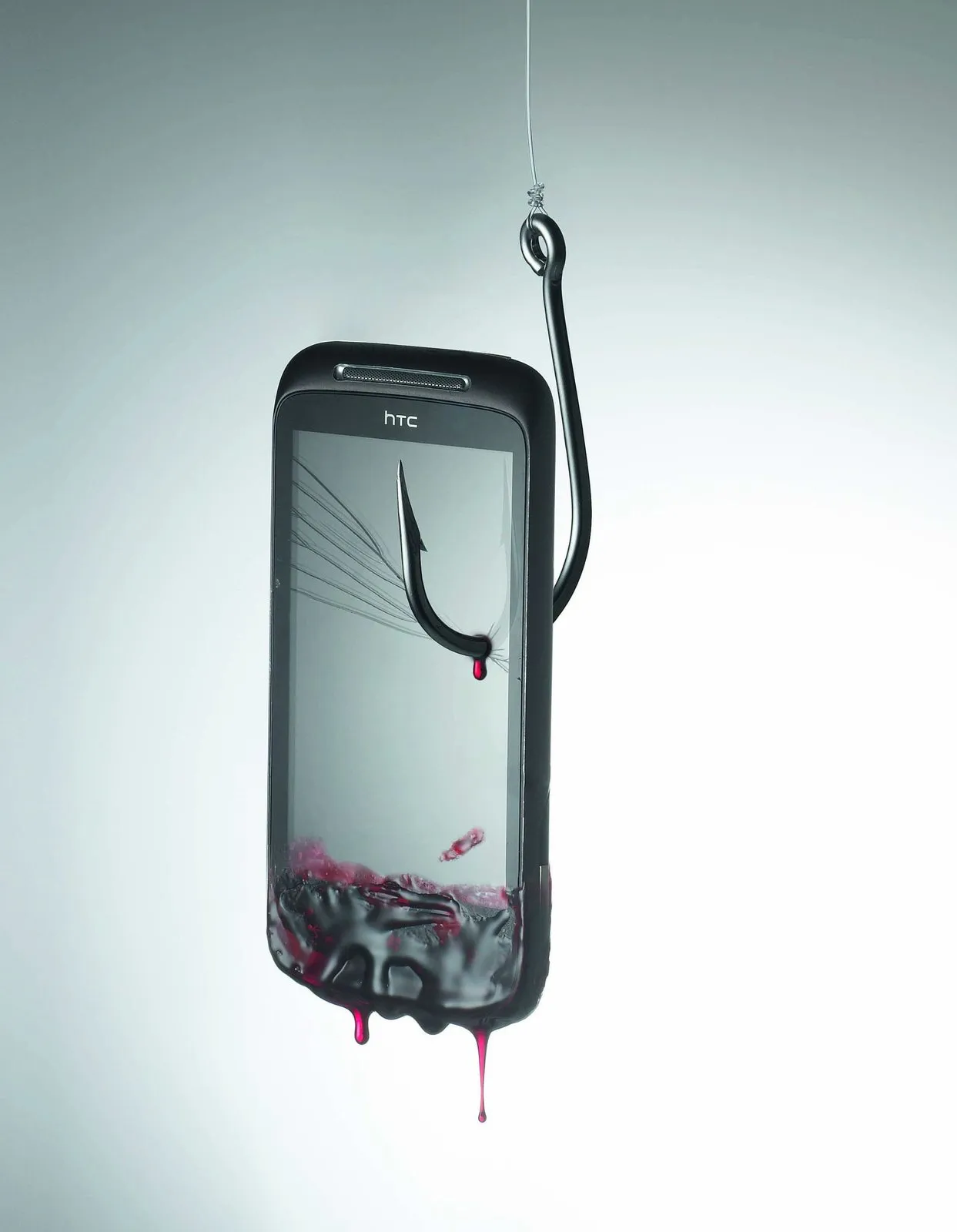



Are you hooked to your phone? Feel naked without your mobile? Can’t stop playing Angry Birds? Find it impossible to log out of Facebook? If so, you might be one of the estimated billion people suffering from phone addiction. Step away from the handset, turn off your email and read on to find out if you have a problem…
Of all the addictions affecting men from their teens to their thirties, which one do you think is growing the fastest? Booze? Wrong. Drugs? Wrong again. The addiction that is causing more damage to the mental health of normal, sociable blokes – blokes just like you – has nothing to do with illicit substances or mind-altering chemicals, and everything to do with your phone. Don’t say it out loud, but living in a world where apps, messaging and social networking are available in the palm of your hand has come at a price. Recent surveys have revealed that a growing number of relationships are breaking down due to obsessive Facebook and Twitter checking on mobiles, while the number of anti-anxiety medication prescriptions doctors are dishing out to young men is growing exponentially, fuelled largely by a country-wide obsession with 24/7 communication. Phone addiction is no longer a rare, ‘novelty’ addiction – recent estimates on the number of addicts range from two million to Ofcom’s gobsmacking statistic that more than one in three young men currently suffer from phone addiction. Right now you’re probably thinking: ‘Yeah, I use my phone a fair bit – so what?’ Well, you may not be aware of it, but new research has found that the pang of excitement we feel when our phones flash, bleep or vibrate is starting to change the structure of our brains in the same way that booze, drugs or gambling do. Scientists have discovered that smartphone users need a bigger hit every time they reach for their phone, which in turn is changing the way their lives are lived – for the worse. No longer are guys content to just sit on the bus staring vacantly out of the window, or go for a poo and ponder what to have for supper. Nowadays, more and more men feel the need to get that hit, whether it be someone commenting on your Facebook status, receiving a text or seeing what’s going on in the Twitterverse. Go to any Pizza Express and you’re guaranteed to find at least one couple both engrossed in their Blackberrys instead of chatting to one another, just as you’ll find it impossible to watch a film from the back of the cinema without being intermittently disrupted by glowing screens.

Even night outs are no longer a haven from the piece of technology that was once only used for making calls. When was the last time you went for a meal with your girlfriend, or a quiet pint with the lads, or a heavy Saturday night out on the town without taking your mobile with you? On average, people now spend 48 minutes on their mobile phones on any given night, during which they’ll send about three emails, 12 texts, two pictures and post three Facebook status updates.
The problem is so bad that, according to a new study, India has more mobile phones than toilets. This also ponders upon the fact that rather than basic amenities people are more dependent on mobile phones and technology launching in the market every single day. The survey stressed that approximately 91.3% of the total population use mobile phones. Out of which, 75% people urinate in the open as they don’t have access to toilets. Isn’t this one of the most embarrassing facts you’ve come across? Well yes, especially when we call ourselves as one of the fastest growing countries in the world. A wake up call for the government, we hope.
An epidemic
At the turn of the 21st century, very few people owned a mobile phone. Today more than 90% of them own one and many of those are smartphones. A staggering 81% of smartphone users admitted to having their mobile switched on 24 hours a day, even while they are in bed. And why wouldn’t we? After all, a phone is no longer just a phone. It’s also an alarm, a camera, a mobile workstation and a portal to the whole world.
Little wonder, then, that all of us feel anxious without them. “It’s down to a chemical called dopamine,” explains psychotherapist Cosmo Duff Gordon (clinical-partners.co.uk). Dopamine is the euphoric reward our brain’s limbic system gives us for performing a task. Most of us can overrule this using the cerebral cortex (the bit of the brain which is responsible for reasoning), but addicts lose their ability to control the need for a hit, and so they find they’re caught in a loop they can’t get out of (they can’t stop looking at their phone).
“These technologies can be addictive because they’re psychoactive, which means they alter mood and trigger enjoyable feelings,” explains Dr David Greenfield, founder of The Center for Internet and Technology Addiction in the US (virtualaddiction.com). Email, texting and instant messaging, in particular, give us satisfaction due to what psychologists call “variable ratio reinforcement”. This is essentially the brain being rewarded for curiosity. Every time your phone buzzes it could be a hot girl (even though it’s probably your mum), so you keep checking in the hope that you’ll be pleasantly surprised.
According to recent studies, the problem is so bad we’ve even begun to imagine messages that don’t exist. Psychologists at the University of Worcester discovered that many smartphone addicts were troubled by ‘phantom vibrations’, which saw them check their phone even though no message had been received. Meanwhile at the University of Maryland, researchers asked 1,000 students to record the effects of giving up their smartphones and other gadgets for 24 hours. The results were terrifying: four in five students displayed significant mental and physical distress, confusion and extreme isolation when forced to unplug. “Frequent smartphone users who experience time apart from their phone experience withdrawal effects,” explains Dr Greenfield. “They become irritable and uncomfortable like drug addicts do when their chosen substance is withdrawn.”
It’s got to a point where our phones have totally changed the way we think. Five years ago you could lay your eyes on a beautiful sunset or your mate being teabagged and just enjoy it for what it was. Now, you want to take a picture, then load it to Facebook to show all your ‘friends’. Think of something funny on the train? You used to be able to chuckle to yourself; now you feel the need to find somewhere with 3G and Twitter it so your ‘followers’ can retweet to their heart’s content. Your work email used to be switched on from 9-6, when you were at your desk. Now your email is at your fingertips 24 hours a day, 7 days a week, 52 weeks a year. Is this alien to you? Or does it all sound painfully familiar?
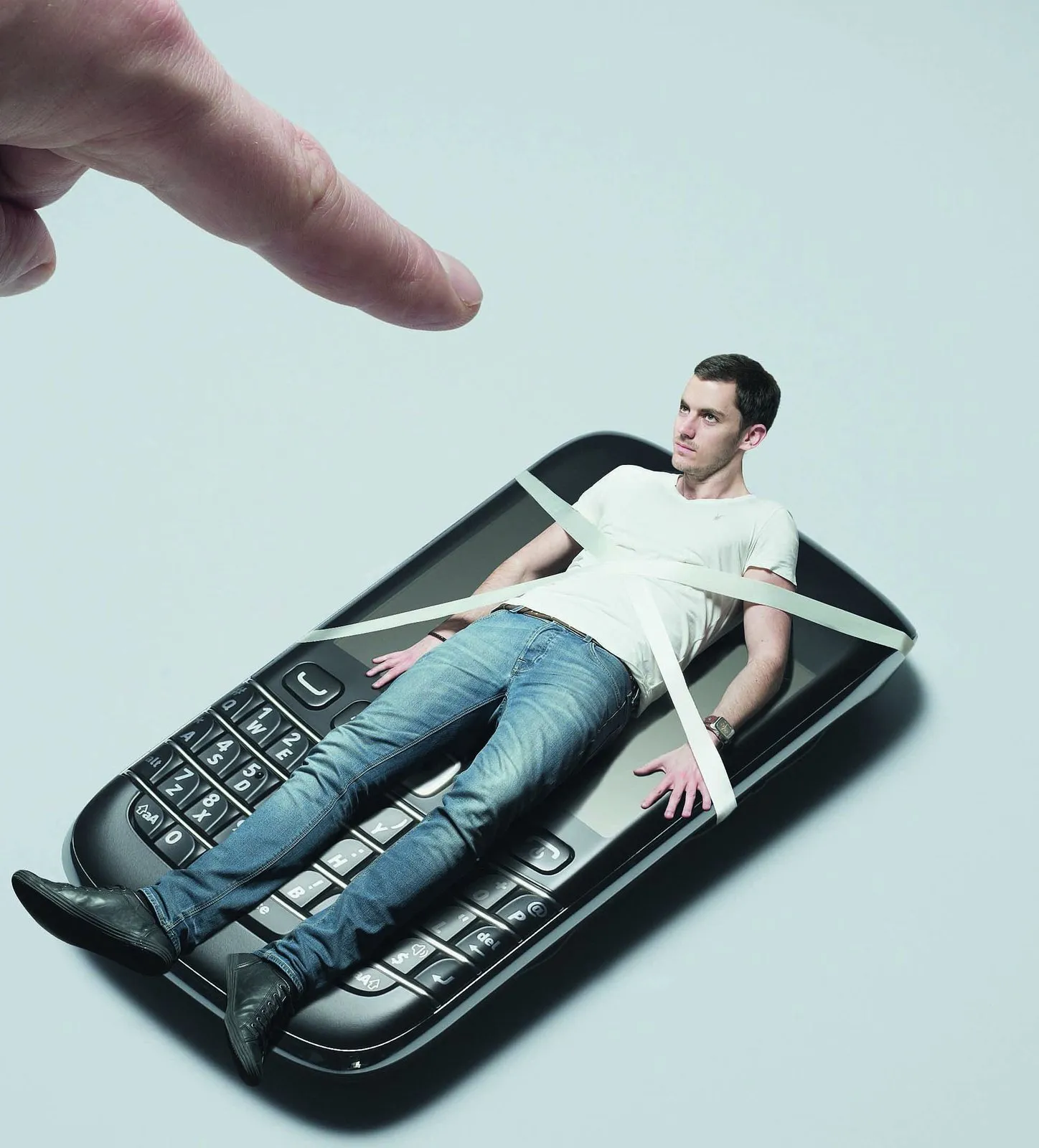
How addicted are you?
Can you leave your phone at home for a day, or does the thought of being without it make you feel all funny inside? Take our test and discover if you and your mobile need some time apart…
1. Do you check your Facebook or email from bed before you get up in the morning?
2. Do you leave your phone turned on at night? (Putting it on silent doesn’t count…)
3. Do you get your phone out on the loo?
4. Do you check Twitter or other social networking sites from your phone more than 10 times a day?
5. Do you find yourself restless or irritable when you attempt to cut down or stop using your phone?
6. Do you struggle to concentrate on work when you know you’ve got an unread text message?
7. Are you spending increasingly lengthy periods of time on your phone each day?
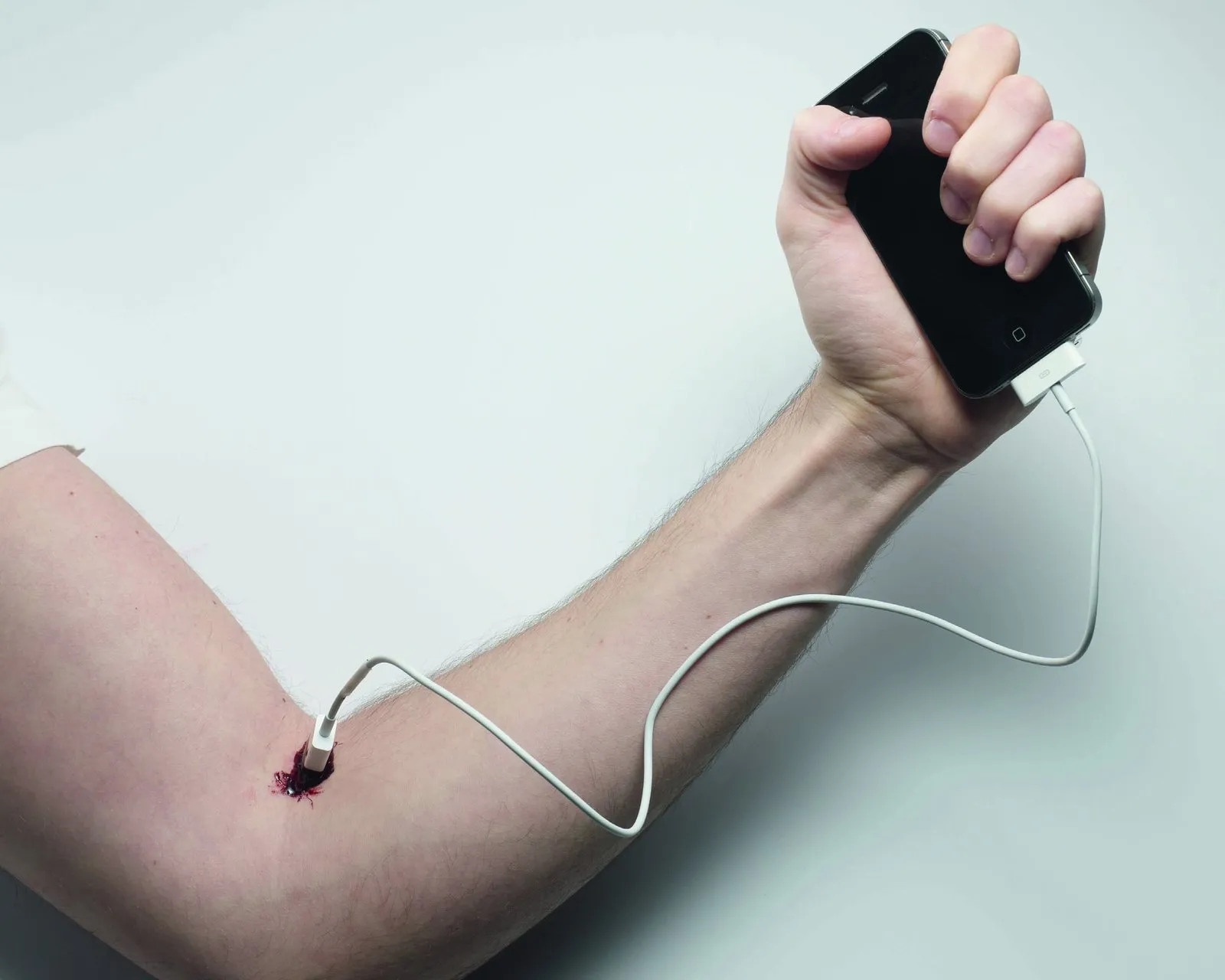
8. Have you ever jeopardised or lost a significant relationship, job or career opportunity because of your phone usage?
9. Do you find yourself regularly checking your phone even when you are enjoying a film, TV show, sporting event or night out?
10. Have you ever been on a date during which you’ve spent more than 30 seconds in one go texting or checking the internet?
11. Do you often think ‘that would be a great status update’ when something funny pops into your head?
12. Do you send more than 20 text messages a day?
The results…
If you answered yes to 0-5 questions… …Congratulations, you don’t have a problem! Text/email/Facebook your mum and let her know.
If you answered yes to 6+ questions… …You have a problem. “You need to learn to regulate your smartphone usage,” says Dr Anna Albright, a cognitive behavioural therapist. “Some of the successful behavioural methods include switching the phone off at agreed times, restricting compulsions to check the phone and replacing smartphone time with other meaningful pursuits.” Achieve this by setting up this simple to-do list, which features a number of tasks that you should try to implement in stages rather than all at once. Try one to two a week, until all ten are in play.
How to wean yourself off
1. Make your bedroom phone-free at all times.
2. Delete your work email account from your personal phone.
3. Limit the number of texts you are going to send in a day (choose a set number and don’t go above it).
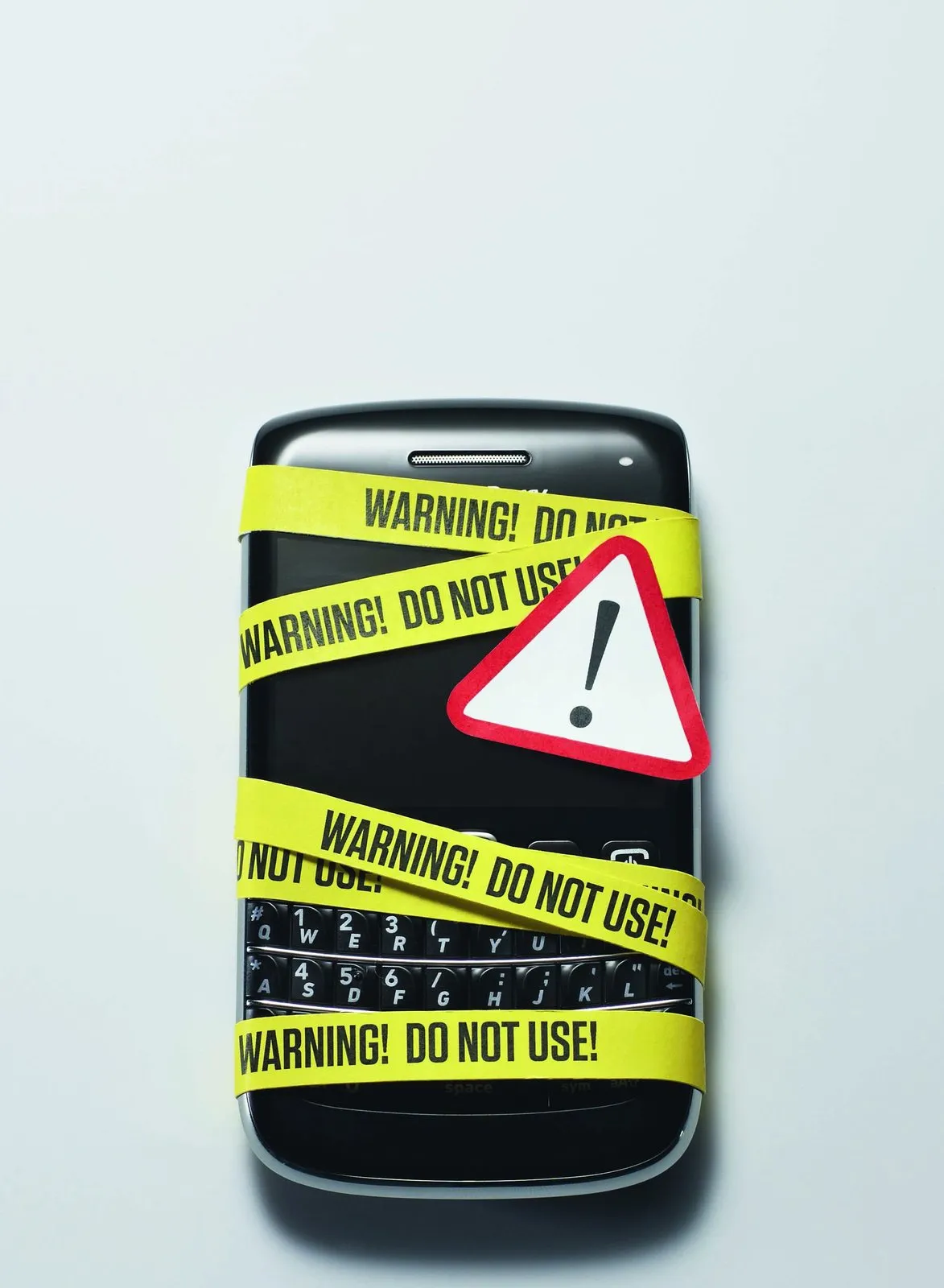
4. Delete apps that you don’t need on your phone, like Facebook and Twitter.
5. Make playing games on your mobile a treat/reward.
6. Turn off your phone at night.
7. Don’t work on your phone outside normal working hours.
8. Listen to music from a device other than your phone.
9. Use a physical diary rather than one on your phone.
10. Schedule in some ‘phone time’, during which you can make all your calls and texts.
The next steps…
Once you’ve mastered these, set intervals of two hours between each time you check your phone (NB: if that’s going to affect your work, you can easily set up an auto-responder to explain you can be contacted by calling). Done that? Great, now experiment with short periods of inaccessibility by leaving your mobile at home for one day a week. “For most people, it will feel like a two-week vacation,” says Tim Ferriss, author of The 4-Hour Workweek. “Don’t worry, any initial anxiety you may feel doing this for the first time, will pass quite quickly,” he assures.

The other addictions of 2012
1. Exercise
The reason that blokes in Lycra run down your road at 6:30am come rain, sleet, snow or shine? Addiction. A study published by the journal Behavioural Neuroscience found that serious runners experience a dopamine shot that gives them a daily fix in the same way cocaine or alcohol can do. Trust us, we know dudes who’ll cancel a hot date or skip an outing with friends to hit the gym to run on the treadmill. It maybe a detoxer, but some men take it to the other level.
2. Binge drinking
At last count 8.1% of UK’s population was described as binge drinkers. Binge drinking is alcoholism too, as you can down more than six drinks in one sitting at least once a week, thus increasing the chances of heart problems and liver disease. In many parts of India, people don’t understand the concept of 30ml at all, as for them a large shot is the ideal drink. In addition, binge drinkers often don’t believe that they have a problem as they don’t have alcohol every day. According to them they’re under control but in reality they’re not.
3. TV
In India, considering the number of shows airing throughout the day, it’s not only kids, but adults too who are addicted to TV. According to leading psychologists Ranadip Ghosh Roy and Jayanta Chattopadhyay, it is the parents’ obsession with TV that rubs off on their children. In fact, back in 2004 in Kolkata, a couple died after a tiff over television. This addiction is a disorder, which is studied in TV studies and can be a real problem, akin to drug or gambling addiction.
4. Gaming
What happens when your controller becomes your comfort blanket? The positive news for smartphone obsessives is that their techy methadone is yet to send them into a spiral of rage. The same can’t be said for gaming addicts, who, again, are mostly blokes in their teens or twenties. “Just over 8% of video gamers show pathological patterns of play,” revealed an Iowa State Uni research paper in 2009. According to a study, children and young dudes in the metro cities of India are facing this video games addiction, where they can lock themselves in their room for hours and hours playing Call of Duty. Also today it results in breaking up relationships too...
Seungseob Lee (StarCraft): In 2005, 28-year-old Lee strolled into a 24-hour internet café in South Korea and played StarCraft almost non-stop for 50 hours. Shortly after his stint he went into cardiac arrest and died in the hospital. Weeks before, friends had warned people that he was a gaming addict after he lost his job and broke up with his girlfriend.
Brandon Crisp (Call of Duty): This 15-year-old Canadian went missing in 2008 shortly after his parents confiscated his Xbox 360 for playing Call of Duty 4: Modern Warfare too much. After an extensive search and a $50,000 reward offered by Microsoft for his return, Crisp was found dead in the woods not far from his house.
Gregg Kleinmark (Game Boy Advance): Ohio native Kleinmark (24) pleaded guilty on two counts of involuntary manslaughter in the US after he left 10-month-old twins Drew and Bryn to drown in the bath so he could play on his Game Boy Advance.
Alexandra Tobias (FarmVille): In Jacksonville, Florida, in 2010, Alexandra Tobias pleaded guilty to second-degree murder after shaking her baby to death. The reason? The baby’s crying had interrupted her game of FarmVille.
Qiu Chengwei (Legend of Mir 3): In March 2005, in Shanghai, Qiu Chengwei fatally stabbed fellow player Zhu Caoyuan, after he discovered Zhu had sold a virtual sword that he had lent him inside the role-playing game Legend Of Mir 3.
Just. One. More. Level. The world’s most addictive games
World of Warcraft: Dr. Maressa Orzack, an expert in computer addiction, estimates that 40% of World Of Warcraft players are addicted to playing the adventure role-playing game. Dr Andrew Power has even set up a site, worldofwarcraftaddiction.com, to help players wean themselves off the game, which – as of September last year – had 10 million subscribers.
Halo 3: Ohio-born teenager, Daniel Petric was jailed after shooting his parents for taking away his copy of Halo 3 in 2009. The judge believed the first-person shooter brought on the same physiological responses experienced by drug users. “There’s a tremendous gratification if you level up and get really good. And so you can be competing against yourself, and that has a certain power,” says Dr Hilarie Cash, a therapist who specialises in internet and computer addiction.
EverQuest: Another online multiplayer, EverQuest was first released in 1999. With new iterations every year, it is so popular (and addictive) due to its in-game buying system that allows people to purchase digital goods with real money, that it now has an economy that would make it the 77th richest country in the world. “Social networking is really the glue that pushes people to sit in the game for long periods,” says Clint Worley, senior producer on the game.
Grand Theft Auto: Running round the streets with an arsenal of weapons has never been so much fun. Unlike online games, GTA provides the player with real power and autonomy and multiple, simultaneous objectives. “It is not dissimilar to a well-structured TV series, such as Mad Men or Battlestar Galactica,” says game designer Richard Rouse III. Go on… try to pretend you’ve never just stopped and beaten someone to death for the hell of it.
Call of Duty: This first-person shooter series has broken every entertainment record going, with the last installment earning £1 billion in just 16 days. The next edition, codenamed ‘COD 9’ is due out later this year, and expected to do even better. But why is killing your mates and total strangers online so compelling? “Once you really feel like you’re competing against other people you really want to receive the admiration that comes with achieving a high status in the game and that’s a very powerful motivator,” explains Dr Cash. Just keep it in the game, yeah?
Stats!
- 81% of smartphone owners have their mobile switched on 24 hours a day.
- 58% of men suffer from nomophobia (the fear of being out of mobile phone contact).
- 18% of men sleep with their phones next to them in bed.
- 40% of World of Warcraft players are addicted to the game.
Photography by Marcin Hryniewicz.
From the April 2012 issue of FHM India.
Spotted a mistake, or your photo used without permission? Report a correction













 in your inbox