
The Big Freeze Off: FHM vs Lewis Pugh
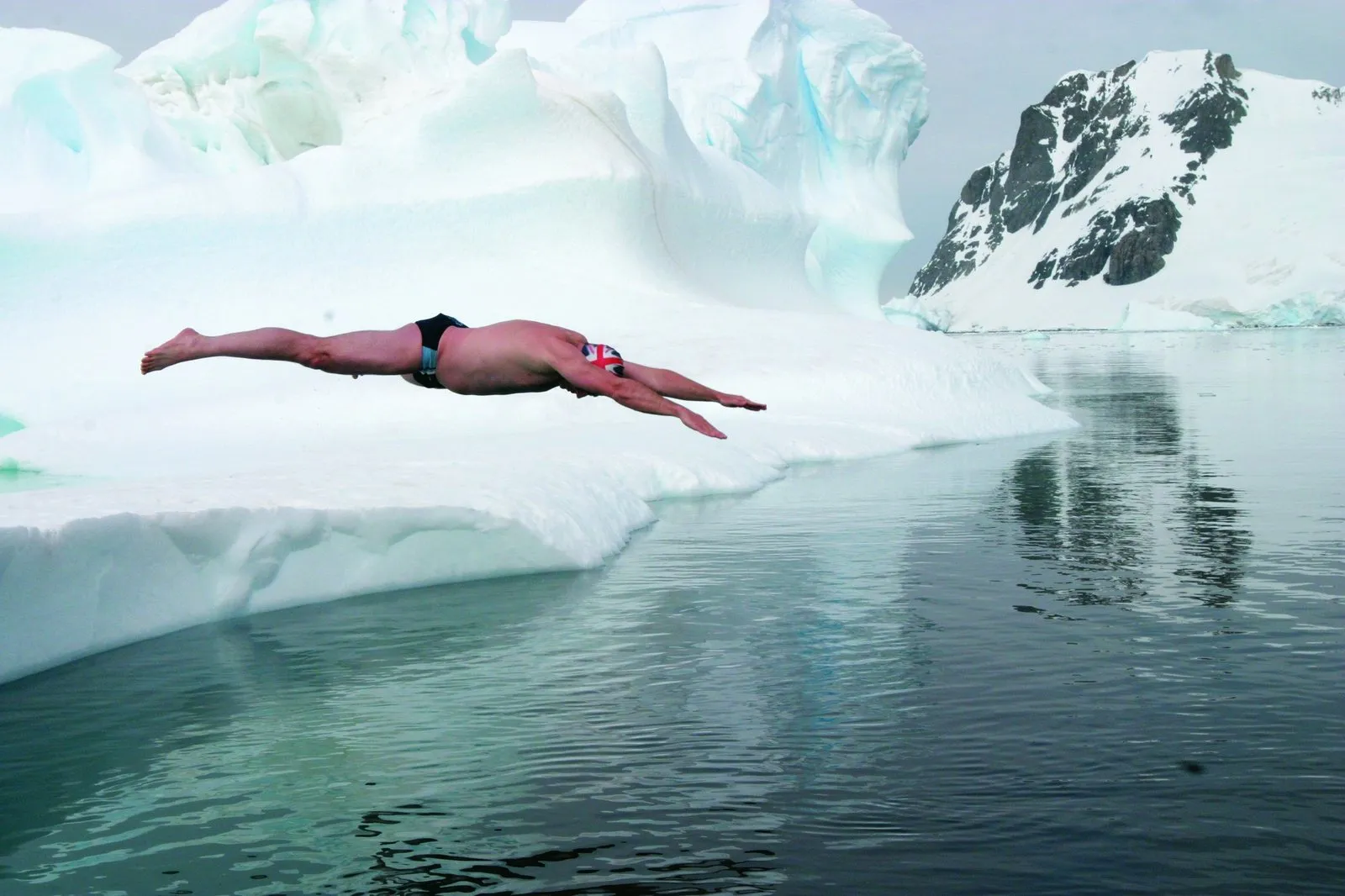



We’ve braved the local lido in June. Can we beat the world’s top cold-water swimmer in a freezer?
On July 21, 1983, scientists measured a temperature of -89.2°C at a Russian Antarctic research facility called Vostok Station. It’s officially the coldest place on Earth.

Today, FHM is in the kind of country manor that has posh women wandering about in dressing gowns with cucumbers on their eyes. We are at the Champneys Tring spa in Hertfordshire, but we aren’t sipping G&Ts or having our nails done, we’re waiting to enter a -140°C cryogenic chamber.
Next to us is Hulk-like South African extreme swimmer, Lewis Pugh. He’s the kind of double-hard maniac who, in 2007, became the first person to swim 1km at the North Pole in sea water that was -1.7°C (which is as cold as sea water can be without freezing). And the kind of double-hard maniac who, to raise awareness of climate change, recently swam in a glacial pool on a west-facing ridge located just down the hill from Everest’s summit.
He’s also the kind of double-hard maniac who is easy to tempt into an endurance challenge. Hence why he snapped our hand off to take part in a contest that could end with cold snapping his hand off.
A duel that saw FHM (dressed in a ski jacket, thick socks, and a woolly hat) take on Lewis (dressed in Speedos) to see who could stand in a cryogenic chamber for longer.
Helping us not die is Julie Turner, the senior fitness instructor at Champneys. She’s checking our blood pressure and explaining cryogenic therapy. The idea, she says, is to take blood away from your limbs, send it to your central nervous system and go into ‘minimal mode’. Then when you come out you get a jolt of adrenalin and hormone production as the blood supply to the capillaries under the skin is increased by four times. It’s good for MS, ME, helping to heal injuries and increasing libido.
Bad stuff that can happen includes any metal inside you snapping and any moisture on your body freezing up and burning your skin. We instantly develop OCD and make sure we’re drier than a dingo carcass that’s been baked in the Australian desert for eight years. Lewis looks on and laughs. He was born dry. Together, we step into a -60°C chamber to acclimatise. “This is totally necessary,” says Lewis. “I don’t think there’s any human who’s been colder than me and survived. I’m perpetually cold. But it’s about acclimatising, and if I don’t I’m just like any other normal Joe, so…”
Inside, we do some squats and keep every part of our body moving. Amazingly, Lewis looks like he’s actually a bit warm, so we enter the chamber of pain. The difference is unbelievable. The room is full of thick, white, dry ice and we can’t see anything more than two centimetres in front. The two of us walk round in circles and, for some reason, start singing the Russian national anthem. Then, during the third rendition, we break. “I’m a shrivelled-livered scribe, get me out of here.”
Lewis waves us off, then gets back to business. Two minutes. Three minutes. Four minutes. Before we got in, Julie told us the longest she’d ever seen someone stay at -140°C for was five minutes. And it was Frank Bruno. Can Lewis beat him? No. Four and a half minutes into trying to “fuck up Bruno”, the man who swam the entire length of the Thames in 21 days admits defeat, opens the chamber door and bundles out.
His skin is bright red. And he’s sort of shaking. “When I swim, my bones freeze and it’s excruciating,” he says. “But, credit to Bruno, that was hard. A different kind of cold.”
Lewis’ book Achieving The Impossible. A Fearless Hero. A Fragile Earth is out now.
From the October 2010 issue of FHM India.
Spotted a mistake, or your photo used without permission? Report a correction













 in your inbox