
The Hindustan Tibet Highway: A Bridge Between Civilizations



“Surely the gods must live here, this is no place for men.”- Rudyard Kipling on Kinnaur
The Satluj flows into India from Tibet and cuts deep and magnificent gorges as it tumbles down the Himalayas into the plains of Punjab. Along the steep gorges of the Satluj, lies Kinnaur. Located at the junction between the Himalaya and Dhauladhar ranges, Kinnaur is a middle land between India and Tibet. Ancient Hindu scriptures considered Kinnaur to be a heavenly kingdom and regarded Kinnauris as people with divine powers. According to the Mahabharata, the Kirats were the ancestors of the tribes that inhabit Kinnaur. The ‘Kirats’ settled in the isolated Trans Himalayas and founded a rich civilisation.Their remote civilization shares a lot of cultural affinity with Tibet due to extensive trade, dating back to antiquity. Thus, Kinnaur was featured in many myths and legends, some of which claimed that it had fallen from the sky. As it was not entirely Indian and not completely Tibetan, the region developed a mixed culture. Kinnaur was a part of the old Silk Route, and the people of this region participated in the Central Asian trade that was based in Yarkand and Tibet. The Shipki La pass was used by people as one of the main routes to access Tibet.

The British Connection
By the 1850s, the British controlled most of North India and actively began seeking refuge from the heat, by setting up hill stations. The establishment of the summer capital in Shimla increased British interest in the kingdoms of the upper Satluj region. Lord Dalhousie, the then Governor General wanted to explore routes to Tibet. Soon enough, strategic plans led to a growing fascination for Kinnaur, which became one of Lord Dalhousie’s favorite vacation spots. He envisioned a motorable road that would connect Kinnaur with Shimla and extend all the way to Tibet, through Shipki La. Back then, an old caravan route was used by traders and travelers to conduct overland trade with Tibet. The sublime region and the awe inspiring valleys led Dalhousie to believe that no mountain road in the world would ever surpass the Hindustan Tibet highway. Himanshu Khagta, a travel photographer says, “The construction of this road was an engineering marvel and many people lost their lives while working on this section. Today there is a memorial that commemorates their deaths.” The completion of the road opened Kinnaur to the world and it lead to an influx of tourists and adventurers, thereby ending its long isolation.
The Drive
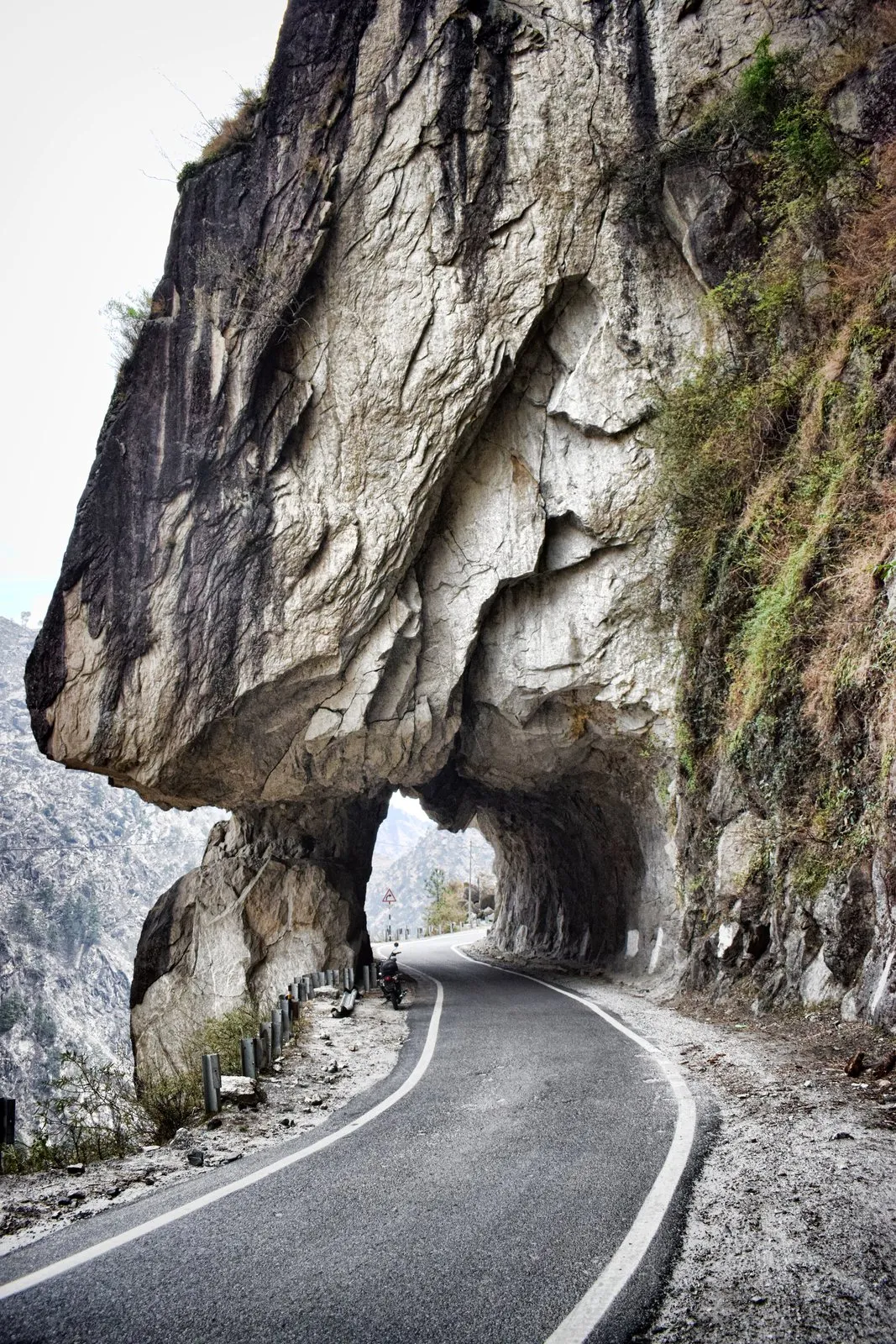
Even today, driving through the Hindustan Tibet Highway is full of challenges. The journey begins from Shimla and the road ascends smoothly to Narkanda. Narkanda is the natural first stop, as it offers breathtaking views of the snowcapped ranges. From Narkanda, the road descends to Rampur. Rampur Bushahr is the historic capital of the region and it was the Maharaja of Rampur, who supported trade and commerce with Tibet. The drive from Rampur to Kinnaur is full of hairpin bends on steep gorges. The Border Roads organization has built many sections of this road by manually cutting mountain rocks. Talking about the drive, Himanshu says, “The constant landslides and avalanches make it one of the most dangerous roads to drive on. Shooting stones/rocks that fall at bullet speed from high cliffs above, continue taking many lives. I frequently drive on this road because of the sheer beauty of the landscape. The nature overpowers your ego as you drive alongside the mighty Satluj in a dangerously steep valley with almost vertical cliffs.” When asked about the importance of the highway, Souvick Sen, a frequent traveler on this road says, “There are many reasons this highway is important. Firstly, in this part of India, the Himalayas are steeper and movement of transport goods would have been nearly impossible if there was no Hindustan Tibet highway. This highway is also the sole route which connects Spiti valley with Shimla, the capital of Himachal Pradesh. The highway has been featured on the history channel as one of the world’s most treacherous highways and this has encouraged many thrill seekers and bikers to drive on this route.”
Cultural Shifts
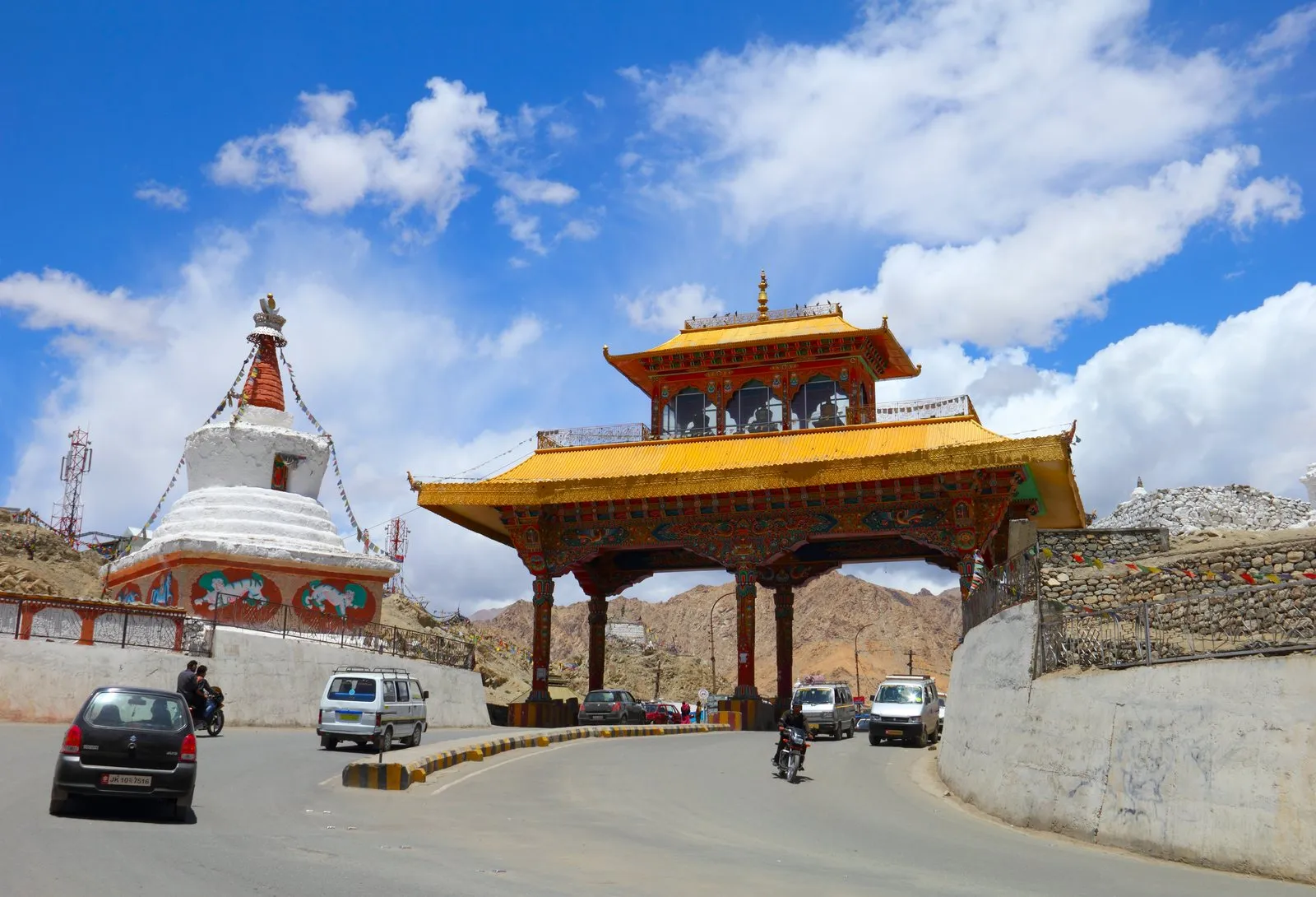
The highway begins in a hill station built by the British, goes on to a Hindu kingdom in Rampur and extends further into Kinnaur, which is a cultural mix of Hinduism and Buddhism. Ahead of Kinnaur lie Spiti and Tibet which have a primarily Buddhist culture. The sheer diversity and variety that one experiences in a 250 km. drive on this road is unparalleled. The people of Shimla and Rampur are markedly different from people of Kinnaur and Spiti. The popular Indian cuisine in Shimla and Rampur, gives way to Tibetan food after Kinnaur. The landscape changes dramatically along the highway, as the roads become narrower and the well forested valleys of Himachal change into the arid and rocky region of the Trans Himalayas. Speaking of his experiences on the highway, Souvik Sen a travel blogger says, “As the name suggests, the highway truly deserves more importance from both the governments of India and China as it can boost trade and improve the relations between people from both the countries. While traversing this highway, I felt it was the most beautiful landscape in India which extends all the way into Tibet. So for all the travelers who want to transcend regional boundaries, this highway is like a dream come true.”
On Preparation
Hill driving is a blend of instinct, skills and experience. Before attempting to tackle one of the deadliest mountain roads in the world, some basic preparation is a must. Gain some hill driving experience by driving to hill stations like Shimla and Nainital. While negotiating steep bends and turns in the hills, a thorough knowledge of your car’s capabilities is more important than having the best SUV. A good co driver is an advantage on this road, as two pairs of eyes are better than one. In this regard, a co-driver can assist you by alerting you to incoming traffic on bends. However, if you have the slightest hesitation at the thought of driving on thin roads which hang off towering cliffs, then rent a car and enjoy the views. Service your car before taking it on such a trip and make sure your brakes and tires are in perfect condition. It’s best to space out your drive over a couple of days in order to prevent exhaustion. Don’t forget to stop at apple orchards along the way to enjoy the famous Kinnaur apples.
INFOGRAPHIC: Draw a rough outline of the road with these locations highlighted in bold.
Major Landmarks: and Km’s.
Shimla
Narkanda
Rampur
Sarahan
Kalpa
Shipki La
From the August-September 2018 issue of FHM India.
Spotted a mistake, or your photo used without permission? Report a correction











 in your inbox