
The Maker: Sumit Dagar’s Braille Phone
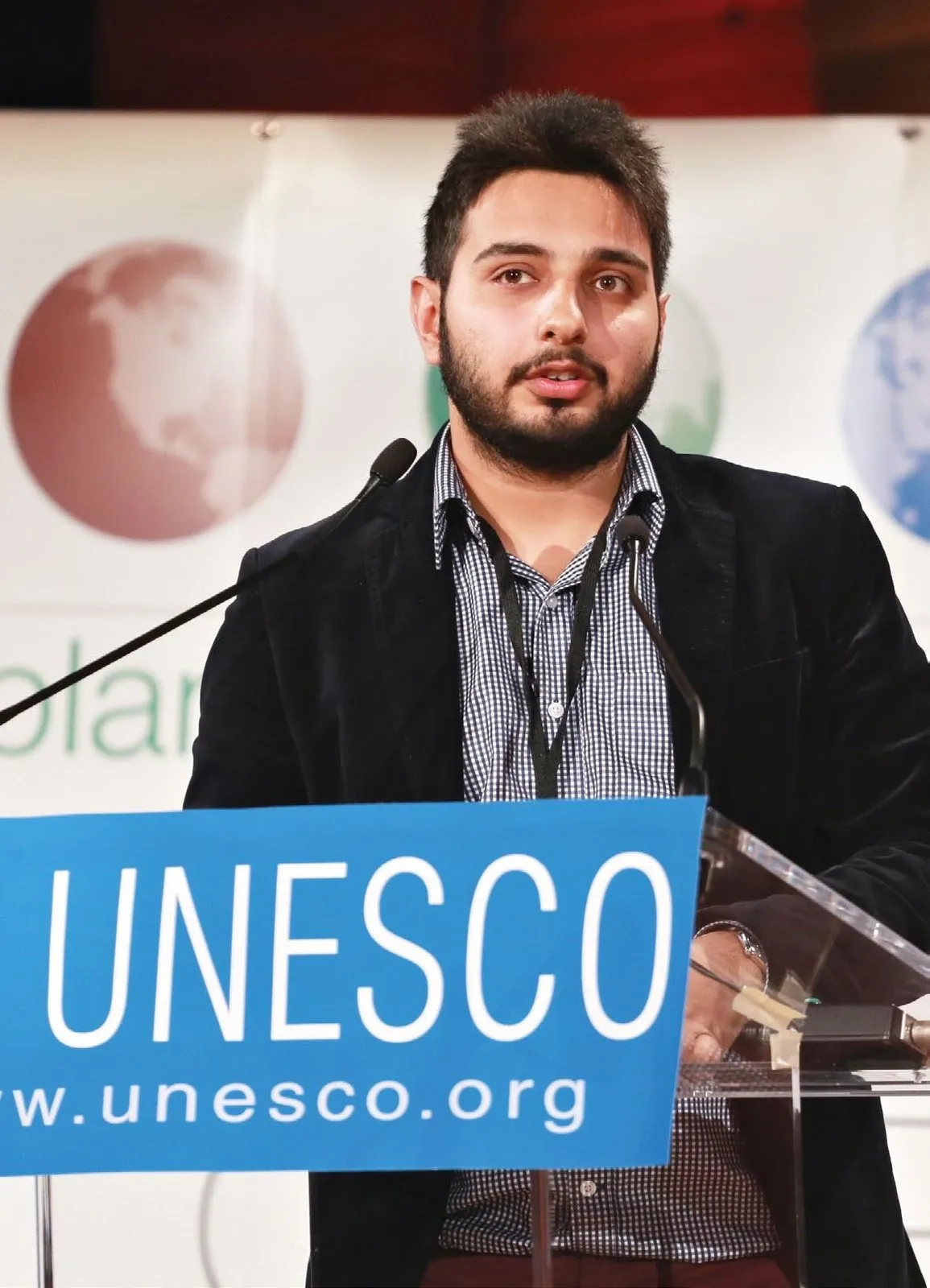


Sumit Dagar — TEDx fellow, a Rolex Laureate and Royal Enfield Bullet aficionado talks about how he wants to shape the lives of visually challenged people through his Braille smartphone.
Design has always been bridging the gap between the developed and underdeveloped societies across the globe. And technology in specific has shaped up the future of a lot of physically challenged people through the inventions of wheelchairs, leg amputations, mechanical arms etc., but the blind have always been sidelined. And this is what moved Sumit Dagar to invent the world’s first Braille smartphone.

His calling came to him as a blessing as disguise when he went for his post graduation degree in Interactive Design from the widely appreciated National Institute of Design. “NID greatly shaped and groomed my thinking process. As a designer, I learned to unlearn”, reminisces Sumit. He still remembers how the institution helped change his mental state — where experimenting and failing was encouraged and brought forward. As we were curious enough to understand the gravity of how Sumit arrived at the decision to build a Braille smartphone, his humble responses left us astonished. “Design is always regarded and seen as a luxury in modern day societies, though the proposal for it being a proficient tool for solving problems for the needful has always been sidelined”, scorns Sumit. This thought, he believes, domesticated his cogitation as a passionate designer and helped him restrain from mainstream innovations. On being asked about how the projected smartphone works and its operating platform, Sumit however declined to disclose a lot of information as it is still in a nascent stage of development, but asserted that its user-centered design approach has led to very smart and usable innovations in the context of the user. Though touted to become a very innovative breakthrough, this project will be conceived in two stages — deployment of GPS enabled phone and deployment of a final version with complete touchable display. Sumit reiterates how the current offerings are largely retrofitted solutions for the blind, where the functionalities are kept at a minimum and design is not one of the primary motivations. “This makes these offerings a complete ill-fit for today’s ‘technoptimist’ era, and hence keeps the large proportion of blind people aloof from the technological advancements. Reams of these products are audio enabled products which enable one way communication, making the products highly unproductive in developing a nation like ours”, exclaims Dagar. This provoked Sumit to develop a phone from scratch, which is not only a voice enabled device but also touch responsive, which would enable visually impaired people to have a faster mode of communication. His innovation will work with a simple framework of a screen technology that will use pixels to vary height, rather than colour. Thus, a high resolution screen will be capable of conveying Braille texts, various shapes, figures and most likely maps as well. Currently the project is in its first stage of developing a product, for which Sumit and his team have incessantly been testing prototypes with visually challenged people. The team is now confident of cloaking in some financial help from various government and business institutions as they have a dedicated team and a business plan already in place. Sumit points out how making the phone ‘affordable’ and locally available is the crux of the whole project. He is also spearheading an assistive technology group, with the intention of designing products for the disabled. While conversing about his favourite pieces of technology, Sumit considers the Nokia 1100 as the simple innovation, Jawbone Jambox as the most sensible and the Google Glass as the upcoming one. An iPhone, iPad, MacBook, iMac, and Sony RX100 are the gadgets he embraces for his daily nitty gritty. On top of all this Sumit is also an avid filmmaker, which is amongst his other hidden talents that he doesn’t wish to embrace. At least not yet…
How is it different
Platform
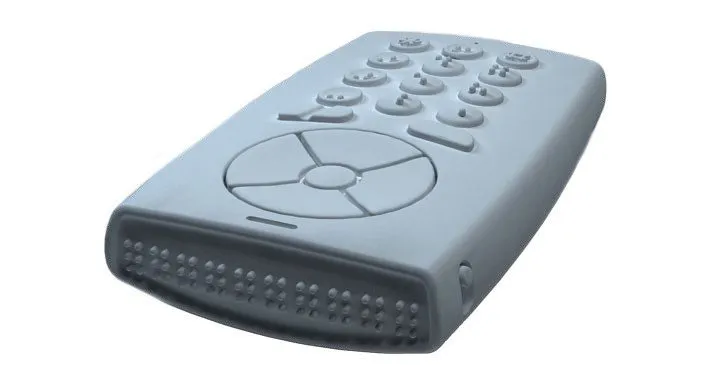
The framework of the Braille smartphone will work with a simple framework of a screen technology that will use pixels to vary height, rather than colour. Thus, its screen will be capable of conveying Braille texts of various shapes and figures.
Screen
The elevation and depression of the pixels will allow the screen to form “touchable” patterns which users will be able to “feel”. The screen will hence display “touchable” alphabets and Braille characters and even animations and videos.
Operating system
This is an open platform for developers to implement innovative applications using a list of sensors that replace vision effectively and a display that is highly functional. This family of devices is a huge step towards the betterment of technology for the blind.
What to expect?
Ream of applications and features like music player, games for the blind, a GPS navigator to help in commuting, scan and translate functionality, possibilty to click pictures and convert images and videos to touchable patterns.
Quick facts
According to the World Health Organization, 22 per cent of the world’s 285 million blind or sight-impaired people are in India. Some agencies estimate that 15 million Indians are blind.
From the August 2013 issue of FHM India.
Spotted a mistake, or your photo used without permission? Report a correction







 in your inbox