
The Realistic Masterpiece
Every Work Of Art Has A Backstory, But This Particular Piece Has A Special Place In The Hearts Of Both Its Creator And The Audience. Let's Find Out What Makes It So Unique.
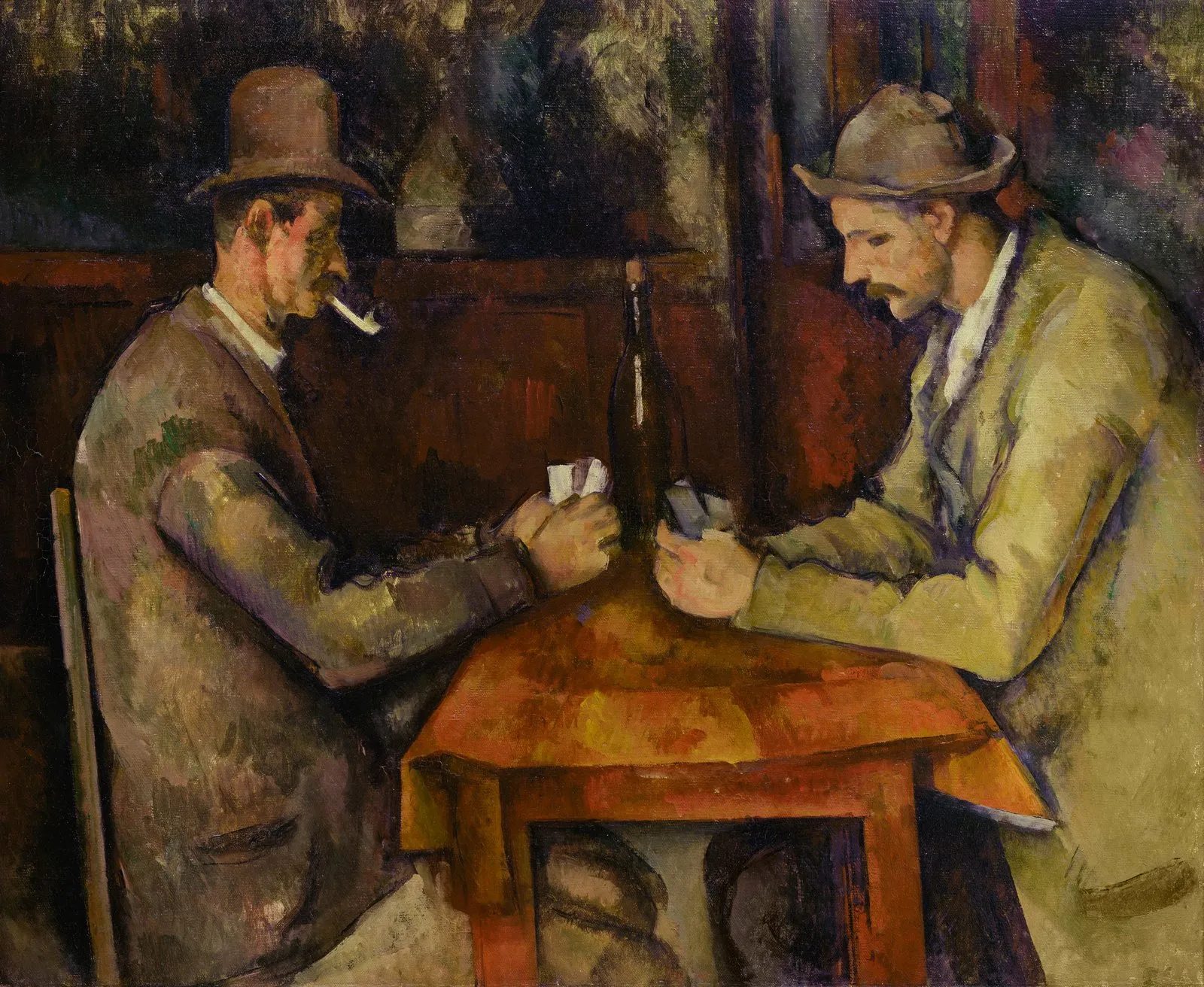



Art is about making an emotional connection with the audience. It's both individual and universal at the same time. Just like artists have a deep-rooted attachment to some of the exquisite art pieces they create, there are some artworks that win the hearts of the world and become distinctive.
This month, we’ll be discussing one of the few paintings that has captured the imagination and admiration of both connoisseurs and the general public - "The Card Players" by Paul Cézanne. This masterpiece, created in the early 1890s, stands as a testament to Cézanne's innovative approach to art and his deep connection to the rural Provencal life in France.

"The Card Players" is a series of five paintings, each depicting Provencal peasants engrossed in a game of cards. The version that has garnered the most attention and acclaim is the one now housed in the collection of the Royal Family of Qatar, which was acquired in a historic art sale in 2011 for a staggering $250 million, making it one of the most expensive paintings ever sold.
Cézanne's approach to "The Card Players" series was revolutionary for its time. Instead of romanticizing or idealizing his subjects like other artists, he chose to portray them in an unadorned, almost documentary style. The figures are depicted with a remarkable degree of realism, their facial expressions and body language conveying the intensity of the game. Cézanne's mastery of form and composition is evident in the way he arranged the figures around the table, creating a sense of depth and balance within the frame. One of the most striking aspects of "The Card Players" is Cézanne's use of color. He employed a muted and earthy palette, with shades of brown, gray, and blue dominating the canvas. This choice of colors not only reflects the rustic setting of the scene but also adds a sense of timelessness to the painting.
Cézanne's meticulous attention to detail is also evident in the depiction of the card players' attire and the objects on the table. Every fold in their clothing, every wrinkle, and every card on the table is rendered with precision. This commitment to detail allows the viewer to immerse themselves in the scene, as if they were observing the game in person.
The significance of "The Card Players" goes beyond its artistic merit. It is a window into the world of rural Provence in the late 19th century. Cézanne, a native of Aix-en-Provence, was deeply influenced by the landscape and the people of his region.
From the May 2024 issue of FHM India.
Spotted a mistake, or your photo used without permission? Report a correction













 in your inbox