
Apache Indian: Chok Dere
He’s alive. And kicking. Well, almost. Apache Indian on why Chuck Dey is actually spelt Chok Dere and how living in Goa will help him break into Bollywood.
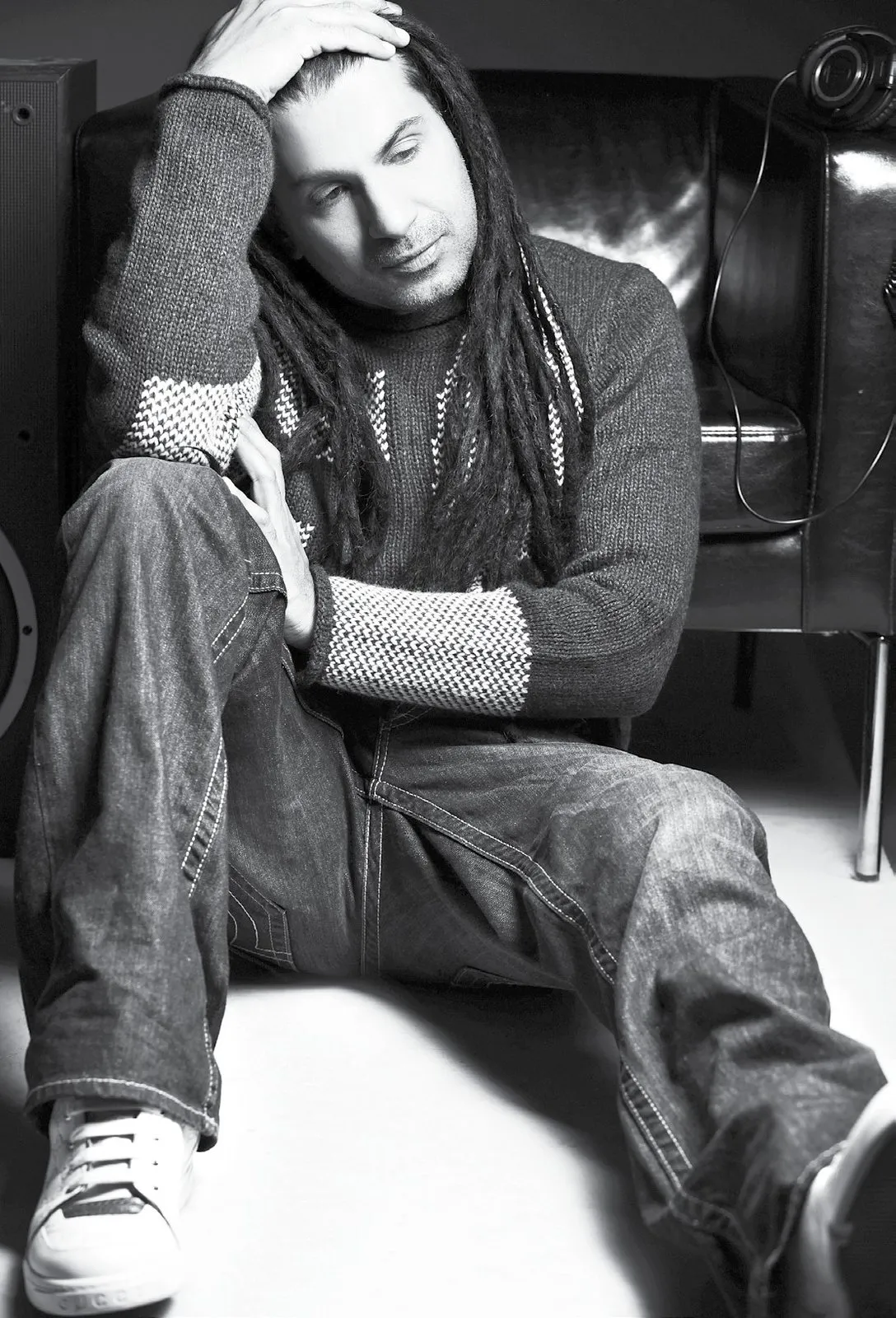



He’s alive. And kicking. Well, almost. Here in an exclusive no one else wanted, Apache Indian on why Chuck Dey is actually spelt Chok Dere and how living in Goa will help him break into Bollywood.
When Chok Dere released in 1993, Petrol was 9 bucks. YouTube – the mark of all things spectacular was 12 years away from being invented and India didn’t have more people than anyone else in the world. Even then, somehow, he was a phenomenon. A man with dreadlocks who inspired a nation to rap Chok Dere to everything from bread pakoda orders to profanities. A man who was popular before we knew who Shaggy was or that pizza’s could be thin crust. So when the publicists of Apache Indian approached us for an interview, our first question was, “errrm...is he still alive?” Turns out he is. And he is also in full-blown denial mode.

FHM: What’s your desi connect? You weren’t even born here.
Apache: My family is from India. We have a lot of family members in Jalandhar. So now that I have shifted to India, I will meet them more often than now.
FHM: There is a less popular track of yours, Roti, which was extremely beautiful… Tell us about it.
Apache: Wow! You remember that track?
FHM: Obviously! It was strong enough to make us feel homesick.
Apache: See, no matter how many places you go to, you never get detached from your roots. I grew up in UK but my parents were from Punjab, so I’ve been given an Indian upbringing. My music is the representation of my culture.
FHM: Since you have grown up in a racially mixed community, you must have a lot of stories to share.
Apache: Back in UK, where I stay, there are a lot of people from different countries and communities. There are a lot of Asians, Jamaicans and obviously, whites. When I was a kid, I would always face this struggle to decide whose culture should I follow – the whites in whose country I live, the Jamaicans who have a completely tangential culture or that of my parents. The atmosphere in the house and outside it would be poles apart, and what was right outside my home wouldn’t be right inside it. I would often fight with my parents, but when I grew up, I started to respect all sensibilities, including mine.
FHM: What happens when you become an overnight success?
Apache: It does get to your head when you perform at big events, but soon you get used to it, and so does your mind. I was arrogant initially, but with time I mellowed down. I am a peaceful and composed man now. However, I’m not as approachable as I was when I was just Steven Kapur, and not Apache Indian.
FHM: What’s the story behind your stage name?
Apache: Nothing.
FHM: So you mean to say that there is no logic behind stage names?
Apache: There is for a lot of people, but not for me.
FHM: We are sure your dreadlocks have a story...
Apache: Though popularised by Bob Marley, dreadlocks are very much Indian. Most of the people who are identified with these dreadlocks were inspired from the sadhus. Mine is maintained by a lady who combs and washes it regularly.
FHM: You continued to EXIST after Arranged Marriage and Chok Dere...
Apache: Obviously, YES! However, I wasn’t bhangra, so you might think that I wasn’t around.
FHM: What does that mean?
Apache: Press wouldn’t talk about songs that don’t have an Indian flavour. I was performing extensively in Japan for a few years. I am a reggae artist, and that’s what is demanded of me when I travel around the world. Not everyone is keen on bhangra or a mix of it with reggae.
FHM: Let’s move on to your new single, It Is What It Is… what makes it special?
Apache: It has been written and recorded in America with Jims Beanzs from the Sunset Entertainment Group (SEG).
FHM: No offense, but who is he?
Apache: He has worked with some of the most hot and happening names like Timbaland, Nelly Furtado (Loose), Shakira (Oral Fixation Volume 2), Pussycat Dolls, Jamie Foxx (Intuition) and Britney Spears (Circus). In India, he has collaborated with Sonu Nigam and Shankar-Eshaan-Loy.
FHM: Are you pumped up about this collaboration?
Apache: Everyone, and not just artists’, want to do something that’s really big in scale, and this album is that big thing for me. I have travelled to so many countries over the last two years that I wanted to compile an album that celebrated my life, my work and what I am today.
FHM: Go on...
Apache: This will also help me connect with newer generations.
FHM: Do you think it will recreate the magic of Arranged Marriage and Chok Dere?
Apache: Hmm. I don’t think so. I am too old to even relate to a song like Arranged Marriage now.
FHM: Not every artist would say something like that…
Apache: You can’t change the fact though.
FHM: How do you plan to promote your new album?
Apache: There is a multi-city Asia tour including Mumbai, Delhi, Hyderabad, Pakistan, Malaysia and Philippines. I will be back for it in November.
FHM: How come you never sang for Bollywood?
Apache: I did for AR Rahman in Love Birds (1996). The song was No Problem. I also lent my voice for Abbas Mustan’s Race.
FHM: The latest one?
Apache: No, for the first installment.
FHM: Which track?
Apache: The one that featured Taz of Stereo Nation. I don’t remember the exact track.
FHM: A Bollywood project is what every artist in India vies for, so what are your intentions?
Apache: That’s my main motive behind It Is What It Is. It will help me break into Bollywood. Hindi films are so popular that anyone would like to be a part of it. Even internationally, Bollywood has a respectable fan following and if I can have a piece of the pie, why not. I have even taken up a place in Goa so that I can focus more on projects here.
From the October 2013 issue of FHM India.
Spotted a mistake, or your photo used without permission? Report a correction










 in your inbox