
Britain Is Bouncing Back... and Bruce Dickinson Is Making It Happen
Think the economy is tanking? FHM and one heavy metal god, Iron Maiden’s Bruce Dickinson, beg to differ… A visit to his Cardiff Aviation business.

Think the economy is tanking? FHM and one heavy metal god beg to differ…
Almost one year ago, Britain manufactured its last ever typewriter. The machine, a Brother CM-1000, came off the production line in November, was given to a museum for safe-keeping and that was that. For many, the sound of the Wrexham factory’s metal gates clanging shut for the final time was also the sound of the last nail being driven into the coffin of British industry. It was official, the experts announced: Britain was no longer a country that built things.

It’s now 11 months later and a lot of those same experts are going quiet. New studies have shown that while the economy is still a long way from rallying (unemployment hovers at around 7.8%), there are reasons to be cheerful. Chief among these reasons? We’re making stuff again. You read that right. Britain still makes stuff. And it’s good stuff, too. The sort of stuff everyone from newly minted young families in the suburbs of Shanghai to elite European militaries want to own. In September, global financial boffins were stunned to discover the UK economy had been given a totally unexpected shot in the arm, after the British manufacturing sector expanded sizably for its fifth consecutive month. The short of it: our country’s output is rising at its fastest rate for almost 20 years.
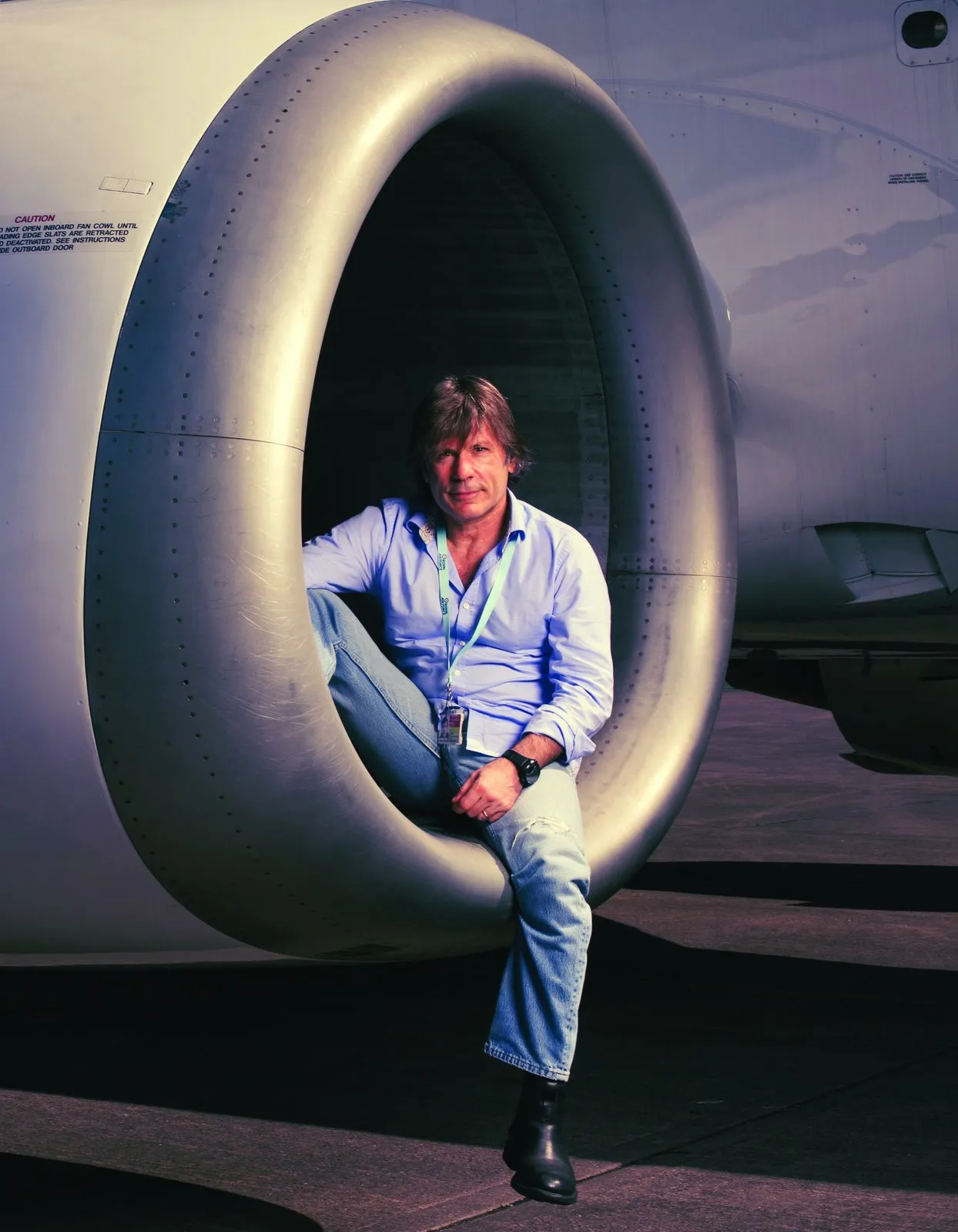
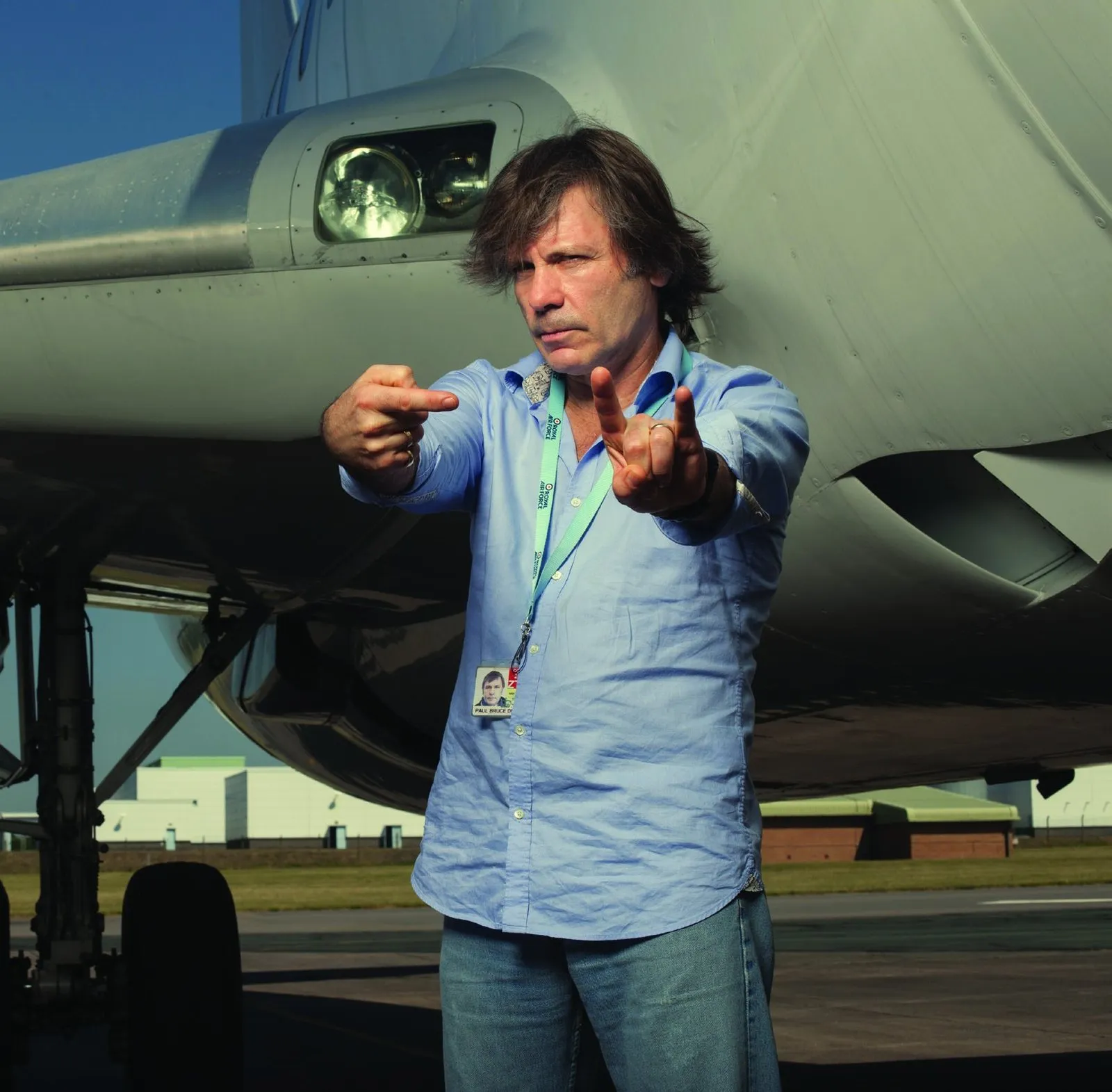
FHM decided to pay a visit to a man whose never-say-die spirit and entrepreneurial attitude is helping reignite the touch paper of British industry. Situated by the mouth of the River Severn, surrounded by 6,000 ft of immaculate runway and housed inside two enormous hangars is Cardiff Aviation Limited – the aircraft business set up last year by one Bruce Dickinson. The Bruce Dickinson most famous for fronting legendary heavy metal outfit Iron Maiden for the best part of 30 years. And why not? It seems sort of fitting that in this period of uncertainty and economic turmoil, it should be a guy like Bruce that rushes to Britain’s aid. His on-stage persona is not a million miles away from a denim and leather-clad Michael Palin, a swashbuckling storyteller thrilling the world with exceedingly British tales of high adventure featuring fighter pilots, cowboys and cavalry charges. He also bloody loves planes. The son of an engineer, Bruce became a qualified commercial pilot in 1998. Since then he’s used his proverbial wings to rescue stranded holidaymakers in Egypt and Lebanon, retrieve British RAF pilots from Afghanistan and ferry football teams — including Liverpool — to matches in Europe.
That’s right — while most off-duty rockstars are happy to cultivate a paunch and wait for the royalties to roll in, Bruce Dickinson (a man who has played thousands of gigs and sold bajillions of records) went and got himself a day job.
We meet the main man on a sunny Welsh afternoon for a tour of his business’s base of operations. He appears remarkably chipper for a 55-year-old who, just 14 hours previously, was screaming his heart out in front of 25,000 people in Zagreb, Croatia. “I don’t know whether there’s a bit of OCD or whatever but when I get stuck into something, I get obsessive,” he says when we ask him about his work rate (apart from singing and flying, Bruce is also an Olympic-level fencer, broadcaster and published novelist). “Every waking hour I’m thinking, ‘OK, I am going to sort this out, I am going to master this.’ It’s wanting to get it.” Cardiff Aviation, launched in May last year, is Bruce’s attempt to “get” the business world. The goal is for the company to become a bustling one-stop shop for all your aircraft needs. Repairing, building and servicing parts, training pilots and chartering flights — if all goes to plan, its CV is going to look as busy as the man who founded it.
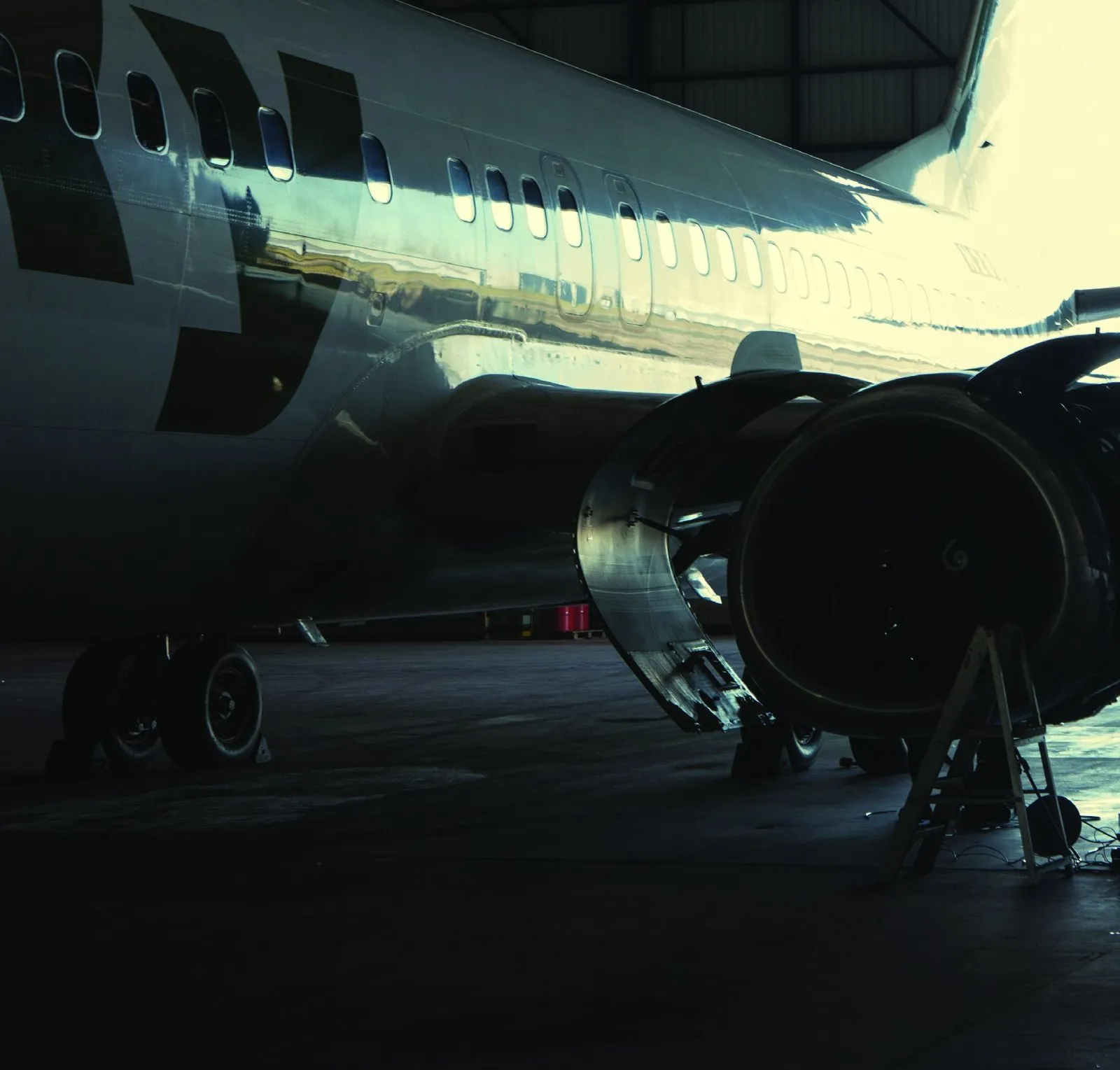
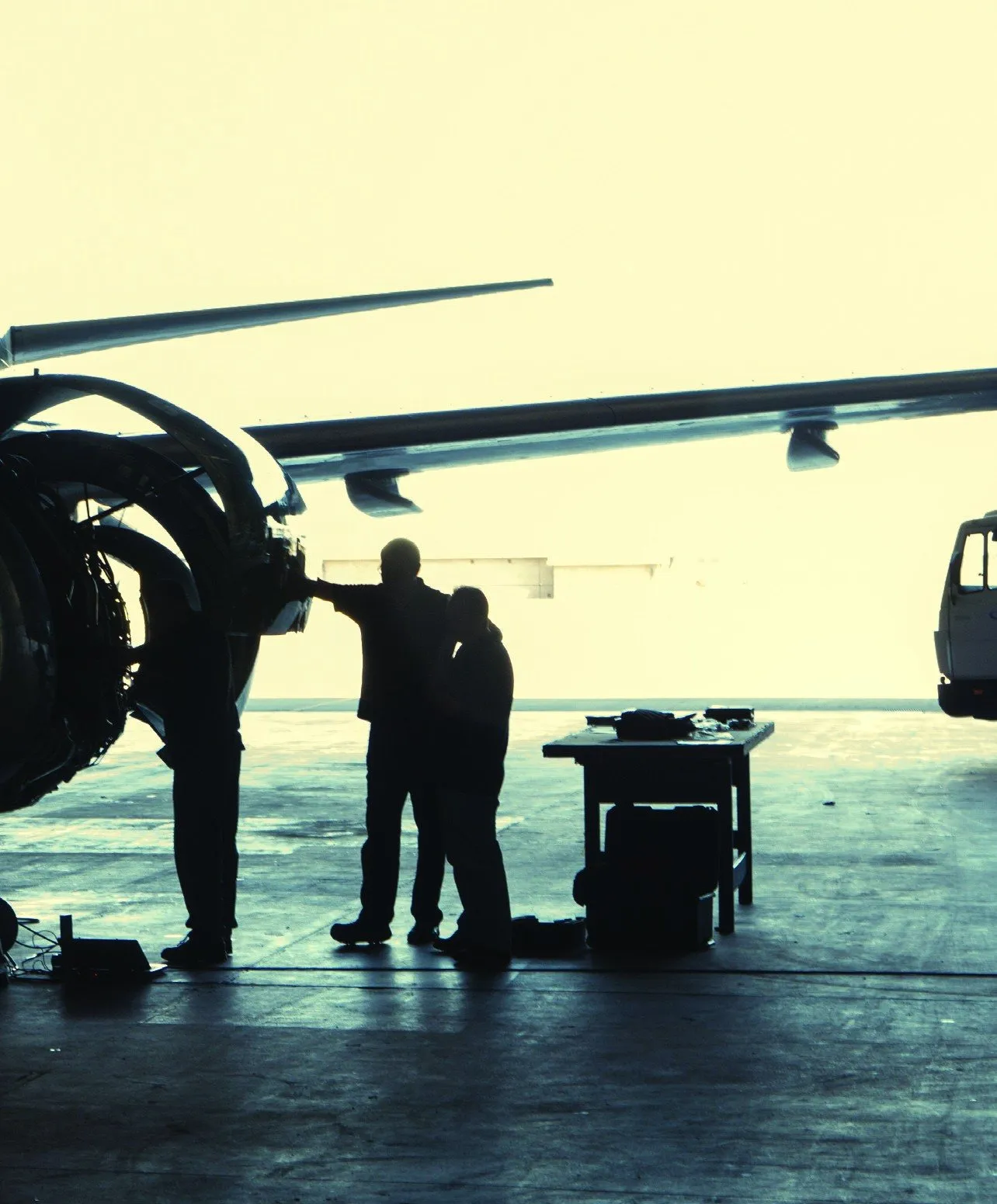
He walks us through the hangars, each one big enough to house a couple of Boeing 737s and still have room to spare. Towers of electric-blue scaffolding lend the interiors a distinctly space-age feel. Engines the size of vans are wheeled out as engineers potter about, tinkering with the underside of a freshly painted fuselage. Each time Bruce enters the orbit of a large piece of equipment, his face lights up. He’s not so much a kid in a sweet shop as the kid who owns the sweet shop. And the sweet factory.
“Look at these,” he says, running up to a set of heavy-duty machines that look like something Arnold Schwarzenegger might get crushed by at the end of The Terminator. “These things were used to build motorbikes. Can you believe they wanted to get rid of them?” The hangars — all 132,000 square feet of them — are full of aeronautical odds and ends. It’s a ginormous inventor’s workshop, but one that could shortly end up employing around 1,000 people.
“When they announced plans to open this place, everyone in Cardiff with an engineering background got excited,” says Jen, who works at the facility. She admits that when she went to the job interview, she’d never even heard of Bruce Dickinson, although her male friends went berserk with envy when they found out. “They want me to get him to sign stuff for them. But that seems like a weird thing to ask my boss to do.”
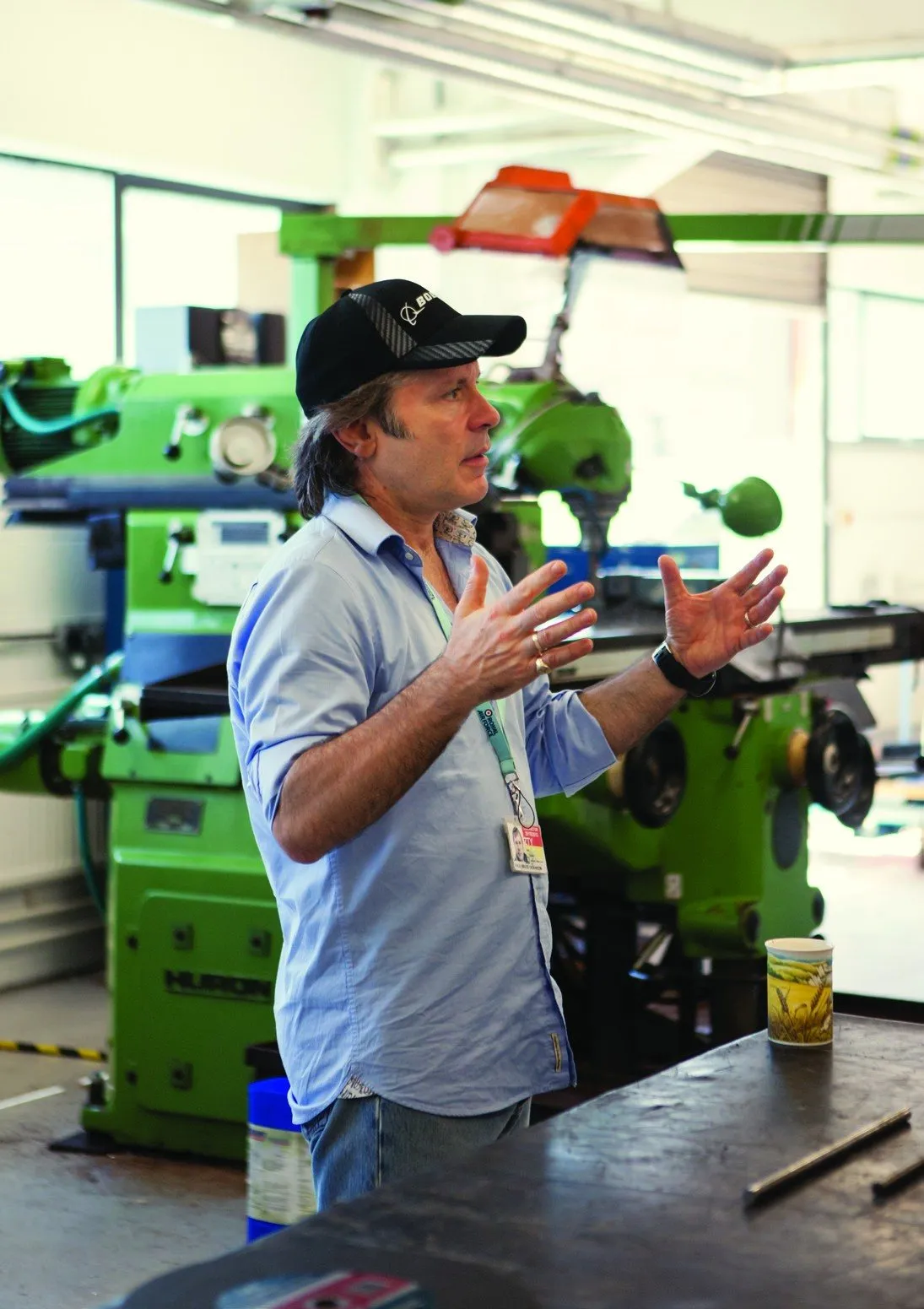
So what does this grizzled veteran of the heavy metal world make of Britain’s re-emergence as a player on the global manufacturing scene? Is the future all blue skies and plain sailing, or do the next generation of businessmen and entrepreneurs have a nasty patch of turbulence coming their way? “It’s in our DNA to be a trading nation,” declares Bruce, sitting down in a conference room. “An inventive trading nation. A stunning percentage of the inventions developed in Japan and Korea are of UK origin. We think outside the box because we’re a nation of eccentrics. We don’t see the world in the same way other people do. It’s rooted in our culture, our humour, in Shakespeare.” That’s all well and good, but perhaps if we were less eccentric we’d still be the ones making everything, not just inventing? “We still do make a lot of things,” he argues. “Cars especially. Jaguar Land Rover just invested billions in a new engine plant. Aston Martin and Bentley are hugely successful car manufacturers. Sure, they’re not owned by British people any more. But British craftsmanship is what’s being used. About 80% of F1 teams are based in the UK, and all their engineers are British, too.”
The idea of our country not being the steel-bashing “workshop of the world” but, instead, a specialised manufacturer of high-quality goods, is one that is slowly catching on. Julie Deane, founder of the Cambridge Satchel Company, whose leather satchels you might have seen in a recent Google Chrome ad, has said as much in the past. “There is now an awareness of UK-based production that appeals to our customers as a mark of integrity and quality,” she says. According to Richard Holt, economist at Capital Economics, this is even more true when the company isn’t actually British-owned. “Individual brands such as Jaguar do carry weight,” he tells FHM. “These are brands partly sold on Britishness. If customers start to feel that the Britishness is faked, sales could suffer.” It’s hard to believe at times that the mild-mannered middle-aged man currently talking to us in very businesslike terms about profit margins is one and the same as the rock colossus who has laid waste to sold-out arenas in places as far-flung as Jakarta and Rio de Janeiro. Yet every now and then, when he gets animated, you catch a glimpse of the other guy. His stance becomes lively and a bit theatrical. The voice takes on a booming, room-filling quality. It all serves as a reminder: unlike his colleagues, when this guy’s finished approving budgeting documents, he doesn't drive home, open a Stella and fall asleep in front of Coronation Street. No, he picks up a microphone and belts out the chorus to Fear Of The Dark in front of tens of thousands of rabid fans.
One topic gets him more animated than any other: the idea that Britain’s become so stuck in its ways, the system has forgotten how to support people who could really make a difference. “The civil service in this country is institutionally prejudiced against entrepreneurs,” he sighs. “There’s no sense of urgency. People want to arrange meetings to arrange more meetings. I just want to get stuff done! If we’re going to make it so hard for people to accomplish things, we might as well all move to fucking China.”
We ask if Bruce has had to put up with much bureaucratic time-wasting in the last year and he bursts out laughing. “Oh, right, let me think how many pieces of legislation keep being dropped on us every five minutes. Endless forms to fill in.” He stops midflow, suddenly very serious. “We’re lucky. We have money in the bank. But if we didn’t... do you know how difficult it is to get a loan now? It’s tragic when you think about how many people have probably been put off doing something because of the hoops you have to jump through to get banks to lend you money.”
On the other side of the runway, a tall chain-link fence topped with barbed wire marks out the perimeter of an SAS support group training facility. The crack of their rifles is drowned by the engines of a Chinook helicopter flying overhead.
“We should be telling young people, ‘Go away and think up a crazy idea and don’t let anybody tell you it’s not going to work,’” he says, watching the Chinook wheel around and fly off into the distance. “Banks are meant to be helping normal people achieve their goals and build businesses. And we’ve lost that.”
The truth is, if we want to capitalise on the potential for manufacturing in Britain, we’ll need more individuals like Bruce willing to inject their own time, money and enthusiasm into kickstarting British industry, even when it feels like the system is working against them. Tony Boylan of stillmadeinbritain.co.uk is adamant there is a demand for things manufactured here. “There’s more and more of a demand for the ‘Made in the UK’ label, especially when it comes to clothes,” he says. “The big issue is the lack of trained personnel. We need more skilled professionals in this country. But no one’s training anyone.”
Holt’s concern is that our government's inability to recognise opportunity may have already cost us dearly. “Look at graphene,” he says. “The new wonder material as thin as clingfilm but tougher than steel. It was developed at the University of Manchester, but will it be exploited here? The Chinese have taken out 2,204 patents on graphene products. In the UK, we’ve taken out 54. It’s worrying.”
Meanwhile, Bruce and his team will continue to plug away at making Cardiff Aviation a barn-storming 21st-century success story. “You have to have the balls to go out and make big decisions,” he says. “It’s just down to the type of person you are — whether when you were beaten up in the playground, you turned around to the bully and said, ‘Fuck you — you didn’t hit me hard enough, you cunt.’”
A dig at Bruce’s solo artist performance
Tattooed Millionaire 1980
Bruce started his first solo album project when he was approached to record a song for A Nightmare on Elm Street 5: The Dream Child. With this album, Dickinson began creating a solo album which was fundamentally different from his works with Iron Maiden. The album peaked at number 14 on the UK charts.
Balls to Picasso 1994
Bruce’s second effort on his solo career after he officially left Iron Maiden. This record marked the beginning of Dickinson’s collaborations with Roy Z, who would work on many of Dickinson’s later albums. The album garnered mild response.
Skunkworks 1996
Originally, Bruce intended for Skunkworks to be the debut album of a band by the same name. However, his label did not want to publish the record under any other name than Bruce Dickinson. The album was further moved away from Iron Maiden’s progressive rock prowess to alternative rock sound.
Accident of Birth 1997
This album saw Bruce’s collaboration with guitarist/producer Roy Z again. He was also assisted by another former Iron Maiden member Adrian Smith and the two would later return to the band in early 1999.
The Chemical Wedding 1998
The record drew some inspiration from the works of William Blake, featuring sung and spoken excerpts of his prophetic works and poetry. As with the previous album, it featured Iron Maiden guitarist Adrian Smith, then a member of Dickinson’s solo outfit.
Tyranny of Souls 2005
The songwriting on the album was split between Roy Z and Dickinson. During composition, Roy sent recordings of riffs to Dickinson, who was on tour with Iron Maiden. Dickinson subsequently wrote lyrics and melodies. Roy also served as the album’s producer and played all guitar parts.
From the December 2013 issue of FHM India.
Spotted a mistake, or your photo used without permission? Report a correction











 in your inbox