
Captured Scot free: Tycho
We caught up with Scott Hansen, the man behind American ambient music project Tycho, before his first ever gig in India.
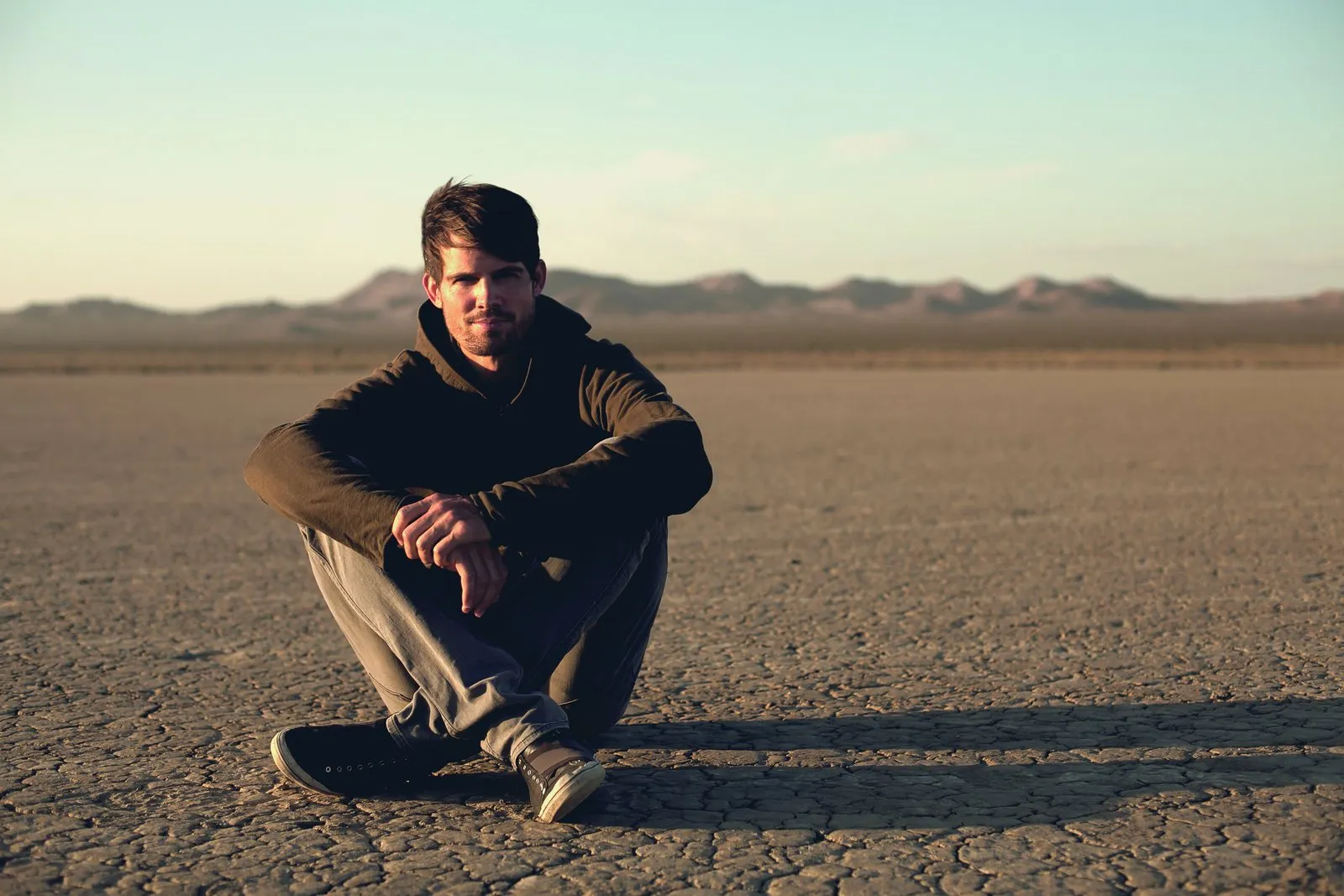



It was a regular Sunday afternoon at the gates of the iconic Mehboob Studio in Mumbai, where cars played petty hide and seek with a concrete round-about that Mumbaikars infamously call gol chakkar. I was a tad sceptical at the venerable silence of the entrance. An impressive line-up of performances just didn’t complement such a dull exterior. I had a slot to interview Scott Hansen, the man behind the American ambient music project, Tycho, who was to perform here later in the evening. Was I up for some major disappointment or had I read the message wrong? I checked my phone and my heart sank. I was at the right place, on the right date at the f*cking right time. Then why was everything so bloody quiet? There was no other way to find out but to enter, which I did... only to realise that the gate was something of a worm hole that sucked me into another dimension; one that had thousands of people inside, all ready to rock.
“I don’t have a huge understanding of Indian music, but this is gonna get into an opportunity to get here and learn... and see what’s going on. But from what I’ve heard there’s a big electronic music scene here at present,” Hansen told me as we settled down on a couch in a small room adjacent to the stage they were about to perform on. My first question was about his comprehension of the music scene in India. There were large speakers playing electronic music while most ringtones we heard around from the security crew strummed Hindi songs.

And what about the classical music? A lot of bigwigs had crossed over to the West in the face of immense popularity, after all. “Are you talking about people like Ravi Shankar? There’s not a lot of scope to explore that in the US, at least now. There were some Eastern influences in the 60s. Now there are some influences in trance music, but that’s all a very appropriated version of it. I am yet to listen to purer versions. Most of the stuff that makes sense to me has been watered down a lot by the time it reaches me,” and he let out a smile that was both apologetic and honest. I found a suppressed guilt in my own question as despite its origin, growth and development classical music has coiled up within bright nooks that even Indians hardly explore anymore. I decided to give Indian music a pass and move on.
Tycho essentially captures the sound of lo-fi analog media, which lets the music stay very organic without distortions and noisy beats. But how does someone compose music without lyrics? Isn’t it difficult to create an instrumental piece without words lending it a theme? “I don’t know. I don’t have anything to compare it with.

Lyrics don’t come naturally to me, so it’s not like the lyrics are dying to come out. I don’t think there’s any language attached to music.” I’d read this about Mick Jagger that he just hummed or made nonsense words while writing the melody first and later attached words to it. “Yes, I find that interesting. With all due respect to everyone, that’s also my approach. I don’t think their job’s easy (who go words first), it’s just a different way of approaching.”
But as a writer I tend to create something out of nothing by going about a single idea and following a logical pattern of thoughts. How does a musician think? Incidentally, Scott did a lot of creative writing in his college himself, so he understood what I meant. “For me too it’s an experimental process where it’s like starting with a pretty simple idea and slowly building on it. And sometimes when you look back at it you go like, ‘Wow!
That’s pretty complex,’ and you realise that it was just in the moment and inspiration where a lot of things happened at once. But in general it’s all about the process and just slowly building this thing that ends up being greater than some of its parts. But really it’s all these little ideas put together that do the trick.”

So, is it like sewing together all those ideas to create something? “It’s usually just kind of messing around with the guitar or a keyboard and saying, ‘Oh that sounds cool.’ There’s always an emotional space that’s informed and finds what’s happening. It’s not like I’m trying to channel to specific things or ideas. It somehow seems more difficult to me to take an idea and translate it into music. I just proceed to creating something as I go with the flow and improvise it... that seems a lot easier,” answers Scott, still seemingly lost in thoughts. Interestingly, Scott was a professional graphic designer and music came to him as a gradual realisation rather than an urgent passion. He learnt music backwards... technology, samplers and the jam machines first, and then instruments like the keyboard, guitar and the engineering bit. His genre is post-rock. “You know, most of the time people use it, including me, because it’s easier to describe where the music fits. But I don’t think it really fits in a particular genre because it borrows a lot from several styles. For me, the music is formed by the kind that I listen to a lot... Rock. It’s through the prism of electronic music, which is how I came into making music.” So, it’s more about taking that rock music influence and playing it through electronic style.
Despite being progressive and futuristic in composition and style, the band reminds me a lot of old bands like The Beatles and Pink Floyd in the sense of all the human elements that find their way in their music, even though without words. People mumbling things here and there, sometimes just gibberish, breathing, or simple weather reports read out. Is it an influence or just two creative sets of minds thinking alike? “Oh there’s an influence, there’s definitely an influence of The Beatles. I think everybody on earth is a huge fan of them. There’s was actually the first album that I owned (it was given to me), when I was eight. Then I’d been listening to my dad’s records and that obviously got ingrained. And a lot of other things too influenced me,” says Scott, visibly excited. “In general, electronic music can be very stark and cold if it doesn’t have any human element. And you use devices like that (human elements) to bring something organic and relatable to people and, in a way, make it cinematic. I’m always trying to set this scene or paint a picture in creative space that if they use this space they can use these connecting elements in an otherwise very abstract space.”
Ever thought of collaborating with ethnic sounds? I ask him. The sound crew has signalled him for sound check. I’m afraid he’d grow impatient and would want to leave. To my relief he signals back that he’d be there soon. “I guess I just don’t have a lot of access to that kinds stuff. I don’t know anyone who plays the Sitar or the jambe. That kind of stuff always interests me and I think I will find my way to it, though.” Clearly right now he’s still trying to carve out a space for what he originally envisioned for. Now that we have some more time at hand I ask about his personal taste in music. “Mostly rock, postrock and psychedelic. I listen to lot of traditional rock music, like the 70s type. There are a lot of bands doing their own versions of music from that time that I listened a lot during my teenage and growing up years. So, it’s always good to listen to that.” As if in a stream of consciousness Scott continues that there’s a component to life and to the human experience that is intangible and that nobody’s been able to nail down. And that’s a pretty big influence in his work. “That other space that I can’t seem to find and locate, I think music is the only way to translate it...”
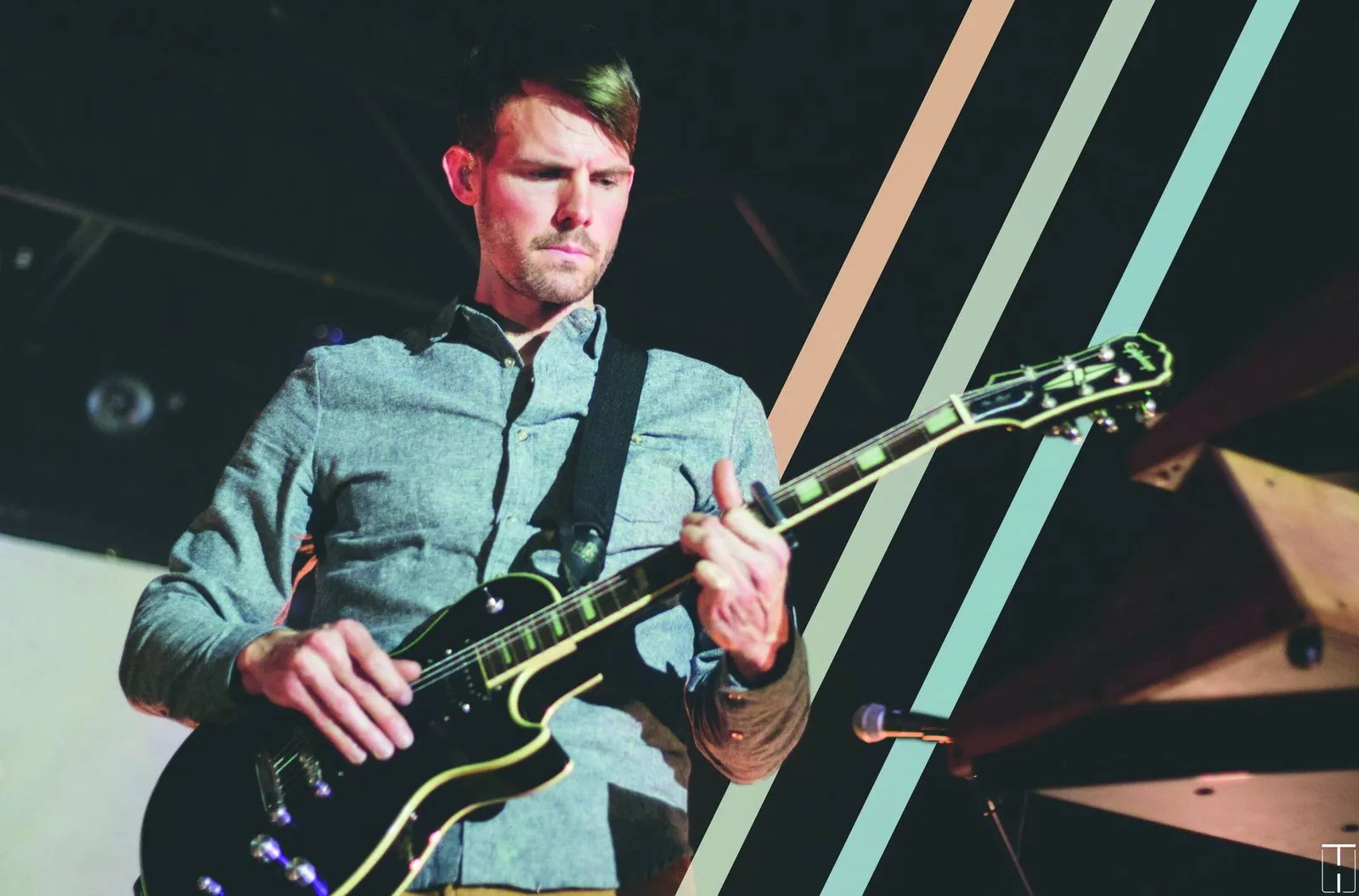
This is his first trip to India. Is he liking it? “A lot. It’s been amazing. I’ve been here only a couple of days but we have a day after the show to explore a little bit more. It’s not much time but I’d definitely want to come back for more.”
With escorts, literally over our heads now, to take him to the stage I know this is all I can squeeze out of the quiet man. Just as I shake hands with him for a short but intense conversation, he leans over and says, “You know, music started as a hobby for me. Another hobby of mine is photography. I just couldn’t imagine travelling to India without a camera. Let me send you my favourite picture from the trip.”
He did send me one. And guess what, I’m in it.
From the June 2016 issue of FHM India.
Spotted a mistake, or your photo used without permission? Report a correction









 in your inbox