
Coke Studio III: Clinton Cerejo and Salim-Sulaiman
The talented composer Clinton Cerejo on indie music and Coke Studio, and Salim Merchant, one half of the musical duo Salim-Sulaiman, on the importance of folk songs.



Coke Studio III goes on air in August.
Clinton Cerejo
The talented composer on his views about indie music and Coke Studio...

FHM: What according to you is Indie music?
Clinton Cerejo: Well, indie or independent music came into existence in the UK when artists in the 60s and the 70s started creating music that did not conform to the “formula” created by big record labels. Indie music doesn’t follow what’s trending at the moment, but sometimes is a precursor to what’s to come. The advantage indie artists have right now is that because of the Internet and social media, it has become easier for them to market themselves and find a wider audience base.
FHM: How does your usual day start?
Clinton Cerejo: My day usually begins at noon, sometimes it depends on when my previous day has ended, and there are times, when there is no concept of day and night.
FHM: You were born in a family of professionals with interests in different industries. How did music make its way into your life?
Clinton Cerejo: Though I got into making music seriously much later in life, I feel I was always musically inclined. I used to be a part of a choir growing up and jammed with friends during my college days. It was only much later, after some goading from my close friends that I decided to take up music professionally. I started out as a singer but the process of creating music always intrigued me more than the performance itself. I taught myself harmonies, vocal arrangement, music production and I still think of myself as a student.
FHM: If not a musician what would have you been?
Clinton Cerejo: I probably would have become a food writer.
FHM: Is making advertisement jingles the sure shot way to make your way into the industry or does taking part in talent shows gets you there quicker?
Clinton Cerejo: I believe that one way or another, real talent always comes across. Doesn’t matter if you’re making jingles or competing against other contestants. A talent show on TV might give you visibility, but only genuine talent and hard work can sustain you in the industry.
FHM: Why has Indie music suddenly attracted a huge fan following in a country ruled by Bollywood hit numbers?
Clinton Cerejo: The current generation has grown up being exposed to a lot of music that hasn’t been traditionally available. This, in a way, has multiplied the choices available to us and musically the horizon has broadened. Back in the days, the avenues to get exposed to different music were limited with cinema and the radio playing the same set of songs.
FHM: Are we in an era where crass compositions like Bhaag DK Bose are taking over the traditional style of making music?
Clinton Cerejo: Haha… I wouldn’t call the composition crass, although the lyrics can be considered cheeky. I guess there’s a lighter side and some humour in making music too, so you compose something trivial. It has happened before and it will happen again. I won’t say such compositions are taking over. For every so-called “crass” song, there are probably more than 10 good songs that are liked and appreciated by all.

FHM: How is Coke Studio changing the perception of fusion music?
Clinton Cerejo: Coke Studio has been successful in bringing together different genres of music, both indigenous and international. It has become a platform where two or more musical styles come together, explore each other and create some beautiful music. The songs on Coke Studio @ MTV keep the younger generation in mind and this is the secret of its appeal.
FHM: What are the inspirations behind your compositions for this season of Coke Studio?
Clinton Cerejo: As I mentioned, the sheer variety of music we have access to is immense. The freedom to take from this vast pool and create music, which hasn’t been made before, has inspired me to be a part of the series.
FHM: One gadget you cannot live without?
Clinton Cerejo: My phone.
Salim-Sulaiman
Salim Merchant — one half of the musical duo talks about the importance of folk songs.
FHM: How is Coke Studio bringing about a definite change in music in this country?
Salim: I think Coke Studio is a great platform for artists to express themselves in the purest way. It connects us with our roots and fuses our tradition with the present. Music in our country is a very integral part of everyone’s life, but sadly it’s largely connected to films. Coke Studio breaks that barrier and gives music its own voice in a very beautiful way. We’ve composed 6 songs that reflect our personality and taste (I wish we could do more). We always wanted to do a qawwali, which we’ve done as one of the tracks. We also wanted to feature a classical bandish that we’ve composed in raag jog. We felt like doing this, as our classical music has immense power and reach and it touches one and all. There is a cinematic percussive track depicting the tradition of sati as well. It’s a ritualistic, dramatic piece. Then there’s a Gujarati folk song talking about Krishna’s flute, a funky cool track called Namaste and a bhajan from Saurashtra.
FHM: What attracted you to Coke Studio this year?
Salim: We had recorded a folk album in 1999 called Bhoomi. This was a collection of folk songs featuring folk artists from different parts of our country, which was produced in a very contemporary way with drums, bass and guitars. A few years later, I heard something similar in Pakistan’s Coke Studio series. This paved the way for our inclination towards this year’s Coke Studio. I think indie music makes us feel free. After so many years of working on movies creating music connected to scripts and stories, it’s time to tell our own story through MTV Coke Studio 3!
FHM: How does your usual day start?
Salim: I’m a late riser. I like to spend my mornings in silence with my cha, then I work out for 20 mins and am off to the studio. Once I’m in the studio, I always preview what we’ve done the previous night and then take it from there.
FHM: You’ve been working as a duo for more than a decade, how does everything fall in place for you two?
Salim: It’s fantastic! We grew up listening to music, learning music and then playing music, and now we are inseparable!
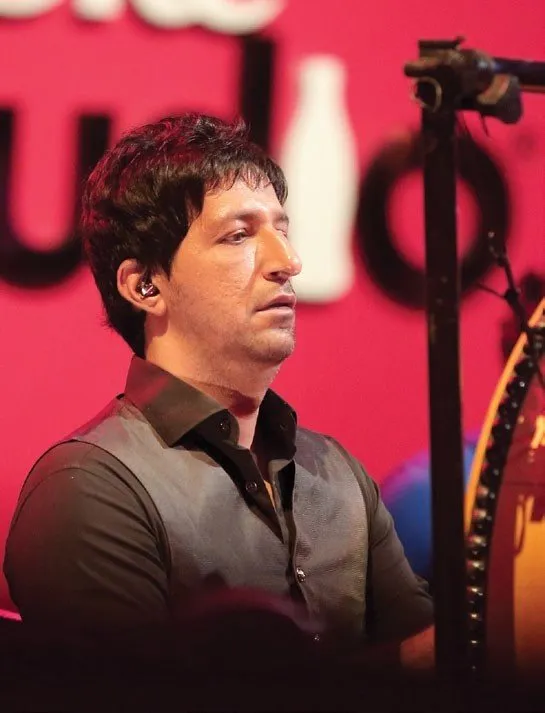
FHM: If not a musician what would have you been?
Salim: I was sure of the fact that I will become a musician.
FHM: You were brought up in a family that has a direct inclination towards music. Did this eventually pave the way for your careers or was it your own inclination?
Salim: Our father was our idol and was the key reason for us becoming musicians. He was a fine keyboardist and saxophonist, and would play guitar as well. He started composing music later in his career and then got into manufacturing musical instruments. When we were growing up, we had musical instruments as toys. It was a very natural progression for us to learn music and make it our passion and profession.
FHM: You both started out making background scores for advertisements years ago. What path do you suggest young talented people who are looking to make a big mark in the industry take?
Salim: I would say before choosing a path, it’s important to learn music. I see a lot of young people these days who have half knowledge and rely a lot on loops and software. It’s a great time for one and all to compose and produce music, but learning music is extremely imperative. Of course, you learn each time you take an assignment but formal training, especially classical music, is a must.
FHM: You’ve been making background scores for big banners for a long time now. Have things changed with respect to listeners and producers… Have their expectations changed?
Salim: I don’t know about producers and listeners, but we’ve certainly changed! We are constantly pushing the barrier for ourselves. Music is a very big spiritual force for me and it’s very important for me to be in it religiously. We always make music for ourselves and I keep saying it’s important to make a good song rather than a hit song, as a well-balanced song can turn into a hit most of the time.
FHM: You recorded the anthem for the 2010 FIFA World Cup with international artists. What is the basic difference you observed while working with musicians from overseas?
Salim: Loyiso Bala and Eric Winner are like our brothers now. Both are from Africa and we had a great time making music and performing with them. FIFA was very prestigious and one of our biggest milestones, but these two artists ended up singing Shukranallah at the end of the week! You can YouTube Shukranallah Africa and you’ll see the performance we did in Kenya post FIFA.
FHM: Tell us something about your future projects?
Salim: We have produced some good compositions for forthcoming movies like Satyagraha, Rabba Main Kya Karoon and Bolly Boom (live project).
FHM: Which is your favourite instrument?
Salim: I love playing the piano.
FHM: One gadget you cannot live without?
Salim: My iPad is the most important gadget for me.
From the August 2013 issue of FHM India.
Spotted a mistake, or your photo used without permission? Report a correction








 in your inbox