
Could You Have Hacked It as a Roman Soldier?
The Eagle suggests life as a legionary was glorious and dazzling. It wasn't: five experts on the training, the battles and the retirement of Rome's killing machines, and why "neat buttocks" helped.
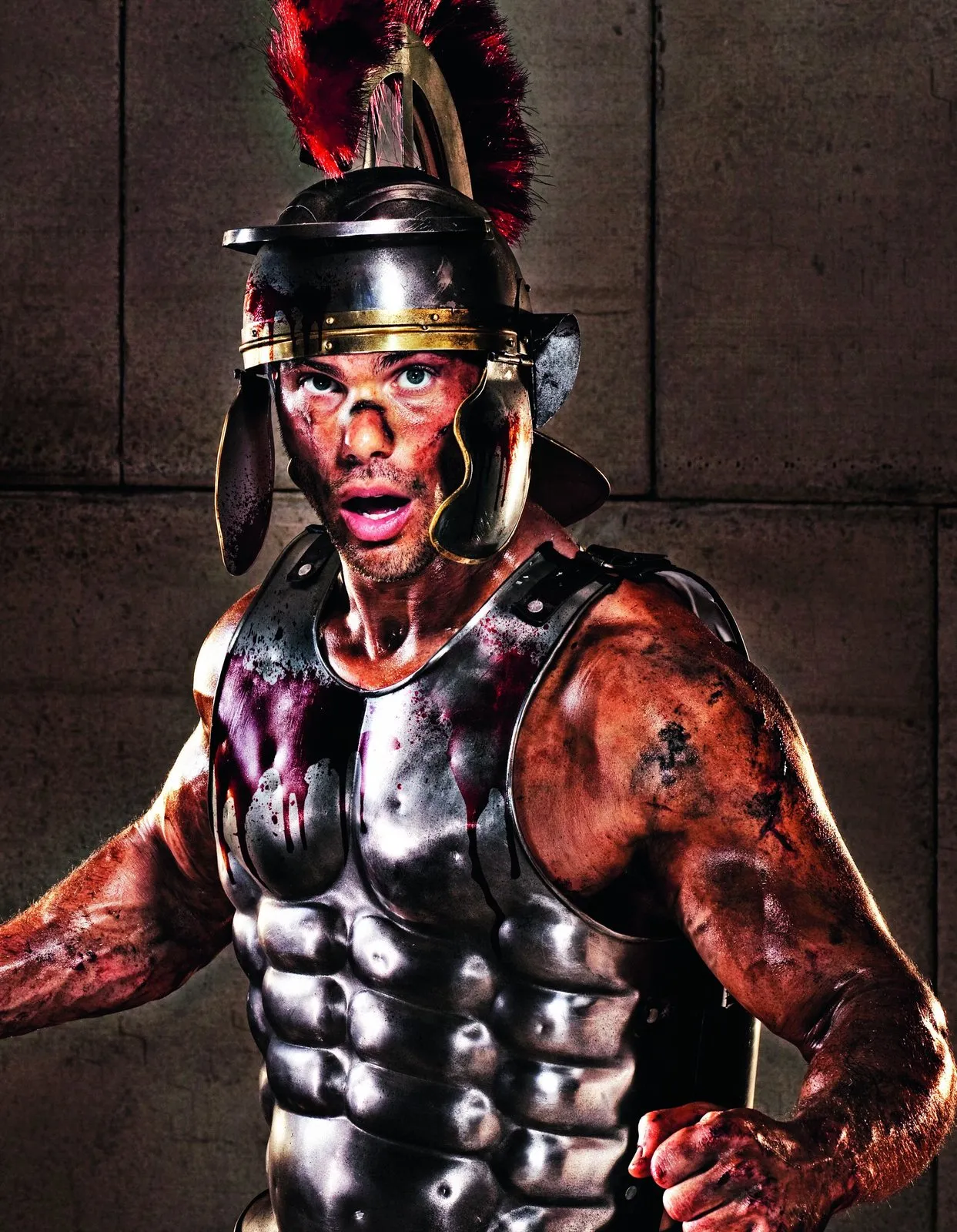



The rousing new centurion movie The Eagle suggests that the life of a Roman soldier was glorious and dazzling. It wasn’t. It was harsh, savage and favoured those with “neat buttocks”. Could you have hacked it?
Meet our experts
Mark Hatch (MH): Chairman, Roman Military Research Society

Dr Jon Coulston (DJC): School of Classics, University of St Andrews
John Conyard (JC): Chairman of late-Roman re-enactment group Comitatus
David Richardson (DR): Secretary of Roman re-enactment society LEG II AVG
Professor Richard Alston (RA): Expert in Roman History at Royal Holloway, University of London
Training
*How the Roman army transformed men into lethal killing machines…*
MH: If you wanted to be recruited into the legions – basic army units typically comprised of 6,000 soldiers – you’d have to have been a full Roman citizen; otherwise you’d be in the auxiliary units. They were looking for a young man, from about 15 years old. They wanted good eyes, a straight neck, broad chest, muscular shoulders, strong arms, long fingers, flat stomach, and “neat buttocks” apparently.
DJC: People would have got a leg up through family connections. Like many modern armies, it’s not the best person for the job, it’s the best connected person for the job.
JC: But if I were a Roman citizen joining a legion, I would want to think hard about which one it was. In Spain, not that much happened; in Egypt, it’s sandy, but you got a nice suntan; in Germany, you were fighting constantly, and would become a very good soldier. The best posting was Syria, which was all about prostitutes and wine, really. You might have to be in the army for a while before you managed to wangle that particular one.
MH: You had men from what is now Iraq serving up near Hadrian’s Wall, the defensive fortification in northern England. But, once a unit is established in a place and doesn’t move for a long time, recruits tended to be taken from the local area. It’s no different from Iraq or Afghanistan today – you’ve got a coalition force at first, then later on you’re training an indigenous force to take over those roles when you withdraw.
JC: The first thing you’d want to do is train up as an immune [someone who has a special skill like blacksmithing] so you don’t have to do the dirty tasks, and for that you’d have to bribe the centurion. It was all totally corrupt, not unlike Italian society today.
DR: If you joined up and you couldn’t swim, meanwhile, they taught you to swim. Every single Roman soldier also had to learn how to ride a horse, and how to use a slingshot and bow and arrow, even though they’d have specialists to provide those roles on the battlefield.
DJC: They then practised weapons training against a six-foot tree trunk stuck in the ground. It was exactly the same training regime that gladiators used; they went through a series of attacking moves until they became instinctive. And they practised with double-weight swords, double-weight shields and extra-weighted javelins to build up stamina and endurance. So when soldiers have been uncovered on a military site, they’ve got a mutant muscular structure. They had lots of development in the sword arm compared with the other arm.
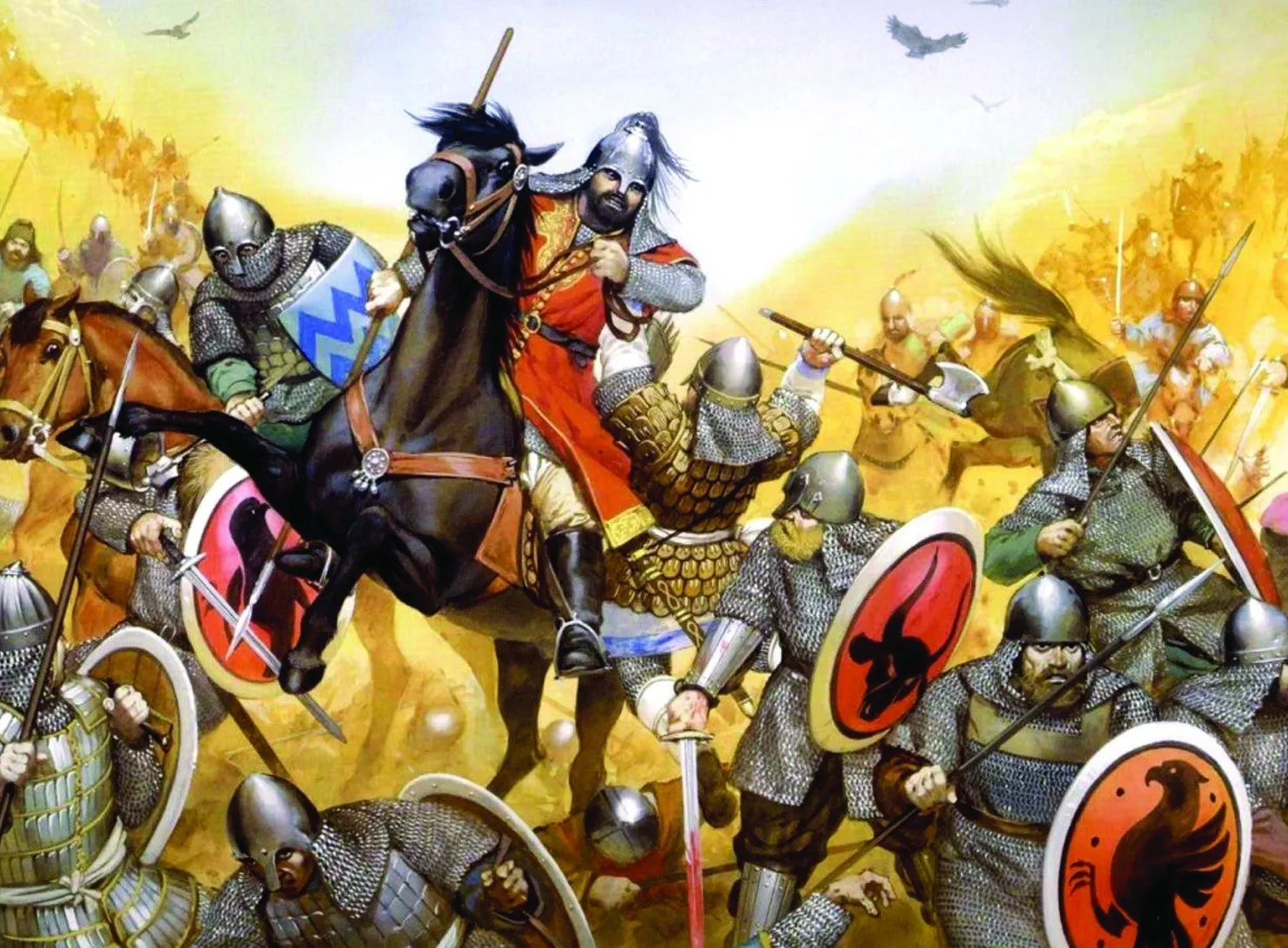
MH: You were also taught to march, so everyone kept the same military pace – it was all about working together, team-bonding as much as anything else. The idea was to get up to distances of about 20 miles and complete that in five hours. Arms and armour weighed 20-30 kilos, plus the same again in each pack. At the end of the march they’d build a camp, stay overnight, then flatten it, pack it all away, and head back again.
DR: Flavius Josephus, a historian observing the Roman army, wrote:
“Their drills are bloodless battles, and their battles bloody drills” – in other words, these men were training as if they were always at war.
DJC: Training was all about building up stamina, building up specific musculature. But troops weren’t just fighting – they were doing policing, construction, civil engineering – big things such as Hadrian’s Wall, but also small things like quarrying for building material. Provinces were full of toll frontiers and wagon trains full of supplies, so there would always be escorts detached from units. Plus we’ve found dice and gaming boards, and they were into cock fighting. They did drinking games, gambling, all sorts of stuff. And they left graffiti behind – the soldiers were proud of what they did, and they’d scratch the names of their regiment on anything.
DR: If you’d done something wrong in training, you’d have to unblock the toilets, clean out the stables. If a legion showed cowardice, such as deserting its place on the battlefield, then every one in ten men would be executed.
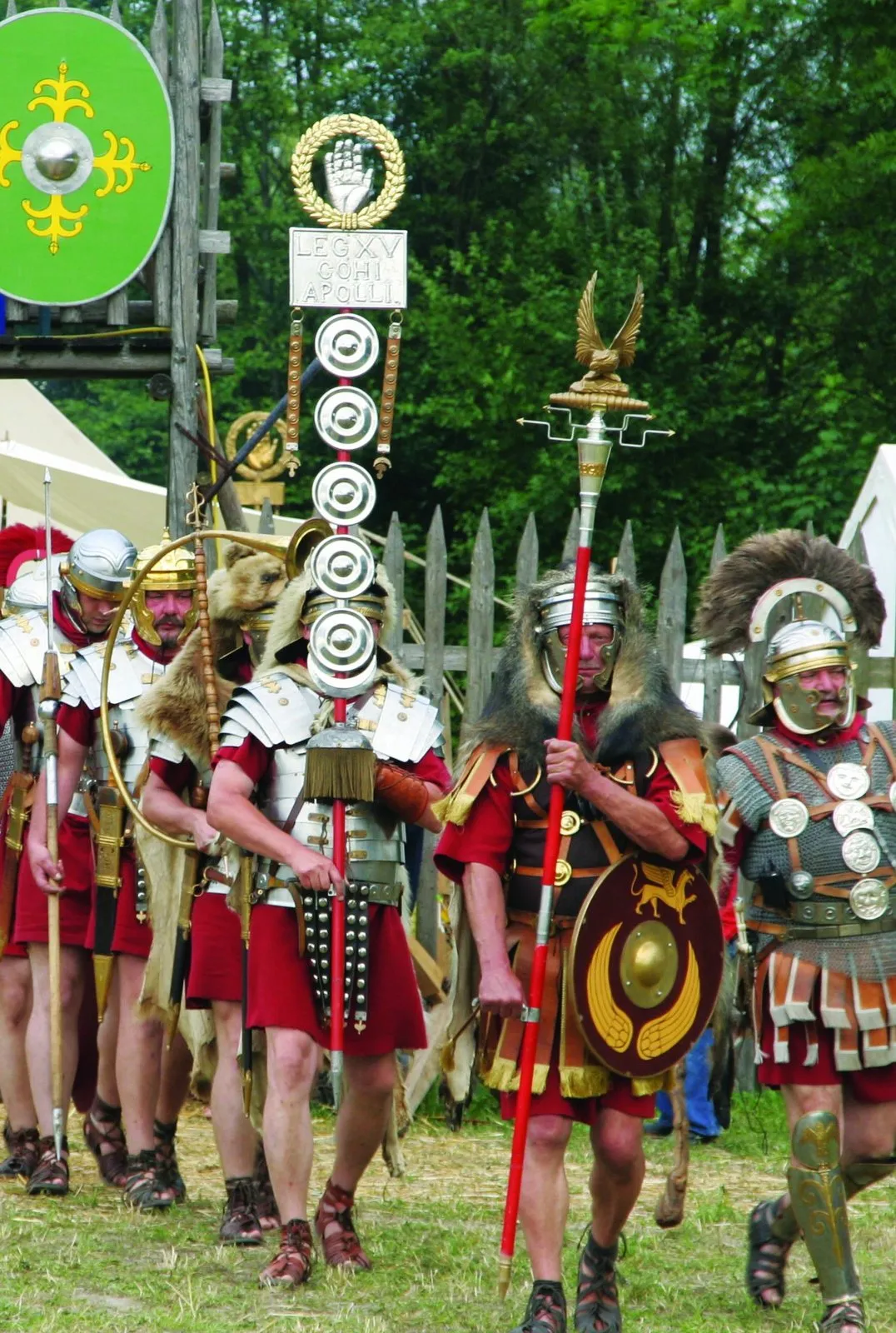
DJC: Now, in the run-up to war, the legions were divided into 10 cohorts of roughly 500 men each; each cohort was divided up into six centuries of 80 men each, and each century was divided up into ten tent groups of eight men each. Artisans and specialists were divided up across the legion, so they could build roads, build pontoon bridges, attack cities, do pretty much anything within the technology of the Roman period. Even the sculptures on Hadrian’s Wall were done by soldiers.
DR: But one of the successes of the Roman army is that it didn’t go around slaughtering everybody and wiping them out. If they came up against Syrians, for instance, who happened to be the finest archers in the world at the time, once they conquered them they actually brought them into the Roman army and created archery units from them.
Battle
*Disembowelling one’s foes on the battlefield was an art…*
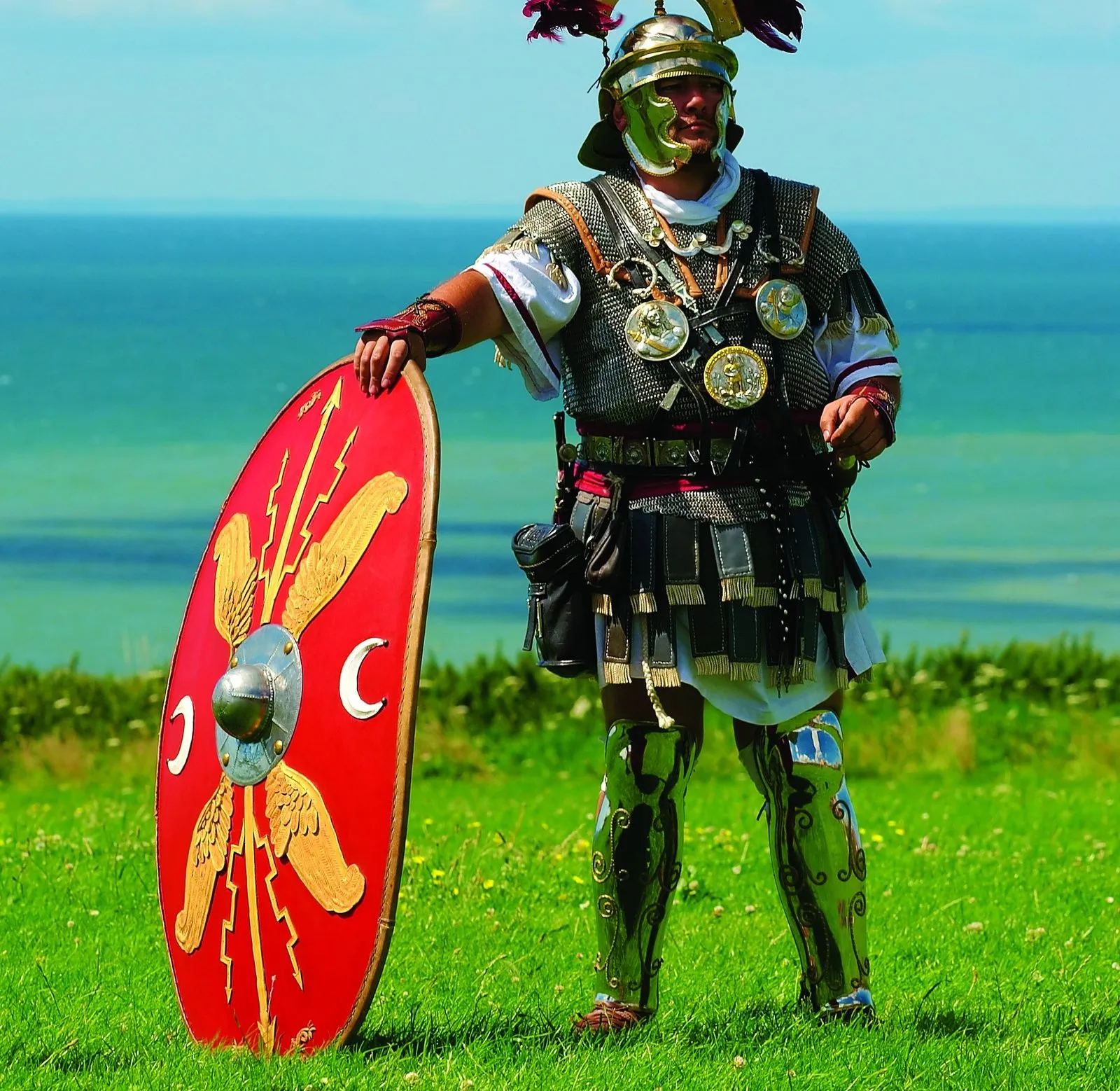
Soldiers wore an iron or bronze helmet, with cheek plates at the side, ear guards, and a very broad neck guard. The main body armour was made from laminated thin strips of iron, articulated and overlapped, a bit like an armadillo, and held together with leather and rivets. When necessary they wore greaves, or little shin pads. Then you’ve got boots with small iron studs underneath, very similar to a pair of football boots. Plus in the winter they had socks, long trousers, thick woollen cloaks, and scarves, and each legionary would be armed with a javelin, a short sword, and a dagger. On the battlefield, the army had to stand there in absolute silence – until they engaged.
MH: At ranges of 300-400 metres from the enemy, they’d use bolt shooters. You’re 400 metres away thinking, “The Romans can’t touch me here”, and then suddenly, “Twang!”
And your mate next to you gets taken out by this missile. So you’ve got two choices: withdraw further away, or close the gap. As you run forward – you’re feeling brave, you’ve had a beer or two – at 200 metres you’re feeling the effects of archers. At 150 metres, the slingers will start taking effect.
And at 30 metres away, the javelins come flying at you. If you survive all of that, you’ve got a guy with a big shield and a sharp sword trying to stab you. So you can see why an awful lot of Rome’s enemies elected to sue for peace, and not fight the big engagement.
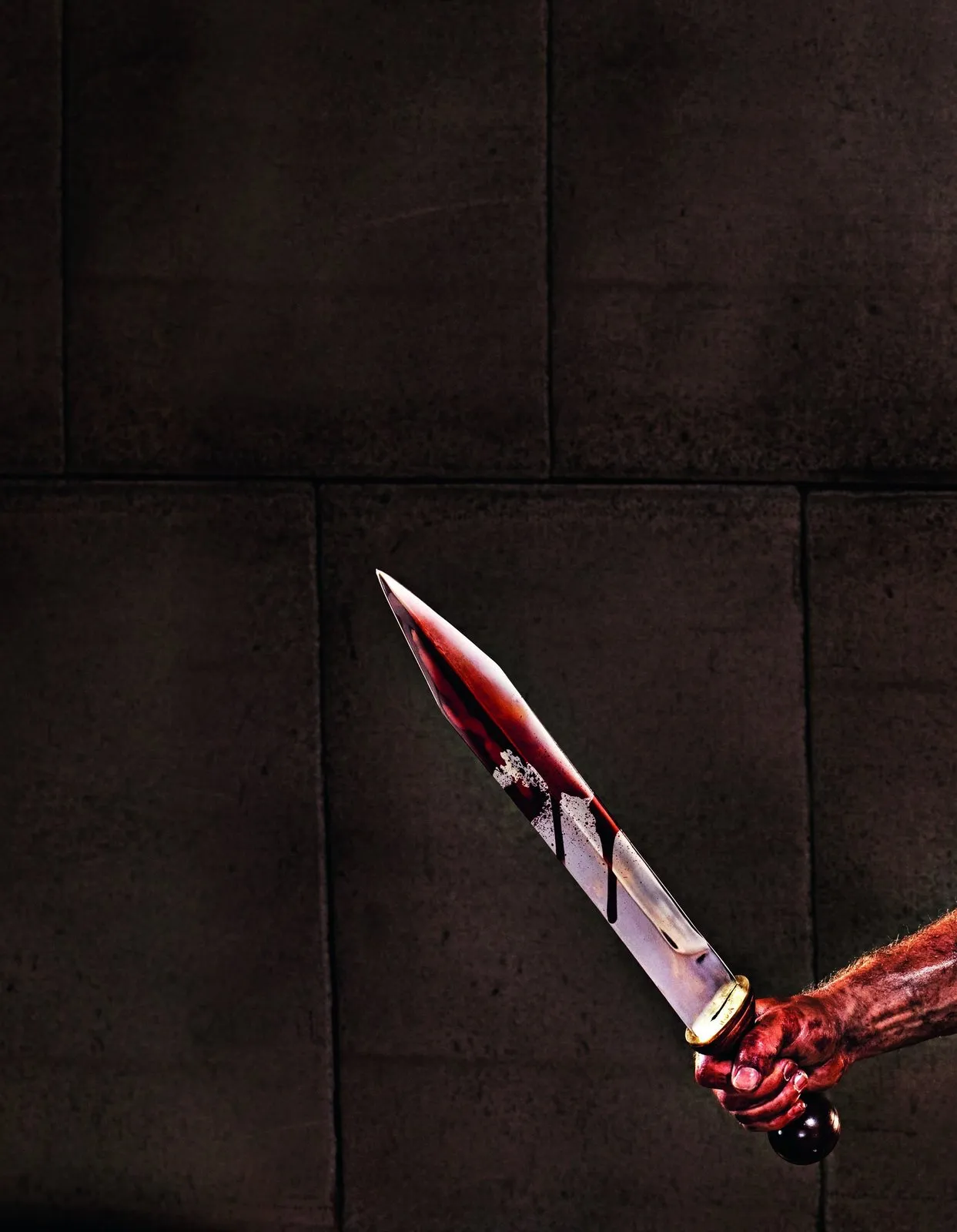
DJC: The key for a fighting soldier, though, was the sword and the big curving shield working together – they’re both defensive and offensive. You could smash that metal boss of the shield into somebody’s face, and if you timed it properly, you could get the bottom rim of the shield into that person’s throat or stomach. And as soon as this person was incapacitated and on the floor, in came the short sword to disembowel them.
DR: The sword and the dagger were designed to create massive haemorrhaging, with a small entry wound that widens out very quickly. Soldiers didn’t swordfight by bashing their swords together with sparks coming off, that’s just in the films.
Swords were designed to hit soft things – like people.
JC: That said, the late-period Roman army was more of a missile army: they had lead-weighted throwing darts, and throwing axes, and cavalrymen going around shooting bows and arrows, and using four-metre long lances.
MH: The soldiers would also swap ranks – as one got tired, they could fall back, and the next rank would take on the fight, so every few minutes you’d be facing a fresh Roman.
DR: The casualty rate among centurions was high because they were expected to lead from the front. That’s how they got the job – they were the brave blokes, or the insane ones.
MH: Plus the Romans were good at not giving up, at wearing you down with time and numbers. No matter how many times Hannibal, the enormously tactical Carthaginian commander, defeated the Roman army, they never stopped. Next season they’d be back.
Retirement
*The final chapter was peachy, providing you ever made it back home…*
DJC: Being captured by the enemy was a real no-no – you’d become a slave and lost your status both as a soldier and a Roman citizen if you did. There were examples of captured commanding officers committing suicide just to avoid the shame.
DJC: Eventually, you retired after 16 years in the guard regiments in Rome, 20 in the legions, or 25 in the auxiliaries; because when you’re talking about a veteran in the Roman army, you’re talking about a lifetime, not a one-year tour in Vietnam.
MH: And if you were recruited in Germany and ended up in North Africa, by the time you end your service, the chances are your family had either passed away or moved on. Those close ties had been broken, and your new family, the army, is all you’d known most of your adult life. That’s what you now had an emotional attachment to.
DJC: You then received the savings you were forced to make during the course of your service, and the money you invested in the military equipment, which you’d have to sell back to the army, and you might have got a discharge bonus as well. But if you got a limb chopped off in battle, then there appears to be no assurance of veteran support. You’re out on your arse, basically.
RA: But remember: when most soldiers retired, they were still only at the top of the peasant class – they weren’t running towns and they weren’t local aristocracy.
DJC: And if you’d only been in the auxiliary troops, you just became a Roman citizen when you retired, though it did have its benefits: judges weren’t allowed to have citizens flogged, and laws to do with marriage, inheritance and making wills all gave preferential treatment for citizens.
RA: But because soldiers weren’t allowed to marry during service, quite a lot of soldiers in retirement remained unmarried – though a few soldiers did have slave women, or long-lasting relationships from when they were soldiers.
DJC: At this point in time, there were no such things as the definitions of gay or straight that we have in modern society, because if you were having sexual relations with a younger man of lower social status, that was absolutely fine, no problem. Having ‘pleasure slaves’ of any age or persuasion was fine. What was frowned upon and people tried to avoid was adultery with other men’s wives. And you would lose famia [honour] if it came out that you’d been performing oral sex on a woman, as a higher status man, or indeed oral sex on a lower status man.
RA: What you did find, though, is that men who were the passive partner, the penetrated one, were mocked, and seen as effeminate; yet there is no suggestion that the man who penetrates was anything other than manly. Sex in general was simply a healthy activity that men were expected to engage in, and if they didn’t, the assumption was that they’d become ill.
DR: Sex with prostitutes was also a natural, done thing – the Roman population was declining at one point because young men weren’t marrying. Prostitutes in Rome even had their own union.
JC: Ultimately, being a soldier was perceived as a good job: they got paid more than most people. And they were relatively unlikely to fight anyone.
There was one decent war every 25 years and they were probably not going to be in it, because on average they would be dead by 26 from diseases.
From the April 2011 issue of FHM India.
Spotted a mistake, or your photo used without permission? Report a correction










 in your inbox