
Disco daddy: Giorgio Moroder
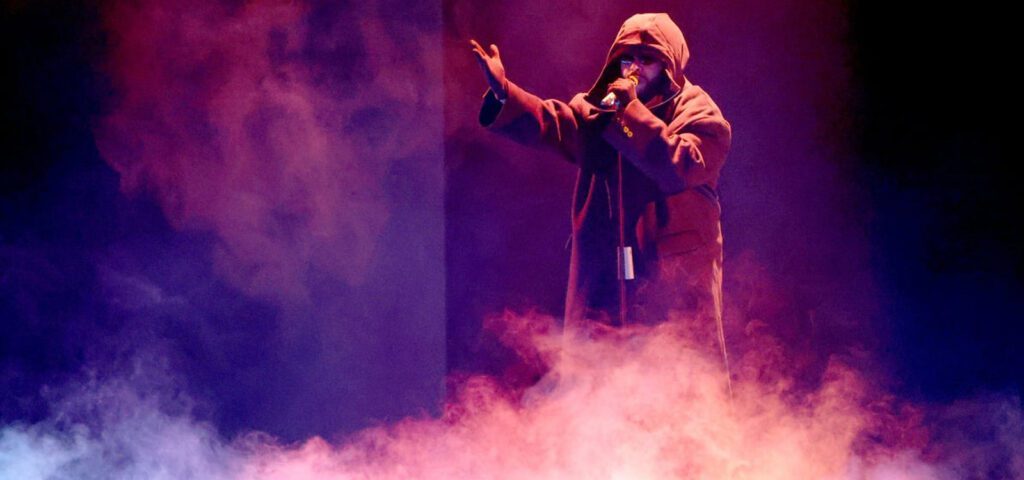
One of the most influential disco and electronica musicians of all time, Giorgio Moroder, performed at the Johnnie Walker – The Journey Festival 2015. FHM jived, partied and got candid with the legend.



You’re a Marco Polo of sorts who inspired the Christopher Columbuses of the world. How does it feel to be a pioneer?
I certainly love Marco Polo and Columbus. If you can compare me to one of them, I’m absolutely lucky.

Returning with Deja Vu after 30 years was an amazing piece of news for your fans. Did you receive a lot of fan mail?
Actually you know what – it’s all online now, it’s all on social media. Earlier people would write, but now it’s all on Facebook and Instagram and Twitter. So there’s a lot of information coming in now; much more than 20 years ago.
We can’t ignore the prominence, sudden disappearance and a final restoration of the moustache. Is it going to stay for good?
I will continue to write music until the moustache doesn’t grow any more. That could be tomorrow or in ten years – I hope it continues to grow as I get older.
We can all spot pop music when it’s playing, but are still confused as to how to define it to may be an alien who doesn’t know anything about the music on earth. How would you explain pop music?
It’s the music that you can relax to and don’t have to worry about the words, which aren’t too complicated. Contrary to rap and heavy metal, pop music has smooth rhythms with good voices. It’s enjoyable and you don’t have to worry too much about the music.
You’ve had a career graph that people can only dream of: Academy Awards, Grammys and what not! How come DJing now? Isn’t the trend supposed to be the other way round?
I got my last Grammy last year, so I just hope to have another. With the Oscar, I hope to do some great movies soon and maybe another – but it’s very difficult. So I’m not anxiously thinking about it. For DJing, it’s not like I decided I would do it... Daft Punk and the music industry decided it for me! After having a big song by Moroder it was obvious I would go back to recording. To be honest, I’m happy I did it.
Back when you started composing, music was not considered to be a very stable career option. How supportive was your family?
I became a musician who was making money, which is interesting because at least I worked and earned something. A lot of people start with becoming composers and don’t make any money as it takes time. So, in the first six-seven years I made some good money making music. Then gradually I began composing, and was lucky to make it good there as well. In the beginning my parents may not have been happy but after a while they were very proud and supporting.
What was your first synthesizer?
That’s difficult. I think it was a Rolland JP 08. The one I used a lot was monophonic.
You’ve worked independently, in collaboration with artistes, produced their music and have even composed for films. Which of these roles was the most fun?
To write for a movie is maybe a little more fun than writing songs, because for the movie you write songs and also the score. That combination is very interesting as you have to base it on the characters of the film and compose a song that fits the movie. It could also potentially be a hit. So it’s a big challenge but a very exciting one.
Love To Love You Baby with Donna Summer was sensational. How was the general reaction towards the overtly sexual undertone that the song carried? Wasn’t it partially banned on the radio in England?
Yeah, the BBC didn’t play it for a period of time, which was good because it served as good promotion. But later they had to play it because people were protesting that they couldn’t hear the song. That was an interesting period of time.
Who are your favourites in the music scene now?
One of the great guys is Max Martin – he’s from Sweden. Then there’s a new German guy called Zedd who has some great dance songs.
You’ve worked with a diverse set of artistes. What has changed between back then and now?
Well, I would be in the studio with them working on the song and lyrics back then, but now it’s a little different – I’m in the studio with the artiste sometimes and sometimes I’m not. There’s a new way to record now. People like to work by themselves in their own space. It’s less personal unlike how it was 20 years ago.
Has someone ever commented on your music in front of you when they had no idea who you were?
No, I’ve been lucky. It has never happened.
A plethora of amazing dance numbers to your name must mean that you’re a terrific dancer yourself?
I’m absolutely the worst dancer in the world (laughs). My wife is the best. She’s trying to get me to dance a little more. But I’m really tough and I resist.
If you’re feeding your iPod for a long holiday, what are the top five numbers that will definitely be there?
That’s difficult... I like a lot of Michael Jackson, The Beatles... I don’t really have a preference though. I don’t have favourites. I just pick up great songs.
You performed in Mumbai in front of a relatively younger, EDM-loving crowd. What was the set-list like?
I’m glad I finally made it to India for Johnnie Walker The Journey. It was very exciting. I’ve played some great sets on my travels and couldn’t wait to feel the energy India had to offer! It was amazing. I had about 45-50 songs of which about 25 were my older songs, and some which I composed in the last ten years. I also played some from the album Deja Vu and some EDM songs by David Guetta and Avicii.
From the March 2016 issue of FHM India.
Spotted a mistake, or your photo used without permission? Report a correction








 in your inbox