
Highway to light
When Tiziano Terzani is diagnosed with cancer, he sets out on a journey that takes him from Western medicine to the Himalayas. An excerpt from his book.
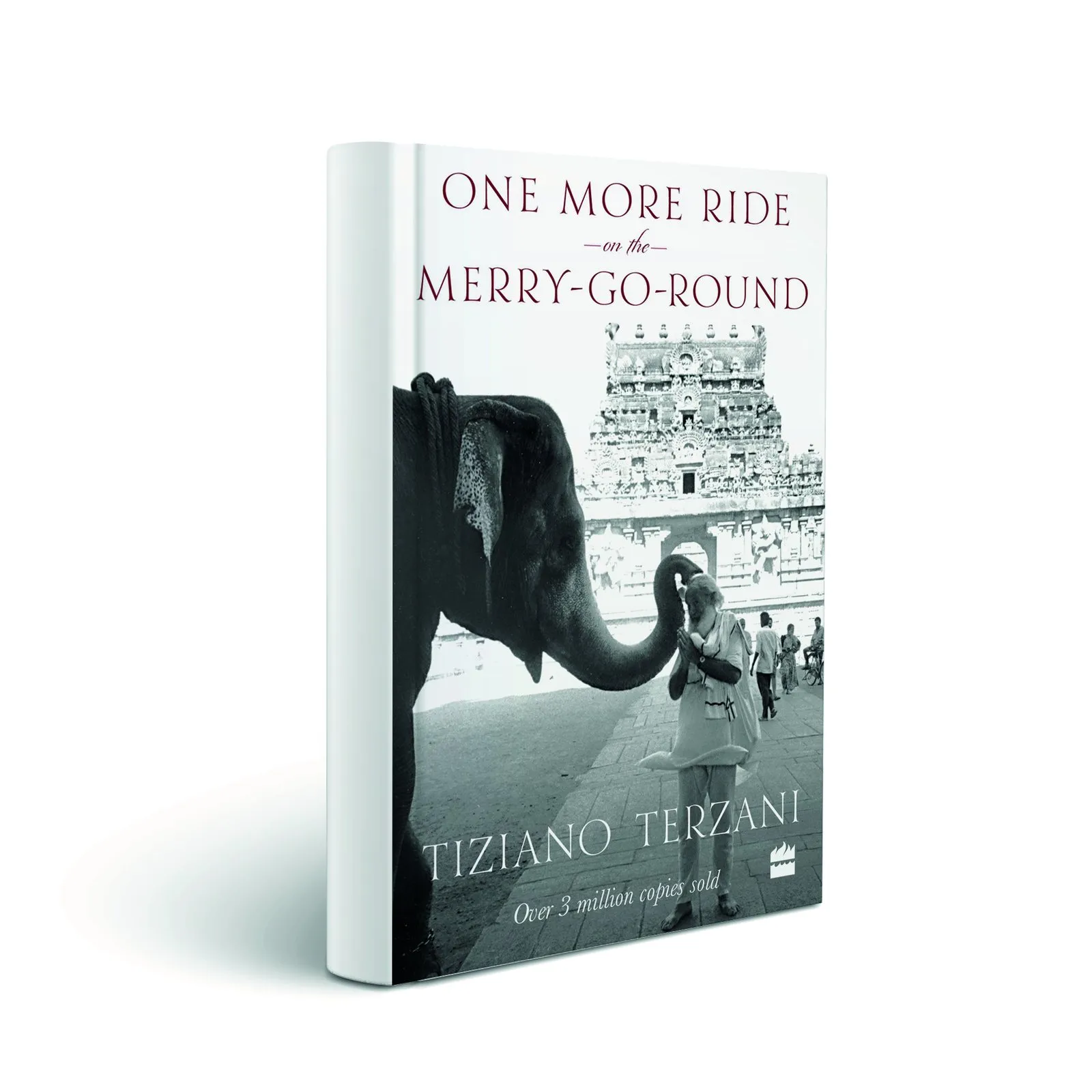



When he is diagnosed with cancer, in the silence of the hospital room broken only by the swish of cars outside, Italian writer Tiziano Terzani realises that his whole life has been one long ride on a merry-go-round where he has always journeyed without a ticket. Now, for the first time, the ticket collector has come to demand his dues.
At first, Terzani turns to Western medicine for a cure, but a question soon begins to haunt him: is cancer, as the doctors say, an enemy that needs to be destroyed, or is it a friend one can talk to? Travelling had always been a way of life for him, so he decides to make another trip, in search of a solution to India. This final ride turns out to be very different though. And more difficult. Because every step, every choice — often between reason and faith, between science and magic — is inextricably linked to his own survival. As he criss-crosses the country from an ashram in Coimbatore to a hut in Almora, the external journey in search of a cure transforms into an inner journey and a return to the divine roots of man. Then, one day, as he looks at the sun rising over the mountains, he stumbles upon the one truth that has eluded him: death is as desirable and eternal as life itself.

A bestseller in Europe, this is a book about modern medicine and alternative cures, and the quest to understand the true meaning of mortality.
Excerpt
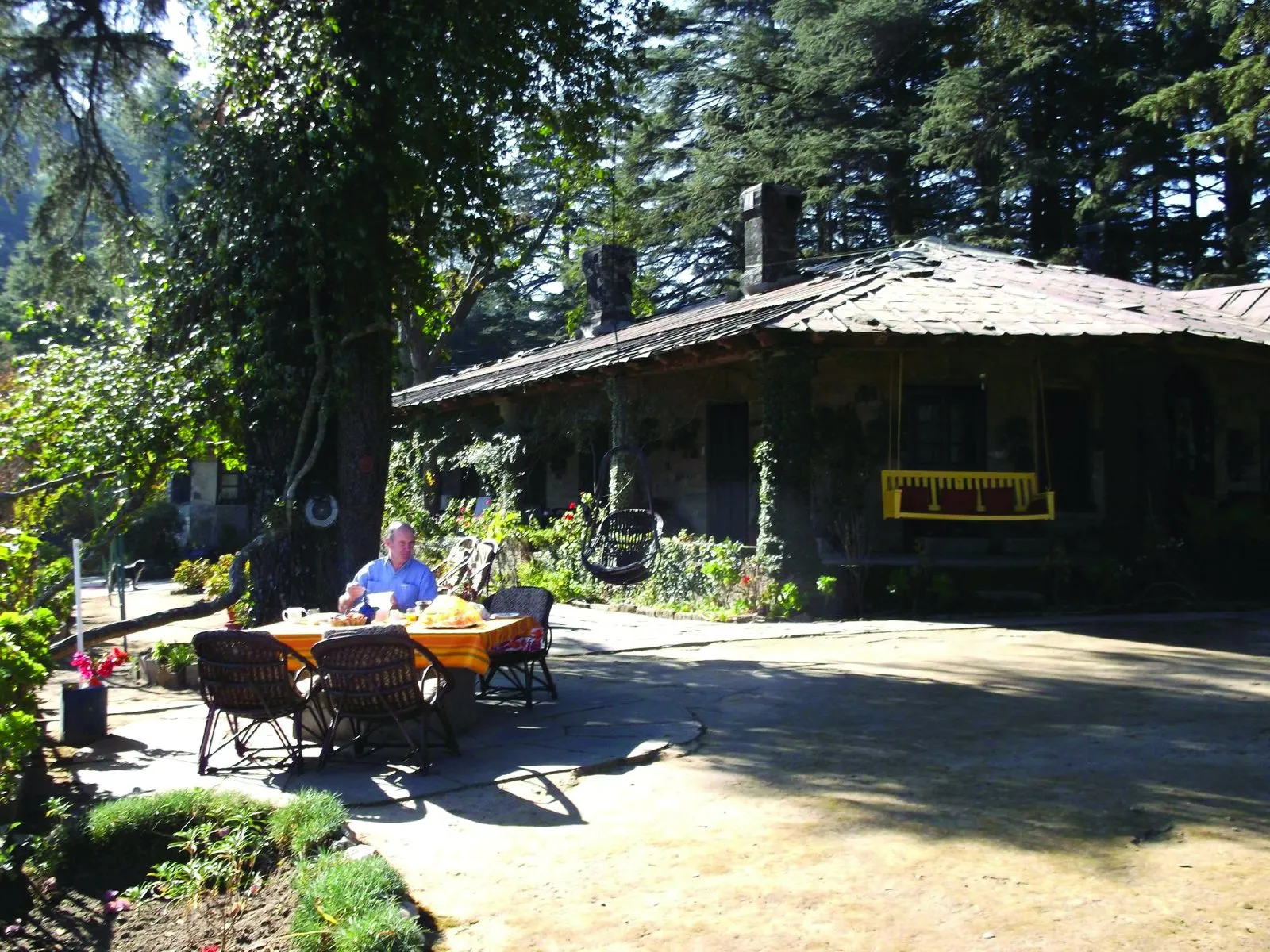
In so many years of visiting India, Angela had only seen the Himalayas from afar, from Dharamshala. So we decided to spend Christmas in Almora, an old hill station on the great mountain barrier where India borders with China to the east. We were staying in a nineteenth-century bungalow that had been converted into a hotel. It bore the name of the majestic cedar trees that had once covered the whole area: The Deodars, the trees of the gods.
Almora has a long history. Mention of it is made as early as in the Puranas, the ancient legends, and for centuries it has been the gateway to some of the most sacred peaks in the Himalayas and their secrets. The sanyasis who decided to ‘go to the forest’ used to stop there, as did the holy men who retreated even higher up on the glaciers. Poets such as Tagore stayed in Almora, as did mystics like Vivekananda, who founded one of his ashrams here.
Gandhi too spent several weeks here, pronouncing it the ideal place for the health of both mind and body.
In terms of sacred geography, Almora is located at the centre of a tantric triangle – other say a swastika – which contributed to its reputation as a place especially well suited to concentration and the spiritual life. With the Himalayas everywhere on its horizon and its forests still virtually intact, in the nineteenth century Almora also attracted a small number of non-Indians in whose footsteps I had decided to follow. They had all gone to live along a narrow ridge between two deep valleys which extended for several miles from The Deodars to the old temple of Kasar Devi. It was because of the eccentric foreigners who sought refuge here that in the course of time it came to b known as ‘Cranks Ridge’.
One of them was the theosophist W. Y. Evans-Wentz, an American of German descent who was responsible for the first edition of the classic Tibetan Book of the Dead and Tibet’s Great Yogi Milarepa. There was also Lama Angarika Govinda, born in eastern Germany, who had arrived on the Ridge after studying Pali, the language in which the earliest Buddhist texts were written, in Naples. After an extended residence on the island of Capri, some had taken him for the reincarnation of Novalis, the first German romantic poet. Novalis had died of tuberculosis in 1801 at the age of twenty-nine, leaving a novel half-written. Bizarrely, Lama Govinda wrote the ending to it while still very young, without knowing anything about Novalis or his unfinished work. Another character who arrived here via Capri was the American painter Earl Brewster, friend of D. H. Lawrence and Aldous Huxley. Yet another was a Dane named Alfred Sorensen, who had been lured to India by Tagore. For several years, he worked as a gardener in his academy at Shantiniketan, then moved to the Ridge and became a sadhu by the name of Baba Sunyata, or Father Zero. I too was looking for some kind of refuge, and the idea of spending some time on the Ridge appealed to me, maybe even in one of the cranks’ own habitations. But here too everything had changed. The house that had belonged to Evans-Wentz and then for ome forty years to Lama Govinda had been divided up and ugly concrete houses had been erected on the site where these two scholars had lovingly sought to recreate a mini- Tibet. Where the bungalow, in which Brewster had lived for almost half a century and died aged eighty-one, had stood, there was now a modern house. And right behind Kasar Devi, one of the most sacred temples in the whole region, in the centre of the tantric triangle a signal repeater for telephones had been installed, thus desecrating the entire panorama with its enormous metal pylon.
In the world’s biggest democracy, everyone is free to do as they please, especially when it involves pursuing their own interests. This is how the Ridge, which once upon a time was covered with dense woodlands, came to be deforested and is now dotted with white concrete cubicles to be rented to the new generation of cranks – no longer the cultured, eccentric personalities of some decades ago, but crowds of hippies attracted primarily by the good quality hashish that grows wild along the walls here, including those of the police station. I had gone to see if I could rent one of those cubicles, but had fled in despair. Until one morning, while having breakfast on the sun-kissed terrace which, like the deck of a ship, looked out over the sea of mist that was filling the valley, the owner of The Deodars, Richard Wheeler, pointed out to me behind the other mountains fading away to blue, a peak in the distance that was darker than the rest. “See, up there nothing has changed. The forest is the same as ever, and I believe an old Indian man still lives right at the top,” he said.
The peak began to speak to me. I watched it, and as I did so I heard these lines from Kipling’s The Explorer whisper: Something hidden. Go and find it/ Go and look behind the Ranges/ Something lost behind the Ranges. Lost and waiting for you. Go!
From the October 2016 issue of FHM India.
Spotted a mistake, or your photo used without permission? Report a correction









 in your inbox