
Hot For Teacher: Marina Orlova Explains Your Words
YouTube's Hot For Words star Marina Orlova, a 29-year-old Russian philologist, explains where common words and phrases come from, from 'unicorn' to 'at the drop of a hat'.




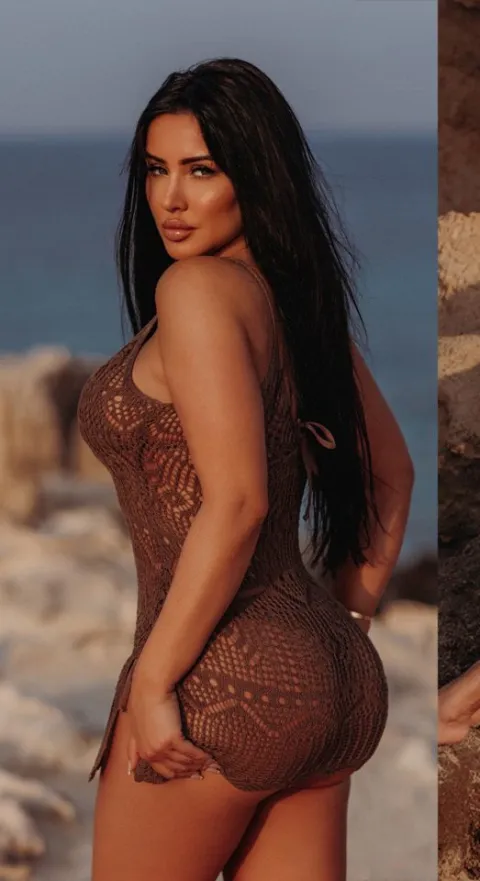
Meet Marina Orlova: knows a lot about words, looks nice in pictures.
29-year-old Russian beauty, Marina Orlova is something of a phenomenon. While the rest of the internet is littered with casualties – like the Star Wars kid who went into hiding, or that mad bloke who cried about Britney – Orlova has dominated by combining the two chief uses of the net, looking at hot girls and learning seemingly useless facts. Orlova’s Hot For Words show, where she explains the meaning and history behind well known words, is now the 16th most viewed YouTube channel of all time.
Orlova wanted to work in fashion, but she was too short. Luckily she had two degrees in philology, the study of historical linguistics, to fall back on. She moved to America and started the channel at a time when she said “everybody was just uploading cleavage”. She’s taken time out of her busy internet life to explain some common words and phrases for us, proving once and for all, intelligence is sexy.
‘Actions speak louder than words’
“We’ve all had this expression thrown at us, but where did it come from?” asks Orlova. “Well, this proverb is found in every language in various forms, from the 16th century French writer Michel de Montaigne who said ‘Saying is one thing and doing is another’, all the way back to the ancient Greek philosophers who felt that man ought to be deemed by his work, not his words. But the actual phrase, ‘actions speak louder than words’ that we use today, first appeared in the United States in 1845 and in 1856 Abraham Lincoln popularised the phrase in a speech that he gave.”
‘At the drop of a hat’
“This means that something will occur without delay. Since the expression is often used to indicate someone as being ready to fight ‘at the drop of a hat’, people often alluded to it as being Irish in origin – due to the stereotypical ‘fighting Irish’. But the Oxford English Dictionary feels that the expression comes from America. In the Wild West there was a lot of fighting going on, and in those days, they would have someone stand to the side holding a hat, and when he dropped it, the fight would start.”
‘Off the peg’
“The expression comes from buying clothes that are all ready to wear, of standard sizes and not custom made. These clothes would typically be hanging from a peg in a store and are ready to be bought off the peg and worn, with no tailoring needed,” explains Orlova. “The opposite would be ‘haute couture’ for women and ‘bespoke’ for men.”
‘Blonde’
“There are a few possible origins for this word. Is it from the French, by way of the Latin word ‘blundus’, meaning yellow? Or did it come to us from the Germans? Because the ancient German soldiers were known to dye their hair, and the Old English referred to their hair as ‘beblonden’, which means dyed. When the word found its way back into English from France in the 17th century, that’s where the ‘e’ was introduced at the end to refer to a woman.”
‘Unicorn’
“The unicorn is a mythical animal that the ancient writer Pliny described as having the torso of a horse, the head of a deer, the feet of an elephant, and the tail of a lion, with one black horn on its head. The animal was named after this horn, from the Latin ‘uni cornu’, which means one horn. Unicorns go all the way back to 400 BC and were thought to be the only animals able to defeat an elephant, by ripping its belly with its horn. The only way to catch one was to place a virgin near its home and it would lay down next to the virgin peacefully.”
From the October 2010 issue of FHM India.
Spotted a mistake, or your photo used without permission? Report a correction









 in your inbox