
How to Botch a Military Coup: Simon Mann and the Wonga Coup
Ex-SAS mercenary Simon Mann has been pardoned for plotting a bloody coup in Equatorial Guinea. But how did he manage to balls it up so badly? The soldiers, the guns, the planes, the money and the prisons.



Ex-SAS mercenary Simon Mann has been pardoned for plotting a bloody political coup in Africa’s Equatorial Guinea. But one question still remains: how did he manage to balls it up so badly? FHM investigates…
Black Beach prison is the single worst spot on the planet. Inmates are shackled and cuffed for months at a time. They face torture, summary execution, or death from untreated disease, violence, overcrowding, wretched food and rats. Ex-inmates describe being tied to poles until their arms snapped. Guards are said to inflict beatings with electric cables, to break prisoners’ jaws and to have murdered at least one opposition leader before pulling out his liver. The terror in Equatorial Guinea’s main prison has long served a purpose: it helps to deter anyone who otherwise might think of defying the powerful president, Obiang Nguema Mbasogo. He has run his oil-soaked speck of a country as a private fiefdom for the past three decades and is fantastically rich as a result. Only a fool or an incredibly brave man would take him on. Those who have tried have all failed.

So what did Simon Mann – wavy-haired, Eton-educated, upper-class and more English than Tim Nice-But-Dim – think he was doing, when he launched a small army of foreign mercenaries in an effort to topple the president early in 2004? Until then, Mann was little-known in public beyond gatherings of ex-SAS officers and the walls of his gentleman’s club in Mayfair. Since his bungled attempt he has become the best known mercenary since Christopher Walken starred in The Dogs of War.
His friends called him genial, “tremendously good company” and a born adventurer. Others are less kind, noting that he lacked aptitude for university and, though he commanded G Squadron in the SAS, he did not flourish in the Scots Guards either, quitting when it become obvious that promotions would not be forthcoming. Nor was Mann’s move to civilian life in the early ’80s – tinkering with sales of computer software – an instant success. He eventually flourished when he hooked up with Tony Buckingham and a group of others, forming Executive Outcomes, a private military company that made headlines and money in the ’90s by hiring itself out for use in a variety of African wars. Mann filled his bank accounts thanks, in part, to a diamond mine in Angola, plus a security contract for a few million more from the government.
Without his privileged background, and his genuine charm, Mann would have struggled. His good fortune was to be born into a family made splendidly rich from beer (they owned, and then sold, the Watney brewing empire). The family had long combined success in sport and soldiering. Mann himself inherited and made enough money to sustain three consecutive marriages, a stately pile in Hampshire, a home in west London and a (rented) mansion in Cape Town, South Africa.
Before he was 50, he quit working and seemed ready to devote himself to harmless adventures. One diversion was taking part in a car rally from Peking to Paris. There was talk of investing in a gold mine in Guyana, South America. And he took occasional trips to remote corners of Africa – he called in on Gabon’s President Bongo in 2003 – to seek out investment opportunities.
Yet Mann was itching for a new adventure. He was not fabulously rich, but was wealthy enough to sustain himself and his tribe of children. But, concludes a friend, “I’ve never seen anyone look so bored.” As with a variety of mercenaries and others I interviewed over the years for my book of Simon Mann’s affair, The Wonga Coup, Mann’s motivation to do something new was only partly about getting more cash. Mostly he wanted the thrill of acting out a movie script in real life.

Friends and fellow mercenaries would lovingly describe their near-death adventures – and their persistent craving for new stories to tell in the pub. One, a 'tanker jockey', relished the times he piloted aircraft loaded with sloshing fuel tanks to remote airstrips in Angola. Lumbering and hard to manoeuvrehis flying bomb would come under heavy rebel fire as he attempted to get it down safely on a bumpy strip. Another, his eyes sparkling at the memory, told how he had roared into battle on a jeep, guns blazing in Congo. Yet Mann’s plot took such thrill seeking to utter extremes. He has claimed, repeatedly, that he did not dream up his particular scheme. He points the finger at a Lebanese businessman, Ely Calil, who lives in London, calling him “The Cardinal”, and claiming he masterminded the whole thing. The two men met in London in 2003, and Calil introduced him to an exiled priest, Severo Moto, whom Mann would try to install as a new president of Equatorial Guinea. Calil, who is friends with Gordon Brown’s second-in- command Peter Mandelson, denies plotting a coup, though he admits pushing for regime change in Equatorial Guinea. More mysteriously still, Mann has suggested that a variety of Western governments had encouraged him to push ahead.
A military coup, plotted from outside a country, requires some basic things: soldiers, guns, transport, money and a political strategy. Mann struggled throughout much of 2003 and early 2004 to pull these together. He recruited over 100 people to help him, thought he had got the support of several foreign governments, rustled up financiers to pay for the scheme and even ensnared at least one famous friend, Mark Thatcher, ’80s Prime Minister Margaret Thatcher’s son, to organise a helicopter for the scheme.
Mann was based in South Africa and recruited his footsoldiers and junior officers largely from the ranks of ex-apartheid soldiers, including several dozen ex-Angolan 'Buffalo Soldiers', hardened from their experience fighting in the Angolan civil war. These men, and, separately, a forward team based in Equatorial Guinea itself, were led by Nick du Toit, an Afrikaner and an extremely tough ex-special-forces soldier. Du Toit has spent the past five years in Black Beach prison, losing 37 kilos, all his toenails and much of the skin on his wrists and ankles because of shackles. He is understandably bitter towards Mann.
The guns were also arranged with du Toit. Mann boasted to friends, shortly before launching his plot, that he had bought “five tons of small arms” for $80,000 in a deal with Zimbabwe’s state defence company. His shopping list in Zimbabwe included the following: mortars, rocket-propelled grenades, kalashnikovs and 45,000 rounds of ammunition, Browning pistols, machine guns, high explosives, grenades, flares, military clothing and much more. He also paid for a second pile of weapons, apparently for use in a separate operation in southern Congo.
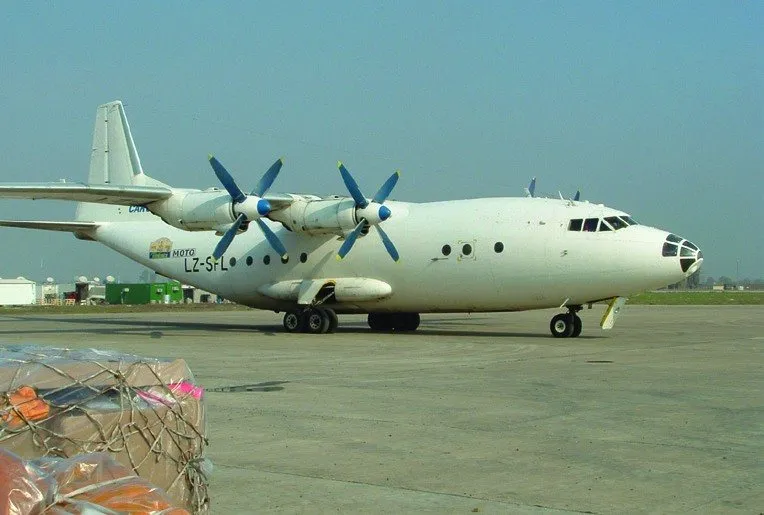
Then Mann had to get his soldiers and weapons to the target country. This required planes, which are readily available, if you are willing to fly rusty, broken craft, picked up from a remote airstrip. First time around – Mann made two attempts to topple Equatorial Guinea’s government, first in February 2004, then in March – he relied on a German with a dubious past, Gerhard Merz, to send aircraft to pick him up. Merz, a man suspected of trading in chemical, biological or even nuclear weapons, was based in Equatorial Guinea and ran a small airline. But the plane he provided was useless. An Antonov, a clapped out Russian plane, suffered a series of accidents – a broken wheel, a bird sucked into an engine.
For Mann’s second attempt he turned to a more reliable supplier: a CIA-connected outfit in Mena, Texas, which, at extremely short notice supplied and delivered a specially adapted, ex-military aircraft, a Boeing 727, with a pressurised cargo hold and the ability to use shortened runways. The man who flew the plane to Mann in South Africa is widely thought to be an employee for American intelligence.

Then there was money. The guns, salaries, planes and other equipment all told cost a few million dollars. Mann had a series of investors, some organised in London, and some recruited over champagne parties beside the pool in Cape Town. According to lawyers who interrogated Mann, and others involved in the plot, investors were promised a return of ten-to-one. A syndicate of South African investors was organised by another friend of Mann’s, who had accompanied him on the drive from Peking to Paris. Money flowed into Mann’s bank accounts in the Channel Isles. These account details were later leaked, showing deposits of hundreds of thousands of dollars from newly formed companies with strange names in Switzerland and elsewhere.
Last, but most important, Mann needed a smart strategy. First a military one, to take the place, then a political one, so he could hold on to it. He botched both. The first was daring enough, basically a plan to burst in by the front door, storm the airport (with the help of his welcoming committee led by du Toit), race to the presidential palace and start shooting. The political idea was simple too: get the Spanish government (the ex colonial power, cosy with Moto, the priest-to-be-president) to deliver both diplomatic recognition and several hundred “peacekeepers” as quickly as possible. Two Spanish war ships were steaming to Equatorial Guinea at the time of the coup.
Mann bungled the whole thing, though he seemed to come close to succeeding. As dusk fell, on Sunday March 7, 2004, he stood at Harare airport, Zimbabwe, relishing the thrill of his Boys’ Own adventure. His hired guns were sprawled in the 727 beside one runway, the lights dimmed in the passenger cabin.
Mann walked over to a lorry parked in a hangar once used for parachute training where his weapons were stacked. They were en route to the target country, and, if all went to plan would be there within hours.
Only as Mann inspected his weapons did he suddenly realise something was wrong. In the shadows a member of Zimbabwe’s secret police held a video camera to his eye. Armed security men, out of uniform, stormed the hangar, grabbed Mann and two accomplices and demanded to know who was on the plane. Mann tried lying, then charming, then browbeating the officials, and eventually offering up a large bagful of US dollars.
Nothing worked.
His bewildered men were dragged aside and soon bundled off to Chikurubi, a high-security prison where violence, hunger, cholera, AIDS and overcrowding kills inmates at a terrifying rate. The pilot of the Boeing, Niel Steyl, told me later how he had a few seconds in the cockpit, as the plane was stormed, to send a desperate text message to his brother, Crause, another mercenary pilot. He warned that the plot had collapsed. He still dared to hope they would be detained for a night or two at most. In fact it was the beginning of a prison ordeal that Mann and the rest would endure as one of the most horrifying experiences of their lives.
Mann’s plot, despite months of long planning, lay in tatters. South African intelligence – and many others – had been watching and decided to stop him, aware that information about the plot had, by now, reached the government of Equatorial Guinea. The same night the priest who would have been the new president of Equatorial Guinea was on a plane with Crause Steyl and a gaggle of others in west Africa. They had been on their way to the target country, but when Crause got his brother’s text message, they turned back. Landing in the Canary Isles, they were debriefed by Spanish intelligence and sent on their way.They were the lucky ones. Du Toit’s team, the forward unit which had been based in Equatorial Guinea for months, making contacts, setting up front companies, buying vehicles, getting familiar with the capital city, Malabo, were now trapped. Along with Merz, the man with the Antonov, and other foreigners, du Toit’s team was thrown into Black Beach.
Within days Merz – who was fat and suffering a heart condition – had been beaten to death. Officials claimed he had succumbed suddenly to a fatal attack of malaria, but his fellow prisoners said that they watched him die moments after a violent beating during an interrogation. Fearing for their own lives, du Toit and the rest rushed to admit everything.
Back in Zimbabwe, Mann did the same. He hand-wrote, then typed and signed, a full confession, saying that he had good reason to believe the governments of South Africa and Spain were backing his plot. As it became clear that he faced little chance of escaping Zimbabwe, getting his fellow mercenaries out, or surviving the prison ordeal without raising a lot of money to pay bribes, he began to beg his friends and contacts for money. Funds were reportedly channelled to the head of Chikurubi prison to ensure that Mann’s treatment was not too terrible. He was mostly kept away from his fellow plotters, which saved him from beatings and perhaps worse.
There had been threats against his life from men who would have been able to carry them out. Yet, Mann was able to receive books, some visitors and food provided by his lawyer: roast chicken was a regular meal.
By contrast to his fellow prisoners within Chikurubi, who at times were short of drinking water, and many of whom succumbed to AIDS, violent and sexual attacks and death from malnutrition, Mann’s time inside was harsh but bearable. His great fear was being sent to Equatorial Guinea.

Early in 2008 he was indeed bundled – kidnapped, he lamented – onto a plane to Equatorial Guinea. Reportedly the exchange followed a gift from President Nguema to his fellow President Mugabe of a suitcase stuffed full of dollars. Mann went on to sing the details of his plot to all who asked, at his trial and to visiting television journalists and, eventually, to visiting representatives from the Metropolitan Police’s anti-terrorist squad.But whereas Black Beach has proven unbearable for most of its inmates, Mann had become a valuable, celebrity prisoner. Soon a special cell, complete with treadmill for exercise, was provided. Mann was treated well because he was the most pliable and willing captive the president had had.
What now for Mann and the rest? Thatcher has said that he still considers Mann to be a friend. But Mann has retorted that he will co-operate if British prosecutors decide to go after the ex-prime Minister’s son, or against Calil or others based in Britain who helped in the plot.
Yet Mann might be feeling anxious too.
The ex-SAS officer confessed to everything about the plot at the first moment he was asked to do so. He also collected many hundreds of thousands of dollars from investors in the coup plot, but then blew their cash extravagantly and disastrously. That might be forgiven, but his investors may not be happy at evidence – clear enough in a contract that Mann signed with the priest, Moto, who would be the country’s new president – to strike a secret and lucrative deal, that would cut out many of the other investors in the plot.
The lot of a mercenary, apparently glamorous but too often hapless, is never a simple one.
*The Wonga Coup: Simon Mann’s Plot To Seize Oil Billions In Africa by Adam Roberts is published by Profile Books, price £8.99*
From the April 2011 issue of FHM India.
Spotted a mistake, or your photo used without permission? Report a correction













 in your inbox