
Inside the Jungle: life in the Calais refugee camp
FHM goes inside the Jungle, the makeshift migrant camp in Calais, where thousands wait for a chance to cross to Britain.
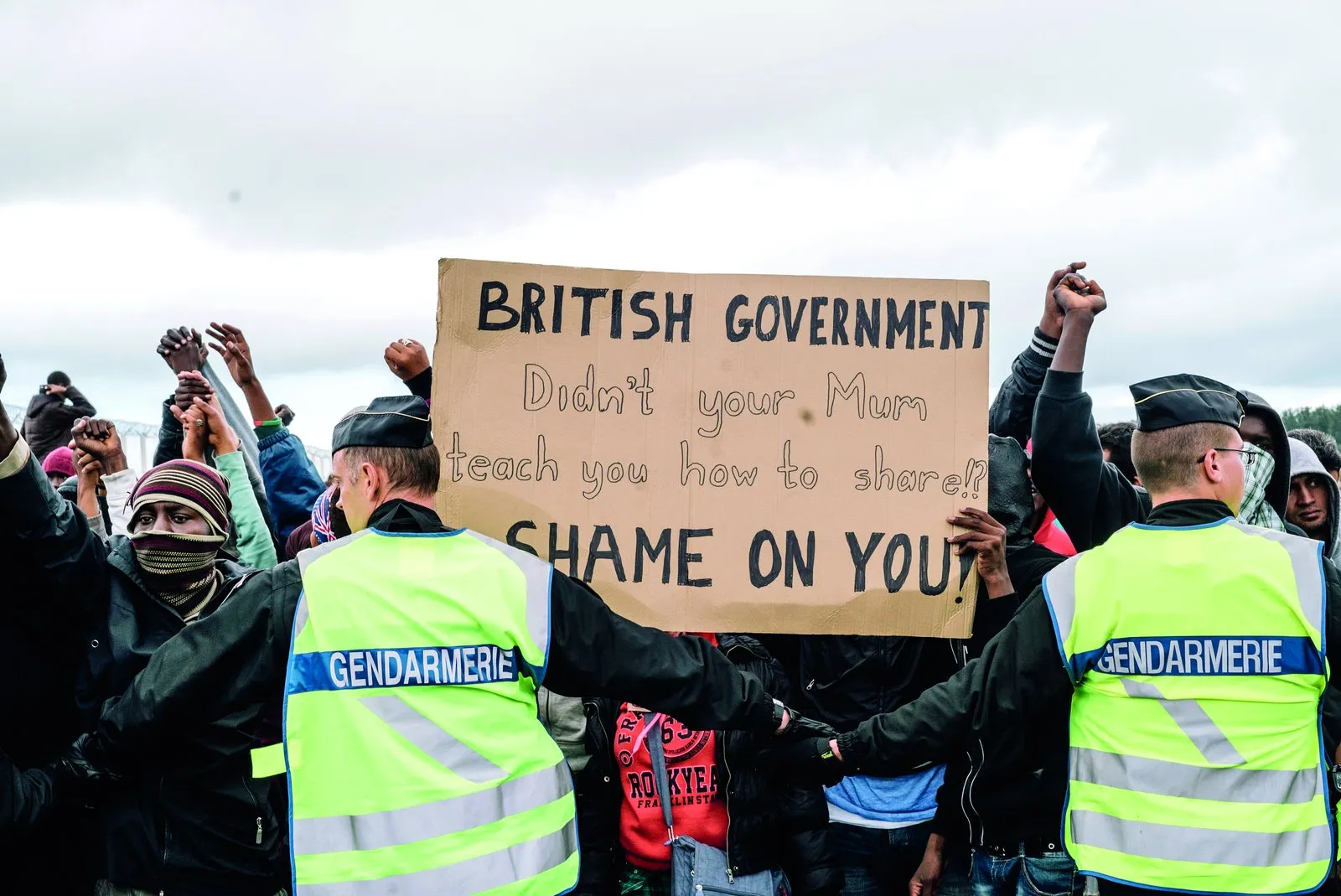



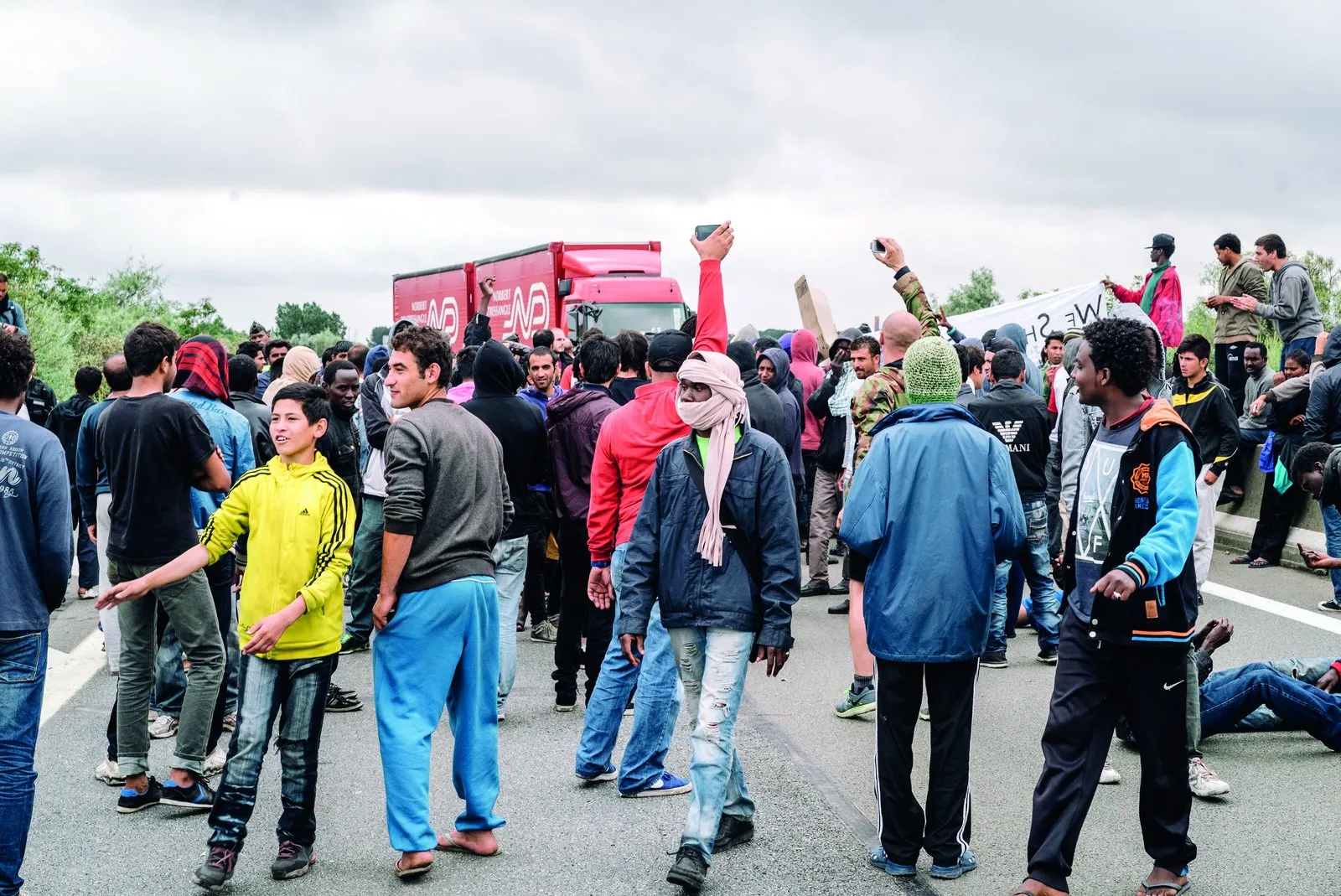
Pressed against the plastic shields of French riot police straining to hold back protesters, FHM is in the thick of the Calais migration debate. Outside the ‘Jungle’ migrant camp, desperate asylum seekers – from Sudan, Eritrea, Afghanistan and beyond – have poured across the motorway heading to the Channel Tunnel in a human chain, blocking the road.
Against the soundtrack of blaring car horns, the line chants, “We are human! We are not animals!” In the crowd, homemade boards mock, ‘Britain, didn’t your mum teach you how to share?’

An Iraqi named Mohammed, who tells us he worked as an interpreter for the British army during the allied invasion there, pleads for sanctuary from Britain. Safety is in short supply in Calais – that night, when we go out with the migrants as they attempt to get into the Channel Tunnel, the undergrowth throbs with human shapes, figures dash over busy junctions and flesh snags and tears on razor-wire fences.
Later, past 1am, we find a Syrian woman – hobbling along, eight months pregnant – stood under a motorway bridge looking for a way into a lorry. Even in the protest, the refugees are friendly and keen to talk – especially when, like Mohammed, you have a death sentence on your head from Isis. “I’m not thinking about money,
I am thinking about life,” he tells us. “I was working in my country as an English translator with the army. Isis found out and now life is very dangerous for me.”
He starts to discuss his wife and two-year-old daughter back home, but his voice breaks and he turns away. At almost the same moment, his real tears are matched by chemical ones, as the French police lose patience and pour tear gas. Suddenly, the Jungle isn’t safe. Barefooted youths escape down the muddy embankment in a toxic mist, some almost falling to their death over a motorway bridge. Others – taking the blast full in the face – mop their faces with their dirty shirts.
Since home secretary Theresa May settled her ‘Ring of Steel’ security system – a series of towering fences to keep migrants reaching the Channel Tunnel – this is the new, penned-in reality of the tent village that 4,000 international refugees currently call home. deep into The Jungle
Two hours earlier, FHM swings into the front seat of a French taxi. Our driver isn’t impressed: “Great – more journalists here to write bad things about Calais.”
Nobody has good things to write about Calais, the port that
12 million people pass through each year. Seemingly, Calais’ migrant tent village is a hotbed of benefits scroungers or potential jihadists – a ‘swarm’, according to David Cameron.
Images of migrants scaling fences or dodging guards en masse as they seek to get on trains or trucks bound for the UK dominated the British press this summer. After FHM returned, migrants rushed the Channel Tunnel, causing the Eurostar to close for hours.
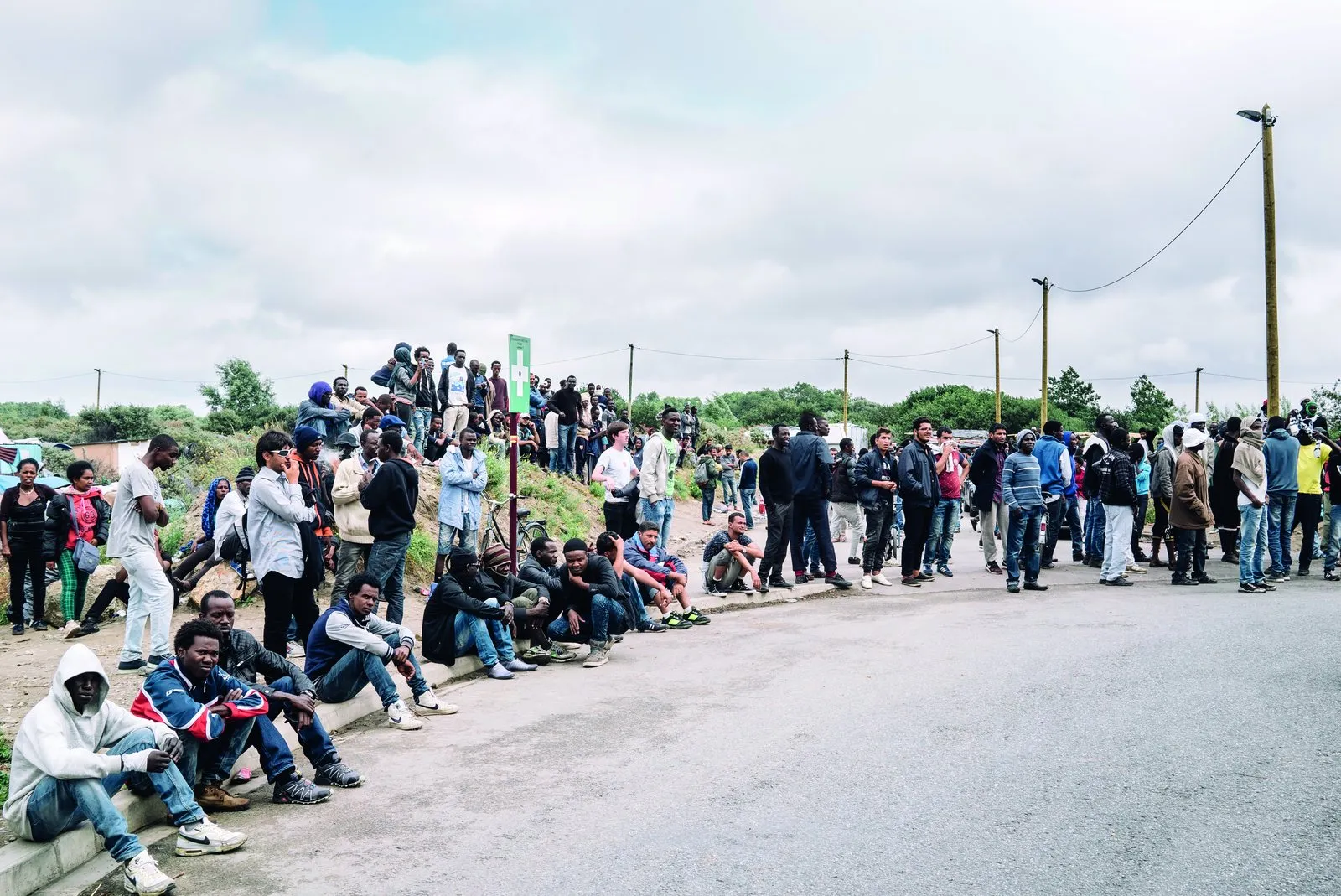
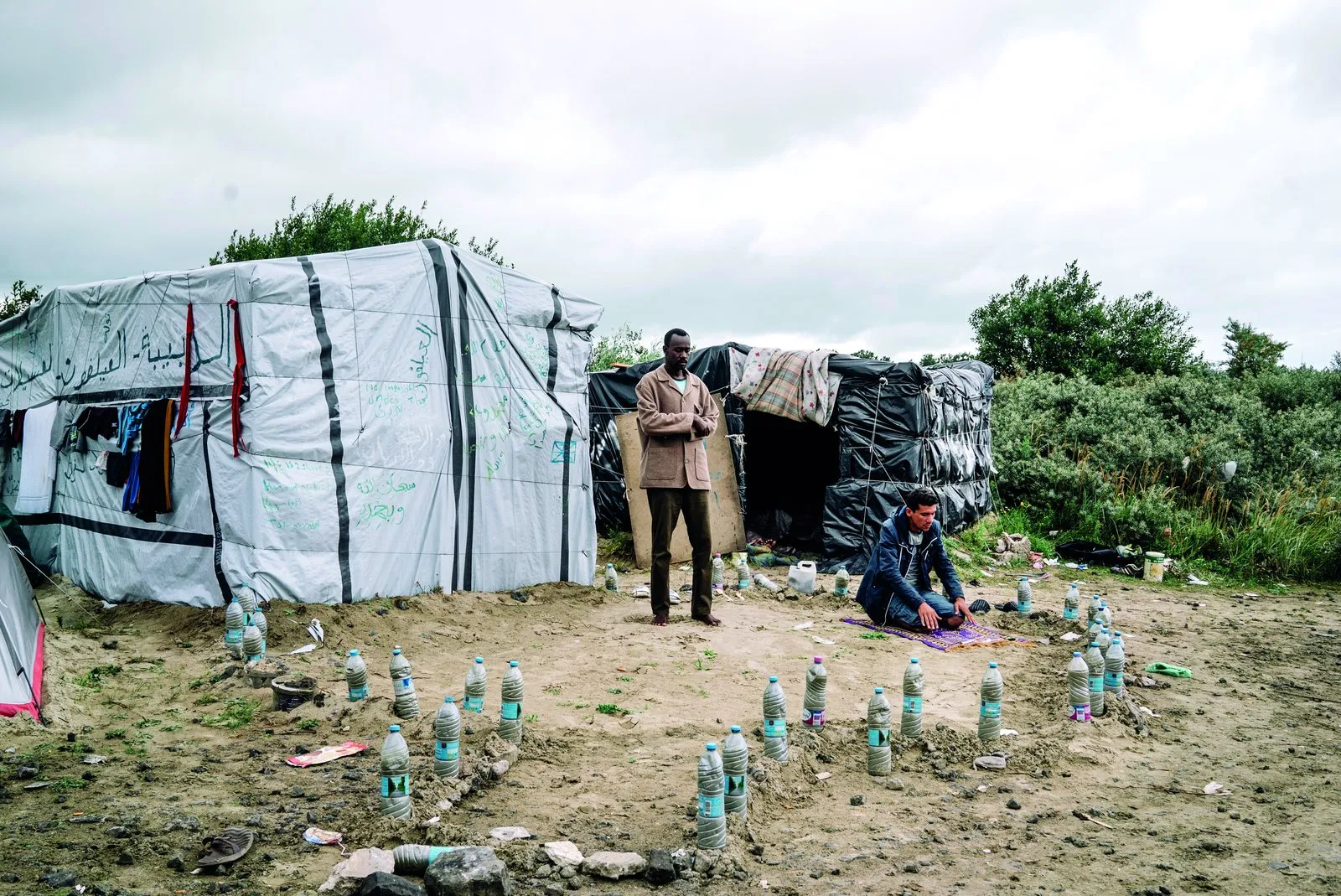
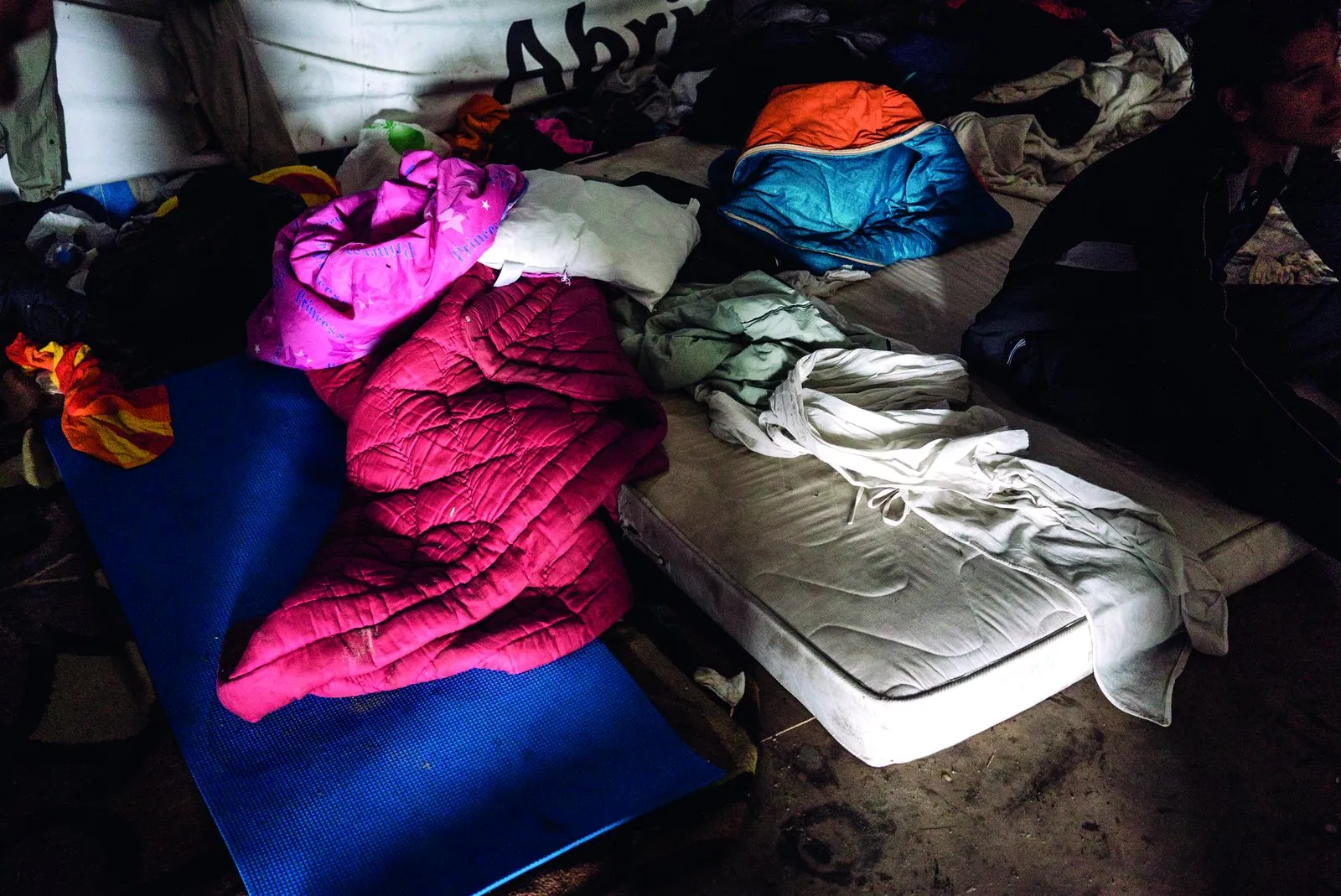
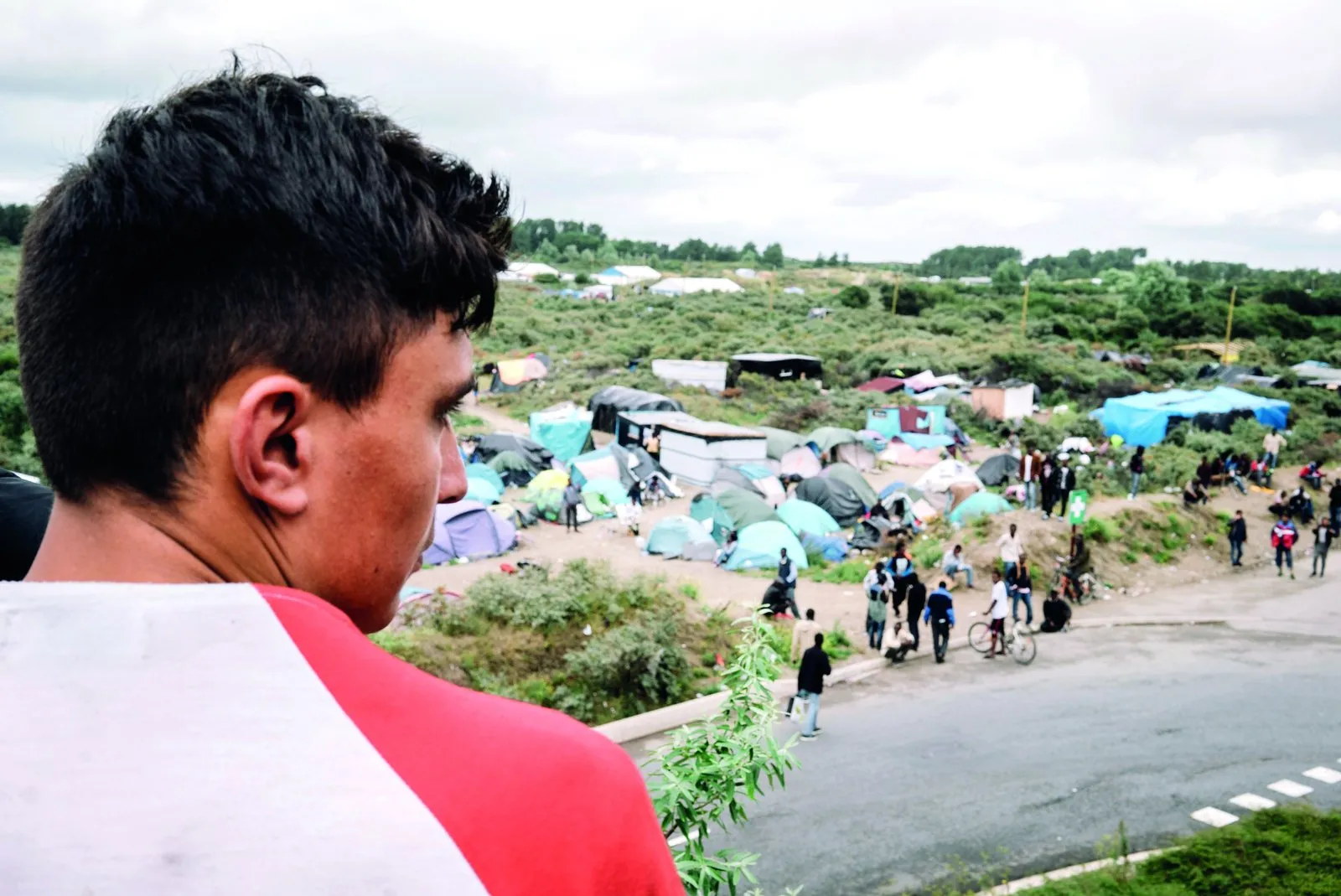
Up close, the migrants are less threatening. Hidden under the armpit of a motorway flyover, the Jungle is a depressing mess of humanity. If you’ve ever stood above Glastonbury, you can imagine the rows of tents and mud. Now remove all the joy and music. Rumpled tents flattened by weather and wear sag and rise among bramble bushes. Not the luxury tents that proliferate festivals, but sheets and tarpaulin thrown together out of necessity.
The name ‘Jungle’ might conjure up visions of colour and life but the entire landscape is grey and rubbish-strewn. Each nation sticks with each other – Kuwaitis in an abandoned shack, Sudanese in a series of tents, Afghans living close to Pakistanis, united by their love of cricket. Men stand in their underpants queuing to soap themselves up at the camp’s single overworked cold tap. Others sit bored and hungry, waiting for their lone meal to be dished out at 5pm.
Everyone wears the battered mask of exhaustion. Groups of young men stand in shorts and flip-flops, despite the squalling winds. Many don’t have shoes at all, their feet wet from the caking mud. There’s the occasional mid-price watch or designer label, but most barely have a complete outfit. Some might wear an Armani hoodie but without any decent shoes – an odd cameo of how global consumerism works. FHM gives out some food, trainers and warm clothes from a bag. The first queues are polite but as a crush develops, hands appear through our legs and under our arms to grab whatever they can. One lad runs off with one trainer, another goes off somewhere else.
Risking death for a life in britain
If these people are here solely for benefits, they must believe the £37 per week they’d receive in the UK to be worth utter humiliation. Hassan, 25, from Pakistan – his village near to the Afghanistan border and a hotbed for fundamentalism – fled here five months ago. Every day since has been the same. “We wake up, we eat, then we walk for two hours to try to catch a lorry or get on a train. Each day, our lives go past and this is all we do.” Fatigue isn’t the highest price to pay in the Jungle. “Our friend died on a train,” Hassan says. “He caught hold of a moving train but he collided with a concrete wall. I was with him. It was on 27 July. Do you know what hitting a wall like that can do to a man’s body?”
Everyone here wears either the scars of war or the attempts to escape it. Since the start of the year, a dozen migrants have been killed attempting to get into trucks or jumping on to moving trains. The youngest was an unborn child who died when its mother fell from a truck.
Dom-Dom is a Calais local who donates time and charity to the camp. “You see plenty of injuries,” he says. “It is not just climbing on trains. Sometimes they fall down a barrier. This morning, I carried a guy through town with a broken ankle. He had been that way all night so
I put him in the car and took him to hospital. One guy got crushed by a police car against the security barrier on the motorway. He almost lost his leg. He is badly disabled now. And 10 people have died in the past few months.”
‘Benefits’ is a dirty word here. Nobody wants to talk benefits, just safety, says Shahid, 25, who has been here five weeks, having escaped Afghanistan when Islamic extremists attacked his village. “Why would we come here if our country was good?,” he says. “We wouldn’t come, would we? Nobody wants to go far from their family. Who came and destroyed our life in Afghanistan? Europeans. Americans. Australians. My villagers were killed in a bomb blast. That’s why we’re coming here. Life here is not life. It’s a kind of shit life. The Jungle is for animals, not humans.”
Despite some discussion about British foreign policy, we face no hostility here. Most faces are smiling, everyone quick with a handshake. In every tent we venture into, we are offered coffee or tea. In one, our Sudanese host crouches under a wet plastic sheet and siphons what little coffee and sugar they have into a shattered glass.
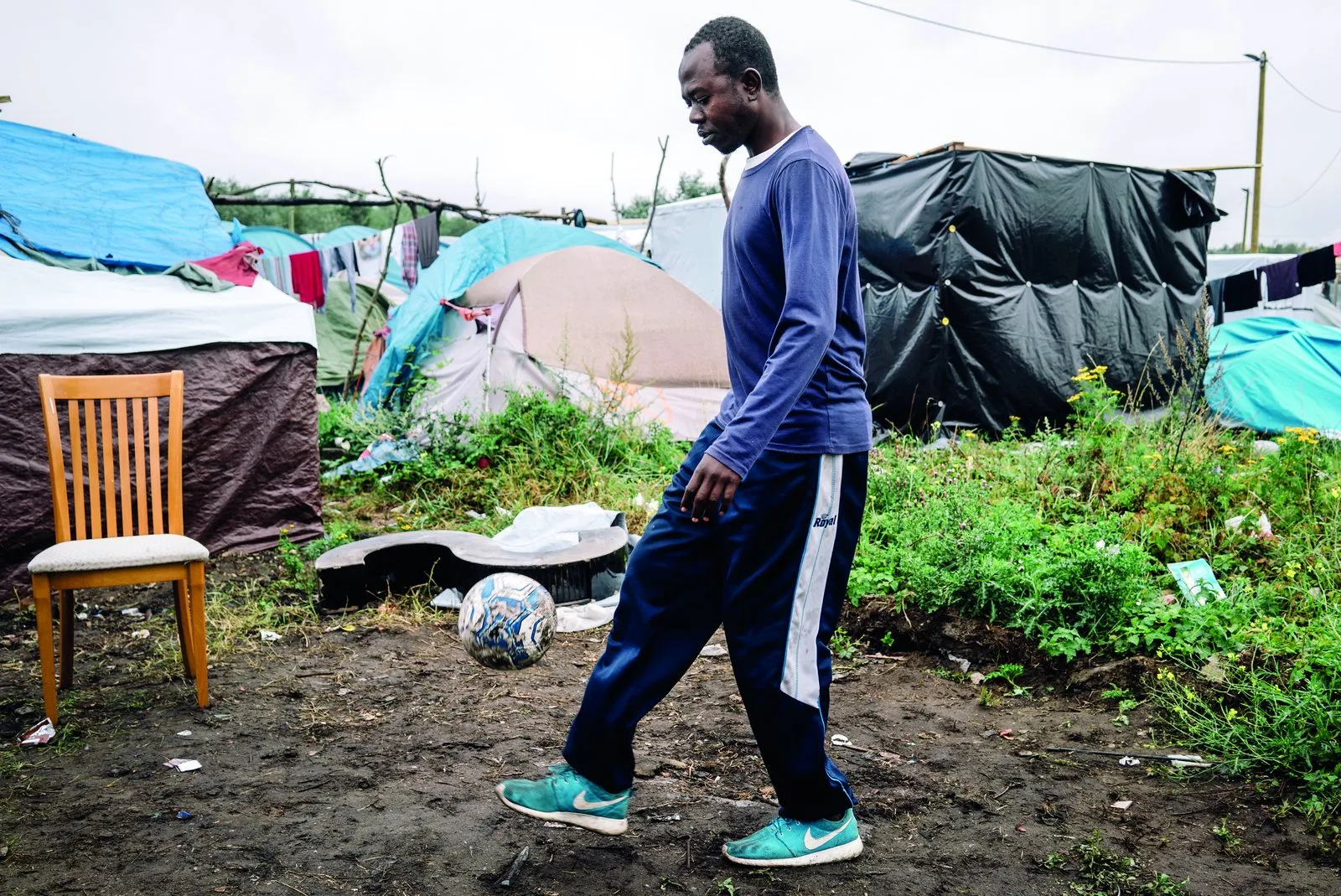
Outside, Khaled, 28, is playing keepy-uppy with a salvaged football – the mere mention of the Premier League sparks interest, a flicker of normality amid the grim. Khaled left behind his life in Darfur, where he played to second-division level at weekends. War broke out and his friends were killed by police.
“When we play here, it brings people together,” he says. “But there’s no room for a proper game.”
A BUSINESS Spirit
In the chaos, shoots of civilisation spring up. A church and a mosque are here, as are some shops, with surprisingly tidy-looking shelves. Ahmed, 22, is from Afghanistan. His English is good and he manages to buy goods from the nearby Lidl and sell them for a tiny profit. The owner of the stall – a fellow refugee – gives him 10 euros a day for his trouble and a place to sleep.
Ahmed describes his journey to the UK, which took him two months. “I arrived first in Turkey, then Hungary, then Italy, then France. Sometimes by car, other times I walked or rode a bicycle. I slept in forests. It was never safe.”
And what does he want after that two-month toil? “I’d like to get a job in a chicken shop like KFC. Some restaurant.”
A few months back, he broke his leg jumping off a bridge. So, tired of trawling for an escape out of Calais, he decided to do something else and the shop – a wooden shed with some shelves in – was created. But escape is what still fuels his migrant customers.
“Monster energy drinks sell the best,” he tells us. “Before they go on the trucks, they come here to buy Monster. If you’re out all night, you need energy. People get very tired trying to escape.”
As the sun goes down, young men and women ready themselves for the two-hour trek from the Jungle to the port to attempt to get into the UK. They eat rice and chicken on paper plates, chug Monster and get ready to walk.
In the blackness, you hear the slap-slap of men running in flip-flops, the light of a McDonald’s and a Hotel Ibis on the horizon. Policemen wearily arrest migrant youths near the port then release them a mile up the road, only for them to come back again – a pointless game of British bulldog. In the brambles and the dark, one migrant shielding his face asks, “Why does Britain hate us? Why are the fences so sharp and so high?”
Back at the Jungle’s tiny shop, Ahmed admits he lost heart for the nightly chase to get into a UK-bound lorry months ago. Now the huge iron fences make it even harder. “I see people in the camp with missing eyes, broken hands, broken faces. When someone dies, it’s like losing a member of your family. Some of them are very young. They die here and their father and mother will never know. They will never know how bad their life was here.”
The camp has a growing business community. Shopkeeper Ahmed says, “I sell things only for a small profit – my profit on a can is 20 cents. It helps people – we stand together here and everyone is your friend. The most expensive item in the shop is 1 euro 60 cents. I roll cigarettes with a machine.
We sell each one cheaply because it’s not very full. It’s not like an original cigarette, but it’s good for making the time pass.”
1 Sprite: 50 cents
1 Monster: 1 euro 60 cents
1 Water: 50 cents
1 cigarette: 5 cents
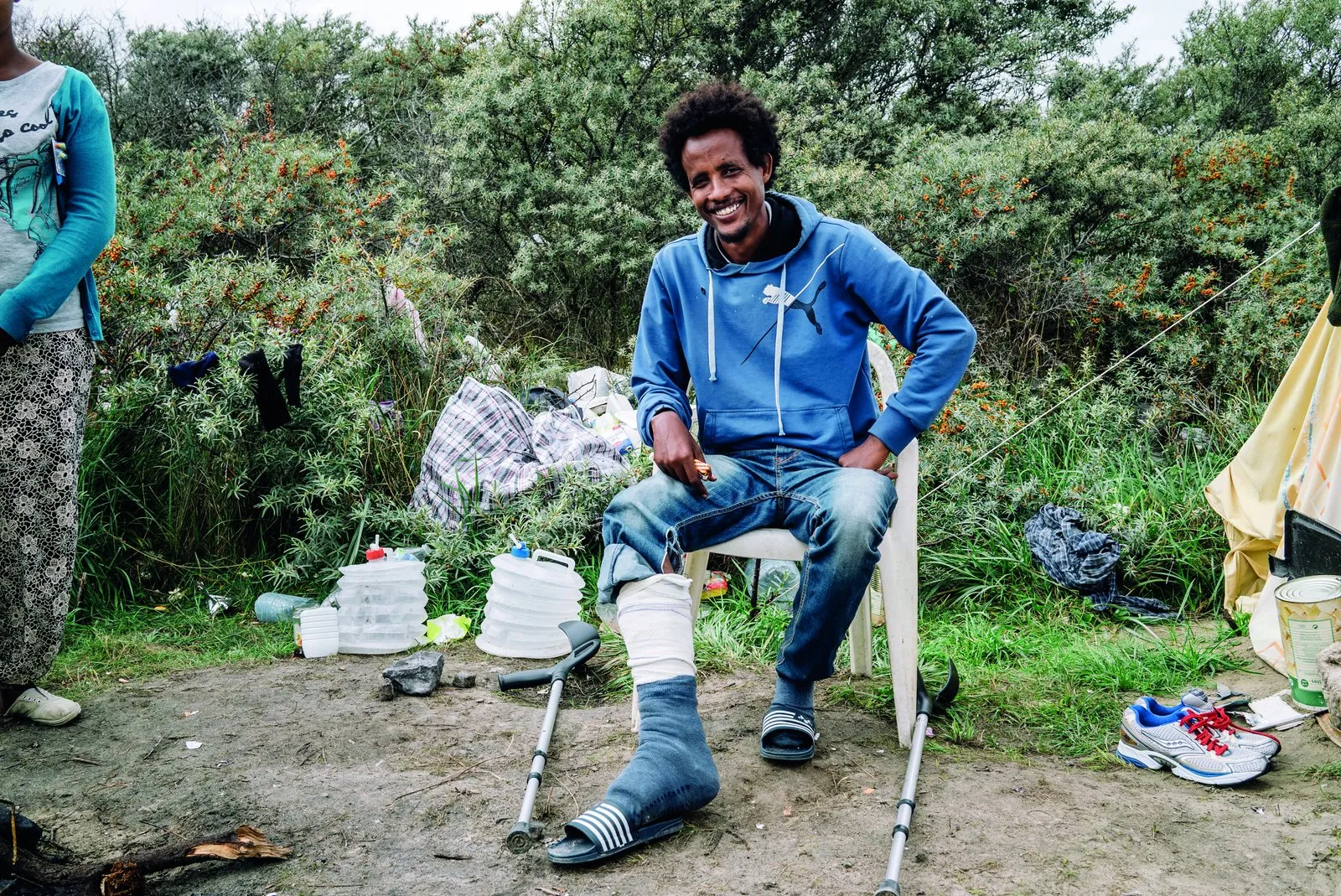
Filimon Semere, 25, is from Eritrea. He has been in the Jungle five weeks with his sister, Saba, 20. They share a tent with six others. When he gets to the UK, he hopes to be an accountant.
“It took three months to get here. Four days ago, I jumped from a bridge to reach a train and broke my leg. I can’t reach the shower because of my leg so I wash using a plastic can now.
“Saba has to get our meals because I cannot walk. She can only get one meal for us to share as it’s one meal per person. The weather worries me. We used to make hot tea on the fire but now the ground is too wet.
“Saba still tries to get on a train at night. She has been tear-gassed. If we make it to the UK, we will study. This is why I came all this way. I want an education.”
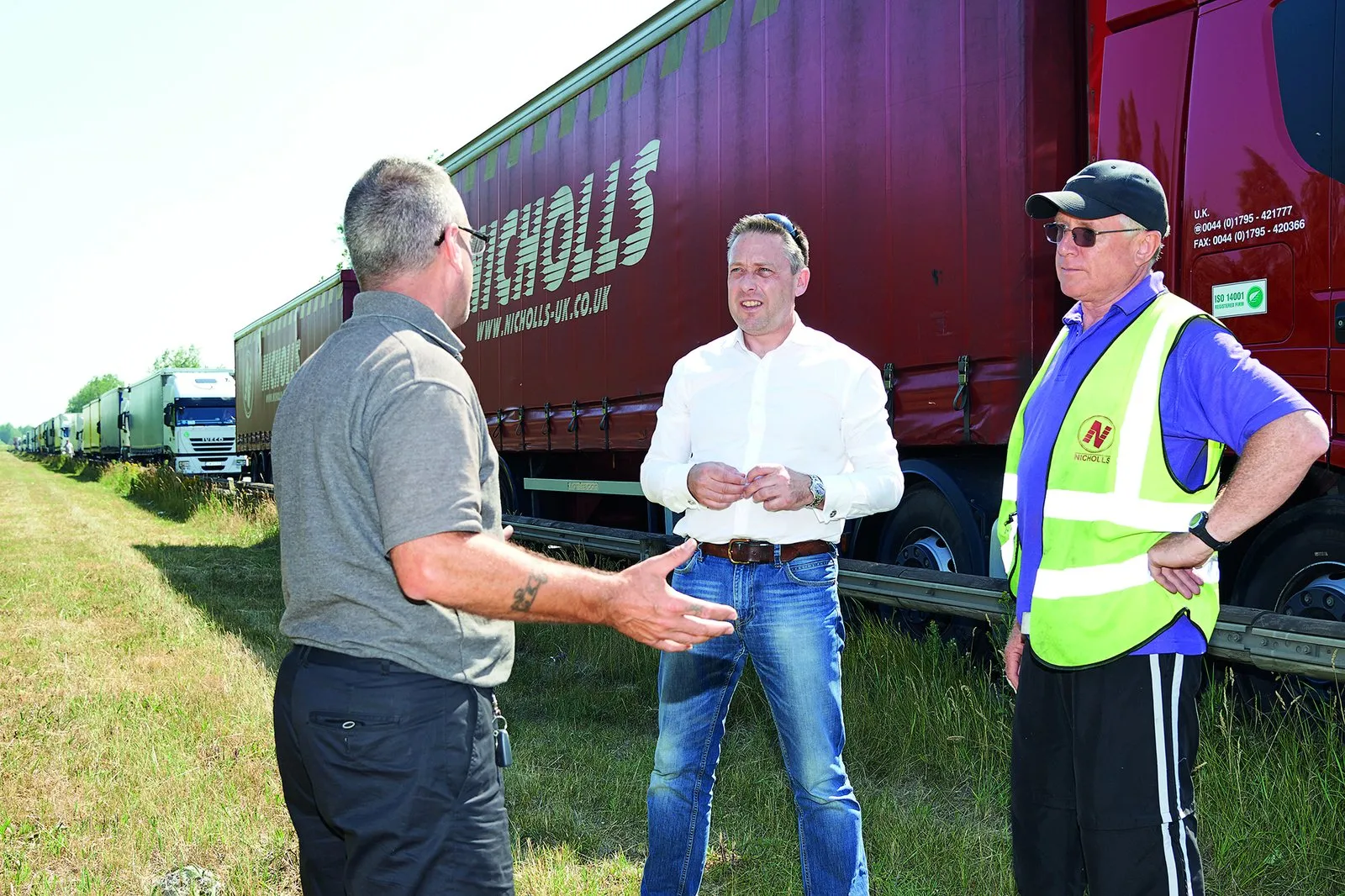
Richard Burnett is the chief executive of the Road Haulage Association, whose 10,000 lorry drivers often drive through Calais.
“The migrants know the drivers don’t want to hit them so they will run on to the motorway and the drivers are forced to stop.
“In July, we had a driver threatened at gunpoint in Calais. This guy was ex-army so was no coward, but he quit because he doesn’t want to face that.
“We had one driver offered 65,000 euros in a suitcase to turn a blind eye and let 30 migrants in his lorry. He declined.
“The migrants all have mobile phones and they coordinate on the edge of the perimeter tunnel to hit the Euro Tunnel at the exact moment the Gendarmes leave. Their plan is to get into a vehicle that has already gone through passport control.
“The UK has hit £4 million worth of fines on lorry drivers this year for ferrying migrants. One driver opened his truck in Peterborough and a dozen migrants leaped out the back of the van and ran. Migrants will hide in refrigerated vehicles – that can be as low as -17°C – or even get into powder tankers. They unscrew the top of the drum and get in it. You can drown in that.
“The vast majority of the deaths are axle riders. These are migrants who climb on the underside of the truck and try to hang on. Drivers have seen migrants jump on to moving trains and be electrocuted, or get run over. Others have looked in their wing mirrors and seen 20 migrants hanging on to their cab unit and their trailer, on the side, the roof – everywhere.
“As well as the human cost, there’s the material cost too. Most containers carry roughly £30,000-worth of merchandise, but a load of designer clothes can be worth up to £250,000.
That can be entirely written off because of spoilage. They’re in there for days sometimes, so you can imagine how much bodily fluid there can be.
“The atmosphere is getting more and more tense as it becomes harder to get into the UK. Calais is just the bottleneck. More needs to be done across Europe to make it safer. The drivers are dads, sons, ordinary blokes doing a day job. Why should they face being violently attacked on a daily basis?”
From the December 2015 - January 2016 issue of FHM India.
Spotted a mistake, or your photo used without permission? Report a correction










 in your inbox