
Leh Floods: The Army To The Rescue
The soldiers who dug Ladakh out after the cloudburst
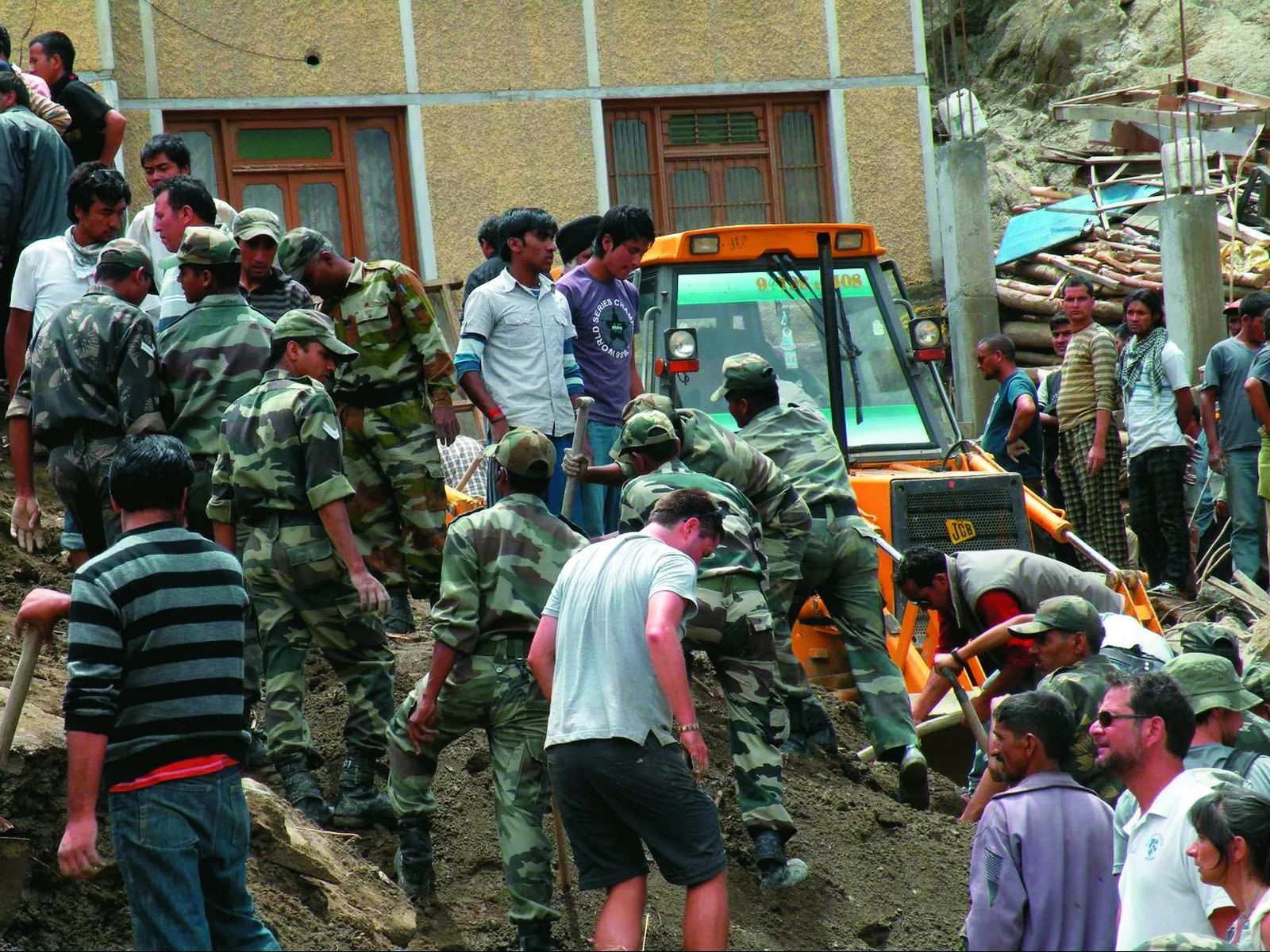



It’s a line that’s being repeated with a disturbing urgency in the newspapers and the channels, so often it barely stands out anymore. The picturesque Ladakh painted a gloomy picture. It didn’t seem to be the tranquil land of monks and monasteries on those fateful days. And what happened in Ladakh early August will be etched in their hearts of its people for eternity.
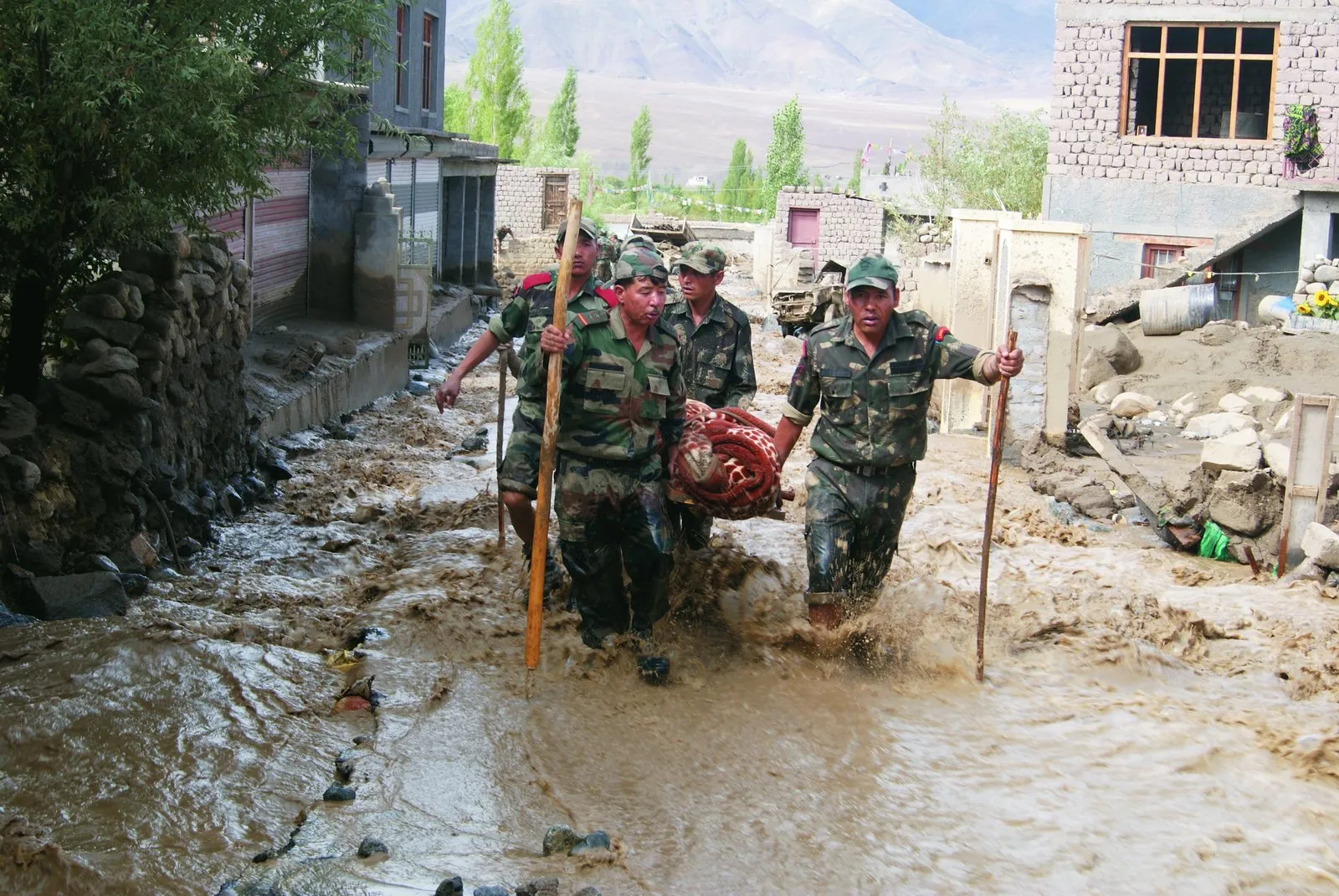
Amongst the devastation that the infamous cloud burst brought to Ladakh, a moving picture will continue to endure. An extended hand of a few firmly and surely lifted out trapped people from the rubble caused due to torrential rains.

Amongst the first few brave hearts were Lt Col Kedar Gokale and his two aides. Gokale, an officer of the Engineer Regiment of Trishul Division was returning from Leh to his unit location at Karu that was 42 kilometres away on the Leh-Manali National Highway. Accompanying him were a friend Sapper Mani Kantan and his driver Nalik A Nair.
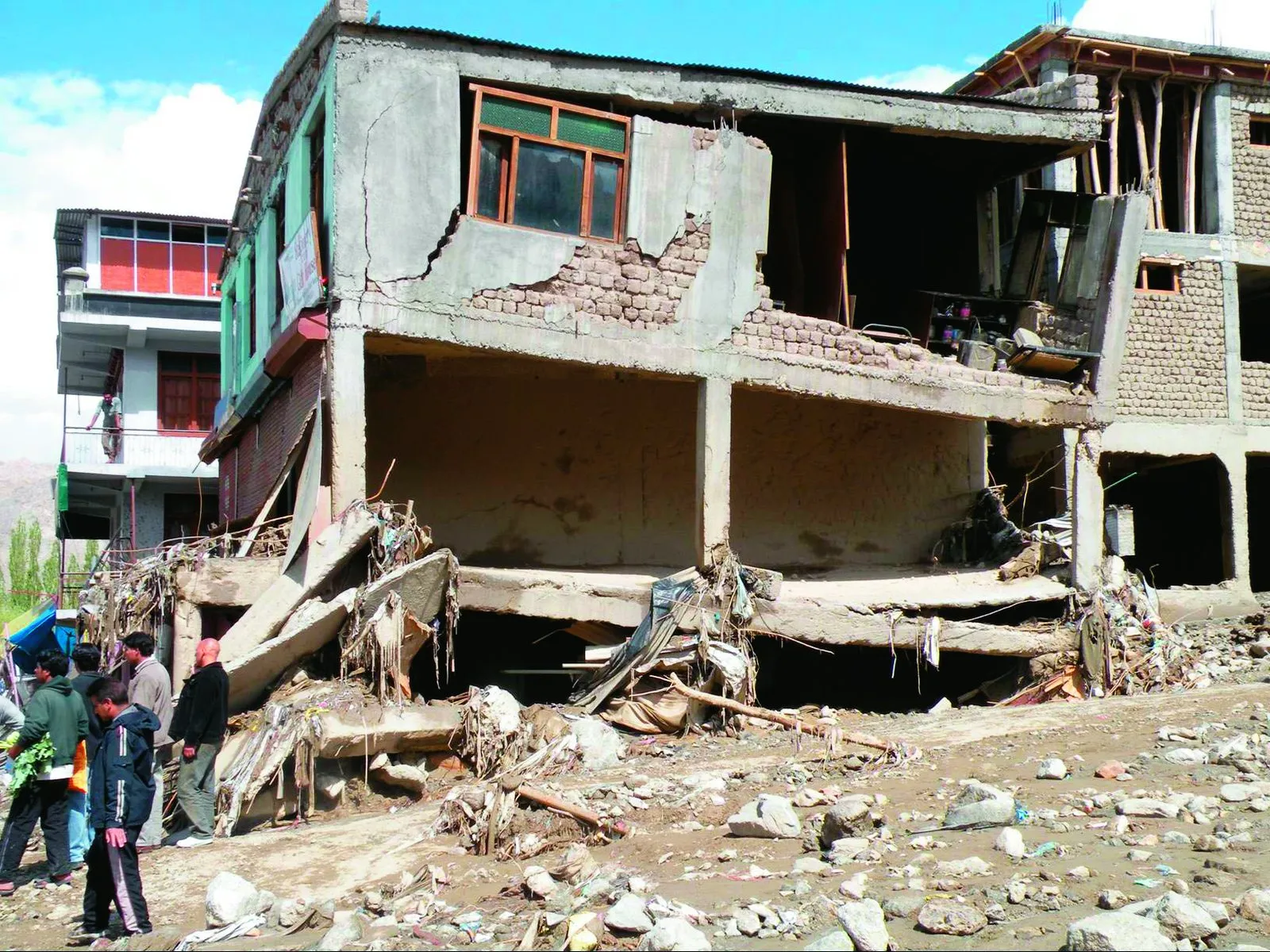
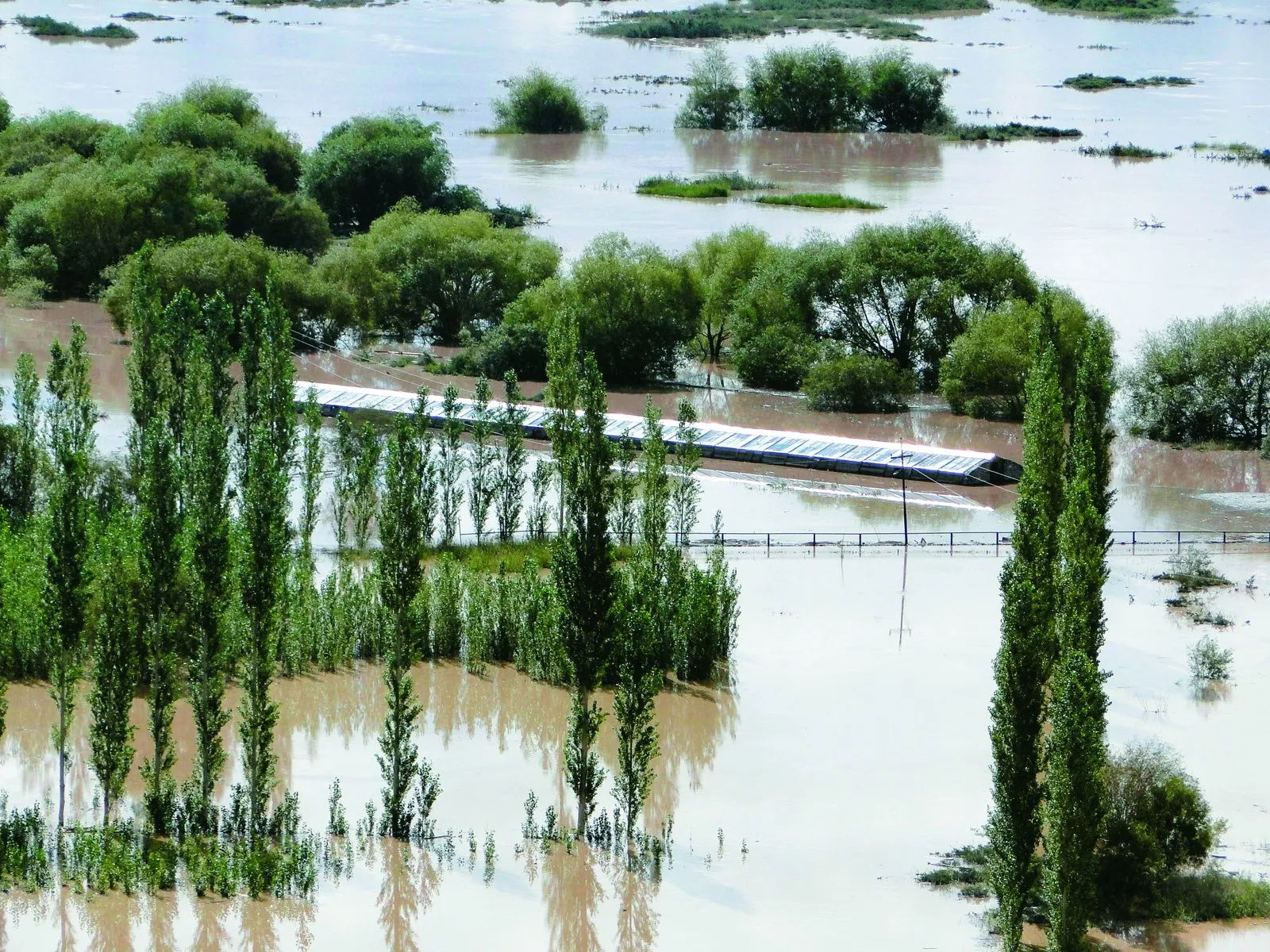
The rain had by now flooded the entire highway after a five kms drive when they found themselves stuck in the town of Choglumsar - a devastating site by then.
The town wept for help as vehicles floated and crashed into properties; and boulders smashed everything that came into their path. Most others would have sought shelter, but then that’s what the three guys didn’t do. Despite the pelting rain Lt Col and his people headed in the deep slush and the shifting mountains of mud. Villager after villager was pulled up onto firmer ground as the three brave-hearts ventured into chest high mud. Are there pictures to prove their heroic feat? No, and precisely that’s why they made it into FHM – the three soldiers were among the first rescuers on what is now clinically referred to as ‘Ground Zero’.
The effort managed to save at least 12 people from almost certain death by a threatening mudslide. Those rescued included two girls of ages 6 and 10. These guys didn’t pretend to look good, they were simply daring. And, it was only when the task became massively overwhelming for them, they established contact with the army headquarters to kick off a rescue mission. That’s when they and the Indian army realised – this was a cloud burst like no other.
Choglumsar was the epicenter of the cloudburst in Ladakh and this peaceful town endured the maximum damage in terms of lives and property. The first relief and rescue columns reached the location by day break after negotiating and clearing a number of mudslides en route.
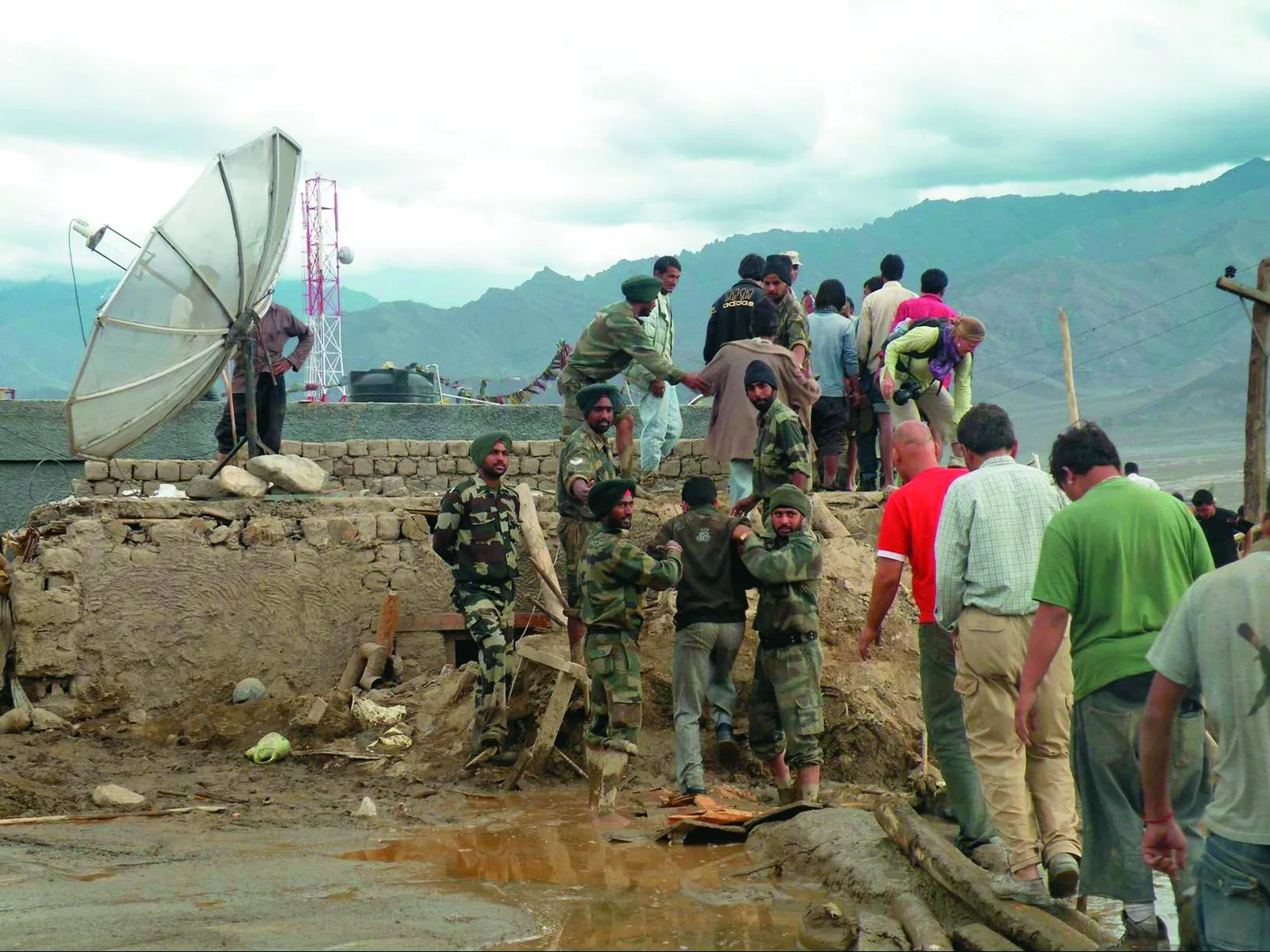
It was only the next morning that an actual scale of the devastation began to be evident. By the morning of the 6th August senior officers were dispatched to direct the rescue and relief operations. The Disaster Management Cell of the Trishul Division headquarters also dispatched medical officers to provide the survivors with instant trauma relief.
It would be only fair, to point out that some of the officers of the Trishul division that were pressed into action were locals of the region – officers who had themselves suffered loss of loved ones and property. Strangely enough, in Ladakh that day personal trauma didn’t seem to matter; if it did they didn’t show it. There was only the hope, that someone else was helping them out.
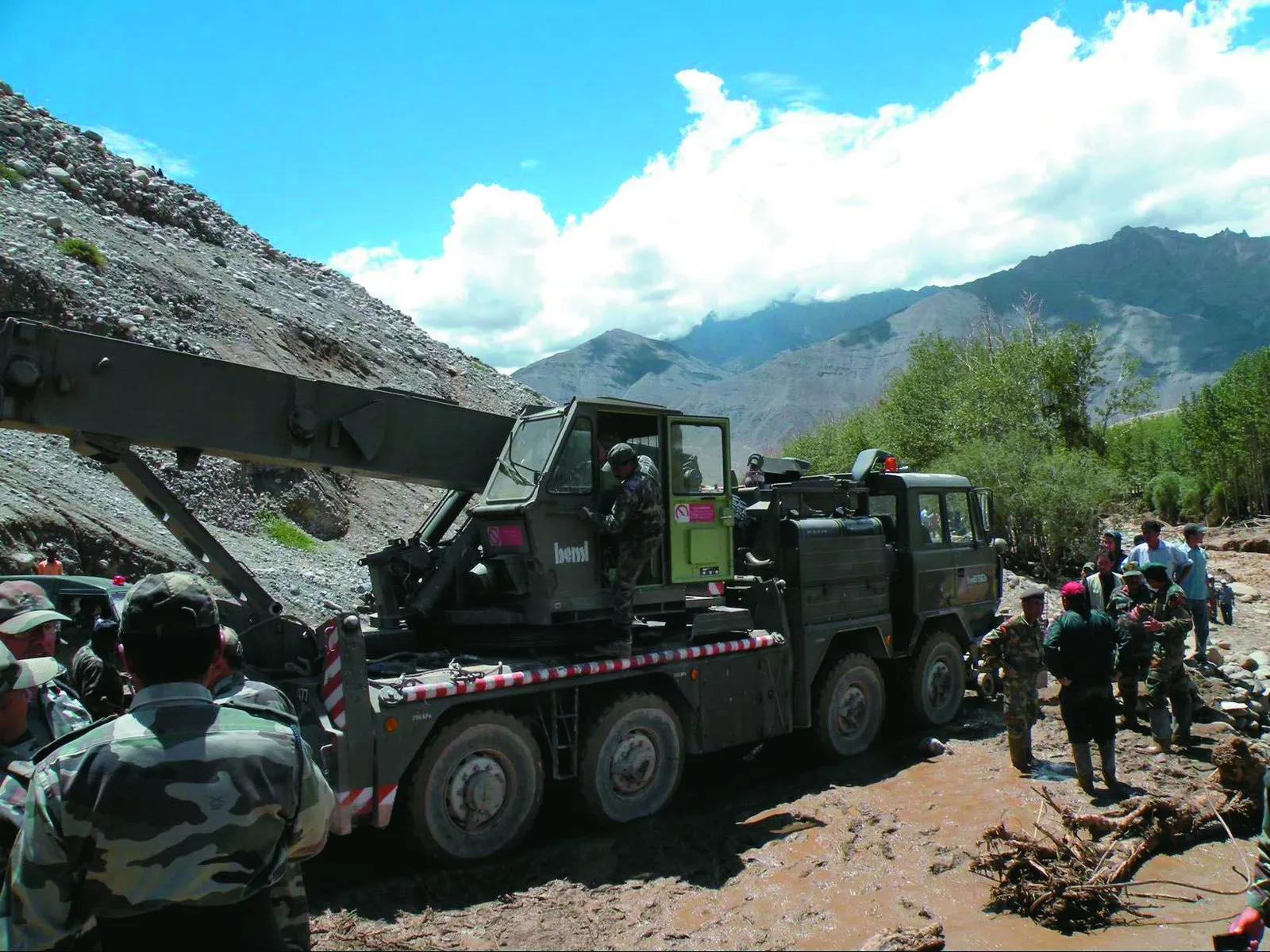
With the help of the troops and the facilities like earthmoving plants, bulldozers, ambulances and medical personnel, relief columns of the Trishul Division were successful in containing the extent of the damage significantly.
The main focus of all the relief operations was to restore the lines of communication both physical and electronic at the earliest to enable faster move specialised relief facilities.
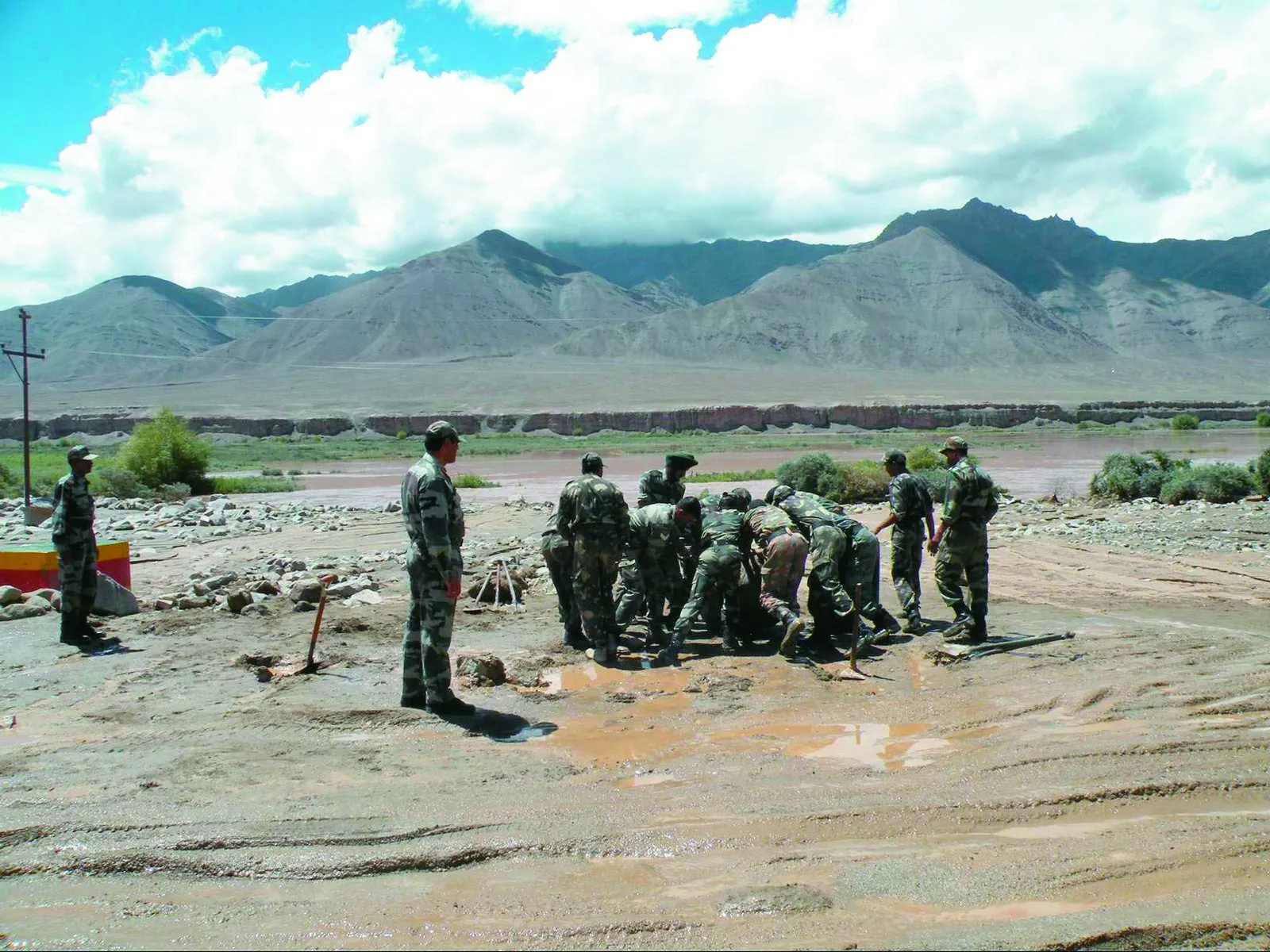
At the same time it was the locals who had suffered untold losses in terms of loved ones and property that remained the core focus.
In Igu, a small village near Karu, a relief column of the Mechanised Battalion of Trishul Division was launched. The village, located some 5 kms off the Leh Manali Highway had so far been completely cut off and thus not reachable.
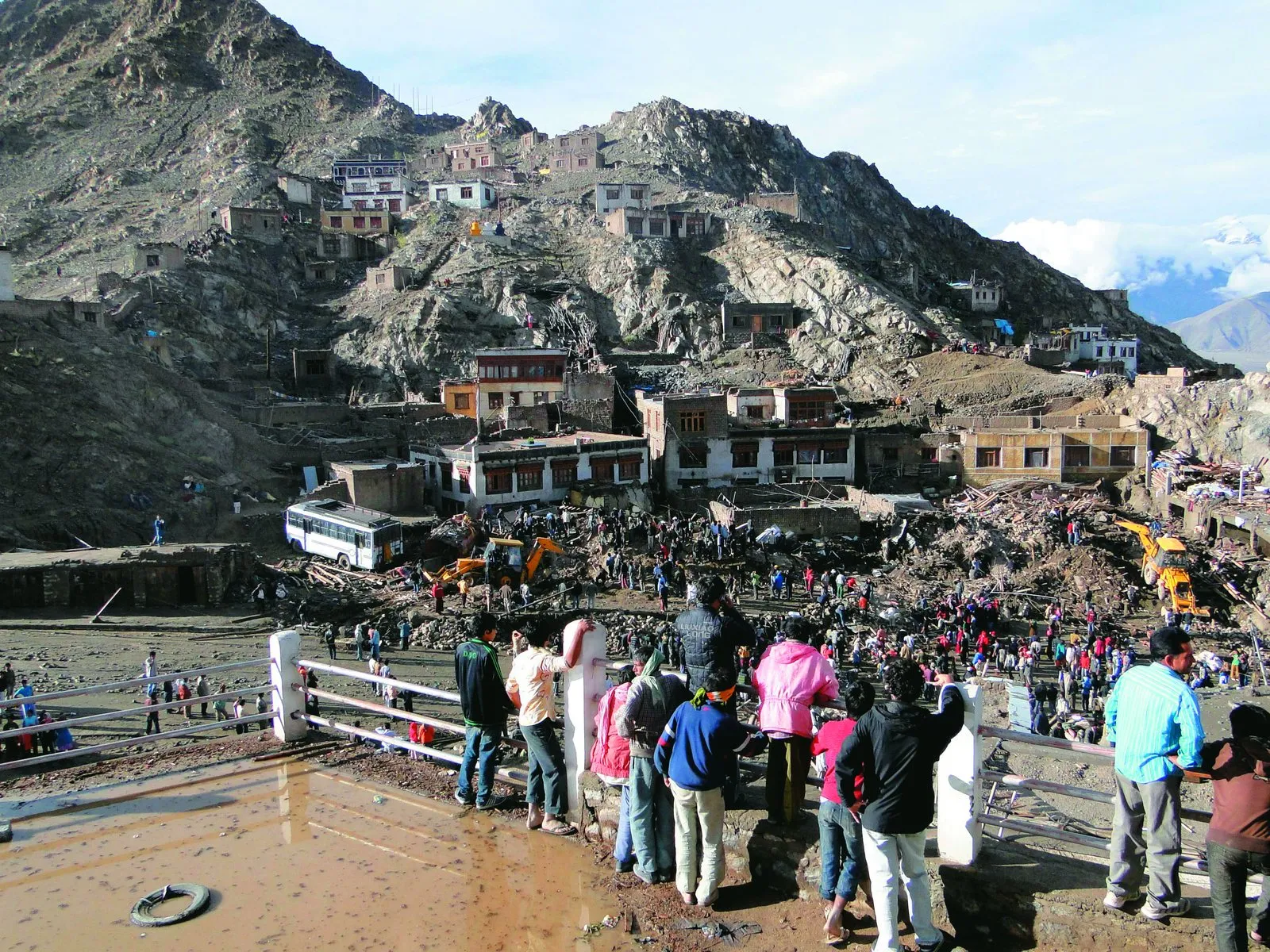
But as the relief columns worked their way through the mud and slush and slid their way down to reach the village prepared for the worst when, a sense of relief overcame them. A silver lining in the dark cloud that had burst over Ladakh – the locals said they had already sensed a calamity coming and had shifted to higher reaches thus avoiding human casualties.
But not everything was rosey; the mudslide had washed away most of the houses of the village and the livestock too. The columns not only aided the villagers with food and medicines but also excavated two hand-pumps from under 15 feet of mud and slush and repaired it so that the villagers get a steady supply of clean drinking water.
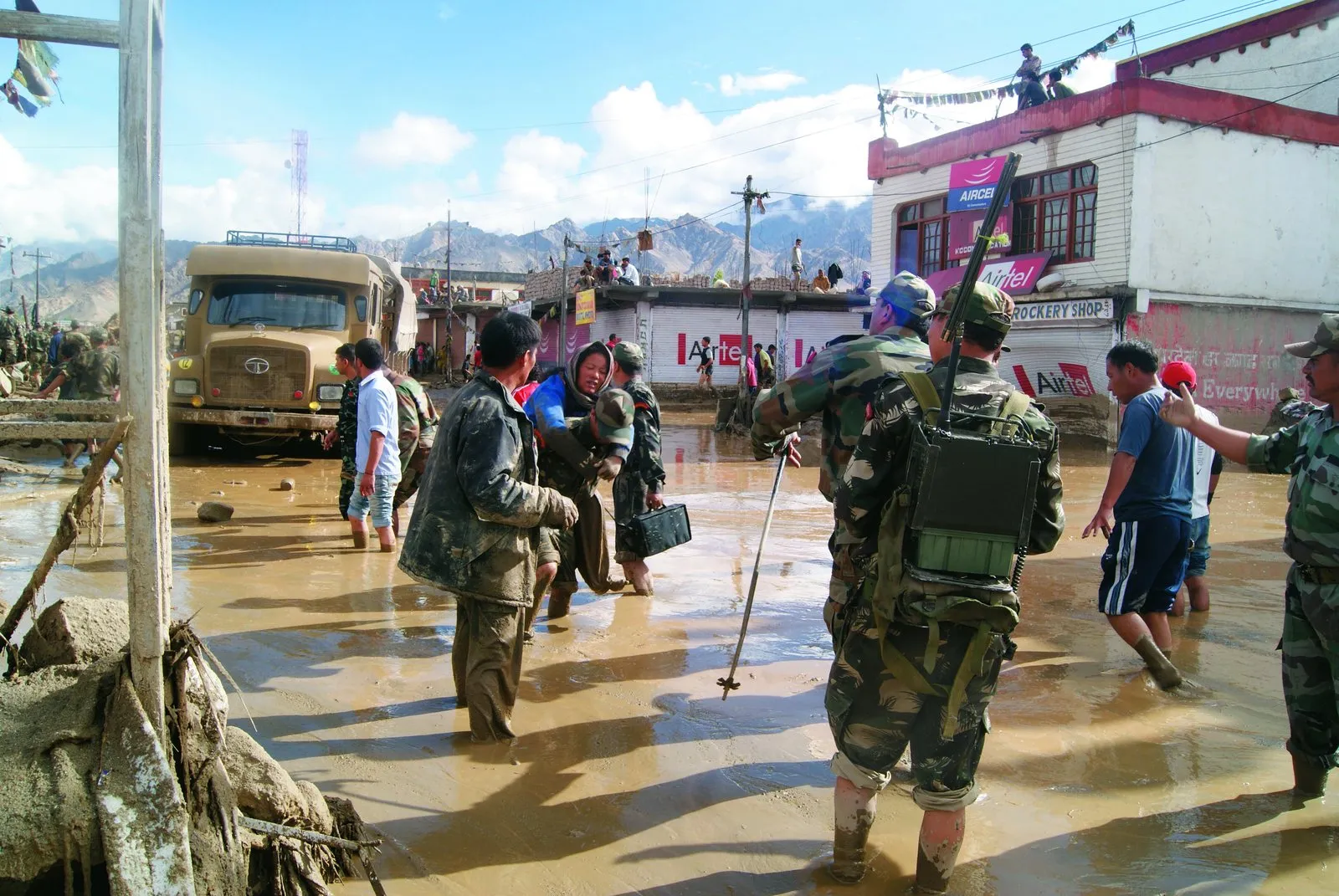
At Pang, a small Transit Camp Detachment division provided shelter and food to almost 110 tourists including about 40 foreigners who were stranded on the highway because of landslides at various places. The incessant rains and the extremely high altitude had made conditions even worse for the vacationers. Again the soldiers came to the rescue – the doors of a Transit Camp were flung open as the soldiers went out of their way to make sure the tourists were fed and warm.
Later when the hardworking but not often acknowledged men of the BRO had cleared the route, these unfortunate tourists were ferried out of the disaster zone to safety.
NIMU
Extensive damage was reported from Nimu, another village and medical aid was immediately sent for. Three disaster rescue teams of the Ladakh Scouts, whose troops come from the local areas, have most commendable rescued a commendable number of 600 civilians from the critically affected Choglamsur area. A column under Havi Sonam Palgor did an admirable job in negotiating through the heavy rains, mudslide and the overflowing Indus River and reaching the helpless stranded villagers on time.
The villages of Skyurbuchan, Baldes and Katchatang in the Khalsi block of Leh district too had been affected by the cloud burst. The army has offered tremendous support and assistance to those affected and two bridges have been rebuilt in order to restore the transportation lines in the Leh Manali Srinagar highway.
But it wasn’t just relief material and the road rollers that the army rolled in – the soldiers brought what the people needed the most –
Being true patriots, these brave Jawans also showed the stranded tourists and foreign vacationers that in our country guests are nothing short of Gods by providing them with warm clothes and food and ferrying them in vehicles to safer places.
These ladies and gentlemen are people who left their personal losses behind. They gulped their own sorrows and provided a strong hand to make sure peaceful Ladakh came away with as few scars as possible.
As a popular philosophy of Buddhism is the cycle of cause and effect, it is hoped that this massive loss of property and loved ones too is just a tough phase that the survivors must be going through but this too shall soon pass.
But that said – the heart does go out to those silent warriors. The men of the Border Roads Organisation who will be entrusted with the task of reconnecting Ladakh. Godspeed.
From the September 2010 issue of FHM India.
Spotted a mistake, or your photo used without permission? Report a correction













 in your inbox