
Rule breakers: the renegades who turn left when everyone turns right



They are the renegades, the rebels, the misfits of life: the men and women who turn left when everyone else is turning right. They are the people who say no to the status quo. You may love them or hate them but you cannot ignore them. Because, whether you like it or not, they are the people changing our world.
The photographer who was blown to pieces
In 2011, documentary-photographer Giles Duley lost both his legs and an arm when he stepped on a landmine in Afghanistan. But, 18 months later, he returned to the country to finish his project. He continues to work in war zones.

The last thing I heard before the landmine blew was a click. I’d been in Afghanistan for four weeks with US Army 101st Airborne photographing civilian victims of war. It was 7 February 2011 and we’d arrived at a compound where the soldiers knew Taliban fighters had been. While the sergeants discussed how best to enter the compound, I turned to talk to a soldier. Then click.
The space between the click and the explosion is pretty instantaneous. I remember seeing myself from outside my body, being thrown into the air, no noise; just floating in a bright, white heat. Then I was lying in the sun feeling disorientated, but not in pain. I was beyond pain.
Then I saw my left arm, smouldering. There were white bones where the fingers should have been and the skin had peeled back off my hand.
My arm was nothing compared to my legs. They were nowhere to be seen–just white bones sticking out of shredded flesh, one above the knee and one below.
Then came a wonderful realisation. I could still see and my right hand was intact. I could still think, too. And then I realised I could still work as a photographer.
The funniest moment came during the medevac back to base. I had lost my arm and both legs. But something else worried me more. I turned to one of the medics and asked, “Do I still have my dick?” He lifted up the blanket to look and shouted, “Man, you’ve got a goddamn beer can down there!” Everyone laughed; me more out of relief than anything.
“I am still a photographer.” Those were my first words to my family when they lifted my oxygen mask to speak at a Birmingham hospital three days later. Still, I spent the next 46 days in intensive care. My lungs gave in, my kidneys gave in–and, on 27 February, my family was called in to say goodbye. But one by one, my organs came back to life.
The doctors told me I’d never walk again, or live independently. They said I shouldn’t even have lived–most soldiers with those injuries don’t survive. And at first I wished I hadn’t. It was pure stubbornness. As a child I was told it’d be the end of me, but it was starting to become my greatest asset. Lying in the hospital bed one morning about three months later, I thought, “Fuck that, fuck them.” I was alive and in that moment I decided never to focus on the things I can’t do, only on the things I can. The darkness I felt just bled away.
I ended up walking again, with prosthetic legs.
I also went back to Afghanistan 18 months after my injury to finish the project I started. My career is better now than ever–I’ve been to 14 different countries this year already. I travel alone, carry my own gear and am as good a photographer as I was before my injury. Better.
When I have a camera in my hand, I don’t
feel pain, I don’t feel disabled. I own my disability, nobody else. Some people occasionally look at me with pity in their eyes, but I feel more of a man now than I ever did. That’s my greatest victory.
I hope I can draw a line under this stage
of my life and move on from being the story. As every injured civilian in Afghanistan deserves, I want to be defined not by what I’ve lost or what has changed but instead by who I still am. One day, if they write an epitaph for me, I hope it will not say I was a triple-amputee, but just that Giles Duley was a photographer. That is what I am.
Any regrets? Yeah, one: my nickname is now
‘beer can’.
The scientist teaching robots to love
Dr Hiroshi Ishiguro is director of the Intelligent Robotics Laboratory at Japan’s Osaka University and the world’s leading robotics visionary. In 2010, he created a lifelike android version of himself, called Geminoid, that can carry out his duties as a lecturer. His next plan is get robots thinking for themselves.
The robot is a mirror to humanity. Humans are very complicated. Everybody believes we have a heart, a mind, consciousness. But nobody can prove that. Neuroscientists cannot clearly define what is a mind, or what consciousness even is. So once I can create robot societies, where robots can interact with people, then I think we will understand the human self.
My dream is for robots and humans to live together in harmony. I want robots to have consciousness, emotions, behavioral quirks, plans and desires. This will be a reality.
One day, robots and humans will fall in love. It will be as natural–and as mutual–as humans always have. But love is not the final answer.
We will give human rights to
the android. Remember that black people were only accepted as equal to whites less than100 years ago in some countries. So if we come to think of androids as our close friends and family members, people will want to give them rights.
The rise of the machines has happened already. We all use smartphones and they control us, like a pet cat or dog. We prepare their food, clean up their waste. I see little difference between our relationship with smartphones and pets. Who is the master and who is the slave?
The Geminoid is my copy. It is not an autonomous robot; I am controlling it through the internet using my laptop. I synchronise my behaviour, my talk and my movement with those of the Geminoid so I can use the Geminoid’s body as my own. So when I get old, even if I have to stay in hospital, I can keep walking in society. Geminoid is a tool to transfer our presence to a different place. It’s much better than an aeroplane or car.
In the future there will be more robots. In the street, at home, in shopping malls. The possibilities are endless. Why not a fashion model, a movie actor, or a pop star? Androids never get old, so you can keep a young identity by creating an android.
I think we’re ready for the Robot Age. Once people start to accept the robot, we can change this world again. And why not? We’ll need a personal robot like we needed personal computers for our information society.
In the past, all kinds of technology has taken
human jobs, not just robots. Cars are one example. The machine is replacing the human; that is the reality. Now humans need to find new jobs. But if we are going to have more robots, everybody can have a much better life, and spend more time just for themselves.
Am I breaking the rules of human life? That’s a possible understanding, but I think of it like this: we are changing the rules, not breaking them. We are just extending the definition of humankind.
A robot never gets tired. A robot is always smiling.
A robot never dies.
The cliff- jumper
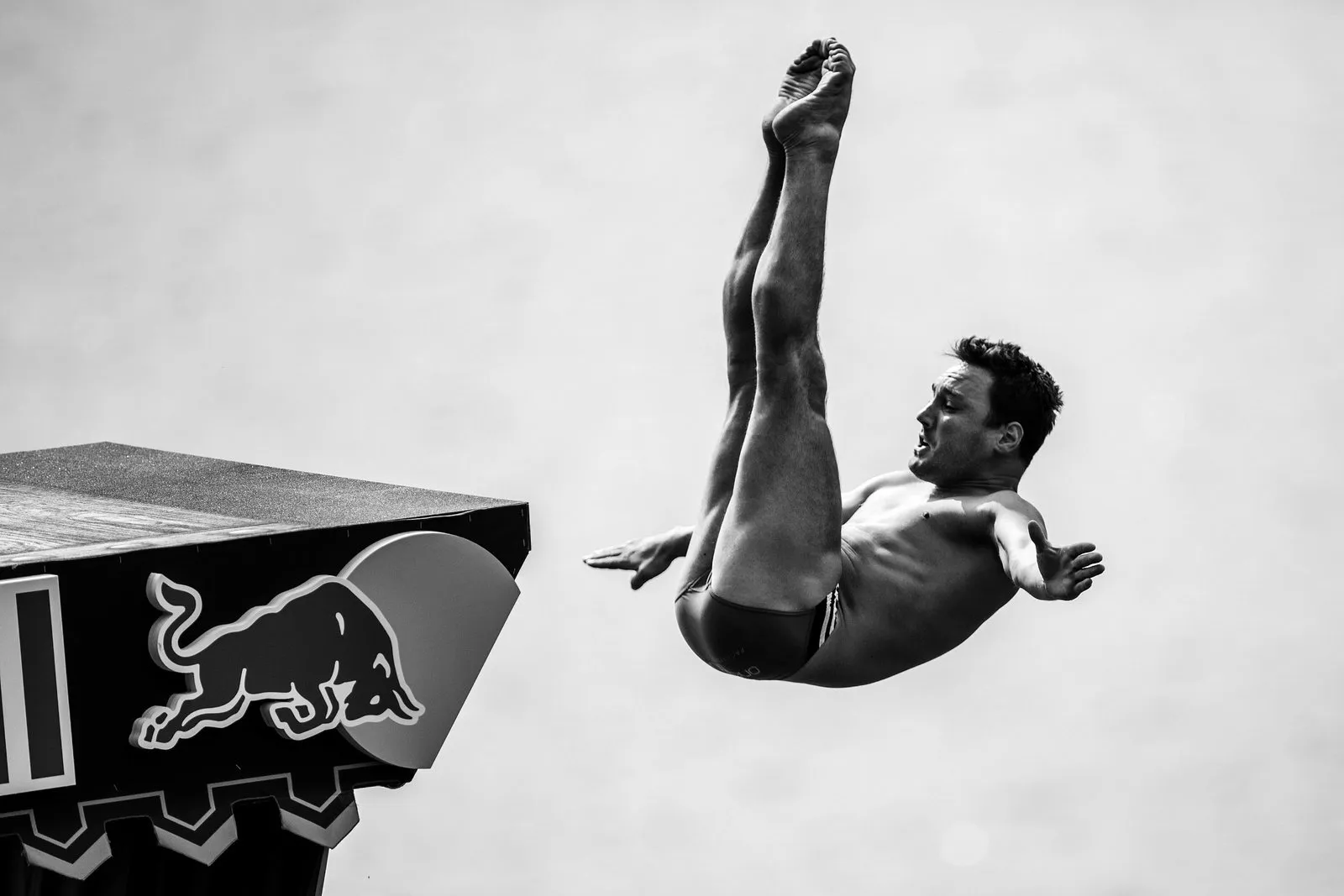
Blake Aldridge routinely leaps from precipices higher than 30m. He should be dead.
I’ve broken all the bones in my feet,
my collarbones and even dislodged the retinas in my eyes. I thought I was blind. When something goes wrong, it really goes wrong.
I’ve had a doctor tell me not to dive. I did it anyway and I’m still walking. I know my body and what it can take.
The risks are worth it. I was an Olympic diver, but I’m glad I traded it for cliff-diving. Now I’m never bored. I’m proud to be the only one who’s transitioned.
When I first told my family, they though I was crazy.
My nan screamed, “You don’t have to do this! It’s dangerous!” I told her if she didn’t like it she didn’t have to come and watch. She hasn’t been to a dive since.
You only get one chance at life and I’m taking mine.
All negative decisions you make are because of fear.
You have to see how high it is and hear the noise as you hit the water. Then you appreciate how dangerous it is. You’re naked apart from a pair of Speedos. No safety net. No parachute. But I risk it.
When I first went to do it I walked away. The hardest part is on the platform. When you’re in the air it’s fine.
Blake Aldridge is competing in the Red Bull Cliff Diving World Series 2015 (lifeproof.com)
The director who reinvented horror
Dan Myrick co-wrote, produced and directed 1999 horror The Blair Witch Project. Despite an initial budget of $40,000, it grossed $248 million at the box office and spawned a new genre in the process.
When we began pitching The Blair Witch Project, most of Hollywood thought we were crazy. It didn’t tick any of their boxes of what makes a good film. They wanted effects, attractive actors and trailer moments.
Fear is a simple, primal thing. And it doesn’t take a lot to make it work: just a strong story and good characters.
It all started with a single idea. We had a decrepit house in the woods and this notion of walking up to it at night and not being able to turn away. At the time, CNN was broadcasting 24-hour news-gathering and MTV Real World–the first reality TV show–had just come out. A handheld video aesthetic was migrating from the documentary world into the pseudo-documentary sphere.
We realised how real-time improvised storytelling could have a real effect on the horror genre. Then we came up with the idea that a group
of film students had disappeared looking for a mysterious witch and that we’d found their footage. We then made an eight-minute fake news report about the ‘found footage’ and took it to a film studio.
“This is not a real movie,” they said. “What you’re doing here is a hoax, an expensive gag . We want no part of it.” They didn’t get it at all.
We didn’t want it coming off as a hoax. One of our strategies early on was to engage our audience and let them in on the joke. But it required a degree of effort. So on the website it was presented as totally real, but at the bottom of the page, you could get on the mailing list or follow the behind the scenes.
Still, a lot of lazy Americans who couldn’t be bothered to click at the bottom of a website thought it was 100 per cent real. I think it came from a collective desire to believe in the supernatural and boogie men in the woods.
A lot of people started badmouthing the film, saying it’d never amount to much. I would be lying to you if I said it didn’t have an effect.
But we believed in our idea. We thought, “Fuck you, you’re just a middle-aged exec with an MBA from Harvard. What do you know about making movies?” I guess we found a revolutionary spirit in the face of adversity.
That ‘fuck you’ attitude can be good and bad. On the one hand you feel
like a revolutionary, like you’re marching to your own drum. But it’s not politically acceptable in Hollywood and can ruffle a lot of feathers.
Another general rule of Hollywood is you have to spend big to make big. We had a small budget, but it became the most profitable movie of all time.
It’s flattering to be credited with inventing a new genre of cinema–especially after all we went through. I love it when filmmakers tell me they were inspired by my movie to make their own. That’s the biggest pay-off.
Paranormal Activity is my favourite ‘found footage’ horror that followed in Blair Witch’s footsteps. Hats off to those guys for making it work all in one house. When something like that comes along, it reaffirms that somebody can come out of left-field and shake things up. I love it when that happens.
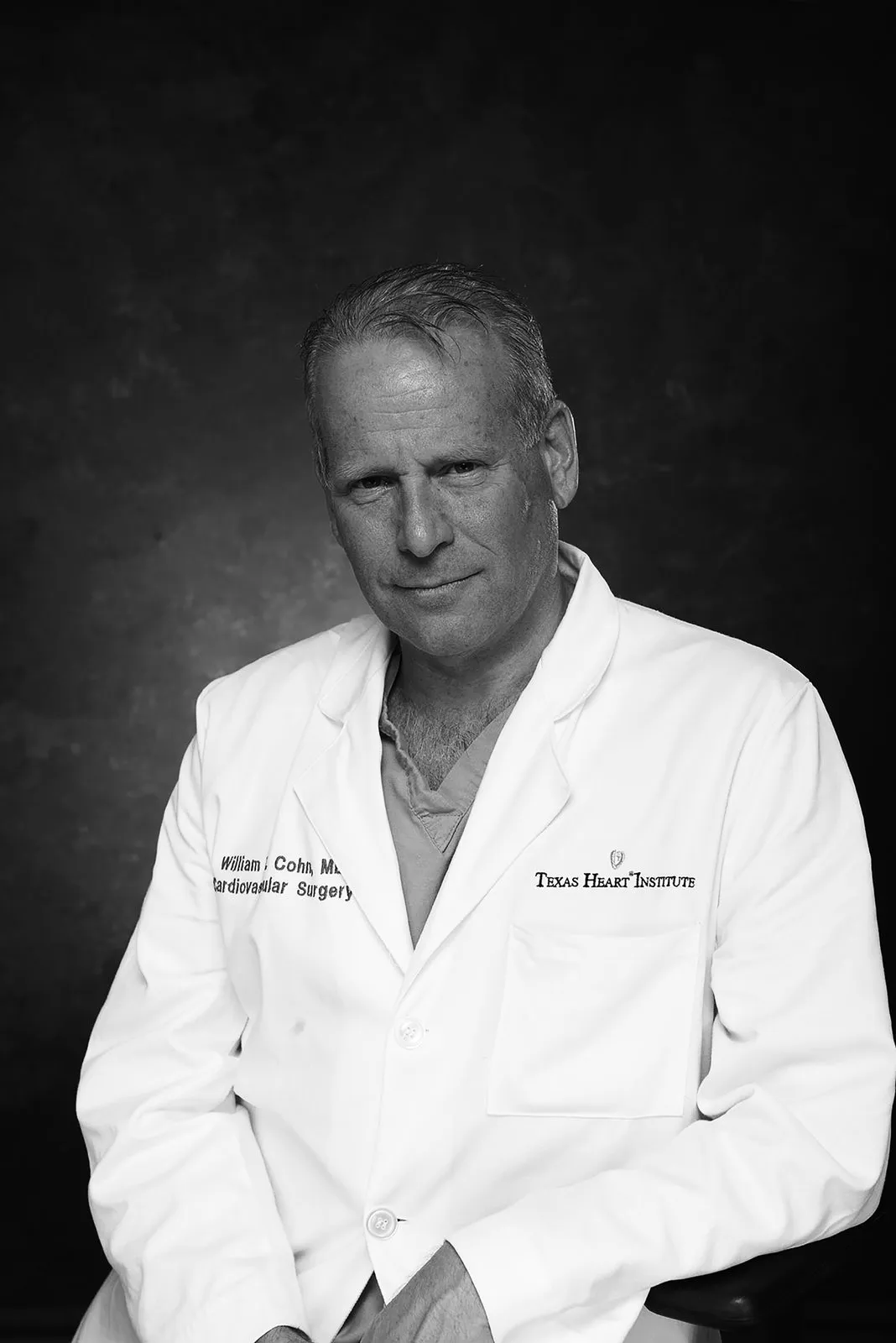
The surgeon who replaces broken hearts
In 2011, working at the pioneering Texas Heart Institute, Dr Billy Cohn, along with colleague Bud Frazier, removed a dying man’s broken heart and implanted the word’s first twin-valve artificial one.
The heart is the weak link in the chain of every one of us. Statistically speaking, you will more than likely die of some heart-related disease, as will everybody else.
An artificial heart does what your heart, I hope, is doing right now–it beats 80 times a minute. That’s 132,000 times a day, 42 million times a year, and no one’s ever been able to make anything small or more durable enough to do that month after month, year after year.
More than $1 billion has been spent trying to do it. People have come close, but they’ve all failed miserably. Everybody was trying to make artificial hearts that beat just like yours. But Bud said, “What if we cut the heart out completely, throw away the entire diseased organ and replace it with two turbines?” The problem with a turbine spinning like a dentist’s drill is that you don’t have a pulse or heartbeat. But it worked.
For centuries, man tried to imitate the way birds flew. They tried to make heavier-than-air flight, but no one could get off the ground. It was only when the Wright brothers made the wings fixed and put on a rapidly spinning propeller that heavier-than-air flight became a reality. So copying Mother Nature is not always the best shot. Maybe a rapidly spinning turbine without a pulse is an OK way to propel blood through your body.
In March 2011, we implanted the first completely pulseless heart. The guy was gravely ill and being supported by a pump sitting on a table next to him attached to long hoses. There was no other option anyone would have considered, but based on our experience, we tried it.
Although this wasn’t an elegant device, it worked beautifully.
He lived for several weeks. Tragically, he had the same illness in his liver, which worsened to the point where he couldn’t remain conscious, and his family asked that we stop.
The rules we’re breaking are the ones set by Mother Nature. All living things have a pulse and a heartbeat. That was carved in stone; medical dogma.
In truth, the heart is a dumb muscular pump. It’s just a piece of meat, like a steak in your grocer’s freezer. We get occasional comments like, “Does it mean you take a patient’s soul as well?” Or, “Can they still feel emotion?”
There is no emotion, no thought, no love, no fear, no bravery in a heart. I could take a syringe of adrenaline, inject it into your arm and your heart will beat very, very fast. It doesn’t know the difference between that and love.
What’s the future? That’s the $100 billion question. In 1908, they thought the only application for heavier-than-air flights was to take people up for thrill rides at carnivals. Nobody anticipated there’d be thousands of domestic flights every day in the United States, but that’s the reality.
Perhaps we could crack mortality and make humans live for 500 years if we devoted all our efforts to it. Would that be a good thing? I doubt it. If I knew I’d live for 500 years, I probably wouldn’t have gone on that bike ride yesterday. I’d say I’d do it later.
The rockstar without a face
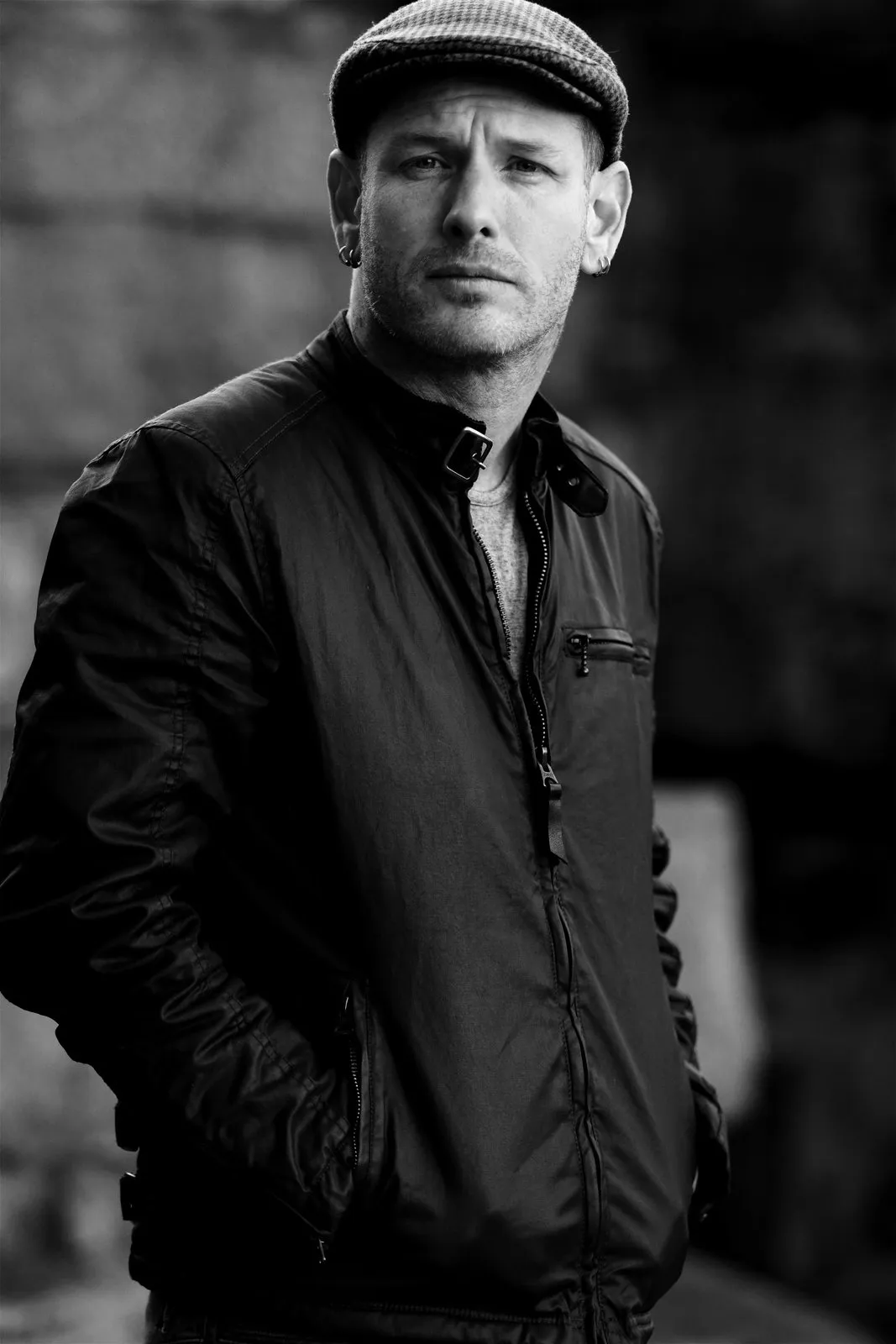
Dressed in jumpsuits, growling dark lyrics and wearing masks, Corey Taylor and his Slipknot bandmates are a physical antidote to music’s infatuation with image.
The mainstream is so mediocre, someone has to balance the scales. Even so, we never thought Slipknot would be such a pinprick to the zeitgeist. It’s cool–obviously we revel in it as much as possible. But at the same time you’ve kinda got to break the rules.
I’ve got three kids. I do their laundry, I cook their dinner and yet I’m still one of the biggest people in the music business. It’s weird: you have to have that yin and yang.
We wore masks because all people seemed to care about then was what you looked like. They’d come on to what you sounded like later. For us
it worked on both fronts. Screw the face, screw the fashion–here are my overalls, here’s my mask… here’s the goddamn music.
The real trouble came when various organisations tried to pigeonhole us to try to understand us. Whether it was religious groups thinking we were satanic, or political groups thinking we were subversive, we confused the mainstream. At the time it was like: screw you, this is America–we can say whatever the hell we want.
Not everybody is going to love you, but that’s just how life is. People who chase that kind of universal love drive themselves mad. Because just when you think everybody loves you, that’s when they’ll turn on you. You’re never going to change someone’s mind once they’ve already decided what they think, so why bother? That shit will keep you awake at night.
I was never a social drinker; I drank to get fucked
up. So I would binge-drink, for the most part, and it was exponential–one would be two, two would be four, four would be eight. I was the guy who’d order two Jack and Cokes at last call, just so I was smashed for the ride home.
The first time I quit drinking was 2003. I was sober
for about three years and then I fell off for about four. Finally, I just said, “I’m done. I’m not getting anything out of this and I’m feeling worse and worse every morning.”
That was six years ago and counting.
Music is the only outlet that lets me deal with my demons. I know I’ve still got it in me. To think that everything’s really white and soft would be insane. I still have really bad anger issues, and issues from when I was growing up, but the music–thank God–lets me work that out. Or at least let it off the leash a little.
Make music or art for your reasons. No one is
ever going to truly understand why you do it, but fuck everybody else. If you get over that barrier, and you get people’s attention, keep it by just being yourself. That will throw the world a loop for the rest of your life.
I plan on writing my autobiography when I’m 80.
By then I would have lived a life that I can tell a story about. It’s when people write an autobiography at 20 that I’m like, “What do you expect to do for the next
40 years–what the hell are you doing?”
Corey is author of You’re Making Me Hate You
(£12.99, Da Capo Press), out now.
The woman who changed dating
Whitney Wolfe and her friends tore up the rulebook of dating and changed the game forever with Tinder. Now CEO of Bumble–a swipe app where women make the first move–she wants to do it all over again.
I always struggled in school. I’ve always understood things in an intuitive way and only know how to be successful to the beat of my own drum.
Three years ago, if you wanted to get a date, you waited for Friday to roll around. With Tinder, you can be at home in your sweatpants, eating ice cream, and start chatting up a girl or a guy.
Online dating never used
to be something college students would do. They wouldn’t be caught dead on any dating platform. People were still doing things–I hate to say it–the old-fashioned way.
We didn’t really pioneer the market. Dating apps weren’t new. What really set us apart was the marketing of Tinder.
My dad told me so many times to get a real job. While we were building Tinder up, getting the downloads, he was like, “When are you going to take work seriously? You need to play by the rules.”
There are naysayers everywhere. But what do
they know? If you truly think someone knows what they’re talking about, take their advice. Otherwise, do it your way.
The north korean defector
Kim Joo-il served eight years in the North Korean army until 2005, when he swam to China under cover of night and travelled to London.
Growing up in North Korea, I never broke the rules. Nobody did; the punishments were too severe. Fear holds people better than any prison.
We have a saying in North Korea: “There is an ear, even on the wall.” I remember two boys at school who were rivals. One drew a funny doodle on a portrait of The Great Leader in the other’s textbook to get him into trouble. The teacher saw the sketch and the first boy’s family disappeared overnight.
I was 14 when I saw my first public execution. The victim was the brother-in-law of a classmate who had stolen a historical artifact from a museum in China. He was shot, and I remember thinking he deserved to die for what he did.
Captured defectors, however, are usually hanged or burned alive. Then the authorities might extinguish up to three generations of their family.
I joined the army when I was 17. For men, it’s compulsory to serve 10 years. And it was hell. I was beaten once a day for three years until I became a captain; then I did the beatings myself. I thought it was a normal way to live.
Part of my job was to find soldiers who’d gone awol. I soon began to realise something was wrong. Everyone was starving. Every train station had a health centre where there’d be piles of corpses, just lying about. And the mountainsides were bare as villagers cut down trees to burn for heat and light.
One day a mission led me to Hamgyong, on the border with China.
I’d thought about escaping for a while, but I knew I’d never get a better chance to cross the Tumen River into China.
It was curiosity, more than anything, that made me escape. I had to know if starvation and fear were normal in the world. I had to find out for myself if North Korea was indeed the best place to live, as we’d been taught.
There were guards every 30 metres along the river. As I got near to what I thought was a large rock, I realised it was a guard holding a gun. I was ready to fight and die, but he was asleep. I changed direction and started swimming.
When I got to London, I realised everything I’d been told by the regime was a lie. I’d been brainwashed. I have now learned the concept of freedom. I can go to the shops and play football. I have a wife and two children and run my own business. Here, there is no limitation to having a free life.
I do not know for sure what happened to my family. They might have been sent to a prison camp but, because of my humanitarian activities with the UN, the regime cannot harm the family of someone as exposed as me. I heard my family are under constant surveillance and cannot leave their town, but I don’t feel guilty. If they knew what I now know, they would understand.
North Korea needs a people’s revolution. It is not a lack of ambition holding my people back but a lack of information and ideas. They are what fuel a revolution. I plan to send hard copies of my newspaper there.
I will one day return to North Korea. But not until democracy reigns. When that day comes, I will happily never break another rule as long as I live.
The artist who hears colour
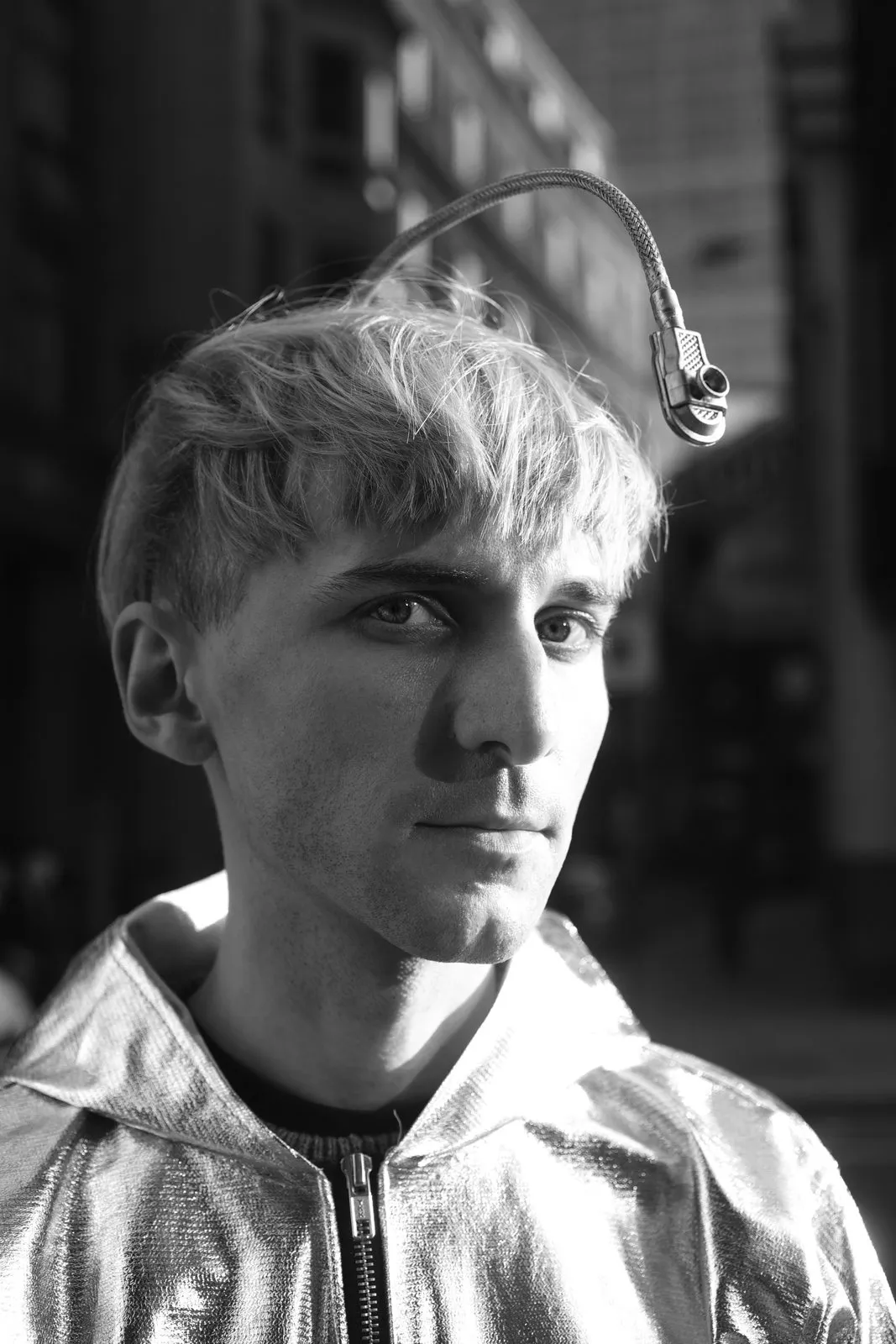
In 2004, colourblind artist Neil Harbisson had an ‘antenna’ embedded in his skull that allows him to ‘hear’ colours as sounds. He can also receive phone calls, images and log on to WiFi through his skull.
I can only see in grey, black and white. As a kid, doctors told me that I would never be able to sense colour. I didn’t like the sound of that.
The idea came to me

during a cybernetics lecture at university. I realised technology could allow me to sense colours in a new way.
My antenna works by picking up light frequencies and creating vibrations through
a small implant in my skull. This creates a unique noise for each colour. I can listen to a Picasso painting, or the cereal aisle of a supermarket. I can compose music with food. Eggs are high-pitched and aubergines take a lot of getting used to.
I consider myself a cyborg. When I began to dream in colour without the help of my antenna, I truly felt the software and my brain had become one.
The surgery was illegal, so we had to find a doctor who was willing to drill into my head. I also broke passport laws by posing in the photo with my cybernetic extension. They tried to stop me, but I argued it was part of my body.
There’s an internet connection in my skull. Friends around the world have permission to send different colours to my head. I have an eye on each continent.
NASA sends me colours from satellites in space. It’s profoundly beautiful to achieve such a deep connection with the universe. As our senses evolve, everybody will be able to experience space from their own homes.
My art is truly unique, because it’s created through an extra sense. I paint what I see and hear, and present the uniqueness of people’s faces and voices. We’re trying to push cyborgism as an art form. Some critics refuse to consider it as true art because of the technological aspect, but people said the same about photography.
This sense allows me to find beauty through imperfection and chaos. If you go to a school concert where kids are singing out of tune, it creates far more vivid colours than a flawless orchestra.
My face doesn’t sound too bad. It’s a combination of G, C and F sharp. Make-up makes it better–especially green lipstick. I’m not quite ready to wear it in public, though.
A lot of people have sent me death threats. They accuse me of acting against God, and see the cyborg movement as a threat to humanity. I don’t respond to them.
If you come across a rule you don’t like,
break it. I’ve been doing it all my life. I’m proud of what I’ve achieved.
The 95-year-old who’s still a superman
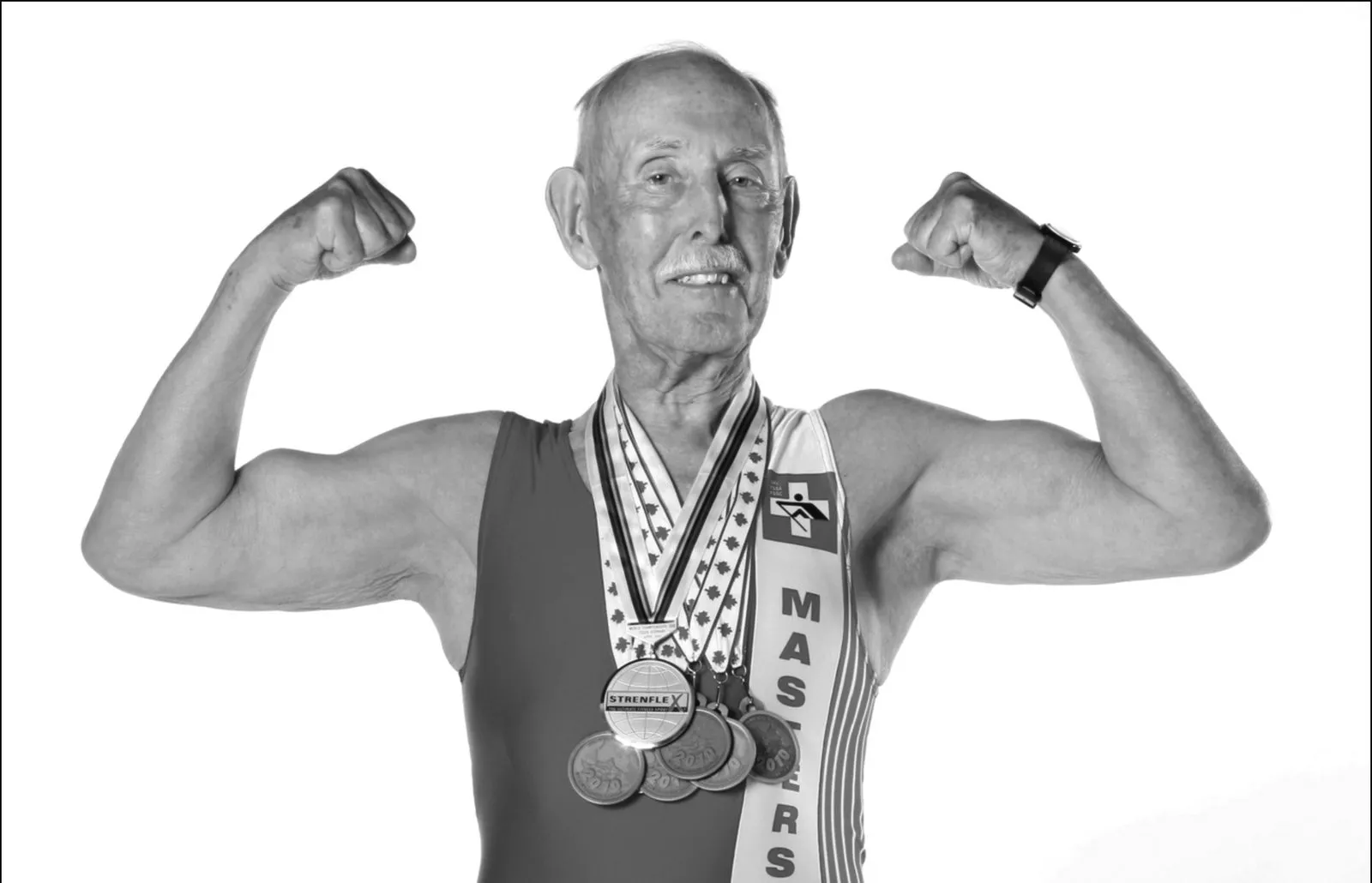
At 95 years old, Dr Charles Eugster has been dubbed The World’s Fittest Old Age Pensioner. He has a better body than most men a third of his age and, in March this year, smashed the indoor 200m world record for males over the age of 95.
To anyone who says a man in his 90s can’t sprint, I’m here to tell you he can. Last March, I became the fastest man over the age of 95 to run 200m on an indoor track in history. And what a feeling it was. It took me 55.48 seconds: I challenge you to beat that.
It’s never too late to get fit. I took up exercise at the age of 85, hoping it would stop me ageing. It was pure vanity, really. My body was degenerating and I just thought, “Who knows about muscles?” When I was 87, I joined a bodybuilding club. I started sprinting last year.
There’s nothing special about me whatsoever. Yes, breaking that record was a wonderful feeling, but anyone can do what I do–and more–if they just put the effort in.
I want to change the world. The stupid thing is that people don’t realise you can have a beach body at 90 and turn the heads of the sexy 70-year-old girls on the beach. I am living, breathing proof that, if you eat the right food and exercise correctly, you can be that guy at any age.
I start every day with a protein shake. That’s because, from the age of about 50, most people begin to lose 1 to 2 per cent of their body muscle a year. You need to make up for that and protein is the only way. Whatever they say about carbs being the best is bullshit. I have very little for lunch and, in the evening, I always have meat, usually red, and vegetables.
Muscle strength is key to a healthy body in old age. My regime includes lifting weights either to exhaustion or muscle failure on a regular basis. It is not pleasant but it is better than slowly getting weaker. When I’m not in the gym or on the track I go running in the forest.

In today’s society we completely ignore the elderly. Nobody cares about them. There are no training plans for people in their 70s and 80s and absolutely no 70+ gyms like they have in Japan.
Retirement is the biggest killer of old people. I prefer to call it involuntary unemployment. Work keeps your body and mind active and statistics show that those who start retirement at a later age live for longer than those who start younger. Look at The Queen: she’s nearly 90 and, though she may not go jogging in St James’s Park, she does still have a job.
We’re pouring the experience,
creativity and talent of people over 65 down the drain. We should be able to found companies in old age and be creative. Picasso was creative until he was 90.
I’ll face my nemesis at the world championships in a few months. His name is Frederico Fischer, from Brazil, and his time is unbelievable. He’s a great athlete. But I have one thing in my favour: he’s three years older than me so I am hoping that the ravages of time will have slowed him down.
My bucket list is still pretty full. It goes as follows: show the world that anyone can rebuild their body at any age; publish a book called 95 And Loving It; establish a fitness centre for those over 70; and start a job-creation company to retrain older people.
I also plan to launch a fashion label for the elderly. The worst thing about old age is that the way older people dress is–and I say this from the bottom of my heart–absolutely disgusting.
The actor who couldn’t care less
When This Is England star Thomas Turgoose was invited to audition for the film, the then 13-year-old tearaway from Grimsby agreed… but only if director Shane Meadows paid him first.
I do always try to do it my own way. Maybe that’s wrong. Maybe if I moved to London, turned into a hermit, read scripts word for word and went to a drama class, I’d never stop working and life would be different. But I enjoy my life the way I live it.
I grew up on a rough estate
in Grimsby. I was knocking about with a group of lads where we’d go about smashing windows, robbing cars and fighting with people. I was a vile kid, but weirdly I was always polite at the same time. I minded my Ps and Qs.
I charged Shane Meadows
a fiver for my first This Is England audition. I’d gone to the youth centre for the day, because I was excluded from school, and I remember seeing this massive crowd outside. I thought it was a fight at first, but they were auditioning for a film. They asked if I wanted to audition, and I remember thinking, “As if I’m gonna be in a fucking film.” But I thought if they’re having my time I want some money for it… so I charged them.
I think Shane liked my cheeky streak. I was charging more and more for each audition. The first one was a fiver, the second a tenner, the third was a PlayStation game and the fourth a mobile. No one in This Is England had a silver spoon upbringing–there was a realness, a grittiness. And I think that’s what he wanted in everyone.
I’ve been an actor for 10 years now. If 10 years and two days ago you said I was going to be an actor, I’d have told you to shut the fuck up. I never would’ve believed it.
As far as Hollywood goes, I wouldn’t complain about going there to shoot a film for 50 million
quid. But at the minute I’m happy doing what I’m doing–British films, real British films. I’ve never been to Hollywood–it’s not a place I’d book a flight to.
There’ll always be one actor who’ll sit with his
script in the pub. I remember going on the piss with Eddie Redmayne while we were filming in Budapest and he’d always have a script on him. I sat there thinking, “Fucking hell mate, give it a break,” but then he went and got an Oscar a few years later, so it does pay off.
Sometimes If I get a script and I’m not really into it, I’ll just think, “Fuck it” and go to the pub. It’s probably not the right thing to do. I did that more when I was a kid than now, though–these days I have a mortgage to pay so I’ll work a lot harder.
If I could act for the rest of my life I’d be buzzing. But I’m going through a period now where I’m 23 but still young looking. There are only really restricted parts for me until I grow a beard, and I don’t think that’s going to happen any time soon.
If I wasn’t an actor, I’d be… in jail. Probably.
This Is England premiers on Channel 4.
From the November 2015 issue of FHM India.
Spotted a mistake, or your photo used without permission? Report a correction






 in your inbox