
The A Files



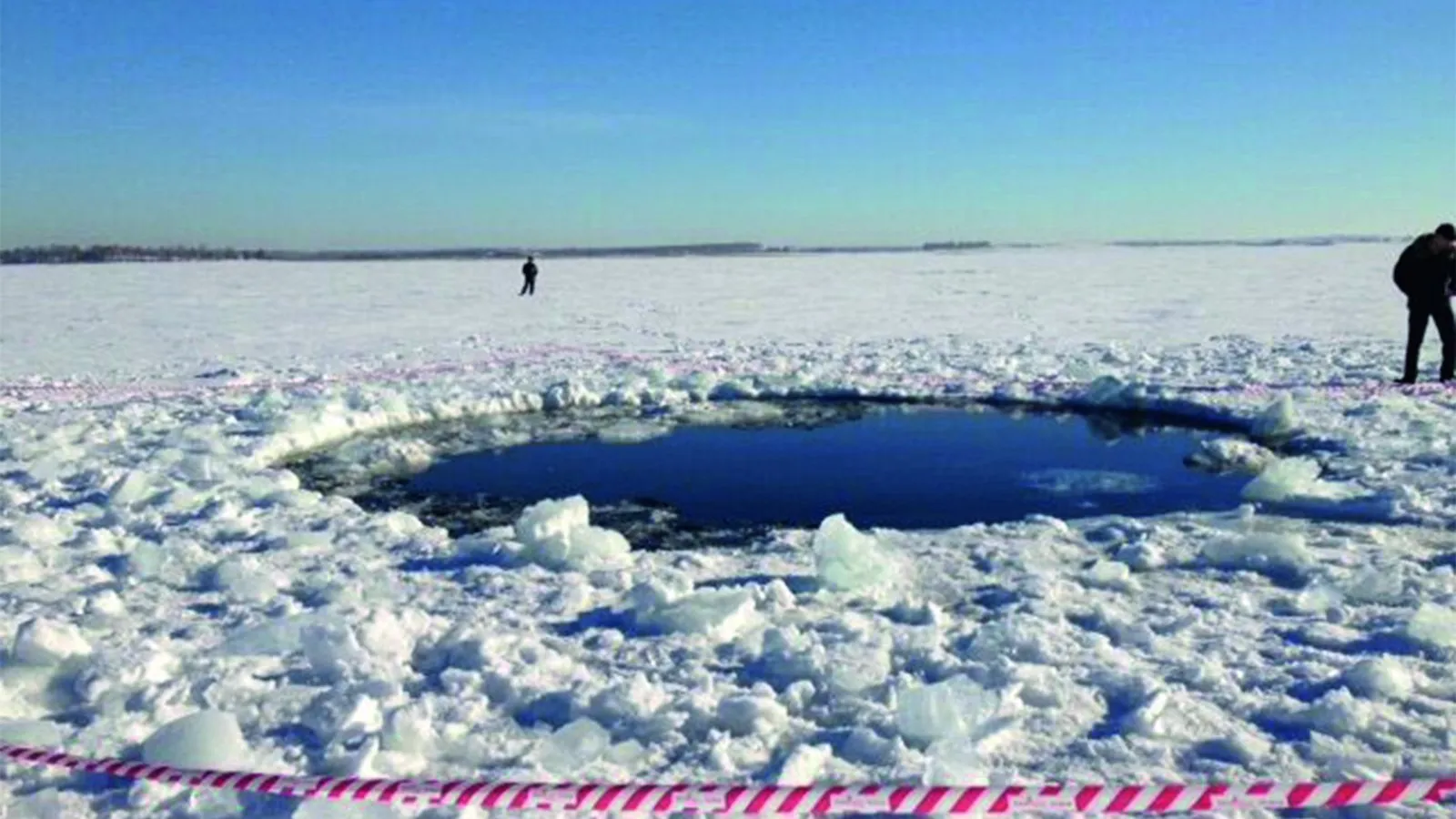
Last month was pretty big in terms of celestial activity. One asteroid shattered window glasses in Russia while another the size of almost two football fields whizzed past the world threatening to obscure humanity. Fine that last part might be a bit of an exaggeration, but it does make you sit up and ask – would you be ready if an asteroid decides to smack earth right in the face? Especially now that Bruce Willis isn’t in Armageddon-ready shape anymore.
Meteorites
ASTEROID
What: An asteroid is sometimes called a minor planet or Planetoid. They are small Solar System bodies in orbit around the Sun. They are rocky, do not have their own atmosphere and some have their own moons and high metallic content.

Status: Inactive
Last Known: There are tens of thousands of them grouped in the main asteroid belt between Mars and Jupiter.
How Big: Few metres to 100s of Kms
METEORITE
What: Aka Shooting Stars. Meteorites are little chunks of rocks and space debris that have entered the atmosphere of another object and survived the surface impact. They become meteors when they fall through a planet’s atmosphere leaving a bright trail. Their remnants (space rocks) are called meteorides.
Status: Inactive except for Science Fiction
Last Known: Anywhere in the Solar System
How big: Bigger than a molecule and smaller than about 330 feet (100 meters)
COMET
What: It’s a relatively small object composed of dirt and ice, leave dust and gas trails when they come closer to the sun. Otherwise it’s difficult to distinguish one from the other.
Status: Active
How Big: The average comet is less than 10 km (6 miles) across. A small comet is about the size of a house.
Last Known: NASA reckons comets originate in the cold area beyond Neptune and Pluto called the ‘Oort Cloud’ and just past Neptune’s orbit in a place called the Kuiper belt.
An asteroid is always going to be in space. Once it enters an atmosphere, it becomes a meteor and then a meteorite if it hits the ground.
OUR LINES OF DEFENSE:
SPACECRAFT
Status: To be operational by 2017
Cost: $100m (£65m)
Deep Space Industries is preparing to launch a series of small spacecraft’s aimed at surveying nearby asteroids to see if they can be mined for metals and ores. The fleet could also be used to monitor small, difficult-to-detect objects that threaten to strike Earth.
ATLAS
Status: To be operational by 2015
Cost: $5m
The University of Hawaii is working on a system called ATLAS (Advanced Terrestrial-Impact Last Alert System) that consists of a series of eight telescopes fitted with powerful cameras to scan the sky for any space threats. ATLAS would give a one-week warning for a small asteroid, which it calls "a city killer", and three weeks for a larger "county killer"
Sentinel
Status: To be operational by 2017-2018
Cost: $ 450 million
The B612 Foundation plans to launch a large telescope known as the Sentinel that can find 90 percent of the asteroids larger than 460 feet in diameter passing through the Earth’s part of the solar system. They also want to discover smaller asteroids down to a diameter of 100 feet. Such asteroids are much bigger than the meteor that hit the atmosphere over Russia and the telescope would thus be blind to those kinds of smaller threats.
NASA – Space Mission
Status: Operational by 2016, results by 2023
Cost: Unclear
NASA is said to be preparing to launch a mission in 2016 that will fly to an asteroid and, in 2023, return a sample to Earth for detailed analyses. The insights are expected to help scientists learn more about the makeup of the threats whizzing through the cosmic shooting gallery.
LSST (Large Synoptic Survey Telescope)
Status: Operational by 2020
Cost: $300M
This is a wide-field telescope that will create detailed photographs of the sky every 10 days to detect asteroids and other Near Earth Objects.
PAN STARRS Telescope
Status: Operational
Cost: $ 100 M
An array of extremely detailed astronomical cameras and telescopes combine together to show the Pan-STARRS (Panoramic Survey Telescope and Rapid Response System), which are constantly surveying the sky. It detects differences from previous observations to spot asteroids, comets, variable stars and other near-Earth objects that might threaten an impact with Earth.
Planetary Resources
Status: Unknown
Cost: Unknown
Planetary Resources too has unveiled plans to mine asteroids that zip close by Earth, both to provide supplies for future interplanetary travelers and to bring back metals like platinum.
The venture attracted some big-name investors, including Larry Page and Eric Schmidt of Google. The company also has plans to develop telescopes that would hunt for rocky intruders coming near the planet.
Fire at it with a paintball
Effective in: 20 years before impact
Sung Wook Paek, a graduate student in MIT’s Department of Aeronautics and Astronautics has proposed that an asteroid on a collision course with Earth can be deflected using paintballs.
He believes that the impact of the paintballs on the asteroid would nudge it off course. Then, by using highly reflective paint, the paint would increase the reflection coefficient of the asteroid, which would increase the effect of radiation pressure from the Sun’s photons making the asteroid veer off course. It is estimated that this method would take a yawn-inducing 20 years to be effective. He had earlier proposed using a cloud of solid pellets to deflect an asteroid, similar to a blast from a shotgun or cannon.
Ramming into it
Effective in: Unclear.
A European-American joint mission dubbed AIDA (Asteroid Impact & Deflection Assessment) intends to send two small aircrafts to intercept a 150-metre wide binary asteroid, Didymos (it’s a set of two asteroids) that will travel past Earth in 2022. One 300-kg spacecraft, the Double Asteroid Redirection Test (DART) craft would smash into the smaller of the two asteroids while the European Space Agency's Asteroid Impact Monitor (AIM) craft would survey the collision. Yes, exactly like a gangbang. Scientists will be able to measure the deflection and hopefully put it to practical use.
Use a gravity tractor to veer it off course
Effective in: Unclear.
The B612 Foundation and Jet Propulsion Laboratory (JPL) have conducted a detailed performance analysis on the gravity tractor. The idea was to evaluate both the precision NEO orbit determination capabilities of t-GT (transponder-Gravity Tractor) and its performance in towing an asteroid.
The Armageddon Approach
Effective in: Movieland?
Hypervelocity Asteroid Intercept Vehicle, or HAIV, an unmanned aircraft would hit the space rock twice in quick succession, with the non-nuclear first blow blasting out a crater for the nuclear bomb to explode inside, thus magnifying its asteroid-shattering power.
NASA engineers identified 168 technical flaws in the movie, Armageddon. But they say that the one thing the movie got right is the notion that a nuke will be far more effective if it explodes inside an asteroid rather than at its surface. (At a depth of 10 feet, or 3 meters, the bomb's destructive power would be about 20 times greater.)
MAN FACT
There are 34 upcoming close approaches to Earth in March 2013 alone, according to NASA’s Near Earth Program.
20,000 asteroids and comets orbited close enough to Earth to deliver blows that could destroy cities or even end all life according to the NASA Spaceguard Survey, 1997.
Astronomers know of no asteroids or comets that pose a major threat to the planet, but NASA estimates that fewer than 10 percent of the big dangers have been discovered.
Odds of a meteor exploding over a Russian town at the same time as there is a near miss are 100 million to 1.
BOX
Ninety-nine percent of Near Earth Asteroids larger than 40 meters have not been mapped, so we also don’t know if a crash with Earth is imminent.
Deflecting asteroids is technologically feasible, but only with a lot of warning.
Asteroids that cross the Earth’s orbit are the ones that can collide with us. Since they spend part of their orbit closer to the Sun than Earth, the best way to spot them is from a vantage point yet closer to the Sun (i.e., from an orbit around the Sun much like Venus).
Meteor Crater, Arizona

4,000 ft wide and almost 600 ft deep Meteor Crater owes its startlingly lunar aspect to both a relatively young age (about 40,000 years) and the arid climate of the northern Arizona desert in which it is situated. It’s estimated that the mainly nickel-iron Canyon Diablo Meteorite was about 55 yards (50 meters) in diameter and weighed approximately 150,000 tons.
FACT: It has been privately owned since 1903.
Wolfe Creek Crater, Australia
Wolfe Creek Crater owes its well-preserved state to both age (around 300,000 years) and the environment of the Australian Outback. Approaching the crater on land, visitors must first climb over the 80 ft (25 meter) high rim before descending onto the sand-covered crater floor 165 ft (50 meters) below the rim.
Manicouagan Crater, Quebec, Canada
Manicouagan Crater is one of the oldest visible impact crater, which is most likely due to its location on the tough Canadian Shield about 190 miles north of the city of Baie Comeau. The lake that surrounds the central raised plateau of the crater is about 40 miles in diameter.
Wetumpka Crater, Alabama, USA
Approximately 82 million years ago, a 1,100 ft wide meteorite impacted the shallow sea north of what is now the city of Montgomery, Alabama. What remains today is one of the best preserved marine craters on Earth. Measuring approximately 5 miles wide, the Wetumpka Crater features rocky outcrops on the exposed crater rim and a central uplift that clearly show the effects of a sudden impact on the marine bedrock.
Lonar Crater Lake, India
One of India’s most famous meteorite impact craters is the Lonar Crater Lake, which is located near the town of Sultanpur in Maharashtra. Measuring just over a mile wide from rim to rim, the crater is partially filled by a salty, alkaline lake 3,900 feet (1,200 meters) in diameter. The Lonar Crater was created by the impact of a comet or meteor in the Pleistocene epoch, roughly 52,000 years ago.
Pingualuit Crater, Quebec, Canada
Discovered in the mid-1940s but known to indigenous native people as the “Crystal Eye of Nunavik” before that, the Pingualuit Crater is the site of a meteor impact that occurred approximately 1.4 million years ago. The lake that fills the crater today is fed only by rain and snow, resulting in exceptional water purity with a salt content of just 3 ppm (the Great Lakes average 500 ppm).
Kaali Crater, Estonia
Around 660 BCE, a meteor entered the earth’s atmosphere, broke up into at least 9 pieces, and impacted the Baltic island of Saaremaa with the force of a Hiroshima-type atomic bomb. Some of the craters later filled with groundwater but still retain their characteristic circular shape as they were formed long after the Ice Age glaciers retreated. The largest one called the Kaali Crater is about 300 ft (100 meters) in diameter and is filled with groundwater, the level of which varies with seasons.
Gosses Bluff Crater, Australia
Gosses Bluff Crater looks pretty good for its age of about 142 million years. Located in Australia’s Northern Territory, the ruggedly beautiful crater features a central ring of peaks that soar 500 ft (150 m) into the crystal clear Outback skies. A popular tourist destination, Gosses Bluff Crater can be found about 110 miles west of the town of Alice Springs.
Wilkes Land Crater, Antarctica
If current theories on the anomaly are proven, they indicate a 300-mile (483 km) wide crater smashed into the Antarctic coastline about 250 million years ago. Antarctica was warmer back the,; especially so on the grim day a 30-mile wide asteroid arrived with a very big bang.
From the March 2013 issue of FHM India.
Spotted a mistake, or your photo used without permission? Report a correction











 in your inbox