
The billion-dollar Plasticine: inside Aardman Animations
How did a little brown lump of Plasticine spawn a money-making movie studio and some of the greatest British films of the past 20 years?



You don’t have to be mad to work at Aardman Animations, but a healthy dash of British eccentricity doesn’t go amiss (OK, that might need work before the stickers are made). But what you do need to be is talented. And not just reasonably talented. You need to be world class.
Over 40 years, Aardman has become the world leader in ‘claymation’, the art of animation using run-of-the-mill modelling clay first developed around the turn of the 20th century. When a full-scale film like Chicken Run, The Pirates! and, most recently, Shaun The Sheep is being made, there can be dozens of nationalities in Aardman’s Bristol studio lot, all drawn from the best animators around the world.

But what’s it like to work at the place where they make Wallace & Gromit? Does it feel like a job? And, most importantly, do they have a decent Wensleydale in the canteen? For those who’ve got a foot in the door, it sounds like a dream come true. That’s why FHM is here.
To quote Liam Neeson’s ultra-violent Bryan Mills in the Taken films, to work in Aardman’s animation department, “a very particular set of skills” is required. You need to be an expert sculptor, an actor, an artist, an animator and sometimes a writer, too, all wrapped up in one multi-skilled package. Unlike Pixar or DreamWorks Animation, say, where characters are dreamed up on screens, Aardman’s creations exist in the real world.
Up close, you can see the fingerprints and the imperfections. And, to this day, it’s all still made of that same stuff that used to get stuck to your shoe in the art room at school. Which, incidentally, is where the company grew from in the first place.
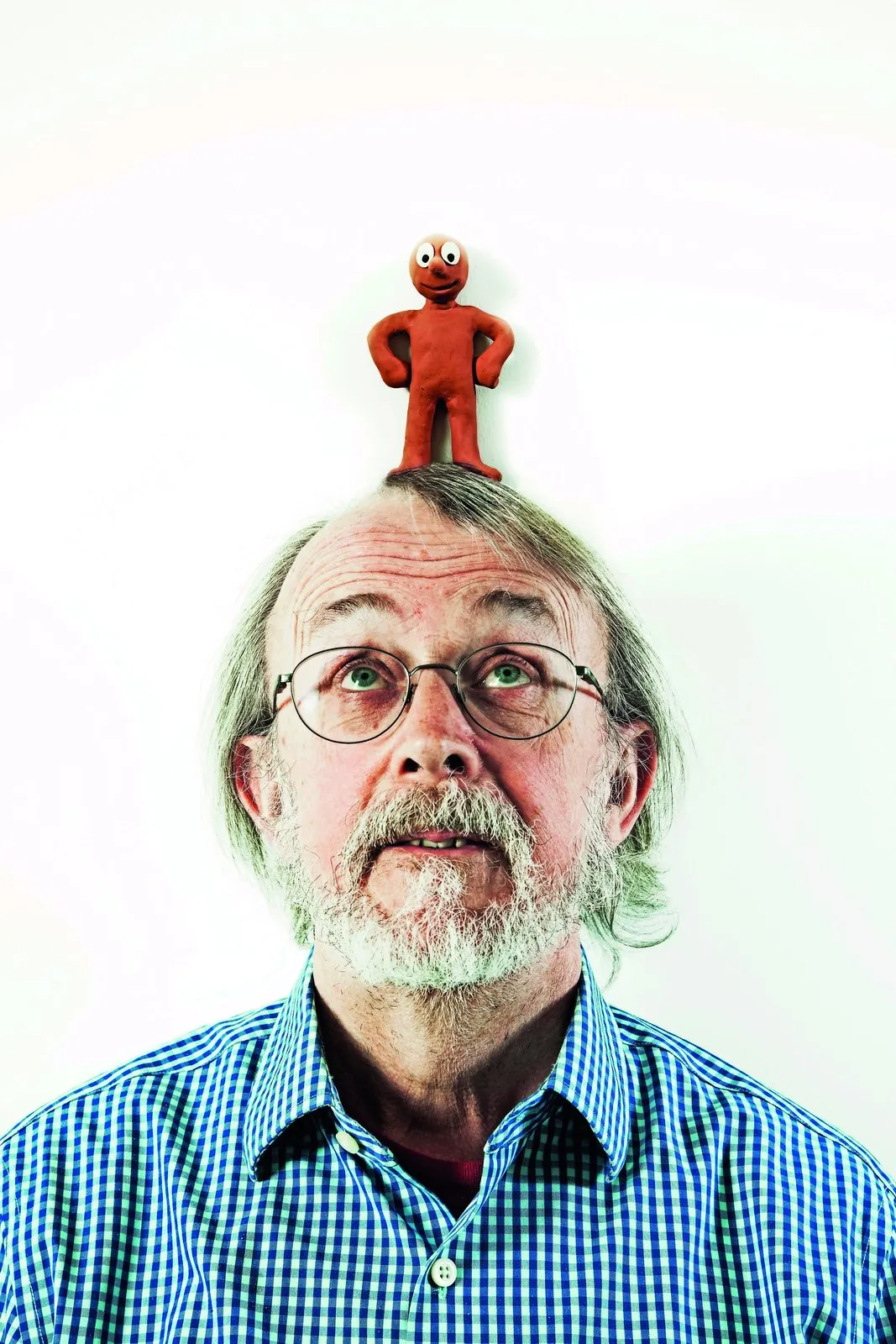
Peter Lord, the man who, with schoolmate Dave Sproxton, founded the studio in 1972, has a touch of the mad scientist about him, or at least the mad artist. His office is the penthouse spot in Aardman’s upmarket facility on the Bristol harbourside, which replaced the company’s previous home – a load of Portakabins stacked on top of each other – in 2009. And it’s stuffed full of stuff.
There’s a Morph (cheeky Plasticine chap beloved of ’80s kids) by his iMac, bottles of real ale, a Bafta looking down from the shelf behind him and, key to all of it, a statue of Ray Harryhausen, the stop-motion pioneer behind the amazing creatures in classics such as 1963’s Jason And The Argonauts and the original Clash Of The Titans from 1981. It was Harryhausen’s work that drew Lord to modelling clay in the first place.
“Honestly, I can still recall it,” he says. “There’s not much I can
remember in the cinema with that vividness, seeing these things and
thinking, ‘Oh my God! What is that? That’s not possible!’ Now in the days of CGI, no one thinks that, because everything’s possible. Back then, I’d never seen a giant, or a walking skeleton or any of those things. You knew it wasn’t real, it was an illusion, but it was a super-compelling illusion.”
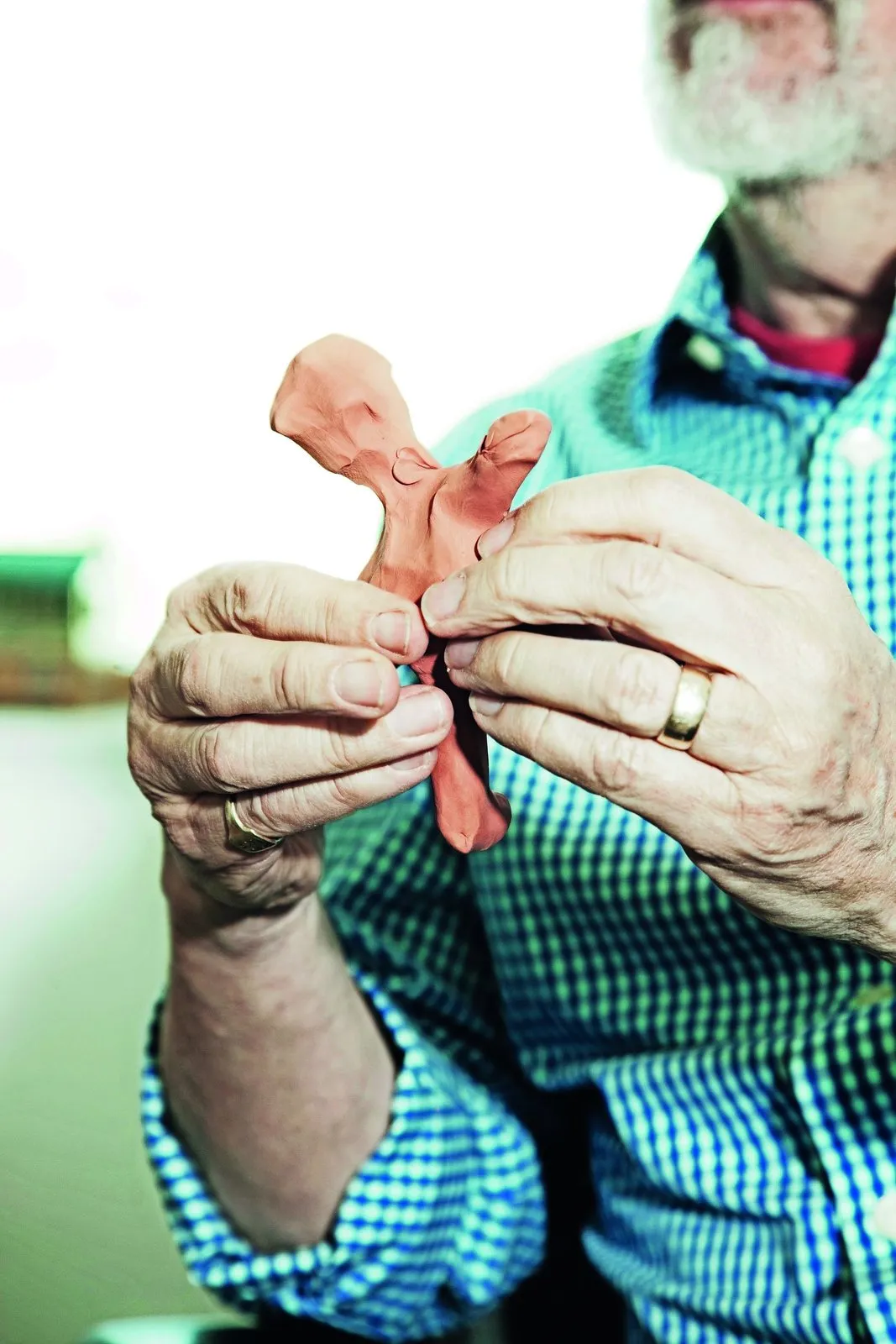
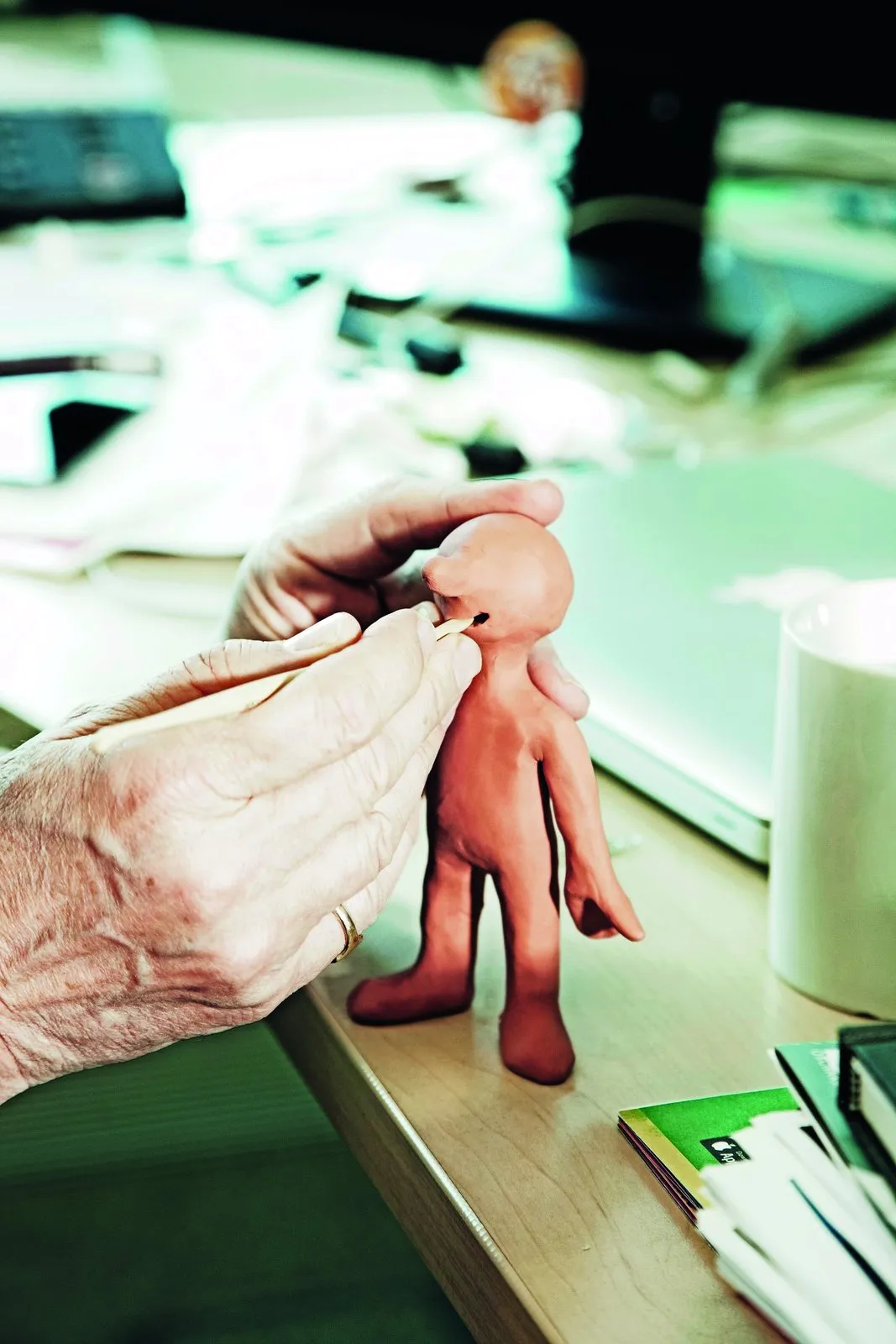
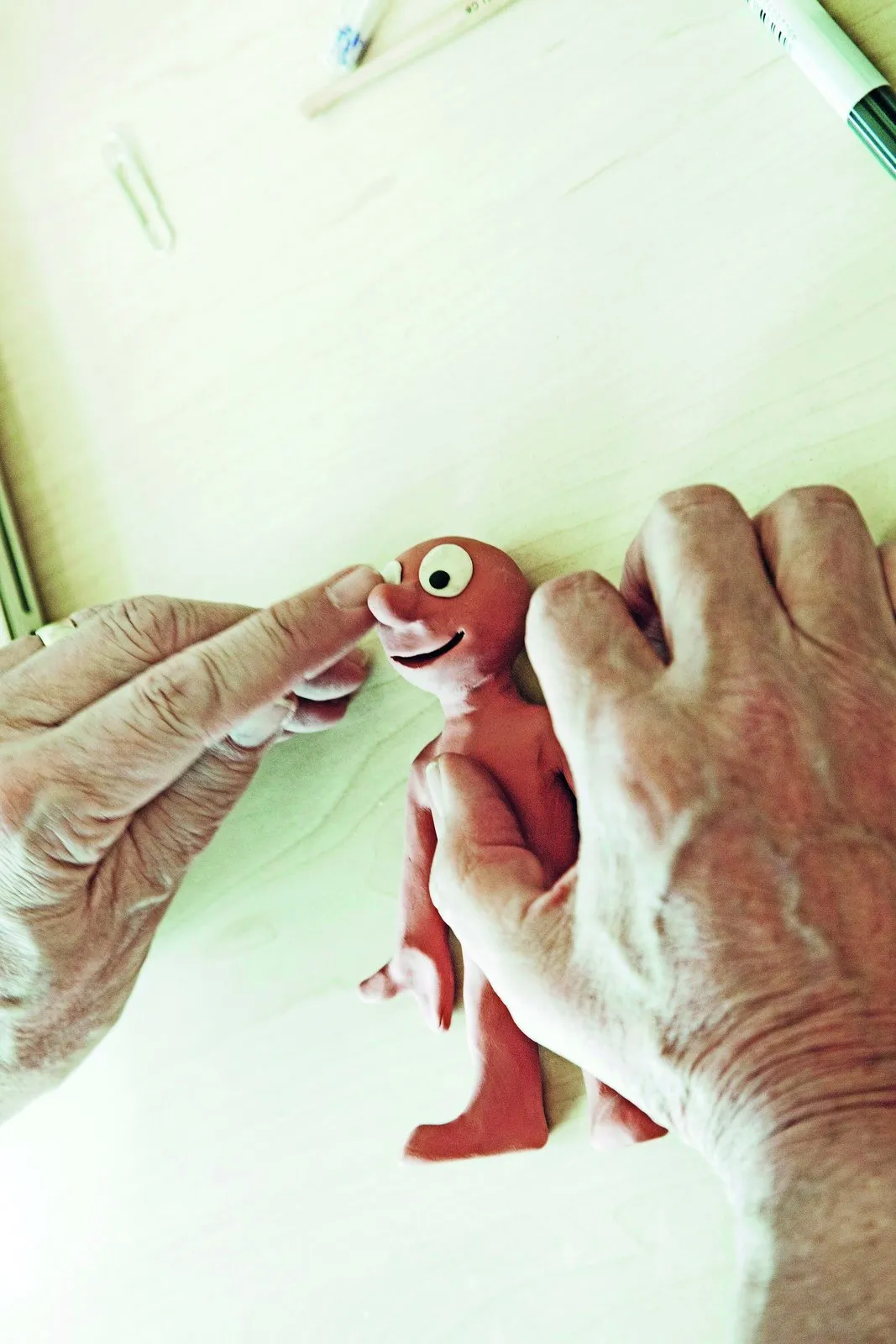
He fetches an old set of scales from a shelf and weighs out a lump of brown clay. Slowly but surely, as we talk over the next half an hour, it becomes a perfect Morph. It’s miraculous to watch, particularly if you grew up watching the little fella on TV.
ord and Sproxton were never motivated to make money. “We were just young fellows who wanted to make a living,” he says. Dave was laughed at by teachers when he said he wanted to go into the film business, whereas Peter was told by career advisers that he should be a town planner. Luckily, they both took no notice. Starting on their parents’ kitchen tables in Bristol, they soon graduated to a back bedroom, then, when they went off to university, various rooms in various flats. Peter thinks it was all to do with timing and a bit of good luck.
“It was all highly speculative. Looking back, you think, ‘Bloody hell, that was a strange decision.’ Bristol wasn’t an obvious place to be.” But it was where the BBC were making Vision On, a show for deaf children that featured telly artist Tony Hart. Lord and Sproxton were “seriously skint” at that time and Aardman might have gone belly-up. Courting the Beeb with their now well-honed stop-motion skills, they created a claymation short for the show, which later paved the way for Morph’s appearance on Hart’s next show, Take Hart. The kids loved it, and Morph became a household name.
Advertising work came, too, as did music videos. Aardman worked on the incredible video for ’80s star Peter Gabriel’s Sledgehammer song, accompanying the music with stop-motion sequences of talking fruit, dancing chickens and flying fish. Go and watch it on YouTube – it’s a work of chaotic genius.
The company’s fortunes changed further when, in 1985, they met Nick Park, a student animator at the National Film and Television School who’d grown up watching Morph. They saw his potential and offered him a job as the “office dogsbody”. In return, they said they’d help him finish his student film. It was called A Grand Day Out and starred his two latest creations: Wallace, a cheese-loving inventor with a ‘coathanger’ mouth, and Gromit, his whipsmart, silent dog.
Then Park’s project Creature Comforts, where clay animals animated to real people’s voices discussed what it was like living in a zoo, won the company an Oscar for Best Animated Short Film in 1990. Park went from dogsbody to the company’s international star in five years, and “rightly so”, says Lord.
The Oscar win opened the door to the US and then the world. Park’s The Wrong Trousers, A Close Shave and The Curse Of The Were-Rabbit all won Oscars, too. Aardman’s bulging trophy cabinet also boasts three Emmys and 13 Baftas and, to date, its movies have grossed nearly $1 billion (about £600 million) at the box office.
ut it’s not just animators who have flocked to the company. Helen Argo started out on reception 16 years ago. She’s now an executive producer on short projects and adverts, a key chunk of the company’s business outside films and TV. “There’s never been a time when I think, ‘Ugh, I don’t want to go to work,’” she says, sitting in the company’s plush screening room.
Aardman holds film and beer nights here for employees after work. The last one was a screening of Manga classic Akira (complete with servings of sushi) and next up is Pulp Fiction with burgers. It sometimes uses the massive screen for gaming nights, too.
“I don’t want to sound too schmaltzy, but the work is fast-paced and there’s nothing formulaic about it,” says Argo. “It’s got that really exciting nature. And there’s the opportunity to work with different characters. You feel very loyal to it.”
That loyalty hasn’t been an obstacle to Aardman looking further afield for partners. A lucrative deal with Steven Spielberg’s DreamWorks in 1997 resulted in Chicken Run, which featured Mel Gibson in the voice cast, and then Flushed Away, which aped Aardman’s look, but in CGI. The latter movie failed to bring in sufficient cash and the companies parted ways. Then, with major studio Sony, Aardman made Arthur Christmas and The Pirates! In An Adventure With Scientists. Park’s next project, Early Man, has just been announced.
Sitting with FHM in the Aardman canteen ruminating on this is Dan Efergan, a self-confessed ‘futurist’, who is among those driving the company forward. He’s the group creative director of digital, the part of the business that is harnessing fans of Aardman’s characters online and on other platforms. He’s been at the company for eight years.
“We’re trying to look for new homes for characters,” he says. “To find out where else they can exist.” Aardman has now started building its own app games featuring characters such as Shaun and Timmy, its two famous sheep.
“People probably think Aardman is like a shed, and there’s a few people in it drinking tea,” he says. “But it’s not – it’s a big building, although it’s a very flat company. Everyone hangs out with everyone else. We’ve fought against going to London to stay in Bristol, and that suits our personality. We try to be true and say what we think, and not be pushed by trends. But I’m still a bit in awe. We had some stop-motion for the last Shaun The Sheep game we did. A guy came in to do it, and I later found out he was the inventor of The Trap Door. I was like, ‘Oh my God.’”
Entering the facility’s studio block is a feast for the senses. Firstly, it smells just like the art department at school and, though it seems like it’s stating the obvious, the smell of Plasticine takes you right back to being a kid again.
In the workshop, there’s a row of dismembered Wallace legs on a bench, and on the wall at the back of the room are a selection of Angry Kid faces. Under the worktops are cupboards upon cupboards stuffed full with packets of modelling clay in all the colours you could imagine. Because the people who make it don’t have a strict policy on colour accuracy – and Aardman very much does – it means that technicians have to mix clays together to get exactly the right colour for Morph, say, or Wallace’s trousers, so that it’s the same every time. Exactly the same. When they’re making films, it means putting together vast quantities of the right coloured clay for all the characters in advance so that they never run out. Aardman uses a massive bubblegum mixer that was bought second-hand from Wrigley to do the job. Though it’s really small in the grand scheme of things, it’s a solution that somehow speaks volumes about what they do here. It’s that sort of make-do attitude that makes Aardman feel so British. In the US, a couple of million would probably have been dropped in development on a bespoke machine. But not here.
ardman is the domain of people like Merlin Crossingham. He’s been at the company for 20 years, and is now the creative director of Wallace & Gromit and the director of Morph, a new series of which was brought into being following a Kickstarter campaign for new one-minute shorts that raised more than £110,000 from fans. Crossingham grew up watching Morph on TV in the ’80s, and now he’s forming him out of clay and writing the storyboards.
“We didn’t even have a telly when I was young,” he says. “I’d go around to a friend’s house to see Morph. It was something you looked forward to.” He stresses the importance of having to act, as well as sculpt and animate. “You’ve got to make this thing live. If you think of it as a blob of clay, it will always be a blob of clay. You have to get in there.”
Starting at Aardman is difficult. Claymation animators are a small group within an already small group of those who work in the field of stop-motion. The work is also amazingly time-consuming, so patience is key. Output during film-making can be just a few seconds a day. Interestingly, Crossingham says that an unusually high percentage of animators drive high-powered motorbikes, himself included. Make of that what you will.
“You have to learn when to stop,” he says, adding that new animators tend to over-animate to start with until they get more nuanced in their work. “It’s a confidence thing. I can draw, but I’m not a natural draughtsman. If I picture something in my head I can sculpt it in my hands, but great draughtsman can think of something and draw it. It flows out of their pencil. I can’t do that. But I can do it with clay. We just think that way here.”
Crossingham joined on an apprenticeship, after working as a runner on A Close Shave. “I don’t really know what a real job is. You’re constantly working with people who are really good at what they do here – it’s great inspiration.”
Why Aardman’s creations have become so successful, Crossingham says, is “the million-dollar question”. Shaun The Sheep, for example, thanks to the fact that it doesn’t have to be redubbed in different languages, is sold to more than 170 countries. “We make things that make us laugh. We don’t go out of our way to say it’s handmade, but it clearly is. You can see the thumbprints on the characters. There’s an honesty to the films we make, and I think audiences connect with that.”
Since those days working on kitchen tables and back bedrooms, Aardman has become a very British success story, dallying with Hollywood, but ultimately preferring home and, in particular, Bristol.
“We demonstrated that other ways of working were possible,” says Pete Lord as he fixes two white eyes on the perfect Morph he’s just made. “We do things our own way, as far as we can. I’m slightly shying away from using ‘eccentric’. But I think it’s exactly the right word.”
Aardman’s greatest hits
Wallace and Gromit
Born: 1990
Need to know: Wallace, originally voiced by Peter Sallis, is now voiced by Ben Whitehead
Created by Nick Park, every Wallace and Gromit adventure has won a Bafta and been at least nominated for an Oscar.
Shaun the Sheep
Born: 1995
Need to know: A spin-off from Wallace and Gromit, who first appeared in A Close Shave
Now a hit in its own right, Shaun The Sheep Movie has raked in $54 million at the box office (with a US release still to come) and 100% positive critic reviews on Rotten Tomatoes.
Creature Comforts
Born: 1989
Need to know: The short earned Nick Park his first Oscar
Another Nick Park creation, Creature Comforts featured a selection of animals – including elderly tortoise Frank – voiced by ordinary members of the public talking about ordinary stuff.
Morph
Born: 1977
Need to know: Morph is able to change shape – hence the name
Like a Plasticine version of Bez from the Happy Mondays, Morph gets up to all sort of nonsense – often in the company of his paler mate Chas. Now remade for 2015.
Chicken Run
Born: 2000
Need to know: Chicken Run grossed more than £147,000,000 on release
Britain’s most successful poultry-based film, Chicken Run follows a load of chickens trying to escape the confines of their POW camp-style farm.
From the August 2015 issue of FHM India.
Spotted a mistake, or your photo used without permission? Report a correction






 in your inbox