
The record breaker: Annie Mac
She’s the legendary DJ with an uncanny instinct for spotting the next big thing. Annie Mac on Rudimental, Disclosure, vinyl and EDM.

“I walked onstage to this wall of noise – my name, being chanted. And I was actually moved to tears. I had to have a word with myself: ‘Not a good look, crying while DJing!’ I spent the first 10 minutes with my head bowed right down, trying to hold it together. It was just… phenomenal. I’ll never forget it.” Annie Mac’s Saturday set at Glastonbury 2014 saw her shift from being a big deal in the UK dance music scene to being perhaps the biggest DJ in Britain . Here’s your proof that the 36-year-old DJ is truly the Cool Big Sister of Britain’s young ravers, whose wild weekends are religiously bookended by her two hugely popular Radio 1 shows, in which she eggs on your Friday hedonism, then soothes your broken mind during the comedown. “We kick off Fridays all big and giddy, then the Sunday night show’s a mellower, ‘all back to mine’ vibe.” Aside from broadcasting, there’s Annie’s club DJing, which has now reached the travelling-by-private-jet, three-gigs-in-one-night, huge-crowds-chanting-her-name level. Then there are the annual Annie Mac Presents compilations, which have grown, over the course of six volumes, into a bona fide yearly ‘event’ within electronic music; a multi-platinum, buzzed-over snapshot of what’s hot and what’s next. Make it on to an AMP tracklist, and you can truly say you’ve arrived.
Her uncanny instinct for next-big-thing spotting launched the careers of the UK’s two current biggest dance acts:
Rudimental and Disclosure. She played both acts’ earliest tracks, then booked them on to the Annie Mac Presents 2012 tour. Her support proved life-changing: within months, Disclosure had dropped half-finished A-levels for first-week album sales of 45,000; Rudimental went from council jobs in favour of prime tables at the BRIT, MOBO, EMA and Mercury awards. All the while, Annie’s managed to keep one foot in the mainstream, one in the underground. She’ll champion poppy tracks that go on to storm the charts – see Kiesza’s Hideaway – but she counterbalances them with darker, harder tunes from the outreaches of electronic music. She’s gained the trust of everyone from frowning techno snobs to lairy party monsters alike – an incredibly rare trick. Her secret? “I try not to worry about who I’m gonna please,” she shrugs. “There are too many people to try and keep happy – and once you get your head into that place, you’re fucked .”
Sitting across from FHM above a west London pub, looking back over her decade-long career in music, Annie MacManus seems understandably happy with her lot. That distinctive, Dublin-via-London brogue regularly crackles into laughter as she marvels at the fact that, through sheer bloody-mindedness, she actually managed to achieve her ridiculously specific teenage dream: to land her own Radio 1 show on which she championed leftfield dance music.
It was during her first year at uni in Belfast that Annie fell hopelessly in love with dance music, her growing obsession fuelled by a weekend job at cutting-edge club Shine (“It specialised in techno – Belfast likes its dance music hard ”), and Mary-Anne Hobbs’ Monday-night Radio 1 show, The Breezeblock. “I was ob- sessed with that show,” Annie sighs. “I distinctly remember listening to Mary-Anne Hobbs and saying to myself, ‘I wanna do what she does.’” And she meant that literally.
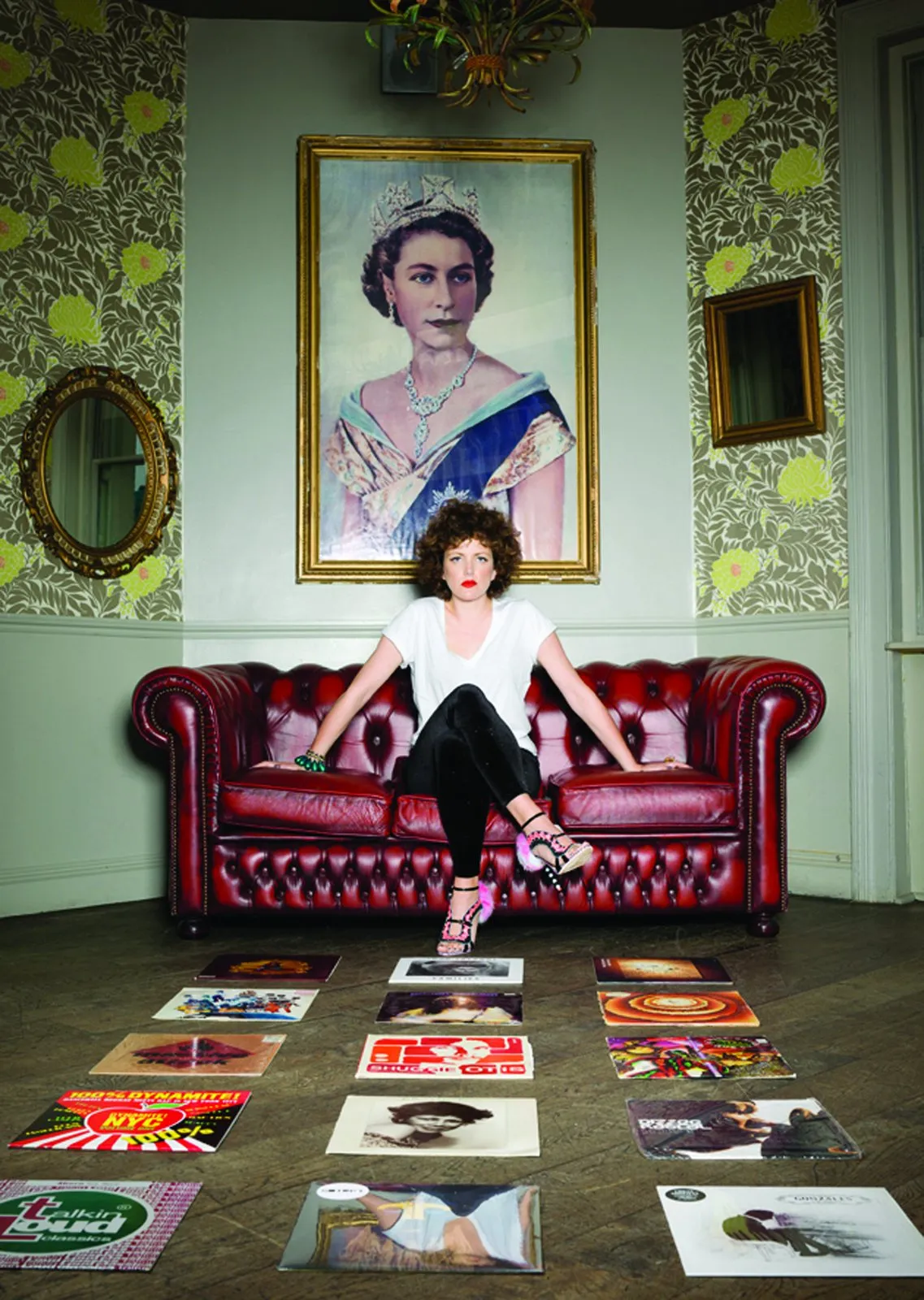
It was the late ’90s – the era of Fatboy Slim and big beat. “I’d listen to Mary- Anne and hear tracks by people like The Wiseguys, Les Rythmes Digitales, and of course, Norman Cook. And I’d record the show, every week – on MiniDisc!”
The Breezeblock was a weekly lifeline for Annie, feeding her invaluable info into what was happening within underground music. It seems strange to recall now, but back before the internet connected everyone with everything at all times, finding out about killer new tunes was no easy task – and actually buying those tracks was even trickier.
“I bought a pair of decks and started digging to find vinyl, but there weren’t any record shops. Belfast was cold and dead, culturally.” She had completed a course in radio production there, before moving to London to realise her insanely singular ambition. “Thing is,” she says, “with a job like mine, there’s no clear path to getting there. It’s not like being a solicitor or a doctor, where you go to uni and study law or medicine. You have to find your own way, and so much of it is about luck and timing and knowing people who’ll help you.”
Things did not, initially, go swimmingly. “I was grafting, doing lots of different jobs, trying to get to where I needed to be.
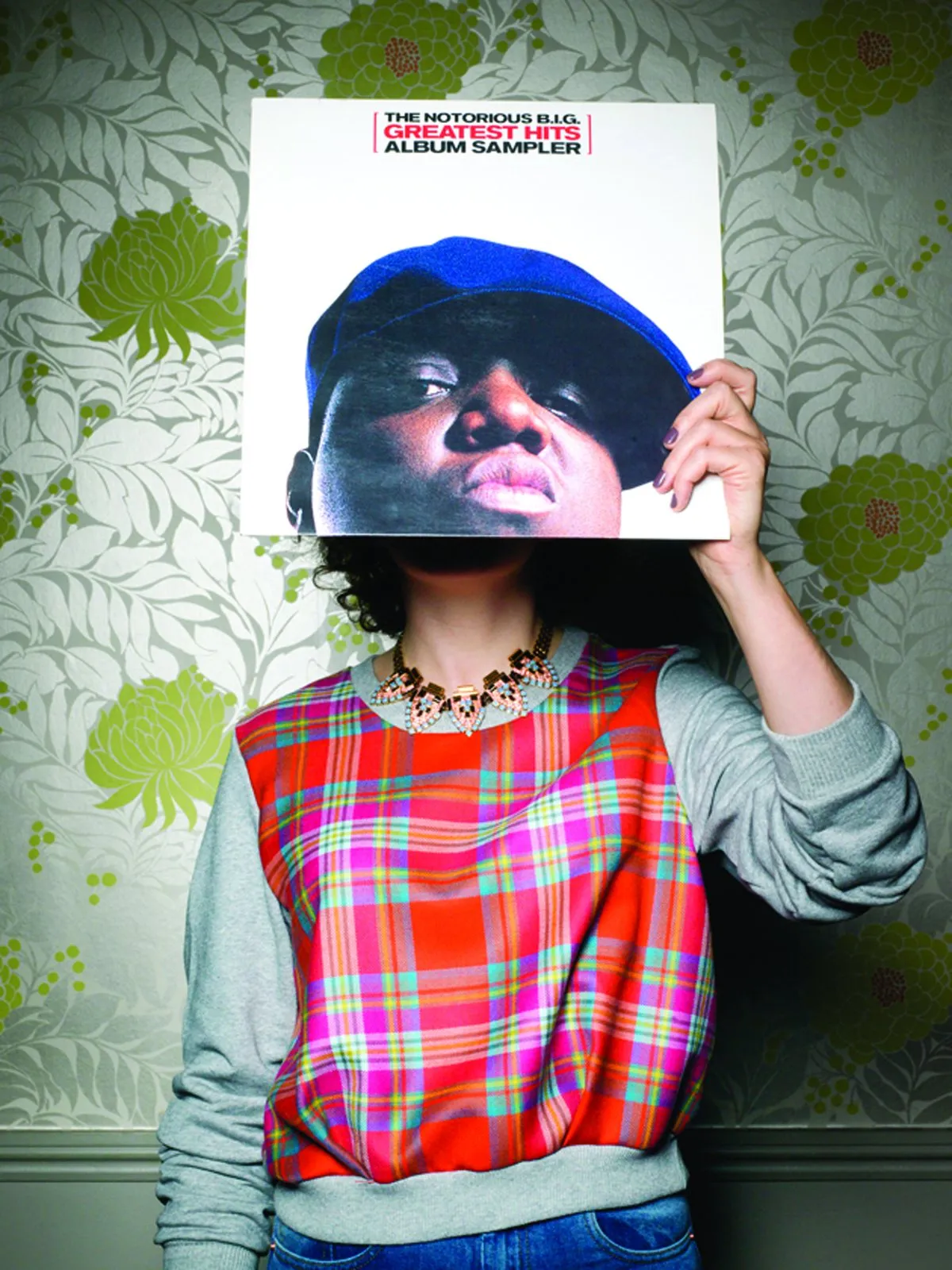
There were times when it was depressing and exhausting. I’d be so skint. Quite often I was like, ‘Fuck this, I can’t go on. I give up.’”
Her break into sort-of radio came when she landed a job at the now-defunct Net FM, an online radio station, “back when internet radio was gonna be ‘the next big thing’. It was aimed at middle-aged men, so we made shows about cars, the stock market… It was such a weird station! It only lasted eight months, then it folded.” But Annie’s time at Alan Partridge FM helped her to land a bottom-rung role at BBC Radio London. “I was making tea and filling in for people when they were sick for a good year or so. It set me on the path to being taken seriously.” She graduated to Radio 1 where she produced shows and voiced jingles, before being entrusted to stand in for her hero, Mary-Anne Hobbs, presenting The Breezeblock, the show she’d obsessed over. She’d aimed herself at one distinct, distant point – and arrived there, dead on target. “Yeah,” she laughs, “it was kind of weirdly focused of me…”
Audiences instantly took to Annie’s savvy but down-to-earth persona, and she swiftly bagged her own show. Her fanbase has grown exponentially year-on-year, and is now at the size where a track given the Mac seal of approval stands a solid chance of breaking the top 40. Annie reckons, modestly, that isn’t so much down to her own rise in popularity, but to the huge surge in appetite for dance music. “Dance music as a trend has become so massive, so popular and so ubiquitous, and it’s still getting bigger. So, if I really champion a track then there’s a good chance it’ll end up going to number one, because dance music is filling up the charts.
“You can use the Annie Mac Presents albums as a gauge for this,” she continues. “With my early compilations, the label used to say, ‘You’ve gotta put more hits on there!’ and I’d be like, “Noo, I don’t wanna compromise!’ We’d have the same fight, every year. But now, the kinds of tracks I support become proper hits.” Dance music’s current mainstream visibility is due, in no small part, to America’s belated but enthusiastic conversion to rave – or EDM, as they’ve chosen to call it. Many DJs, producers and dance fans have been extremely vocal in expressing their disdain for EDM many places to buy dance music in Belfast – just one huge HMV.” Today’s fledgling ravers may have instant digital access to more tracks than they could ever listen to, but Annie doesn’t envy them. “The way we consume music now, it’s so sped-up and fickle. It’s all, ‘OK, I like that track, next track, yeah that’s cool, next, next, next.’ Back in the day, records had more time and space to grow and develop, and artists did too.

Records like Blue Lines by Massive Attack or Dummy by Portishead – I know every single moment of those albums, they’re stamped into my being. But I can’t say the same of albums I hear today.”
Annie’s been heartened, though, by the recent astonishing revival in vinyl sales, and the return of tune-chasing one-upmanship. “What’s great is that it encourages people to value the music and value the exclusivity of it. You used to have 100 white labels of a tune pressed up and people would be trying so hard and paying so much cash to get hold of one. And it felt exciting, hunting down a tune that you wanted, that you needed . The access now is so easy, and it makes music feel more disposable, and you get bored quicker.”
After finishing her degree, Annie spent a miserable, homesick year in Farnborough, Hampshire, (“It just felt so cold and dead, culturally”) where she completed a course in radio production for EDM, and the cheesy excesses it represents: stadium crowds worshipping one-man-brand DJs; widespread fake knob-twiddling to pre-recorded sets; plasticky anthems as enormous and empty as a Michael Bay Transformers movie. For her part, Annie is no fan of EDM – but she’s not prepared to lay into it the way many of her contemporaries have.
“A lot of people have been very outspoken against EDM, and, yeah, it’s completely dumbed-down dance music,” she shrugs. “It’s dance music done the American way – XXXL. In a stadium, you have to have something for people to look at beyond a DJ hunched over a laptop – these people want a show , y’know? So yeah, there are the lazers, the Co2 cannons, the confetti cannons, the heart signs” – she winces as she makes a heart-sign with her hands – “and yeah, it is over the top, and also totally generic.”
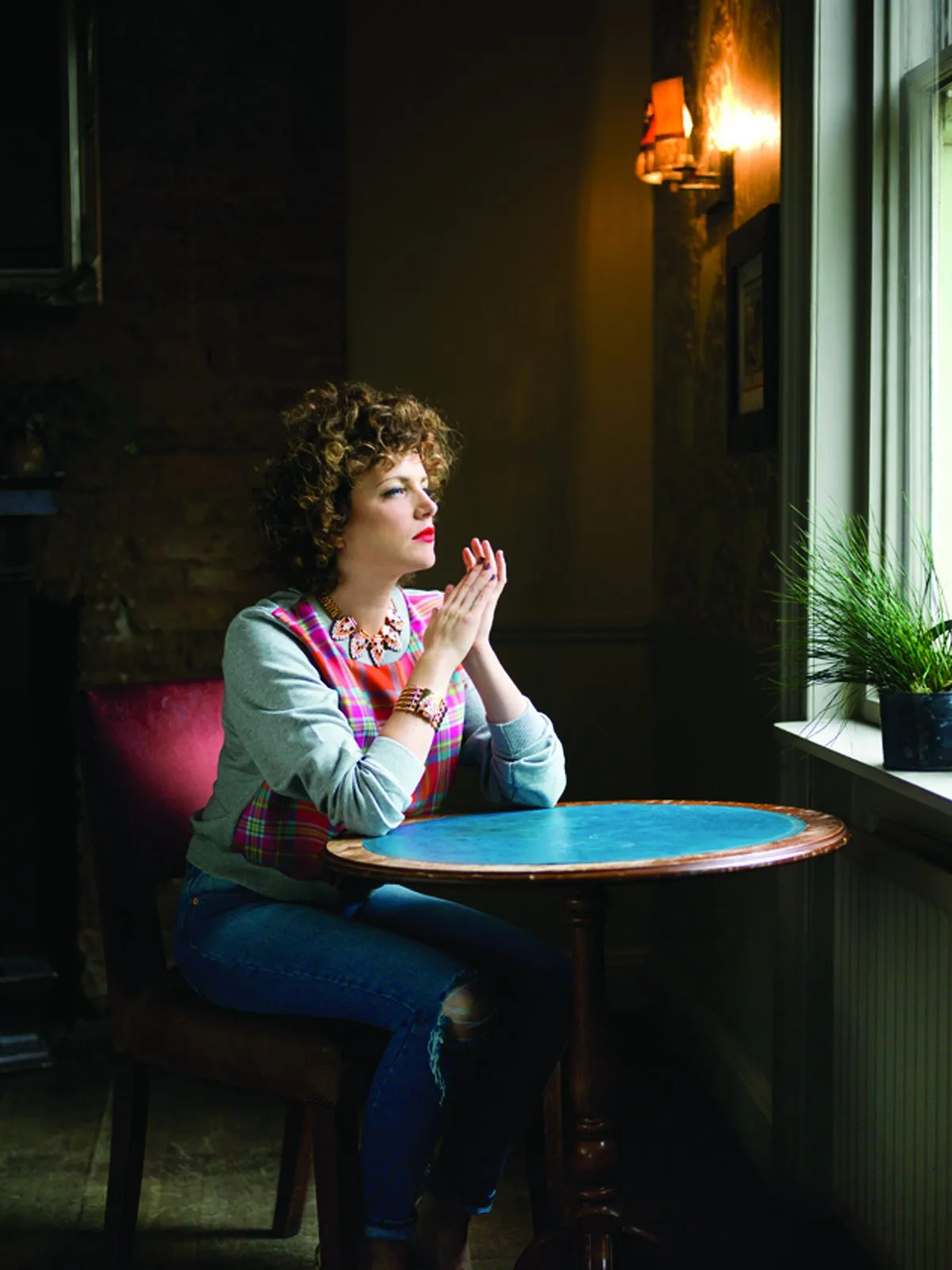
You can feel the ‘but’ coming. “But! The good thing EDM has done in America is cause a trickle-down effect. So you have 17-year-olds into Avicii, but then they grow up. They’re 21, 22, and their taste gets more refined. EDM is their entry point, but then they move on to, say, Dirtybird records.
“I mean, when I was 14, I liked shit music. You don’t know at that age, you haven’t developed. So I don’t like it when DJs get high-horsey about EDM – ‘Oh my God, can’t believe those kids are into that shit music!’ It’s not like any of us were listening to Carl fucking Craig at 14, is it?” And on that cheerfully ranting note, Annie’s press officer taps her watch to signal that they need to get moving – appointments are pressing, people are waiting, time is ticking. Things don’t stand still for long when you’re the Cool Big Sister to millions.
Annie Mac Presents 2014 is out now
From the March 2015 issue of FHM India.
Spotted a mistake, or your photo used without permission? Report a correction













 in your inbox