
What to Wear in a War Zone
In Aleppo, FHM’s John Cantlie meets Syrian rebels and the odds and ends – a knock-off Ben Sherman shirt, a Ronaldo shirt, a knitted scarf, a looted sniper rifle – that give them their fighting spirit.
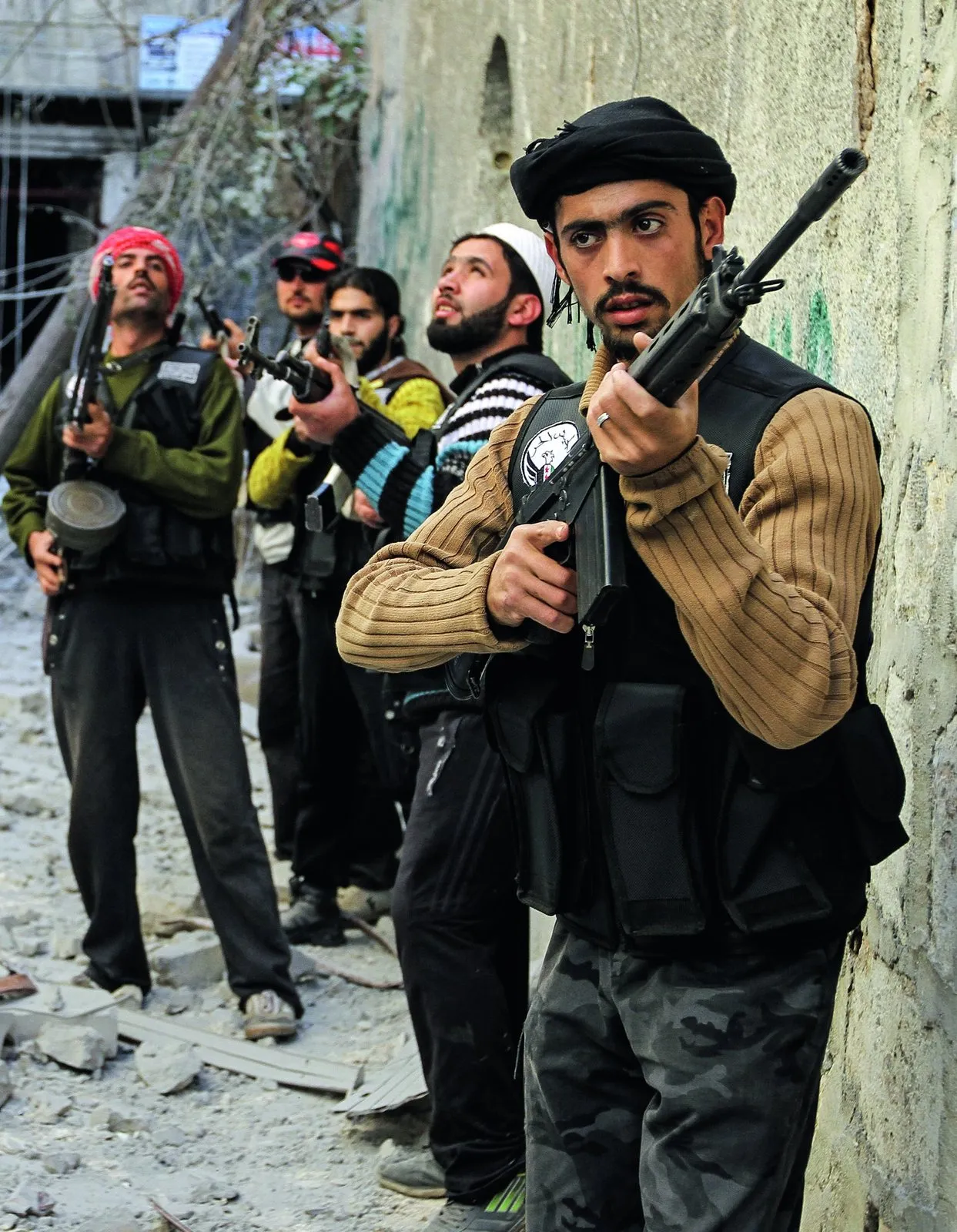


What would you bring to a battlefield? A lucky scarf, a Footie shirt or a looted sniper rifle? FHM’s John Cantlie went to the war-torn Syrian town of Aleppo and discovered the odds and ends that give the front-line revolutionaries their fighting spirit
Two years ago, inspired by uprisings in Egypt and Tunisia, ordinary Syrian people took up arms against their own government. They had a single aim: capture or kill Bashar al-Assad, the much-despised despot who inherited control of the country from his father. It’s become more complicated since then. But one thing characterises each and every rebel. They will not quit. Until the day the Assad dynasty finally lies in ruins, the dentists, builders, plumbers and librarians who make up this rag-tag, makeshift military will keep fighting.

That doesn’t mean each revolutionary has to give up their individuality when they join the cause. Unlike the regulation uniforms and dead-eyed sunglasses of NATO soldiers, Syria’s insurgent troops dress to impress. Headscarves, shiny shoes, jogging pumps, bandoliers from the ’20s – rebels can wear whatever they like. It’s not camouflage but casual sports jackets that define the look of this civil-war. Here, in their own words and their own clothes (and guns), are the revolutionaries fighting a long and bloody battle in the northern city of Aleppo.
Hamed Karali, 20
Knock-off Ben Sherman shirt. Job before revolution: University student
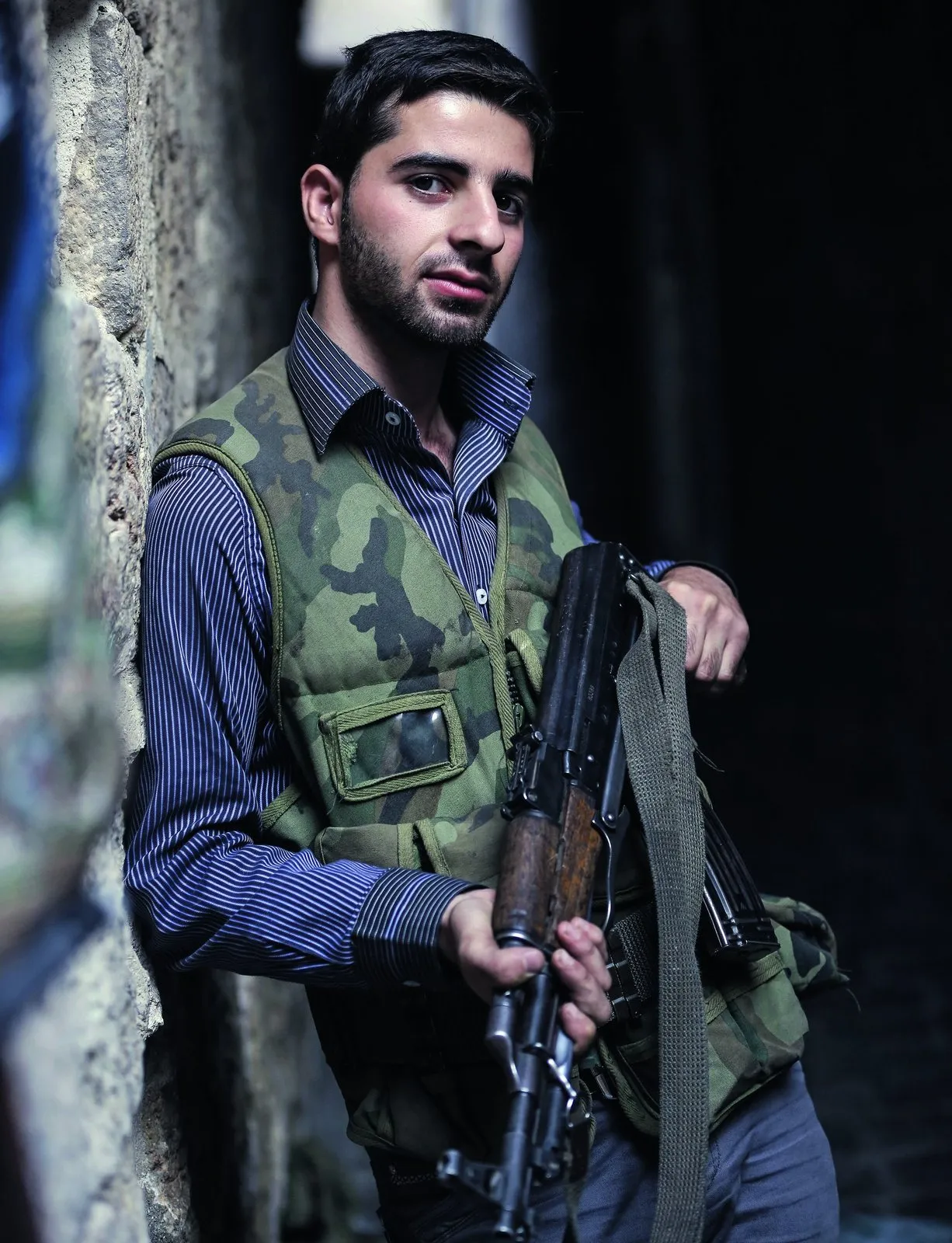
My favourite item is my purple Ben Sherman shirt. It’s not genuine, of course, but I bought it for £5 six months ago and wear it nearly every day. Keeping it clean is difficult here without washing machines, but I wash it every other day by hand and dry it on a line so it keeps its shape and colour. It’s good for fighting in, comfortable and I can move quickly in it. I’d rather fight in this than a combat jacket because it’s so light. I’ve been fighting in Aleppo for two months now. I’m one year into my business studies degree at university, but the government soldiers securing the campus make it a nightmare for us to get in and out so only about 20% of the students still go there now – most of them are fighting like me. You can’t concentrate on studies when your city is in flames. You sometimes worry that you might get hurt or killed in the fighting, many of our friends have been wounded, but we believe in the revolution – Assad has to go. Whatever happens we must win, there’s no turning back now. My parents worry about me but they supported me in my decision to fight and know this is something I have to do.
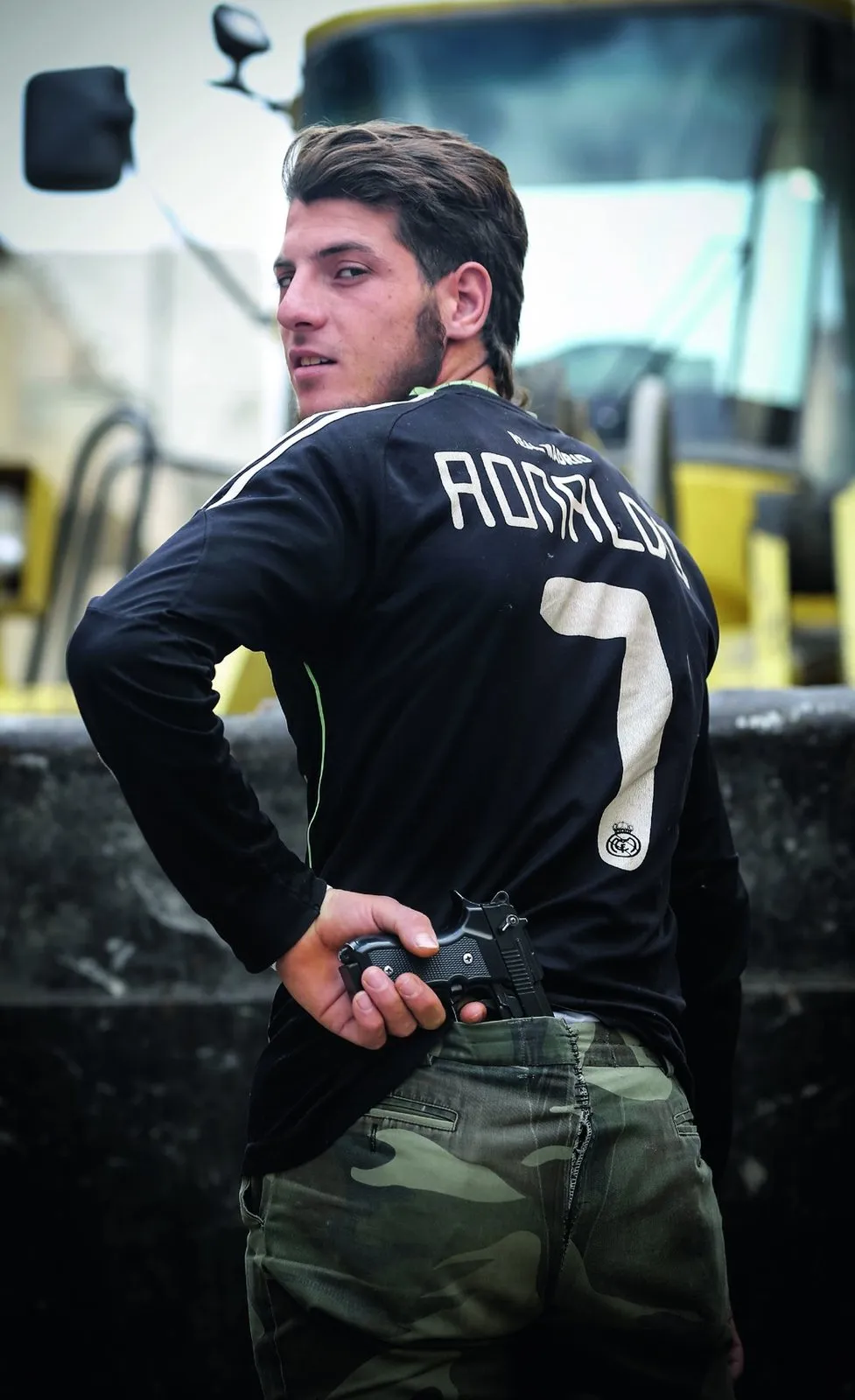
Bazel Araj, 19
Ronaldo Real Madrid football shirt. Job before revolution: Labourer
Cristiano Ronaldo is easily the best player in the world. It’s the way he moves – like dancing. I know a lot of people say he’s like a girl, but I think he’s fantastic. I style my hair like his. Of the England players, I’d have to say Wayne Rooney is my favourite because he’s always swearing and fighting with everyone. He plays better since he got his wig. I paid £2 for my Ronaldo top in Sadal Jebha square in Aleppo and it’s great for fighting in, really light and easy to move in while the sleeves keep me warm when the weather gets colder, as it is now. I’ve been fighting now for about six months. It’s very sad to see the destruction of large parts of Aleppo city, it was a very beautiful town before the fighting came here and I hope that it can be fixed again after the revolution. Syrians are very proud people, we are proud of our history but Assad and his regime have to go, regardless of the cost. A peaceful revolution is always better than war, but he wanted war. So he got one.
Hassan Ahmad, 31
Dragunov 7.62mm sniper rifle. Job before revolution: Kitchen fitter
I’ve killed 12 soldiers with this Dragunov rifle, the furthest shot at 300 metres and the closest at just 10 – I walked round a corner and we bumped into each other. I am sad when I kill these men but we have to finish the revolution. I’ve had my sniper rifle for two months now. I sold all my tools, my television and my car to raise the £2,500 I needed to buy it. A Kalashnikov is good for street fighting, but when you need to shoot someone from a distance, the Dragunov is the tool. Right now it needs a good clean because it’s started jamming. Three of my friends were killed yesterday when a mortar shell landed where they were drinking tea. It’s the kind of random attack that happens in this city – I’ve lost over 30 friends since I started fighting 14 months ago.
Abdullah Wasli, 22
Dshka heavy machinegun. Job before revolution: Plastic moulder
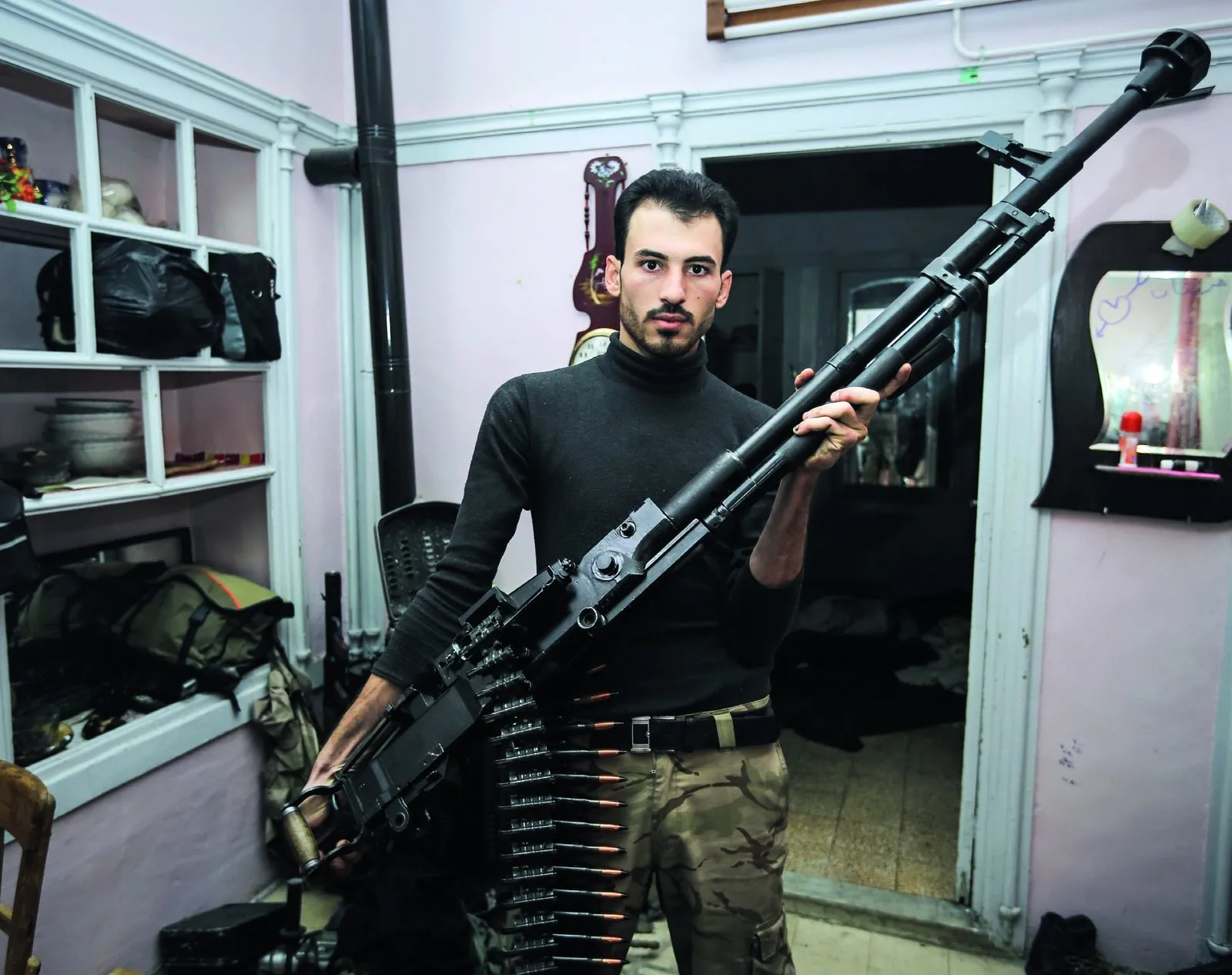
We got this Dshka machine gun after we ambushed a convoy that was travelling between here and Azaz near the Turkish border. We destroyed two pick-up trucks and took the Dshka and two mortar systems. At first we had plenty of ammunition for it but now we have just a few rounds left – we will have to ambush another convoy to get more ammo. It’s not much use in close-quarter fighting here in the city, it’s more of a long-range weapon for out in the open. Sometimes I talk to the Syrian army on the radio. I got into a long conversation with a senior officer just the other day, talked to him for two hours. At first he called me a terrorist, as they always do, but I told him he should join us and in the end he admitted that he wanted to defect but couldn’t because he’d be shot. That’s where this revolution is now. It’s being fought by soldiers who don’t want to fight anymore, but they’re scared they have no way out. We have the citadel in Aleppo surrounded, we can’t go in because it’s impregnable but they can’t get out. We have food, power and water – we can wait.
Imad Faraazdak, 23
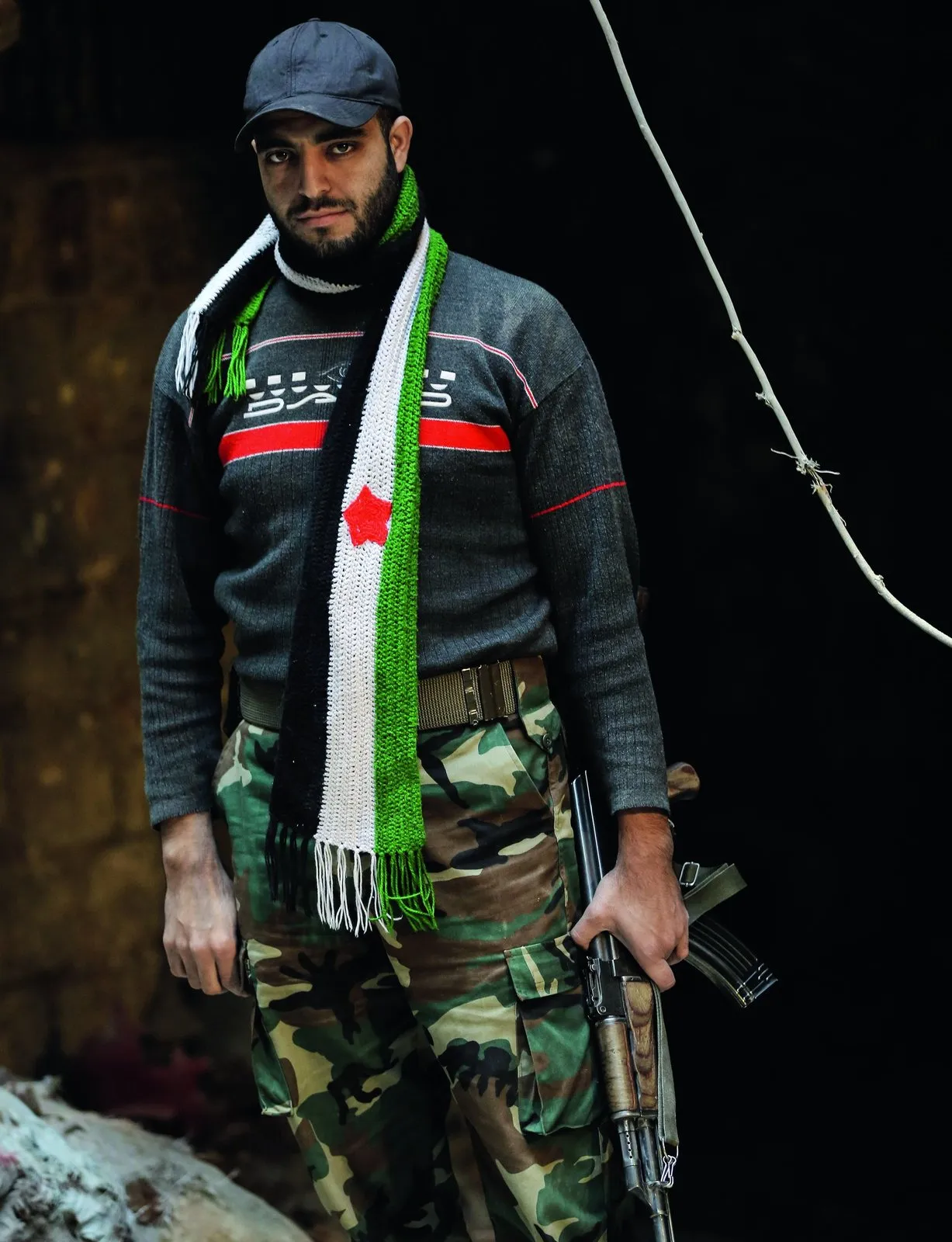
Revolution scarf. Job before revolution: University student
This scarf comes from my hometown of Maraa and friends of my mother’s knitted it for me. Then the other rebels asked if they could have one, so now they have to knit five scarves a day – it’s a small factory at their home now! It gets very cold in Syria in winter, so now’s the time when my scarf will be very useful for fighting in. When we’re in combat I wrap it up tightly around my neck so it doesn’t get caught around my feet when we have to run from enemy fire. I was a student at Aleppo university until the revolution came here four months ago. I’m studying Arabic literature – I will be a teacher when the fighting is finished – but for now I’ve joined my friends and brothers fighting the Assad regime. My platoon is called Hatab and our positions surround the citadel here in Aleppo. We harass the government soldiers inside. I’ve always liked music and at Friday protests I sing revolution songs on the microphone. I’ve become pretty good at rapping.
Memati Hazori, 40
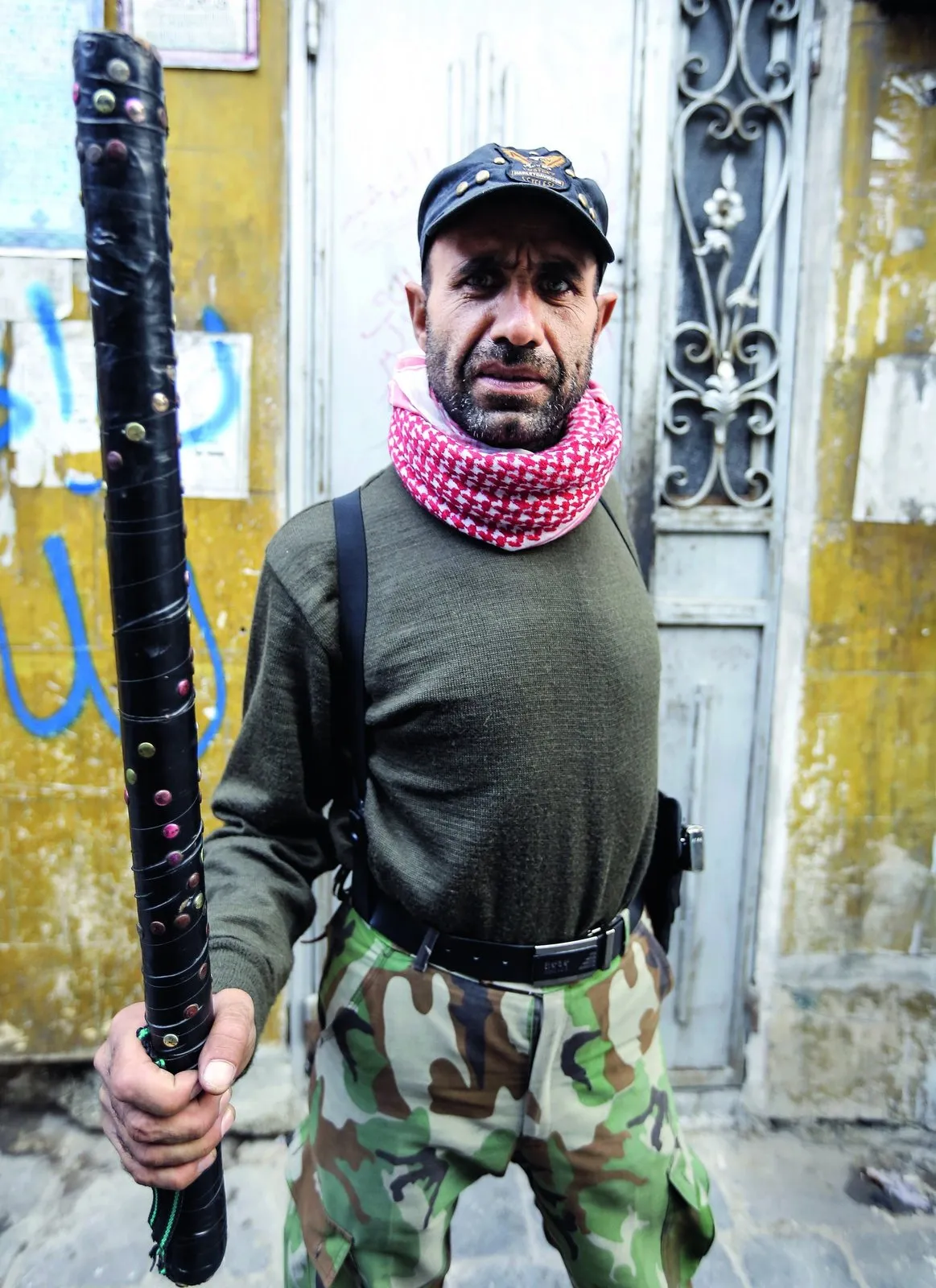
Matraka club. Job before revolution: Coffee shop owner
This big club is called a matraka. I took it from a government militia fighter four months ago who, lucky for him, managed to get away. This is what Assad’s militia use to beat citizens and all the people they put in their prisons – now I use it on them. I’ve used this club to beat four militia that have been arrested, put a couple of them to sleep with it, too. If I ever meet Assad, first I will stick this up his arse and then I will club him over the head. Four of my brothers are fighting in the revolution, we are united in a common cause: Assad must fall. We don’t have enough ammunition for our guns, we need more rockets, mortar bombs, anti-aircraft missiles – we need everything. I only have two bullets for my pistol, but this revolution will not be won with guns. It will be won with our hearts.
Mohammed Kadri, 21
Puma baseball cap. Job before revolution: Soldier
I bought my Puma baseball cap the day before I enlisted in the army in Damascus in July 2010. It cost me just £1 from a street vendor and I’ve had it ever since – it’s my lucky hat. I was with my father when I bought it, and since I have not seen my family since joining the rebels it reminds me of them. When we defected from our base it was the only thing I took with me. I defected from the Syrian army three months ago in Aleppo. I deserted my post at night with a friend, climbed the wall and made it out with my rifle. I chose to defect because after two years in the army I saw that Assad and his regime were nothing more than criminals, and as soldiers we saw with our own eyes what was happening. All my friends in the army think the same way and want to defect. They’re scared of being executed, yet they wait for any chance to escape.
Wassim Nasr, 32
Brogues and sharply-ironed cotton slacks. Job before revolution: Builder
I bought my trousers from the local souk market here in Aleppo. They cost me £6. They are designed with a permanent crease down the leg and they’re light and comfortable, although with winter approaching they’re not too warm. I wear them as a disguise. I can get very close to Syrian army positions and they just assume I am a civilian. In this way I can gather information on their positions. I’ve actually only been fighting for 15 days, so I’m a beginner. I started fighting now because first I had to look after my family – now they are safely in Turkey and it is time for me to pick up a gun. Death and destruction is the price we pay for freedom.
Over the last 10 years FHM’s John Cantlie has been to many of the world’s most dangerous warzones as both a reporter and a photographer. In July he was captured by extremists while in Syria and repeatedly threatened with death. Here, he returns to the country for the first time since his kidnapping.
From the February 2013 issue of FHM India.
Spotted a mistake, or your photo used without permission? Report a correction




 in your inbox