
Who invented the hashtag? And 13 other modern trends explained
From the hashtag to posh crisps, Beats headphones and fixed-gear bikes: where today’s trends really came from.


The hashtag – or in US English, the ‘pound’ – is an integral part of how we find topics that interest us online. But it’s only been around since 2007, when web whizzkid Chris Messina used it on Twitter to organise groups for tech conference network BarCamp.
Dan Spicer, head of community at social media tool Hootsuite, says: “In 2007, a friend of Messina’s used the hashtag #sandiegofire during the fires there, and effectively became the news anchor for the blazes in his area – but Twitter didn’t officially adopt it until 2009.

“Its primary purpose is content discovery. It allows people to find relevant content from other people, businesses and brands. And while platforms, especially social networks, will always look at developing new ways of putting content in front of people, they’ll find it difficult to find a more effective way of linking common themes and topics than a hashtag.”
Why do trailers for films like Godzilla always use a gut-wrenching bass sound?
Nick Harvey, Bafta-winning composer for music and TV says: “The blame lies squarely with Hans Zimmer. The ‘wommmmm’ sound that he created for his Inception score went on to influence composers and editors for years to come. This sound, the bastard child of a foghorn and a robot, has the depth needed for drama and tension and the explosive impact works a treat for punctuating and highlighting cuts and hit points. Perfect for trailers.”
Where did posh crisps come from?
It’s dinner party night. The Jamie Oliver slow-roast lamb is cooking nicely, the vino’s been cracked open and, as the guests arrive, you put out a few bowls of posh crisps to keep everyone happy.
But how did the humble crisp become part of the dining experience? And why is the luxury end of the UK crisp market worth £171 million? The answer lies in Hawaii, where the founder of what would become Kettle Chips, Cameron Healy, saw a chap selling hand-cooked crisps from a cart who was unable to cope with the amount of customers he was attracting.
“We changed the face of snacking altogether,” says Chris Barnard, who’s been running the UK arm of Kettle Chips since 1989. “Before that, there were massive brands like Walkers and Golden Wonder. Their crisps were cooked in palm oil, with artificial colours and flavours. That’s not what we we’re about. We were passionate about real food, so hand-cooked our potato chips. It’s like going back in time and doing it the traditional way: skilled cooks frying potatoes in batches. It enables us to use bigger, high-sugar potatoes, because that’s where the flavour is – the caramelisation and colour. That’s why you get that crunch.”
Who first put a padlock on a bridge?
If you’ve walked along a bridge in a European city and tutted at all the sappy padlocks on it, you may have wondered where it all began. The ‘love lock’ trend started in early 20th-century Hungary, and is based on a tale of a woman whose soldier husband ran off with another lady. The practice died off, but when it was referenced in the 2006 novel I Want You by Italian author Federico Moccia, couples in cities such as Rome and Paris resurrected it. Now, despite the protestations of city authorities everywhere – they’ve been removed from the Pont des Arts in Paris – bunches of locks continue to blossom throughout the world.
Why are online bullies called ‘trolls’?
From chucking out death threats on Twitter to abusing the parents of suicide victims, dealing with trolls is the price we pay for the internet. But why ‘trolls’? Rather than being related to ugly dwarves under bridges, the word is related to ‘trawling’ in the fishing sense – writing deliberately offensive comments to attract ‘bites’ – and was first used on pre-internet network Usenet in the early 1980s. It was recorded with its present meaning in the Oxford English Dictionary in 1992.
When did everyone start getting tattoos?
Once, sporting a piece of human graffiti was the preserve of sailors, barmaids in rough pubs and gents with intimate knowledge of the British prison system.
That all changed in the ’90s, as body art and piercings went mainstream. And one man had a bigger influence than anyone else.
“I’d like to thank David Beckham for the upsurge in tattoos,” says Dan Lake of Arthur T Sharpe Tattoos in Newcastle. “People copy his tattoos, but it’s like a photocopy – you lose some of the quality. Tattoos are now as associated with the middle class as the working class.”
He’s right: today, 29% of UK 16 - to 44-year-olds sport a tattoo. Even the prime minister’s wife has one.
What was the first Downfall parody?
We’ve all laughed at Downfall parodies that see Hitler go ape on everything from West Ham’s defensive frailties to Kanye West dissing Taylor Swift. The first recorded parody appeared on 10 August 2006, with Adolf reacting to the lack of features in Microsoft Flight Simulator X. Copycat videos multiplied, a YouTube channel was set up, and after initially trying to take the parodies down, Downfall’s studio gave them its blessing. Now there are around 1,000 videos.
Why did Airbnb and Uber get so big?
The ‘sharing’ economy has enabled people to make money from assets like flats (Airbnb) and cars (Uber). The idea for Uber came to Garrett Camp and Travis Kalanick when they were trying (and failing) to get a cab in snowy Paris in 2008. Starting life as ‘UberCab’ in 2010 in San Francisco, the company was immediately successful for two reasons: first, as an app, its mobile nature meant hailing a cab was painless and immediate; second, the responsive ‘surge’ pricing meant drivers could charge more at busy times, bringing more of them on to the road. Every journey made brings a cut of the fare to Uber, which means with operations all over the world, the company is now valued at $18.2 billion.
How did Beats By Dre become the world’s leading headphone brand?
If the iPod was the ’00s musical accessory, then this decade is defined by Beats headphones (BBD controls nearly 70% of the premium headphone market worldwide).
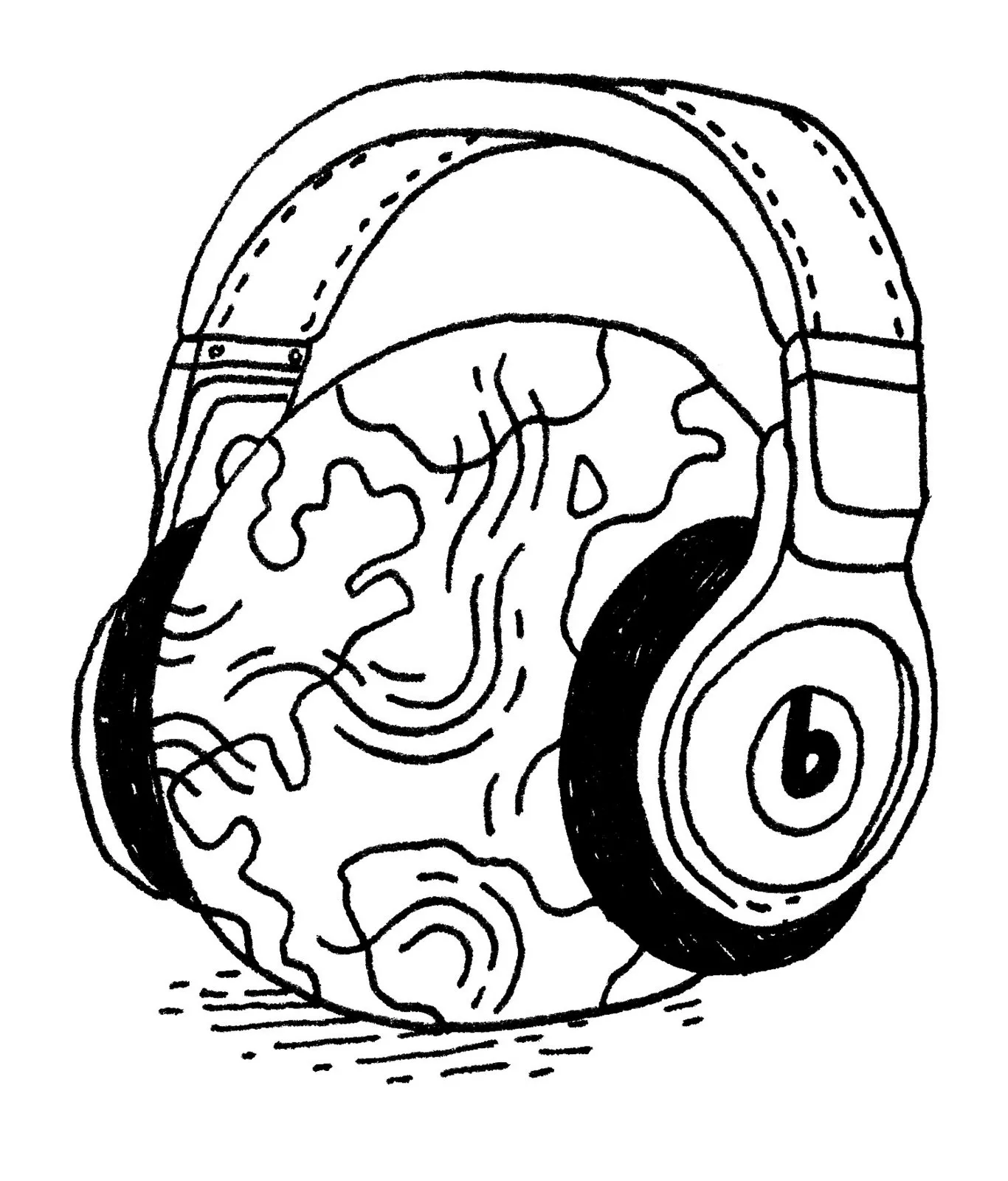
The result of a collaboration between record label boss Jimmy Iovine and hip-hop producer Dr Dre, the brand is the perfect synthesis of technology and popular culture – and so successful that Apple paid $3 billion for it in 2014.
According to Neil Boorman, author of Bonfire Of The Brands, until the arrival of the iPod, only DJs and hi-fi snobs spent money on headphones. But Apple’s cheapo white ear buds led to an everyman demand for quality ‘cans’. Enter Beats By Dre.
“The problem was that the major hi-fi brands looked stuffy and forbidding,” says Boorman. “But Beats headphones are branded like lollipops – all bright and accessible. So that’s what everyone went for.”
The key to getting Beats’ message across was the use of credible music artists like Pharrell Williams and Gwen Stefani in the research stage, before recruiting celebrities such as Robin Thicke, Will.i.am and LeBron James in the marketing campaign.
“Be in no doubt,” says Neil Boorman, “if you send a celebrity down the red carpet holding a product that’s in normal people’s price ranges, they’ll snap it up like it’s the last product on Earth.”
Where do emojis come from?
The first emojis date back to 1999 when Japanese designer Shigetaka Kurita devised a set of illustrations for the first mobile internet network. Influenced by both Manga comics and street signs, they were only used in Japan for years. Then smartphones enabled the ‘language’ to spread all over the world and, in 2010, the Unicode Consortium approved a set of globally recognised standardised emojis. When Apple included emojis on iOS, the global takeover was complete.
When did ‘lol’ come to mean ‘laugh out loud’?
Lol! Lolz! Rofl! When it comes to expressing joy online, there’s one route everyone follows. But why? It goes back to 1980s Canada when Wayne Pearson, a member of a pre-internet bulletin board called Viewline, coined the term. After being on a list of web acronyms in a 1989 newsletter, its use spread. Today, Pearson says, “A friend of mine who went by the name Sprout (and I believe still does) had said something so funny in the teleconference room that I found myself truly laughing out loud, echoing off the walls. That’s when ‘lol’ was first used. I always emphasised (and still do) that it’s meant to be used only if you truly laugh out loud… a smirk, smile or giggle just won’t cut it.”
Where was the first gastropub?
The term ‘gastropub’ was first coined to describe London’s The Eagle in 1991. Combining the traditional elements of booze with food elevated above soggy rolls, The Eagle soon became popular with the wordsmiths that worked nearby at The Guardian. And as those journos wrote about it, (and traditional English food came back into fashion), the idea of paying 15 quid for sausage and mash was born.
Why do people ride fixed-gear bikes?
Some people – ie us – will witter on about hipsters and their silly ways, but fixed-gear bikes, or ‘fixies’, are more than just about stylish posturing. There’s something simple and practical about a fixie – it’s why they became popular among cycle couriers in the ’90s.
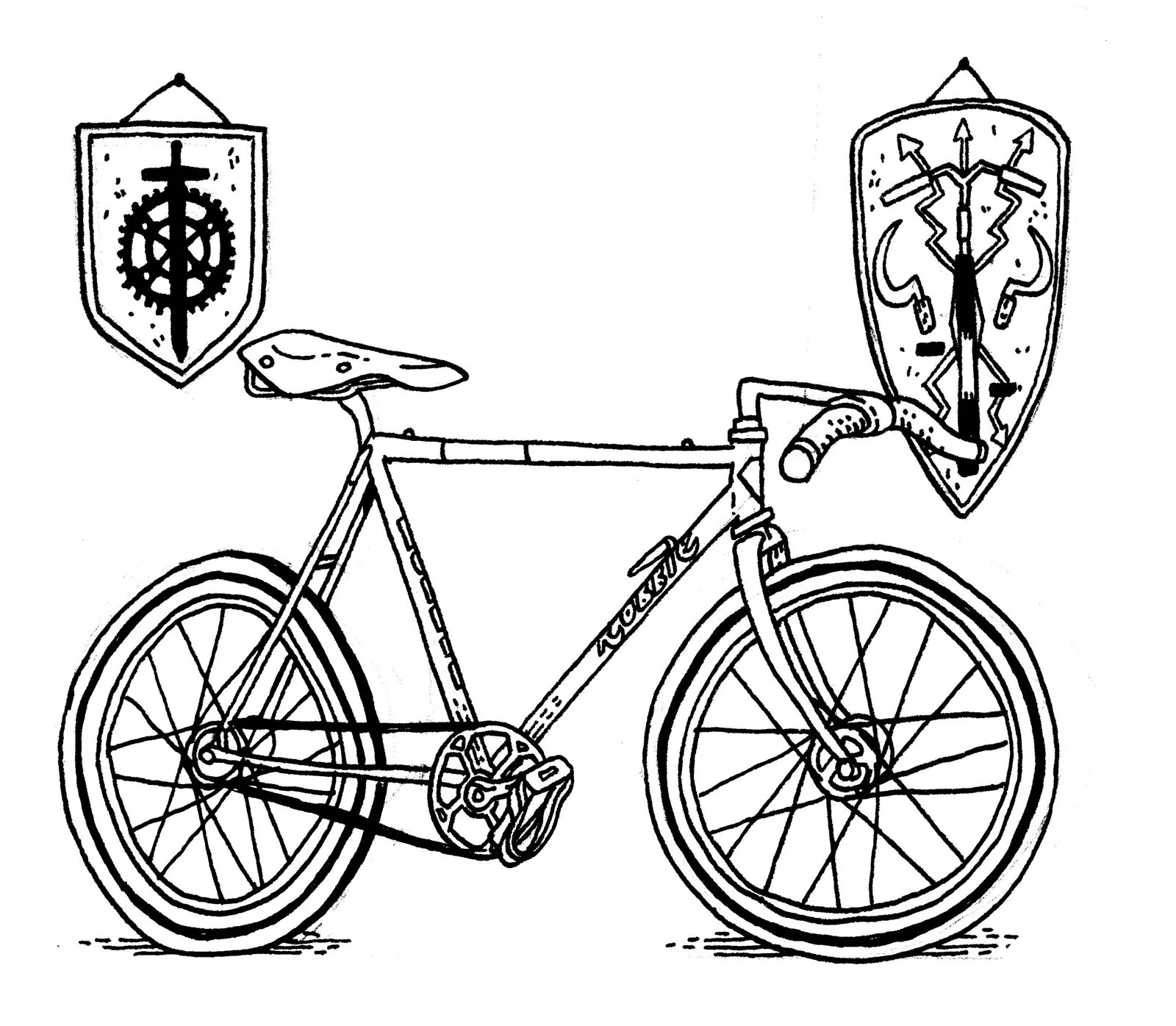
It wasn’t long before the young urban middle class adopted the bikes as a part of their identity. Fixies don’t need brakes as they can’t freewheel, stripping cycling back to basics. They are ‘real’. And hipsters love authenticity.
Why did the Tough Mudder-style challenge get so popular?
It would be a lie to claim that Tough Mudder pioneered the trend in obstacle races. After all, people took part in military-style endurance events before 2010 (the first Tough Mudder year).
However, the canny folk at Tough Mudder have popularised the ‘mud run’ (a hybrid of obstacle race and trail run). Why? There are a number of reasons, but the increased focus on health and an urge for interesting methods of exercise are key.
Tough Mudder’s vice president of marketing John Lodie says, “Who wants to run 26 miles in Lycra with bloody nipples? You do it on your own. The same with triathlons – you’ve got a bunch of people taking themselves a bit too seriously, buying thousands of pounds-worth of kit.”
A Tough Mudder event is a course that you complete, not something you try to win. And you can’t do it alone, as some obstacles can only be overcome with the help of other racers. This encourages a sense of community, magnified by social media.
Alex Thompson, Tough Mudder’s VP of culture in the US, told BizBash, “There’s no way we could’ve grown the way we grew without social media and without people having the opportunity to see a photo, press ‘Like’, click through to the person, ask if they’re doing it next year and ask if they want to be on a team.”
And with 100,000 daredevils set to take on a Tough Mudder event this year, it’s a trend that doesn’t show any sign of ending any time soon.
From the October 2015 issue of FHM India.
Spotted a mistake, or your photo used without permission? Report a correction

 in your inbox