
Woah! What Moved? The Cities Sitting on Earthquake Time Bombs
With fault lines running deeper than Cheryl Cole's cleavage at Cannes, you might be sitting on a ticking time bomb: the world's most quake-prone cities, and what to do if the ground starts to shake.



With fault lines running deeper than Cheryl Cole’s cleavage at the Cannes, you might be sitting on a ticking time bomb!
Istanbul, Turkey
A major quake could kill an estimated 55,000 in this city of 10 million, which sits at the juncture of the African and the Eurasian tectonic plates. The nearby 1999 Kocaeli quake left 18,000 dead and thousands more homeless.

Alaska, USA
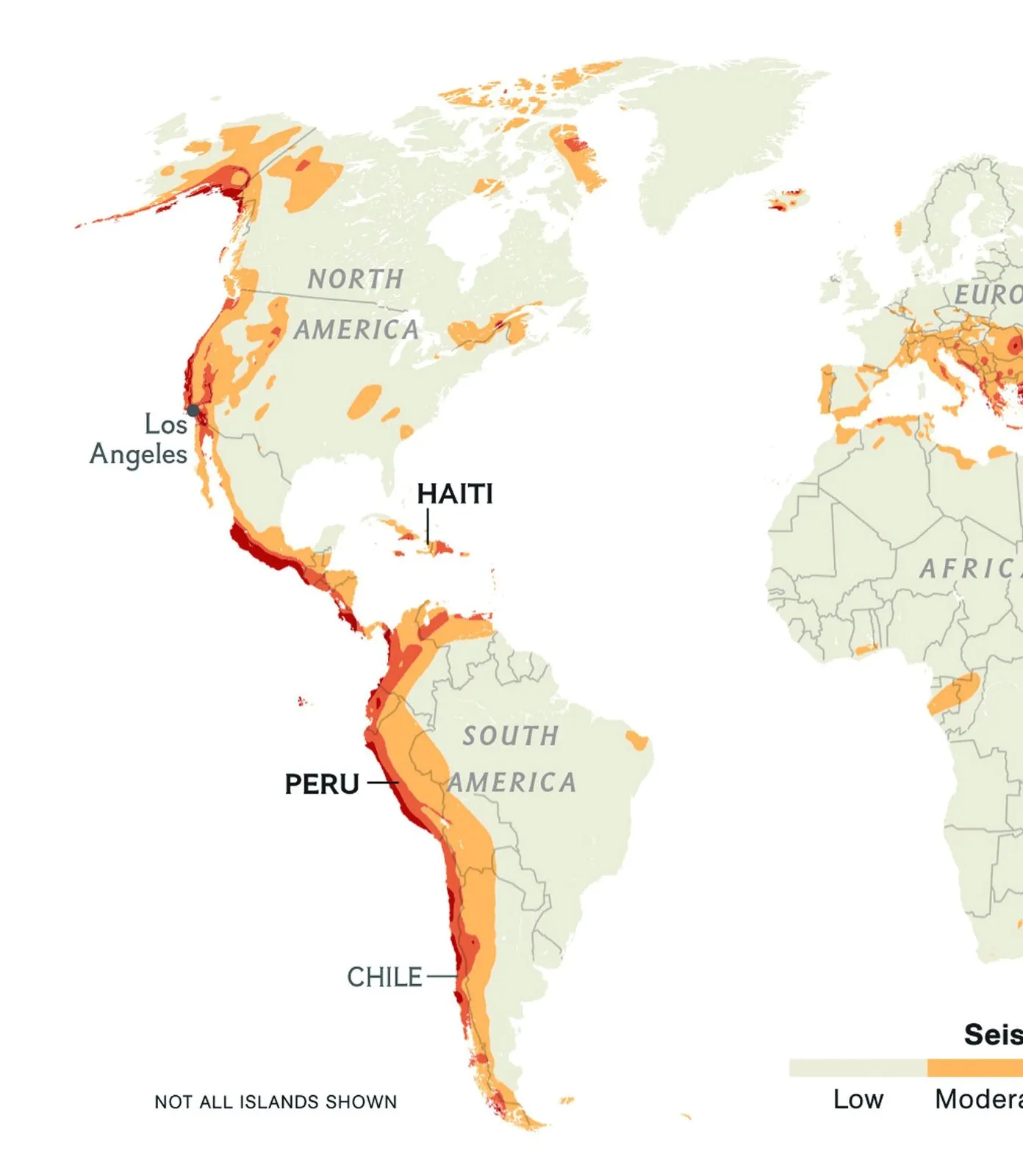
Alaska is the most earthquake-prone State and one of the most seismically active regions in the world. Alaska experiences a magnitude 7 earthquake almost every year, and a magnitude 8 or greater earthquake every 14 years on average.
Mexico City, Mexico
The country’s 220-mile capital city, home to 2.2 million people, has been the site of numerous earthquakes throughout its history, most recently in 2001. A 6.0 quake would kill an estimated 11,500.
Quito, Ecuador
A 6.0 hit on the mountainous Quito, home to 1.8 million people, would kill an estimated 15,000. A quake in 1797 ended the lives of some 40,000. In October 2006, a 4.1 quake hit the city without causing major damage. A bigger threat: volcanoes. The city is surrounded by them.
Port-au-Prince, Haiti
The 2010 Haiti earthquake was of a catastrophic 7.0 magnitude. There were more than 50 aftershocks measuring 5 or greater and an estimated 3 million people were affected. The country is seismically very active and has a history of destructive earthquakes.
Baluchistan, Pakistan
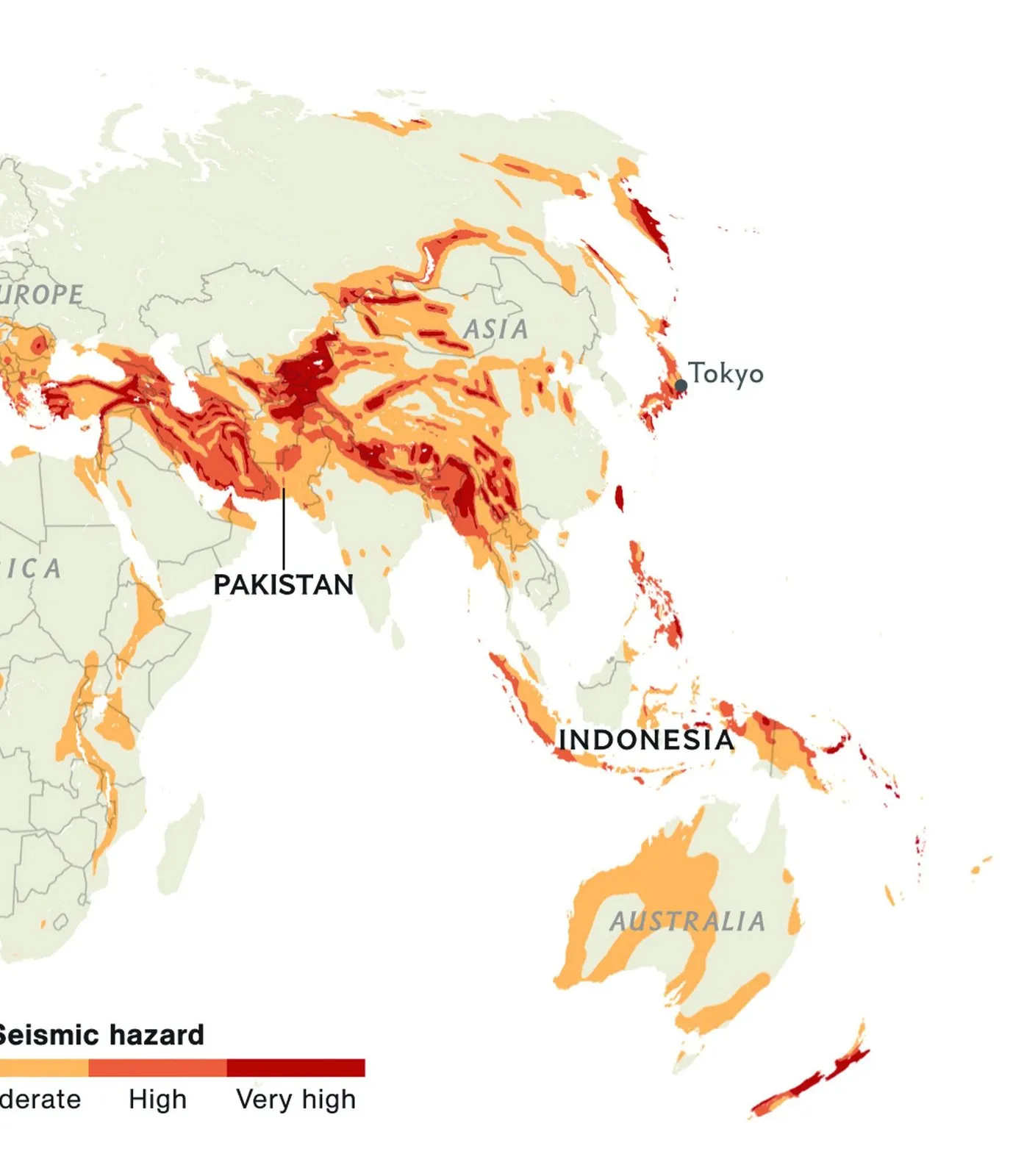
A major 7.2 magnitude earthquake rocked Southwest Pakistan in January this year. Luckily the quake was centered in the sparcely populated Baluchistan province. If a similar earthquake hits Islamabad, home to around 1 million people, it could kill an estimated 12,500 people
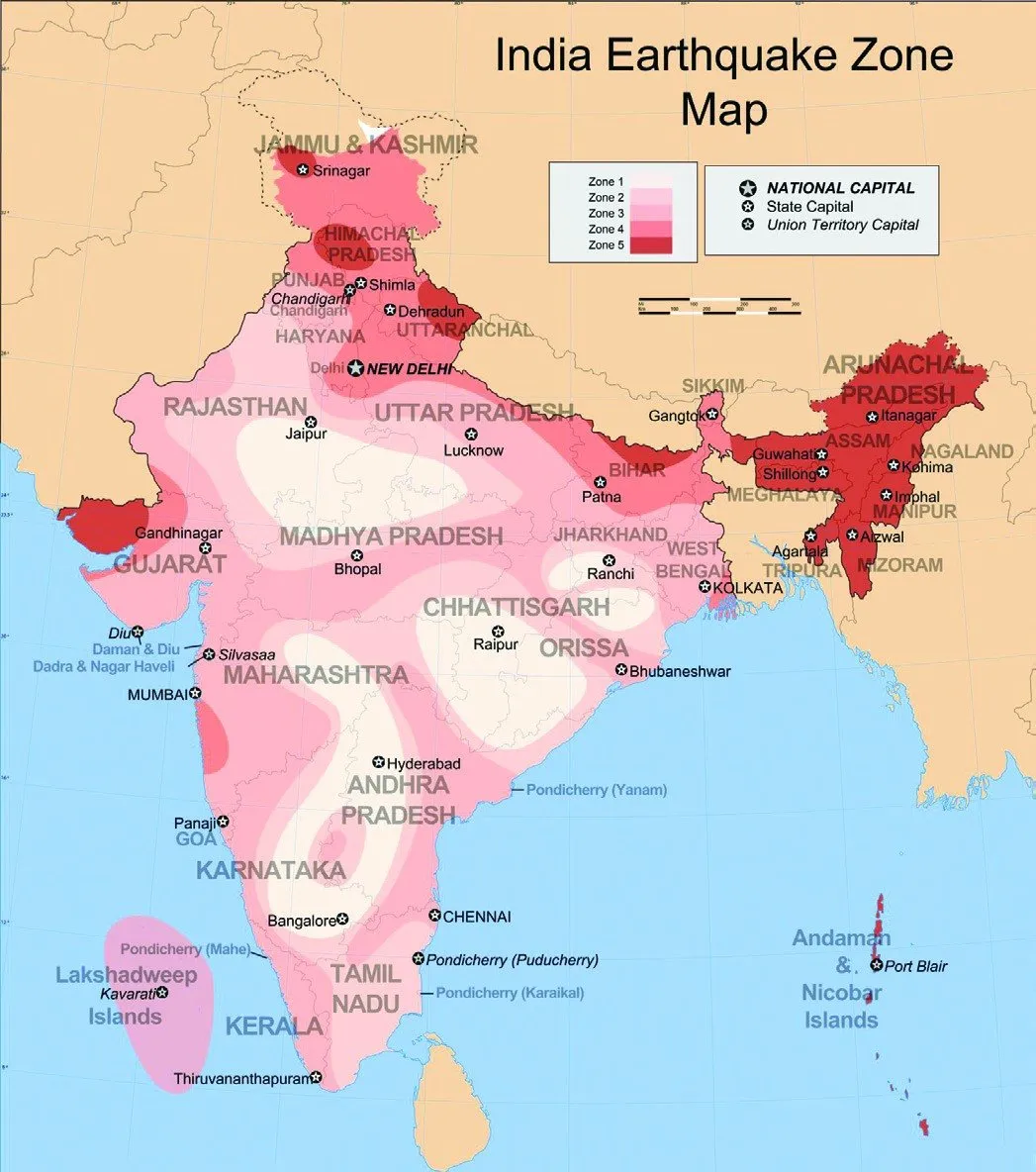
India
The Indian subcontinent has a history of devastating earthquakes. Geographical statistics of India show that almost 54% of the land is vulnerable to earthquakes. However, Kashmir, Punjab, Western and Central Himalayas and the North East regions of India are the most at risk.
Tokyo, Japan
An estimated 9,000 people would be killed if a 6.0 earthquake hits Tokyo, a city of 8 million people; the most vulnerable First World metropolis on the list. Huge earthquakes have struck the city many times: 1703, 1782, 1812, 1855 and 1923. The 1923 disaster, a magnitude 8.3 quake, killed more than 140,000.
Kathmandu, Nepal
A study by GeoHazards International predicted a 6.0 earthquake would kill approximately 69,000 people in this growing city of about 1 million, the most densely populated district of Nepal.
Jakarta, Indonesia
A major earthquake hit Jakarta this month. While there weren’t too many deaths, thousands of homes were damaged. Many of the homes are flimsy and could topple onto each other. Indonesia is also prone to tsunamis – not the best place to go if you fear natural disasters.
What should I do if…
I am indoors
Get under and hold onto a desk or table, or stand against an interior wall. Stay clear of exterior walls, glass, heavy furniture, fireplaces and appliances. The kitchen is a particularly dangerous spot.
I’m driving
Immediately pull over to the side of the road, stop, and set the hand brake. Avoid overpasses, bridges, power lines, street signs and other hazards. Stay inside the vehicle until the shaking is over.
I am trapped under debris
Do not light a match or move about or kick up dust. Cover your mouth with a handkerchief. Tap on a pipe or wall so rescuers can locate you. Avoid shouting as it can cause you to inhale dangerous amounts of dust.
From the October 2011 issue of FHM India.
Spotted a mistake, or your photo used without permission? Report a correction













 in your inbox