
All That Jazz
Jazz is one of the most incomprehensible genres of music.


When Emma Stone, in the Academy nominated movie La La Land, says that she hates Jazz to which Ryan Gosling replies, “it’s conflict and it’s compromise, it’s new every time, and it’s dying.” While we are not sure if the art of Jazz music will ever really die since it has given birth to so many genres, we do believe that Jazz is the conflict and some compromise. Most people, even the ones who claim to be great admirers of the genre, try to depict Jazz as something limited to a finer class and the ‘superior’ white race. The reality is however far different from that.
First came the blues
We all know that Jazz was born in America but not many have the knowledge about its first creators. Before the civil war legally freed the African-American in 1800s, there was little permissibility for them to express their plight. Parched under the hot sun, carrying the weight of American shame African American used to hum to songs that expressed the adversity they were living. Their music told the stories of depression, poverty and all the suffering they had to endure. The amalgamation of spiritual hymns, work songs and field hollers led to the ultimate genre-blues. This later led to the birth of Jazz, Rock ‘n’ Roll, R&B and country music. Many musicians released their work named under ‘Blues’ but only few of them represented the real blues.

From Jass to Jazz
New Orleans in America was a place where the spirit of celebration took place. When Opera, sounds of soldier marching bands, the blues, spiritual hymns from churches, ragtime and the African drumming came together, it gave birth to Jazz. When the music genre travelled from barber shops to brothels its name formerly ‘Jass’ got married to a bad connotation of a lady’s behind. Later when it reached broadways, the name became Jazz. What most striking is the fact that even after giving birth to this rich musical art, Black people didn’t get to own it entirely as there were white Americans appropriating the genre and gaining more popularity. The first jazz music released, Liverly Stable Blue, was also made by an all-white Dixieland Jass Band.

“If you have to ask what jazz is, you'll never know.”
The segregated struggle
Freedom is not only given by the law but also by the people. Even after the African American freed themselves from slavery, the white society did not make accept them as equals. Their music was played by white artists on stage covered in black paint, as if to mock them for having the guts to create something on their own. They were called the Minstrel shows. This is where the mockery in Jazz music comes from. Since no recording studio with men white would let black artists to release their music, only white artists got a chance to multiply their market. The least African-American artists could do was tap into the black audience. Later, with black and white coming together, many Black artists such as Spencer Williams released their work of music with a white person so that it gets accepted by the larger white audience. Some black artist did overcome the race hurdles and came to be known as legends of Jazz music. To name a few, Louise Armstrong, Duke Ellington, Ella Fitzgerald and many such maestros.
As a genre, Jazz has completely transformed itself according to the 21st century. After all it’s a genre that demands improvisation. Like poetry, Jazz has different meaning to different people.
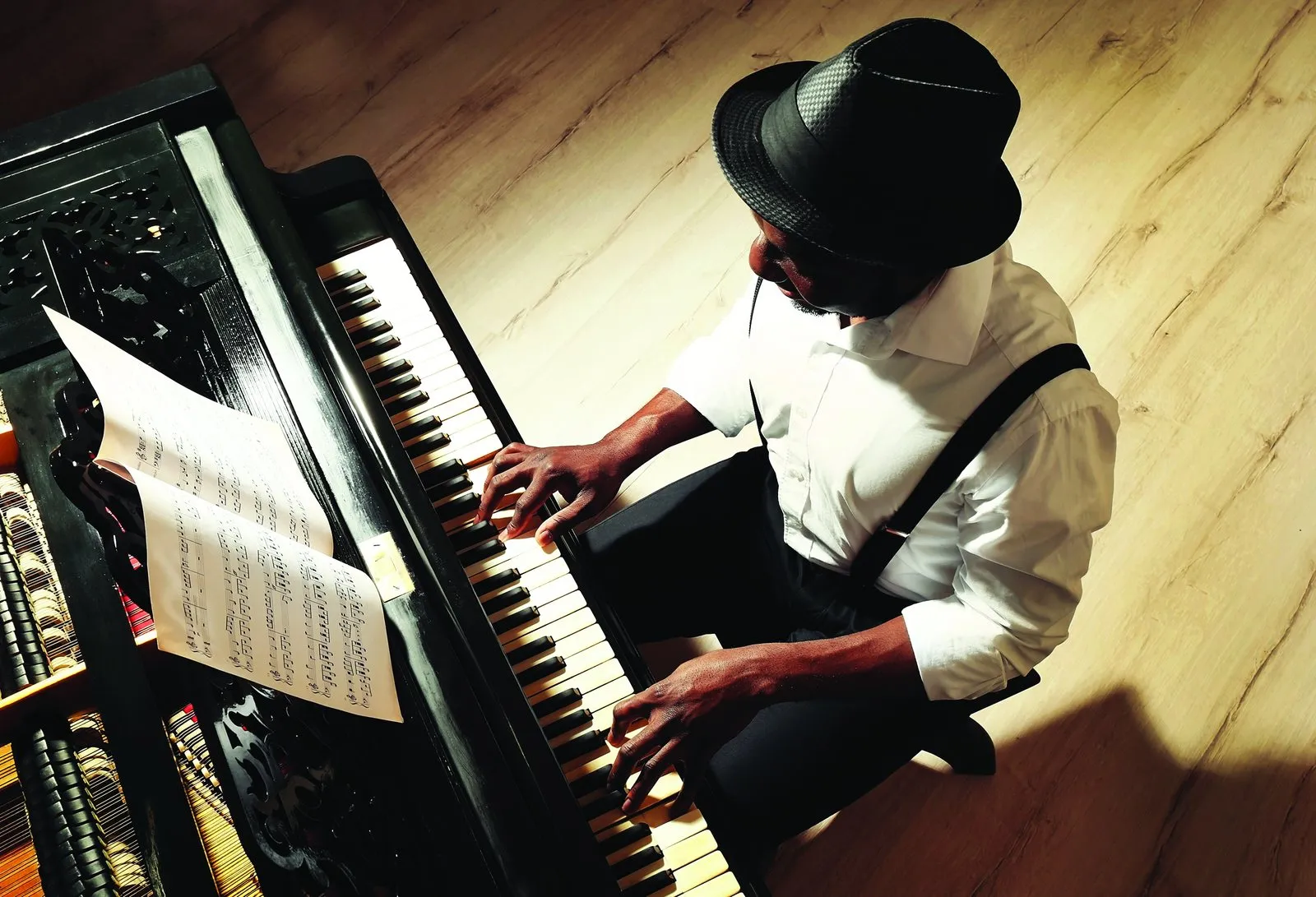
― Louis Armstrong
From the September 2020 issue of FHM India.
Spotted a mistake, or your photo used without permission? Report a correction


 in your inbox