
India’s Only Shaolin Monk
Learn how to punch holes in walls, why 36 Chambers of Shaolin isn’t just special effects and why not all monks are bald



Introducing the man from Gujrat who didn’t sell his Ferrari, but did set out to become a monk – the Shaolin warrior kinds.
“Half the things they showed in the movie weren’t special effects. With practise, dedication and determination the human body and mind can be trained to do things you won’t believe.” The movie Gajanand Rajput refers to is the 26 Chambers of the Shaolin – a film that proved to be his turning point. Like a lot of young blokes, Gajanand who spent his childhood in Ahmedabad took to “martial science,” as he likes to describe it, to avoid being bullied and beaten up in school. “I was one of the parakhu (studious) types and there were a lot of kids who reveled in using me as their punching bag during lunch.” All that changed when his uncle gifted him a videotape of probably the best martial arts movie ever made. Gajanand shares, “I must’ve seen it thirty times. I was just 12 and believed if someone could teach me to do all the things the hero San Te learnt from those amazing Shaolin monks, no one could ever shove me down the stairs again.”


What started as a way to escape being bullied soon turned into a lifelong obsession. Gajanand admits he was lucky to find some really great teachers. “I sought out Shree Lucky N. Chan Thakuri – an expert in Chinese Wushu Kung Fu as my mentor. I honestly believe that I couldn’t have survived the two back-breaking years in the monastery had he not given me such a sound base.”

So what was it that pushed him to go all the way to China? Weren’t there any decent martial arts academies in India at the time? Gajanand replies with a wistful expression “Like every sportsman desires to one day compete in the Olympics, every martial arts practitioner’s lifelong dream is to spend time in the Shaolin and learn from the legends themselves. Shaolin is like the Mecca for martial artists and I happened to be one of the lucky few who got accepted.”

That sounds inspiring. Though keyboard jocks working on lifestyle magazines can never hope to make it anywhere remotely close to Shaolin, Gajanand is quick to assure us that everyone has a chance. “While it’s best to have practised Kung Fu or some other form of martial arts for at least five years, I came across a lot of students who had never been exposed to martial arts before, but were still able to rapidly grasp the basics and make quick progress.”

The secret, he says, is that while such students saved money to come and train at the monastery, they assiduously prepared themselves physically. The best sports for this purpose are those that improve hand-eye coordination, Gajanand informs us. Tennis, gymnastics, high diving, trampoline aerobics and even ping-pong improve agility and motor skills, which are indispensable for martial arts. “Any sport that breaks down muscle tissue so you can rebuild it, stretches and tones your muscles, improves your breathing and is enjoyable too is good.”

Shaolin training may seem brutal to those who’ve never trained physically, but Gajanand proudly admits that he didn’t breakdown. “Sure, the first couple of months were pretty tough. We were expected to be up at six to practice Tai-chi and Qigong meditation (a complicated mind cleansing technique) followed by a simple breakfast after which we trained from 8.30 till noon, when we went for lunch and had a two-hour break during which we could either study or meditate. Then we sparred and trained till 5 in evening followed by an hour of Qigong. Dinner was served at six after which the day officially ended and we had to retire to our sleeping quarters by 9:30.” During break hours, non-native students usually opted for additional Mandarin classes to help them converse better with their mentors and seniors.

With this no-nonsense regimen, the temple also had some strict rules, which couldn’t be broken. “I think we Indians can learn a lot in terms of discipline from the Chinese. While facilities within the temple had been modernised and we had internet access and were even allowed to bring our laptops, the slightest breach (which including accessing hate mail, porn sites or gambling sites) could result in some pretty severe penalties.” Moreover Gajanand shared that the monks have no patience for students with an attitude problem. “If you’re a bully or a show-off or are just plain lazy, you couldn’t last long in the temple.”
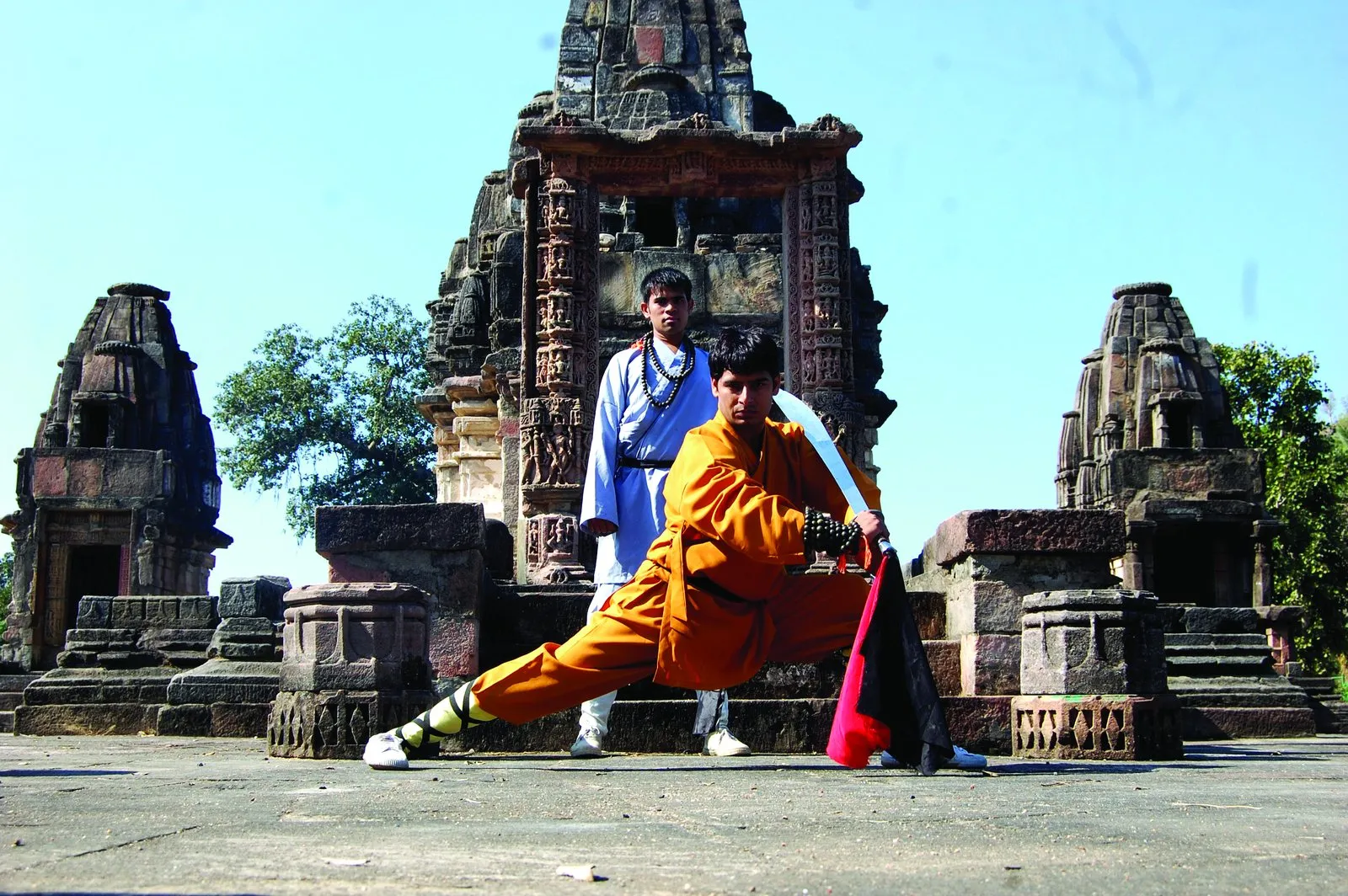
Whenever we think of martial arts, we usually think about Japan and China. This misconception is dissipating though, thanks to men like Gajanand, who after the Chinese leg of his journey – where incidentally he trained with legends like Master Wu Bin (the same guy who trained Jet Li) – came back to India and studied traditional fighting styles and found startling similarities between the two. He says, “If you look beyond the surface, you will realise most Asian fighting forms have their roots in the Indian subcontinent, more specifically in Tamil Nadu.” He goes on to inform us about the legend of Daruma Bodhidharma – a Tamil prince turned monk who traveled to China and laid the foundations of Kung Fu in the monasteries there.
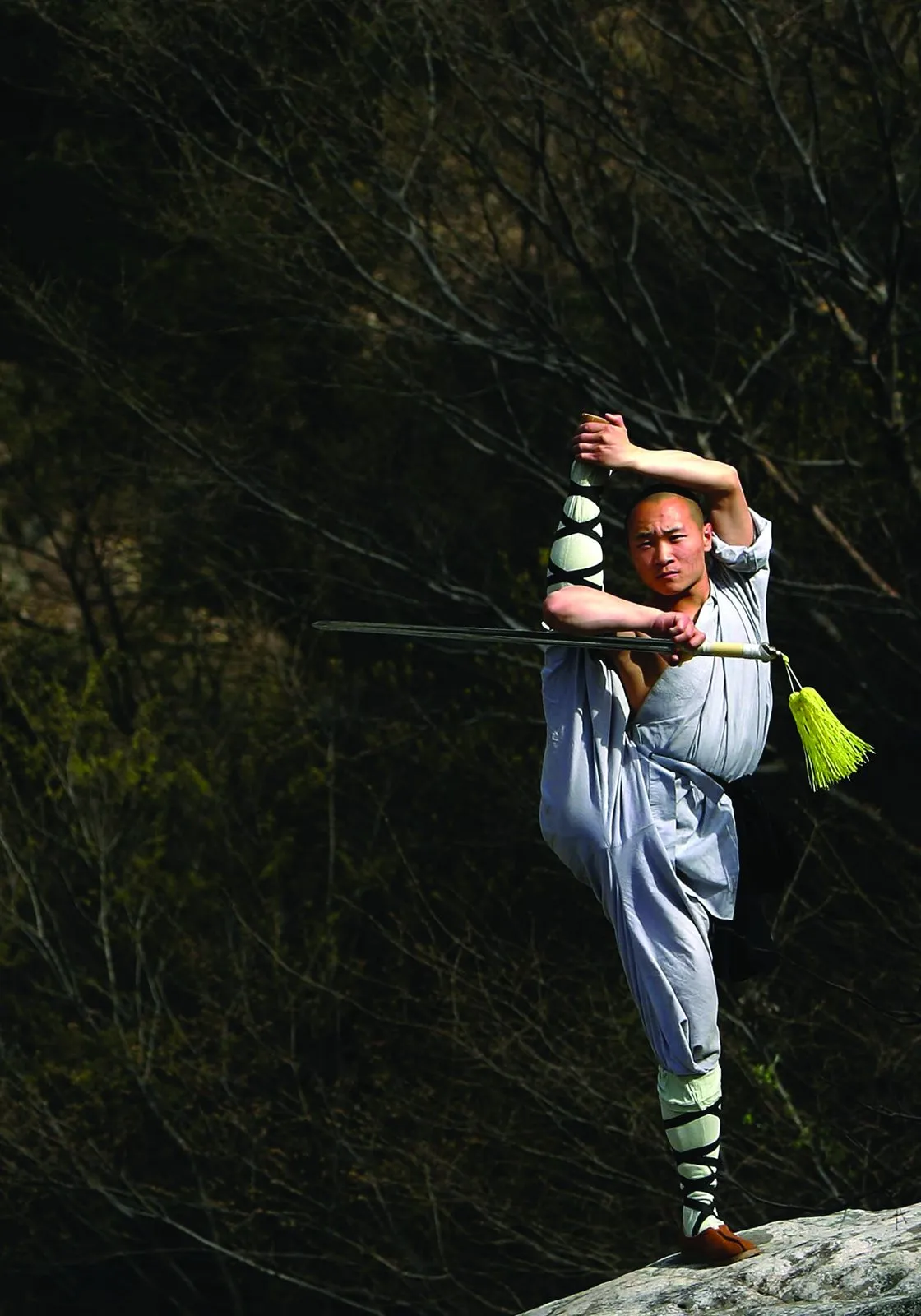
Gajanand who got his first big break in the entertainment industry as the stunt and action choreographer for the TV serial Prithviraj Chauhan and has a number of lucrative movie projects in the kitty (though he refused to disclose any) has also established the Chinese Wu-Shu Federation in India and has organised a number of state and national level championships. As he left for his training, he signed off with a near mystical statement – “The next Bruce Lee is going to be an Indian.”
From the September 2011 issue of FHM India.
Spotted a mistake, or your photo used without permission? Report a correction












 in your inbox