
Weaving a legal cobweb: Vish Dhamija on legal thrillers
Legal thriller author Vish Dhamija on dropping out of law school, his wife's verdict on his first draft, marketing books, critics, Amazon reviews and why writer's block is a myth.
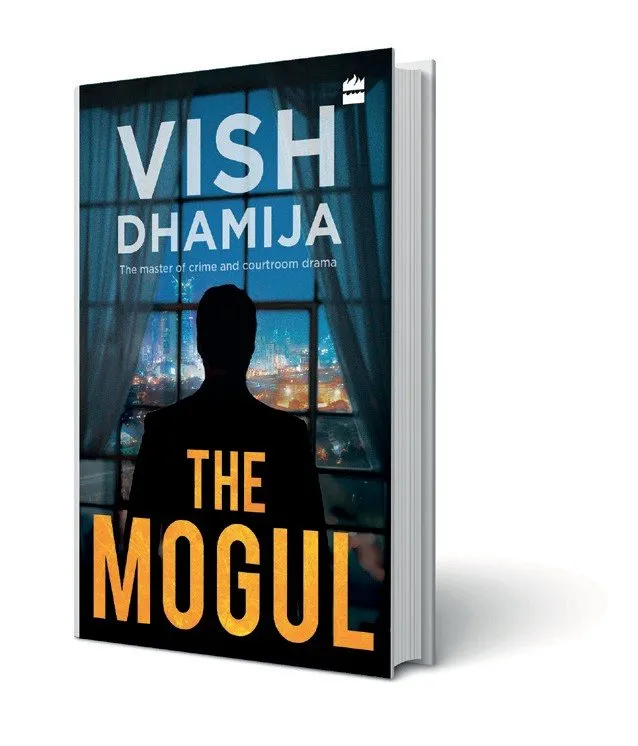



Author Vish Dhamija has plunged into the legal thriller genre only to come out with mind-boggling twists and turns.
Legal thrillers is not a very popular genre and Vish Dhamija knows it well. And this is exactly what he plans to change, one novel at a time. In a freewheeling interview, he tells us how he researches for his books and why he thinks writer’s block is a myth. Excerpts:

You were a law student. Was this what helped and motivated you to write legal thrillers?
I joined the law faculty at Ajmer University to pursue law. In many ways, the law faculty was a sort of waiting ground for IAS aspirants. I decided to drop out and take off for an MBA at Manchester Business School. After graduating, I entered the corporate life and got stuck in the rut of job, promotion and the next paycheck. The vagaries of Indian kanoon have always interested me. Part of me also missed writing. I thought that even though I did not pursue law, I could bring my two interests together. I read a lot of legal cases and watched films and television shows. I have always been fond of James Elroy. I went through real life case reports before putting pen to paper.
So, is this how your first came about?
My first novel came from a story idea, a suspense thriller. My wife coaxed me to give it a shape of a book. I wrote a short draft first and gave it to her. Her response: ‘Where have you copied it from?’ It was my cue. Legal thrillers, mostly American, are not very popular in India, but lately, a lot of legal dramas such as Suits and The Good Wife are catching people’s fancies. It was a risk but I had nothing to lose. The hard work paid off as people liked the book.
What are your thoughts on the reading culture in India?
It will always stay strong. The difference now is that people prefer reading on the digital medium. The medium might change but people will continue to read. Also, these days the trend is to adapt books into television shows and films. It’s catching up fast in India.
How important is to have the right marketing strategy for a book?
The basic fact is that distribution and circulation of books necessitates marketing. Unless the author is a big name, a book is an impulse buy. Only well-known authors are found intentionally. The prestige of the publisher, the cover and the brief synopsis are very important to grab a reader’s attention. Social media shout outs and advertisements, teasers, trailers and eye-catching content prior to the book launch are important.
What do you have say about critics?
I appreciate good criticism. My father was an English professor, also my biggest critic. Once a retired DCP from Mumbai Police called me up to point out some factual errors that I had made. I realised that as a writer I should check the facts and research more intensely to avoid inadvertent factual errors. I am not above criticism and there are often gaps in my knowledge. I speak to my lawyers friends while I research. But, ridiculing a writer is a bad approach, especially by someone who does not fall in the category of a legal book reader.
Where do you find the strangest reviews of your books?
Amazon! Spending a day reading comments is enough to send me into depression. But, when we launch a book in the public domain, we know that people will have an opinion about it. Some feel that I have stretched a scene too long. The reality is that it could be a deliberate decision. My friends feel that my biggest worry should be my parents reading the darker position of my books.
What is your writing ritual?
I write in the mornings, beginning my day at 5:30 am and write till 8:30 am. I like cappuccinos to power me up through the day.
When I get in the flow, I tend to keep writing for a long time.
Do you have writer’s block sometime?
This is a myth created by writers. I don’t write daily and do not stick to a schedule while writing. I believe every author has a different working style. All I need to know before starting a book is its end. The basics are the case which could involve a crime, how an investigator or a cop will go about solving it, the twists and how the defense lawyer will manipulate the facts.
Any advice for aspiring writers?
Read, read, read and then write, write, write. Edit and then rewrite. There is a tough competition, so aim to stand out and carve a niche for yourself. Also, writing a good story is no longer enough. Editors are flooded with manuscripts, so, make yours presentable. Proofread it thoroughly to avoid typos or grammatical mistakes. Put your best foot forward.
From the October 2018 issue of FHM India.
Spotted a mistake, or your photo used without permission? Report a correction










 in your inbox