
Power Of Brands: How The World’s Biggest Brands Get You To Part With Your Cash




It’s February, everyone’s skint, yet we’re still lusting after luxury sports cars and filling our shopping baskets with expensive “essentials”. FHM looks at how the world’s biggest brands get you to part with your cash, and asks whether it’s really worth it…
Why does the box make me feel good?
Whether it’s the clothes we wear, the car we drive or the food in our shopping basket, we define ourselves according to the brands we choose. Buying brands actually makes us feel good, and that’s down to the clever tricks of the packaging trade that you probably didn’t even know you were falling for…

Right size, right shape
There are 250,000 products in your average supermarket, but shoppers have a repertoire of about 100 items. Your eye skips almost everything on the shelves, so brands need to make sure the stuff they’re selling looks like what you’re buying. You wouldn’t pick up a round tin of cereal, because the chances are you wouldn’t even spot it.
Contains added bullshit
B vitamins, folic acid, jojoba oil, omega-3, wholegrain — they all sound brilliant (and can be beneficial in their own ways), but the vast majority of consumers have no idea what they are, or what they do. And that’s the whole point: our instinct is to assume these special ingredients mean we’re getting more for our money, even when that’s often not the case.
Tick it off
You’ll never see a packet with a big cross on it to inform us there’s no added sugar, because on a deeply rooted subconscious level, our brain sees a cross as something negative that must be avoided. Designers will always use ticks instead — which we associate with health and positivity — even on a cereal box that contains more sugar per portion than a chocolate bar.
Insider info: We’re hardwired to see red and yellow together and think value. Watch out for stores using this colour combo to trick you into parting with your cash, even when there’s no bargain to be had.
Can I use my girlfriend’s moisturiser?
It’s official: we men are now spending as much as women on grooming products, according to a recent survey. In fact, the men’s grooming market is forecast to be worth over ₹5,270-crore by 2017. And with a majority of blokes claiming to be using moisturiser on a regular basis, your lovely face is worth serious money.
To meet this demand — or perhaps the cause of it in the first place — brands that made a name for themselves in women’s pampering have been quick to create whole new product lines “for men”. But is your skin really that different to your girlfriend’s? Well, no, according to cosmetics expert Bryan Barron (cosmeticscop.com). “Scientifically, there are minimal differences between male and female skin,” he says. “But these differences don’t mean men need a special set of products that women don’t and vice versa. If an ingredient is good for the skin, it doesn’t matter if the person is male or female.”
The truth is, there’s very little difference between male- and female-targeted moisturisers. “The chief difference between moisturisers aimed at men and moisturisers aimed at women is the marketing and packaging, not what’s inside the bottle,” Barron explains.
There is one key difference though: scent. So go nuts with your girlfriend’s lotions, as long as you don’t mind smelling like sunshine and flowers.
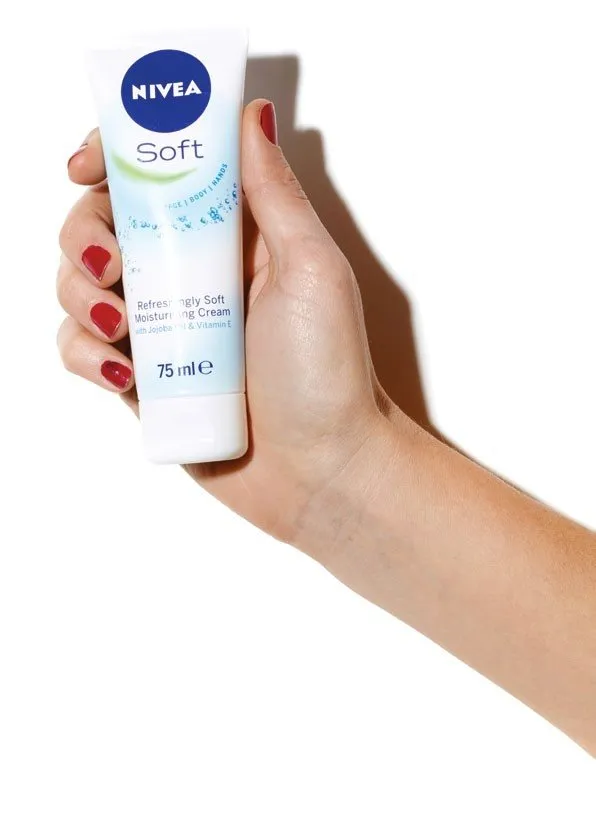
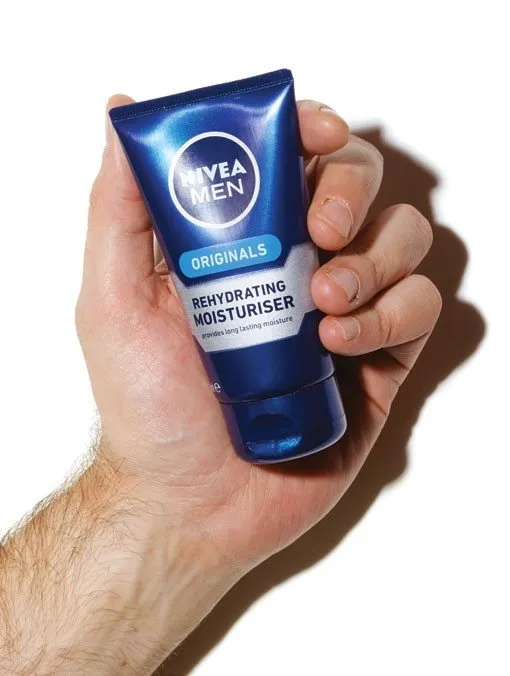
- Since the day we were born, we’ve been programmed to instinctively recognise certain colours as “male” and others as “female”. Here, the soft, pastel colours give the moisturiser a feminine feel.
- The language plays on the anxieties of its target audience. Women’s moisturiser is “refreshingly soft” because, for women, moisturising is a way to pamper themselves. The bloke’s cream, on the other hand, has a functional message of rehydration.
- Brands use rich, dark colours and innately manly gun-metal grey to stand out from their female equivalents.
- Clean lines and simple, stripped-back packaging are also designed to appeal to the masculine approach to grooming. This isn’t a treat; it serves a practical purpose.
Bryan Barron’s book, Don’t Go To The Cosmetics Counter Without Me, is out now.
What do I get for a ₹10,172 haircut?
Even though we’re willing to shell out ₹35,602 for a pair of headphones endorsed by a ’90s rap artist, most of us baulk at the thought of stumping up more than ₹2034 for a haircut. We sent our man Chris undercover to have his unruly barnet seen to by celebrity stylist Stuart Phillips, who holds the record for the world’s most expensive haircut – ₹20,34,656, if you’re wondering. But how can he justify charging ₹11,701 for a standard gent’s cut?

For starters, before the cut, you sit down for a “hair lifestyle consultation”. It may sound ridiculous, but our man found out that keeping the hair above his ears longer would make his face look thinner. Add to that the swanky central London salon, a head massage from a girl so gorgeous there’s no chance she’d touch him under any other circumstances, and the fact that Phillips’ titanium scissors cost ₹3,05,232, and you start to see where your money’s going.
As for the cut itself? “I’m happy with the results,” Chris says. “If I had ₹11,701, I’d probably go back, just to hear Stuart’s anecdotes about when he cut Jean-Claude Van Damme’s hair, if nothing else.”
What makes this premium?
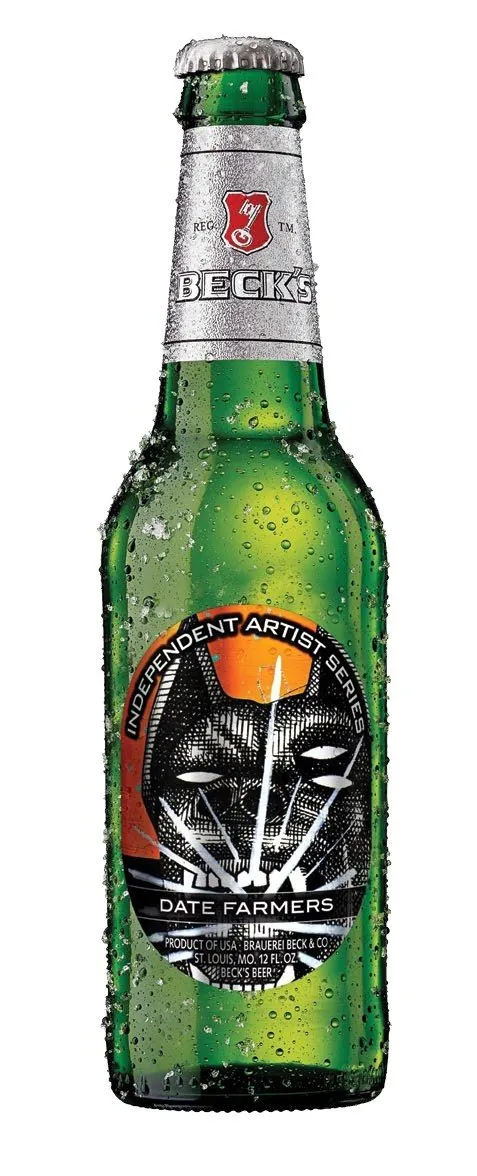
Why do we see this bottle and instinctively feel that it’s a quality product? Ian Anderson, founder of The Designers Republic, lets us in on the design secrets that build a beer brand.
- Green is the colour: “Beer bottles always used to be brown, but now ales are brown and lagers — especially European ones — tend to be green. Green suggests it’s a cleaner, fresher and purer beer.”
- German quality: “We never think of shit from Germany — we expect everything from there to be high quality. Whereas we assume anything brewed in, say, Burton upon Trent is going to be substandard.”
- Explicit language: “There was a period when all ‘foreign’ lagers were brewed here, under licence. That it’s imported suggests it’s exotic, and people think you’re more worldly-wise.”
- Get the look: “Quality lagers — Heineken, Beck’s, Amstel — use white, green and red. If you want to introduce a new product and you’re not using those, it’s not accepted as part of that market.”

Why does this car cost more than your house?
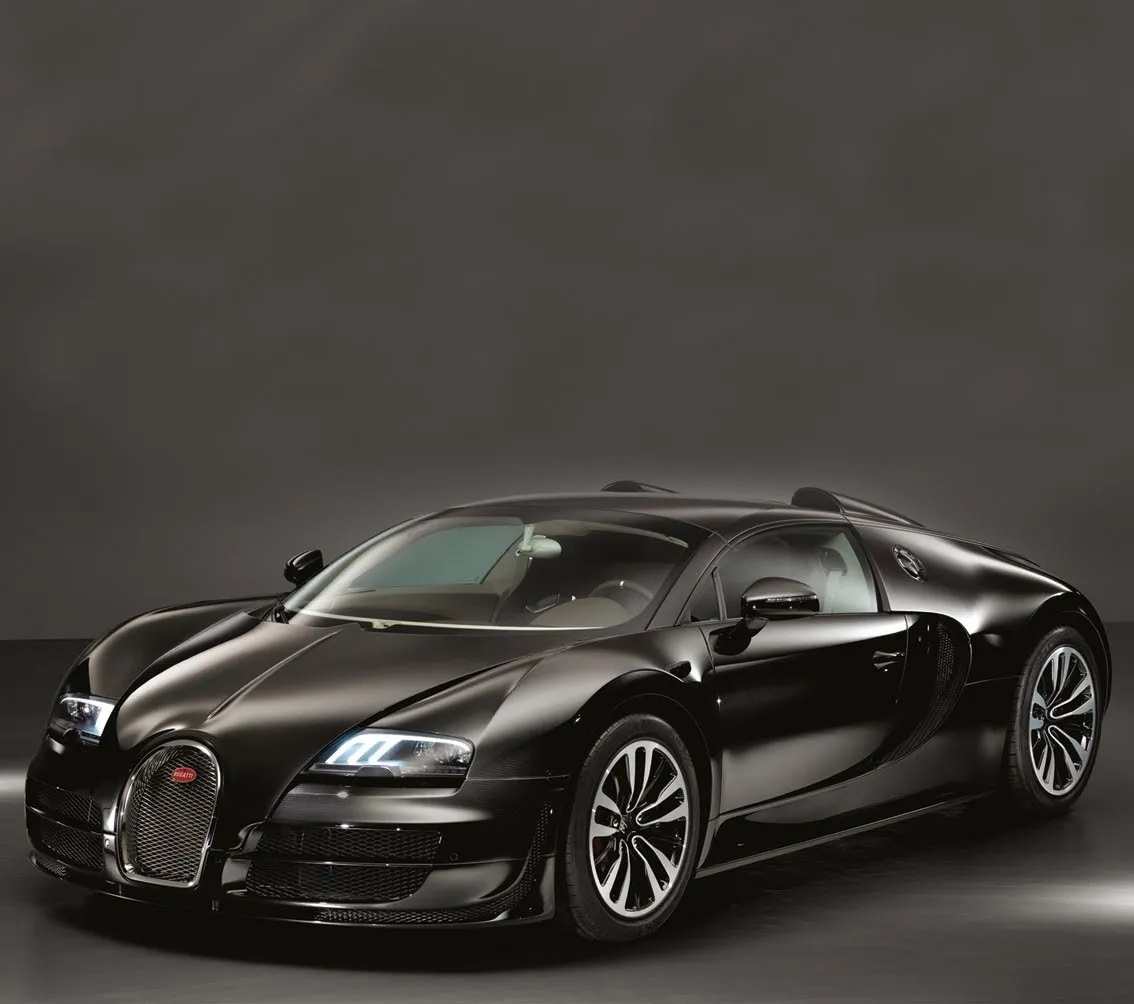
With a cool million-pound price tag, the Bugatti Veyron isn’t just the world’s fastest commercially available car, but also the most expensive. So what do you get for your money?
For starters, the Veyron cost over a billion pounds to develop. Shifting only 40 units a year, the company (which is basically a prestige product for owner Volkswagen) actually loses ₹42,78,26,157 for every car sold. And it’s not like the cars are coming off some cost-efficient production line — each one is handcrafted. It’s the difference between shoving a ready-meal in the microwave and having Heston Blumenthal come round to your house to cook for you.
This is a car that can go from 0-60 in 2.5 seconds and has a top speed of 268mph. Without its advanced aerodynamic design, the Veyron would actually take off. Other features, like its carbon-fibre frame, are unique today, but could one day be seen on every car. There was a time, after all, when rear-view mirrors could only be found on racing cars. Then there’s the fact that by owning one, you’re joining an exclusive club.
“When you buy a supercar, you buy into the brand as much as the car,” says Stuart Masson, founder of thecarexpert.co.uk. “What matters is that people know they’re buying into something the rest of the planet wishes they could have, but could never, ever buy. This is why supercars are flashy and noisy. They’re not meant to blend in with the crowd.”
Insider info: Everyone from supermarkets to high-end car dealerships use scent machines to pump pleasant aromas into the air. If our nosebuds are tickled, we’re more likely to part with our cash.
Same parts, different badges
The VW Golf, Audi A3 and Seat Leon are all manufactured by Volkswagen and have at their core the same toolbox of components used across a range of VW cars. Under the bonnet, they’ve got a hell of a lot in common, but the shell and the badge make all the difference to their perceived quality. Not to mention the price.
Does sex really sell?
The phrase “sex sells” has been an indisputable truth of advertising for as long as people have had crap to sell, and that’s because in all aspects of life, sex is such a massive motivator. From healthy snack bars to fitted jackets, shampoos to headphones, almost every purchase we make is aimed at helping us appeal to the opposite sex.
But are we really so easily manipulated that brands can convince us to part with our cash just by splashing a picture of a bikini-clad lady or a big muscly man on a billboard? “You can say that it’s cynical using sex to sell, but you’d almost be stupid not to,” says Ian Anderson, founder of The Designers Republic, who has worked on branding for everyone from Coca-Cola to Adidas. “The question is to what degree you do it.”
The problem is, if you’re too blatant about it, then people will either be too offended or too embarrassed to buy what you’re selling.
“The worst are the ones where you’ve just got a picture of a car with a semi-naked woman draped over it. That’s route one, and exploitative,” Anderson says.
Insider info: Advertisers use sex to sell for two incredibly effective reasons: 1) we spend twice as long looking at an ad if it includes sexual imagery and 2) we want a piece of the sexy action.
Photography: Marco Vittur.
From the February 2014 issue of FHM India.
Spotted a mistake, or your photo used without permission? Report a correction










 in your inbox